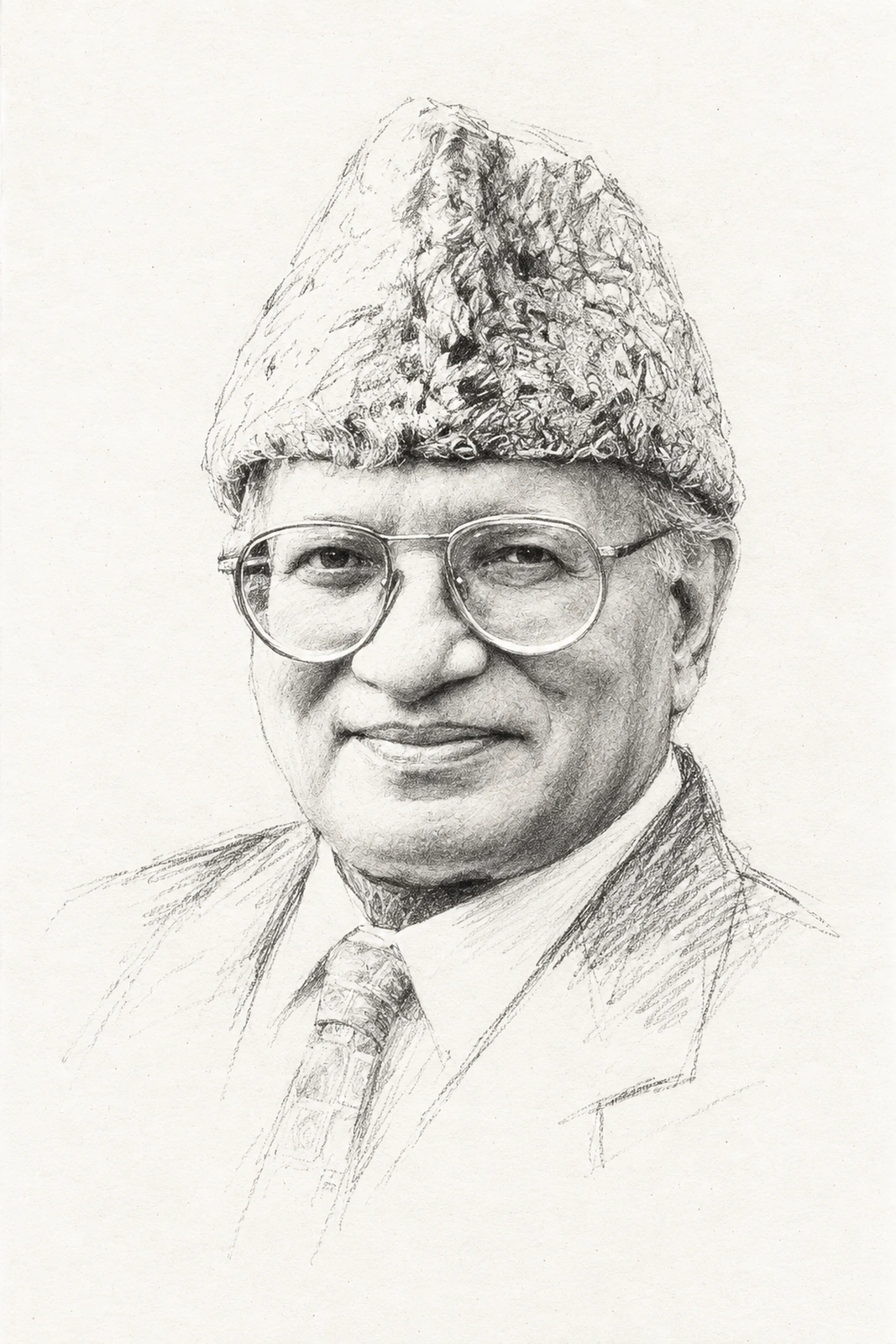
THE SPOKEN WORD
Four Questions for Everyone—Introduction to Books (2008)
Assorted Talks on Education System and Educational Resources
A reading transcript of this session.
Four Questions for Everyone—Introduction to Books (2008)
.. children who are different, that is to say, I am not concerned with children who are good or better but children who are different. Children who do not want to be slaves of anybody except the divine, therefore, the aim of education which they are pursuing or they would like to pursue or without knowing even because children do not know what they are but who are capable in due course to know that the most important thing to know in the world is the divine and what is the divine will.
Similarly, everyone has to try to find out what is the divine will. So when I say children who are different are those children who, whether they know it or not, are here on this earth to discover what is the divine will, and I would like to serve these children and the teachers who want to serve these children.
When you speak in your ideal—Ahimsa, Satya, Asteya, Bramacharya, Aparigraha—all these aims, which you have laid down in your institution, are all preparatory for this work. If, by divine we mean the truth which is the real definition of truth-consciousness, even in the Veda it was called rita-chit.
To be a slave of McCaulay-ian system of education is what has brought about the ruin of India. How to combat the system?
When we speak of universalization of elementary education, the idea is that what is going on, now spread it, give the same thing.
There are many things which we need to discuss, many many things. Maybe in future we may have more opportunities of meeting together, but today I shall limit myself only to one issue: what is it that every child, every human being as a human being aught to learn as a human being? What should every human being as a human being should learn in life? You may become a doctor, engineer, lawyer, a coolie, a teacher whatever you might like to do, but, first of all our first question is: I am a human being and as a human being what should I learn.
I can share with you what I have ultimately arrived at the present, even though we have to continue on and on and on in answer to this question. I have come to the conclusion that every human being should learn four things. Since everybody lives life, he must discuss the question: what is the aim of life? Everybody, whether he becomes a doctor or lawyer whatever it may be his profession, but this is the first question and last question that you should ask: what is the aim of life?
At present because McCaulay struck off this idea from India, you are not allowed to ask this question at all. In no curriculum of India this question is centrally posed. Therefore, hardly anybody thinks about it. Children pick up some idea about what is life from some cinema dialogue and they take it as a guide for the whole life: jivan ek safar hai, jivan ek paheli hai. So many dialogues are there in the cinemas and we take it as if it is patheya.
So this is the first question that you should ask, and you should be able to answer this question or we should all be engaged in research.
Learning and teaching is an inherent profession of man, even as a parent you have to be a teacher, to learn and to teach is a constant phenomenon of human life. Therefore, it is only not only BA people who should learn what is teaching and learning, it is artificial. It is the one subject which everyone in the country and the world should learn. What is learning? What is to be a good learner? What is it to be a good teacher? So this is the second question.
The third question is that every human being has got a body whether he likes it or not.
Just now I’m discussing a question as to what human being as a human being has to learn. So I said everybody should learn the aim of life because everybody lives. Second, is that everybody is a teacher and a pupil, so everybody should know what is it to be a good student and a good teacher. The third is that everybody has a human body. Therefore, he must know what is the human body, as a human being he should learn. And the fourth question that he has to ask is that everybody is required to, wherever he is, move upwards, wherever an individual finds himself or herself. His fundamental thrust is to move upwards, urdhva gama.
Therefore, this is the question. How do I move upward? What is it that will lift me? So I identified three important qualities which uplifts, which are the powers of upliftment, one at the power of illumination, the second is the power of heroism, and the third is the power of harmony. These are the three: illumination, heroism and harmony.
So, as I have told you, I am only sharing with you what I have been learning myself and making research in these fundamental problems, and I would like to share with you what I have so far arrived at. It is because of my concern with these problems that I have advocated what I call value-oriented education.
In fact, this term value oriented was coined by Dr Dave and myself when we were in the ministry of education together. At that time there were many discussions as to whether we should use this term value-oriented and, I said don't say value education but say value-oriented, because the moment you speak of value education there'll be debates.
What are the values required? My answer is, whatever you think are values, be oriented towards them, so no discussion as to what are the values, because endless debate is there in the world. My answer is: whatever you think is value and you can't escape values. Everybody has this trust towards values. You may differ as to what that value is, but there can be no debate that everyone should be turned towards values, so we decided upon this term value-oriented education.
Because of all this I have so far edited four books. I want to introduce these four books to you. The first book is called the Aim of Life. I have edited this book and in due course, I will show you this book. Also the second book is called the Good Teacher and the Good Pupil. The third book is Mystery and Excellence of the Human Body and the fourth book I am still writing, because I have planned to write 85 small booklets on the theme of illumination, heroism and harmony. 10 have been written, 75 remain to be developed as yet. So I would like to introduce, as far as I can, these four books during these two hours.
The method of these books is that of exploration. I do not want to tell people what should be the aim of life, that is to be left to the students themselves, but they should have data. The problem is that we preach something without giving the children the data, they explore by themselves alternatives. They should think about various alternatives, and we have no literature today in the country which can give you a rich literature.
What are the different aims of life? People have thought of life in many different ways. Our children should know different aims of life which have been pursued in the history of the world right. Having made a study, they should decide: this is the aim of life. So it is in that context that I would like to show you the themes and some of the contents of this book.
In the course of the history of human endeavour, there have emerged four main theories of the aim of life in accordance with four different conceptions of the truth of existence. These may be called supracosmic, the cosmic and terrestrial, the supraterrestrial or otherworldly, and the integral or synthetic or composite. This is the conclusion I have arrived at after reading the history of the world. All the aims of life can be summed up in these four aims.
(Slideshow)