THE WRITTEN WORD
Sri Aurobindo—Articles
Paragraph references are specific to this digital edition.
On 15th August—Sri Aurobindo's Birthday
Sri Aurobindo had dreamt great dreams, and his dreams were made realities. He spoke of five of his dreams in his message of 15th of August 1947, which was his own birthday and was also the first birthday of free India. In that message, he spoke of his dream of India as a free nation and of the realisation of that dream. Another of his dream was for the resurgence and liberation of the peoples of Asia, and Sri Aurobindo declares:
Asia has arisen and large parts of it have been liberated or are at this moment being liberated..
Sri Aurobindo, Autobiographical Notes and Other Writings of Historical Interest: The Fifteenth of August 1947
The third dream was a world union, and Sri Aurobindo declared:
The unification of mankind is under way, though only in an imperfect initiative, organised but struggling against tremendous difficulties. But the momentum is there and, if the experience of history can be taken as a guide, it must inevitably increase until it conquers.
Sri Aurobindo, Autobiographical Notes and Other Writings of Historical Interest: The Fifteenth of August 1947
The fourth dream of Sri Aurobindo was that of the spiritual gift of India to the world, and Sri Aurobindo declared:
India’s spirituality is entering Europe and America in an ever increasing measure. That movement will grow..
Sri Aurobindo, Autobiographical Notes and Other Writings of Historical Interest: The Fifteenth of August 1947
And the fifth and final dream was a step in evolution which would raise man to a higher and larger consciousness and begin a solution of the problems which have perplexed and vexed him since he first began to think and to dream of individual perfection and of a perfect society. And he declared:
The difficulties in the way are more formidable than in any other field of endeavour, but difficulties were made to be overcome and if the Supreme Will is there, they will be overcome.
Sri Aurobindo, Autobiographical Notes and Other Writings of Historical Interest: The Fifteenth of August 1947
It is this dream of a new evolution which is centrally related to human destiny. As Sri Aurobindo describes this destiny in Savitri:
A greater destiny waits you in your front:
This transient earthly being if he wills
Can fit his acts to a transcendent scheme. ||98.11||
He who now stares at the world with ignorant eyes
Hardly from the Inconscient’s night aroused
That look at images and not at Truth
Can fill those orbs with an immortal’s sight. ||98.12||
Yet shall the godhead grow within your hearts,
You shall awake into the spirit’s air
And feel the breaking walls of mortal mind
And hear the message which left life’s heart dumb
And look through Nature with sun-gazing lids
And blow your conch-shells at the Eternal’s gate. ||98.13||
Authors of earth’s high change, to you it is given
To cross the dangerous spaces of the soul
And touch the mighty Mother stark awake
And meet the Omnipotent in this house of flesh
And make of life the million-bodied One. ||98.14||
And Sri Aurobindo holds out a promise in the following lines of Savitri:
A seed shall be sown in Death’s tremendous hour,
A branch of heaven transplant to human soil;
Nature shall overleap her mortal step;
Fate shall be changed by an unchanging will.” ||91.9||
Sri Aurobindo’s life can properly be described as God’s labour. This labour has been described in Savitri through the words of Narada, the great immortal Rishi, the Devarishi:
But when God’s messenger comes to help the world
And lead the soul of earth to higher things,
He too must carry the yoke he came to unloose;
He too must bear the pang that he would heal:
Exempt and unafflicted by earth’s fate,
How shall he cure the ills he never felt? ||108.43||
..The sorrow of all living things shall come
And knock at his doors and live within his house.. ||108.48||
..The weeping of the centuries visits his eyes..
The poison of the world has stained his throat. ||108.49||
..He dies that the world may be new-born and live. ||108.52||
Hard is the world-redeemer’s heavy task;
The world itself becomes his adversary,
His enemies are the beings he came to save. ||109.1||
..This world is in love with its own ignorance,
Its darkness turns away from the saviour light,
It gives the cross in payment for the crown. ||109.2||
In his poem entitled A God’s Labour, Sri Aurobindo describes his own labour to translate his dream into reality. He declares:
I have been digging deep and long Mid a horror of filth and mire A bed for the golden river’s song, A home for the deathless fire.
I have laboured and suffered in Matter’s night To bring the fire to man; But the hate of hell and human spite Are my meed since the world began.
Sri Aurobindo, Collected Poems: A God's Labour
My gaping wounds are a thousand and one And the Titan kings assail, But I dare not rest till my task is done And wrought the eternal will.
Sri Aurobindo, Collected Poems: A God's Labour
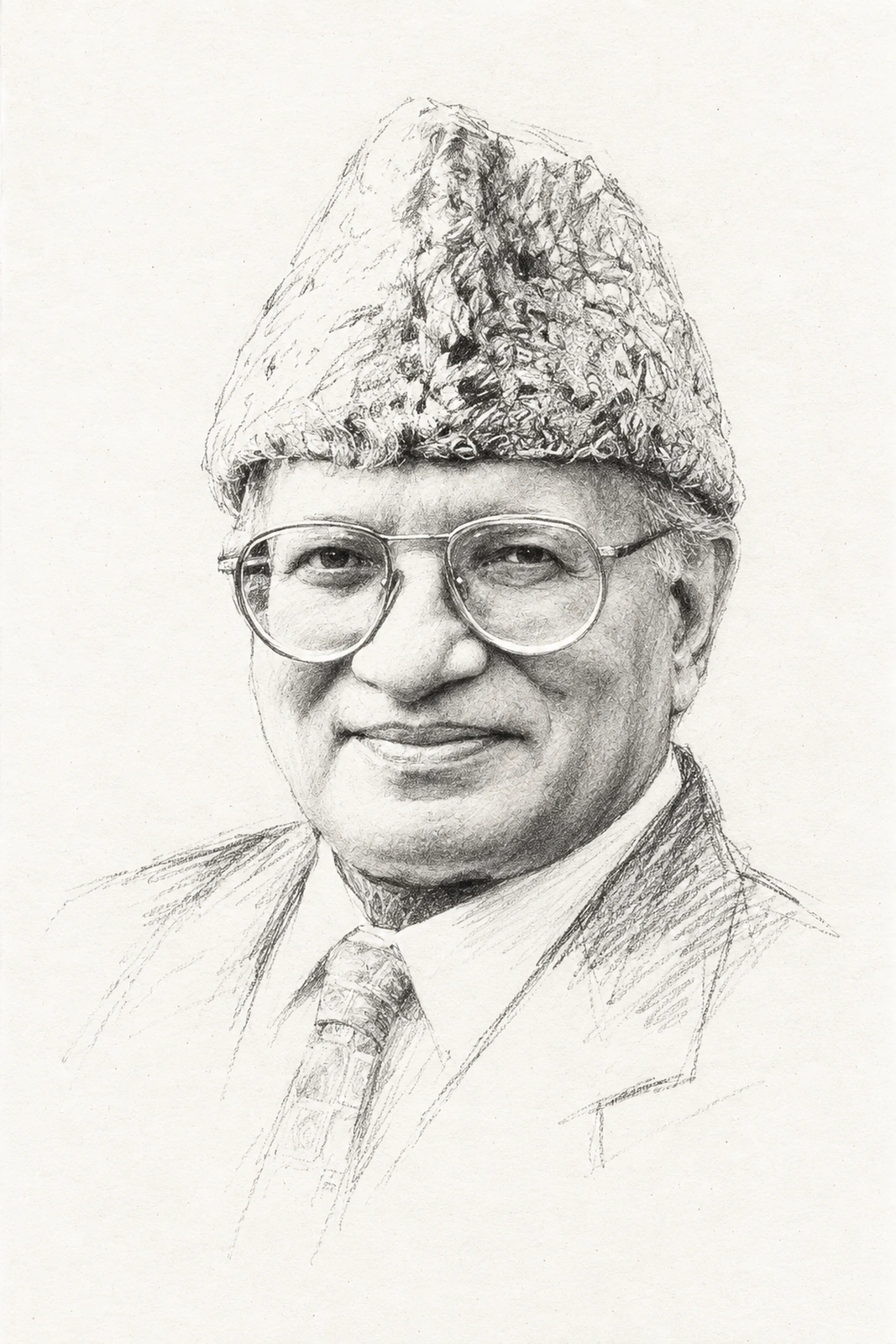
And, indeed, we stand today in the presence of that Rishi who has never failed, and when this statue of Sri Aurobindo is being unveiled, we hear the summary of his divine labour and his promise:
A little more and the new life’s doors Shall be carved in silver light With its aureate roof and mosaic floors In a great world bare and bright.
Sri Aurobindo, Collected Poems: A God's Labour
The supermind that he spoke of and the great supramental transformation that he described in his magnum opus, The Life Divine, was attained and it is witnessed in his poem, Transformation:
My breath runs in a subtle rhythmic stream; It fills my members with a might divine: I have drunk the Infinite like a giant’s wine. Time is my drama or my pageant dream. Now are my illumined cells joy’s flaming scheme And changed my thrilled and branching nerves to fine Channels of rapture opal and hyaline For the influx of the Unknown and the Supreme.
I am no more a vassal of the flesh, A slave to Nature and her leaden rule; I am caught no more in the senses’ narrow mesh. My soul unhorizoned widens to measureless sight, My body is God’s happy living tool, My spirit a vast sun of deathless light.
Sri Aurobindo, Collected Poems: Transformation
That supramental transformation is radiating in the entire atmosphere and here, too, where we have gathered we can feel the radiation. This statue that is unveiled here can be regarded as a powerhouse of that transforming power, and all who have gathered here will share the uplifting force of that supramental radiation. It is to that supramental radiation that we dedicate ourselves on this day, which is also once again Sri Aurobindo’s birthday.
Philosophy of Sri Aurobindo
If our quest of knowledge is free from pre-conceptions and dogmas, and if our search aims at discovering action that ensures the highest good of the entire world, then the study of Sri Aurobindo will be found inescapable. For such indeed was his own quest, and his voluminous works provide ample proof of that quest and they also provide to us a vast body of knowledge that he came to acquire and master and into which we can dive deeply and swim vastly for purposes of our own programme of inquiry, questioning and verification. In his The Synthesis of Yoga he has, like a scientist, given a detailed and precise exposition of the realms of knowledge in which he has travelled, covering various levels of consciousness in the individual and the universal, and in the transcendental, particularly those of the mind and the supermind, as also of the methods by which those realms can be approached, traversed and mastered. In his The Life Divine, he has fashioned in minuteness, subtlety and complexity an edifice of philosophical thought of such vastness and intricate reasoning that can provide a rational assurance of the possibility and inevitability of the evolution of the divine life on the earth and invite an earnest seeker to a long, sustained and patient inquiry at the highest levels of critical and self-critical examination. In his Savitri, he has presented a supreme poetic creation of multiple dimensions relating to a symbolic story of epical character that raises and answers the central issue of human life on the earth in which the riddle of the world is locked, and in the heart of which the secret of the highest good of humanity is shown to be discoverable and realisable. These three are his supreme works, but there are many others, more than 30, in which Sri Aurobindo has expounded his vision and work, and we can approach them for attaining the highest and the best.
Consciousness is, according to Sri Aurobindo, the greatest underlying fact; it is the universal witness; it is to that witness that the worlds and their objects appeal for their reality; we have no other evidence that they exist. It is argued that the material universe existed before life and mind made their appearances and it will survive after they have disappeared. But this argument assumes that consciousness, the universal witness, consists of the individual embodied mind born in the world. But when we extend our consciousness, we find the presence of cosmic consciousness embracing the universe and appearing as an immanent Intelligence in its entire works.
Sri Aurobindo points out that the possibility of a cosmic consciousness in humanity is coming slowly to be admitted in modern Psychology, as also the possibility of more elastic instruments of knowledge. According to Sri Aurobindo, it is only when we follow the Yogic process of quieting the mind itself that a profound result of our self-observation becomes possible. At a certain point of this self-observation, we discover that that which observes all the activities of the mind is the mental being supporting the mind substance and mind energy. It is further found that that mental being is the upholder and source of sanctions, and without its sanction, mental operations could not exist or operate. This mental being or the mental Purusha, as it is called in Indian Philosophy, first appears as a silent witness and subsequently it is discovered to be the giver of the command, the Knower. At this stage, a question arises as to whether the entire phenomenal creation is presented to the mental being or whether it is something pre-determined by the dynamic truth of Self within and only manifested on the mind surface. As Sri Aurobindo points out, in order to know that we would have to touch or to enter into a cosmic state of being and consciousness in which the totality of things and their integral principle would be better manifest than to our limited mind experience.
It is here that one can discover, according to Sri Aurobindo, Overmind-Consciousness which is beyond individual mind and which is beyond even universal mind that can be found in the realm of what is called Ignorance in Indian Philosophy. According to Sri Aurobindo, Overmind-Consciousness carries in itself a first direct and masterful cognition of cosmic truth. One thing becomes clear at this level of consciousness; it is self-evident here that both the Individual and the Cosmos come from a transcendent Reality which takes form in them. But still at the level of the Overmind-Knowledge the question set out for us by the phenomenon of the universe is not solved, and three alternative views of creation are presented, and the Overmind permits each one of them to formulate itself in its own individual right and realise its own existence in cognition, in dynamic self-presentation, in substantiating experience. These three alternative views are (a) whether the building of thought, experience, the world of perceptions of the mental Person, the mind Purusha, is truly a self-expression, self-determination proceeding from some truth of his own spiritual being, a manifestation of that truth's dynamic possibilities or (b) whether it is not rather a creation or construction presented to him by Nature, by Prakriti; or else (c) whether it might be a play of a cosmic imagination, a phantasia of the Infinite imposed on the blank indeterminable of his own eternal power of existence.
According to Sri Aurobindo, Overmind gives us no final or positive solution. But there is still a higher cognition beyond the Overmind, a Supramental cognition which is the highest level of cosmic consciousness, and we are left to seek for an answer in that cognition. Sri Aurobindo describes the supramental cognition as a Supramental Truth-Consciousness and points out that it is at once the self-awareness of the Infinite and Eternal and a power of self-determination inherent in that self-awareness; the first is its foundation and status, the second is its power of being, the dynamis of its Self-Existence. In the Supermind, it is found the Supreme is not a rigid Indeterminable and all negating Absolute; an Infinite of being complete in itself in its own immutable purity of existence, and its sole power, a pure consciousness, able only to dwell on the being's changeless eternity on the immobile delight of its sheer Self-Existence, is not the whole Reality. The Infinite of Being is also an Infinite of Power.
Sri Aurobindo speaks of the triple status of the Supermind. The first poise or status of the Supermind is distinguishable from the pure unitarian Consciousness which is a timeless and spaceless concentration of the Supreme Reality. The first poise of the Supermind is an equal self-extension of the Supreme Reality, – all-comprehending, all-possessing, all-constituting. The first poise of the Supermind founds the inalienable unity of things. As the thoughts and images that occur in our mind are not separate existences to us, but forms taken by our consciousness, in somewhat similar way are all names and forms to this primary Supermind. It is the pure divine ideation and formation in the Infinite. But these names and forms are not an unreal play of mental thought but a real play of Conscious being. The names and forms are not mere Ideas; they are Real Ideas.
In the second poise of the Supermind there is an operation of apprehending consciousness, which consists of differentiation in the unifying consciousness with unequal emphasis. Apprehending consciousness is differentiating consciousness with unequal concentration; in each name and form the apprehending consciousness would realise itself as the stable Conscious-Self, the same in all; but also it would realise itself as a concentration of conscious-self following and supporting the individual play of movement and upholding its differentiation from other play of movement, − the same everywhere in soul-essence but varying in soul-form. This concentration supporting the soul-form would be the individual Divine or Jivatman as distinguished from the universal Divine or one all-constituting self. In the second poise, the One manifests the play of the One with the Many that are still one.
In the third poise, the underlying unity of supramental existence would come to be dominated by the individuals not only apprehending names and forms but even by projecting themselves into the movement of names and forms and to be in a way involved in it.
These three poises are only different ways of dealing with the truth of existence. The secondary and tertiary Supermind only develop and apply in the terms of the Divine multiplicity what the primary Supermind holds in the terms of the Divine unity. It is because in Time, the Many seem not to be eternal but to manifest out of the One and return into it as their essence that their Reality comes to be denied; but as Sri Aurobindo points out, it might equally be reasoned that the eternal recurrence of the manifestation in Time is a proof that the Divine multiplicity is an eternal fact of the Supermind beyond Time no less than the Divine unity.
According to Sri Aurobindo, Infinite consciousness holds within itself the endless truth of its own self-awareness. These, in action, would appear to our cognition as aspects of its being, to our spiritual sense as powers and movements of its dynamis, to our aesthesis as instruments and formulations of its delight of existence. Creation, as Sri Aurobindo points out, would then be a self-manifestation; it would be an orderly deployment of the infinite possibility of the Infinite. But every possibility implies a truth of being beyond it, a reality in the Existence; for without that support in truth there could not be any possibility.
In the Supermind cognition, three aspects of Reality viz., an Infinite and Eternal Existence, an Infinite and Eternal Consciousness, and an Infinite and Eternal Delight of Existence, are always an inseparable Trinity, even though one can stand in front of the others and manifest its own spiritual determinates as its primal aspects or its inherent self-formulations, but all these together are original to the triune Absolute.
According to Sri Aurobindo, all deploying of powers and possibilities and their inherent consequence is held together by Supermind cognition in an intimate Oneness, it keeps them founded consciously on the original Truth and maintains the harmony of the truths they manifest. There is no imposition of imagination, no arbitrary creation, nor is there any division, fragmentation, irrecoverable contrariety or disparateness.
In the supramental consciousness, the objectivity of the objective universe attains certainty, for it is that very consciousness that puts forth the objective universe. Similarly, it is in the supramental consciousness that there is attained the certainty of the truth of the One that has inherent in it the Many, even though unmanifested, as also of the One and its relationship with the Many in various terms of identity and difference. As Sri Aurobindo points out, it is only when our human mentality lays an exclusive emphasis on one side of spiritual experience, affirms that to be the sole eternal truth and states it in the terms of our all-dividing mental logic that the necessity for mutually destructive schools of Philosophy arises. Sri Aurobindo explains the situation as follows:
Thus, emphasising the sole truth of the unitarian consciousness, we observe the play of the divine unity, erroneously rendered by our mentality into the terms of real difference, but, not satisfied with correcting this error of the mind by the truth of a higher principle, we assert that the play itself is an illusion. Or, emphasising the play of the One in the Many, we declare a qualified unity and regard the individual soul as a soul-form of the Supreme, but would assert the eternity of this qualified existence and deny altogether the experience of a pure consciousness in an unqualified oneness. Or, again, emphasising the play of difference, we assert that the Supreme and the human soul are eternally different and reject the validity of an experience which exceeds and seems to abolish that difference. But the position that we have now firmly taken absolves us from the necessity of these negations and exclusions: we see that there is a truth behind all these affirmations, but at the same time an excess which leads to an ill-founded negation. Affirming, as we have done, the absolute absoluteness of That, not limited by our ideas of unity, not limited by our ideas of multiplicity, affirming the unity as a basis for the manifestation of the multiplicity and the multiplicity as the basis for the return to oneness and the enjoyment of unity in the divine manifestation, we need not burden our present statement with these discussions or undertake the vain labour of enslaving to our mental distinctions and definitions the absolute freedom of the Divine Infinite.
Sri Aurobindo, The Life Divine - I: The Triple Status of Supermind
It is because in the supramental consciousness, truths of various experiences are seen and comprehended in their true status and level, that supramental consciousness can be considered to be integral consciousness. A Philosophy founded on integral consciousness can rightly be termed as Integral Philosophy. What is stated above is a brief and inadequate statement of a possible starting-point of the Integral Philosophy as expounded by Sri Aurobindo. In this brief statement no attempt has been made to argue or to establish or to demolish any particular standpoint. But if we are to understand the Philosophy of Sri Aurobindo, the brief statement made here may prove to be of some initial use.
Sri Aurobindo and the Future of Humanity (17-19 January 2005, IIC, Delhi)
I
A Synoptic Statement
Sri Aurobindo has been described as the adventure of consciousness but he can also be aptly described as the future in the process of realisation. Sri Aurobindo dreamt as a revolutionary, and every great dream that he dreamt has been realised and is being realised more and more concretely, the fruits of which can be read in the living pages of history. Of the five great dreams that he spoke about in his message on the 15th of August 1947, Sri Aurobindo himself reviewed these dreams and showed how four of them had already been realised or how they were moving towards their realisation. These were relating to a free and united India, resurgence and liberation of the peoples of Asia, a world union forming the outer basis of a fairer, brighter and nobler life of all mankind, and the spiritual gift of India to the world. Of the fifth dream, which he described as a personal hope and an idea, was a step in evolution which would raise man to a higher and larger consciousness and begin the solution of the problems which have perplexed and vexed him since he first began to think and to dream of individual perfection and a perfect society. And yet this was, we might say, his key dream, since all other goals of his life were dependent on that key dream. His central aim of life was to develop in the human being and in the human race a new light which he calls supramental consciousness by the aid of which interdependence and mutuality of the individual and collective consciousness can become manifest and express themselves in lasting world harmony. At the time when he spoke of this ideal as a personal hope, he was totally engaged in bringing about the descent of the supramental consciousness on the earth, and he was at the intensest point of facing the difficulties, more formidable than in any other field of endeavour.
Sri Aurobindo has been a forerunner, visualising a great future for humanity and a pioneer in hewing a path for humanity to arrive at the next step of human evolution. As a nationalist, he ranks as an outstanding internationalist, as an internationalist, he ranks as a universal humanist, and as a leader of the human mind, he ranks as a climber to the divine supermind. As a climber to the supermind, he made himself a bridge for the descent of the supermind for the supramentalisation of the earth. Future, - a glorious future for humanity, - is the very theme of the life and work of Sri Aurobindo.
II
Sri Aurobindo and Nationalism
As is well known, Sri Aurobindo wrote blazing pages between 1906 and 1908 for Bande Mataram, which electrified the nation and defined for the whole country the meaning of Indian nationalism. In a brief but compelling statement, he provided a quintessential answer to the question as to what is nation, what is nationality and what is nationalism, and this statement would continue even for the future, as guideline of assurance of the continuous relevance of the reality of nationalism for all the national souls, including the Indian national soul. This statement can profitably be reiterated:
..there are certain essential conditions, geographical unity, a common past, a powerful common interest impelling towards unity and certain favourable political conditions which enable the impulse to realise itself in an organised government expressing the nationality and perpetuating its single and united existence. This may be provided by a part of the nation, a race or community, uniting the others under its leadership or domination, or by an united resistance to a common pressure from outside or within. A common enthusiasm coalescing with a common interest is the most powerful fosterer of nationality. We believe that the necessary elements are present in India, we believe that the time has come and that by a common resistance to a common pressure in the shape of the boycott, inspired by a common enthusiasm and ideal, that united nationality for which the whole history of India has been a preparation, will be speedily and mightily accomplished.
Sri Aurobindo, Bande Mataram - II: The Foundations of Nationality
Nationalism and Internationalism
There is today much contest in respect of concept of the nation and nationalism and it is even sometimes suggested that in the coming days of internationalism, globalisation and large aggregation in the formation of a possible world-unity, nations and nationalities will be overpassed and the world will enter into a post-national stage of existence. We of the present day and the coming days will need to consider these suggestions, and in determining our future course of action, Sri Aurobindo’s analysis, which he has given in his great work, “The Ideal of Human Unity”, will need to be revisited. In particular, we need to study the distinction that Sri Aurobindo made between political unity and real unity. Sri Aurobindo states that this distinction must be made because:
..it is of the greatest utility to a true and profound political science and involves the most important consequences. When an empire like Austria, a non-national empire, is broken to pieces, it perishes for good; there is no innate tendency to recover the outward unity, because there is no real inner oneness; there is only a politically manufactured aggregate. On the other hand, a real national unity broken up by circumstances will always preserve a tendency to recover and reassert its oneness.
Sri Aurobindo, The Human Cycle: Nation and Empire: Real and Political Unities
Sri Aurobindo points out that just as the individual is an ontological Spirit, and therefore it can never be reduced to become a mere cog in a machine, even so nation is a living spirit and soul, and therefore it can never permanently be reduced to a status of a mere province of larger or even the largest aggregate. At the same time, Sri Aurobindo underlines the fact that humanity is turning today towards world unity, and the central problem for the human endeavour in this connection will be as to how the nation will adjust itself to the pressure of the forces that are today creating phenomena which are global, world-wide and planetary in character.
In this connection, Sri Aurobindo makes a distinction between national ego and national soul, corresponding to the distinction in regard to the individual life where the superficial ego is seen to be distinct from the true individual soul. The mark of egoism, according to Sri Aurobindo, is its superficiality and its ignorant attempt to arrive at superficial unity whether that ego is individual or national. The mark of the ego is its sense of division from all the rest, its pretension to be entirely independent in a poise of superiority over all the others. Corresponding to this ego, Sri Aurobindo points out, there is no real reality. There is no ontological reality, there is no independent divided entity which is superior to all the rest. The true individual, on the other hand, has indeed distinctiveness, but is not divided from the others. The true individual and the true nation-soul are characterised by mutuality, interdependence and inner oneness that manifests in diversity. Based upon this philosophical foundation, Sri Aurobindo perceives the future of nations as entities seeking and finding their inner souls by virtue of which they will remain free but mutually interdependent, and this, in turn, will provide the form of world unity that is supportive and not destructive of the nations. Sri Aurobindo speaks of a world union of free nations, each having status of equality, and all contributing through their distinctive capacities to the fund of richness and variety at the global level.
In this context, Sri Aurobindo formulates an ideal law of social development in which the truths of the individual, of the nations and of humanity are all reconciled and synthesised. This is the law as he has formulated:
Thus the law for the individual is to perfect his individuality by free development from within, but to respect and to aid and be aided by the same free development in others. His law is to harmonise his life with the life of the social aggregate and to pour himself out as a force for growth and perfection on humanity. The law for the community or nation is equally to perfect its corporate existence by a free development from within, aiding and taking full advantage of that of the individual, but to respect and to aid and be aided by the same free development of other communities and nations. Its law is to harmonise its life with that of the human aggregate and to pour itself out as a force for growth and perfection on humanity. The law for humanity is to pursue its upward evolution towards the finding and expression of the Divine in the type of mankind, taking full advantage of the free development and gains of all individuals and nations and groupings of men, to work towards the day when mankind may be really and not only ideally one divine family, but even then, when it has succeeded in unifying itself, to respect, aid and be aided by the free growth and activity of its individuals and constituent aggregates.
Sri Aurobindo, The Human Cycle: The Ideal Law of Social Development
Globalisation and the Concept of World-Union
We speak today of globalisation, with mixed feelings of welcome and suspicion. On the one hand, it evokes in us a noble sentiment of “one earth” and of humankind as one race born of one common Mother Earth, and it raises in us a dream of the ideal of human unity and of universal fraternity. On the other hand, it is seen as a phenomenon of a growing network spreading over the whole globe in which the old forces of competition and resultant asymmetrical relations constitute the central forum of action and reaction. Sri Aurobindo had foreseen in his “The Ideal of Humanity” how both these features of the contemporary world movement would come to characterise the contemporary global situation. Sri Aurobindo had also foreseen the possible perils of the increasing sweep of the turn towards world unity, and had indicated the necessity of avoiding tendencies towards tyrannical mechanisation and dehumanisation. His vision of the future, therefore, advocates the growth of global consciousness which can effectively combat shortsighted visions and appetites of egoism in individual life and in collective life. In fact, Sri Aurobindo has devoted a major portion of his writings that can provide luminous guidance to the future development of humanity in realising human unity that would be free from the dangers that are likely to develop and which are likely to frustrate the highest possibilities of human fulfilment, unless a deliberate effort is made by humanity to bring about a radical change of consciousness. For this guidance, we need to study not only “The Ideal of Human Unity” but also “The Human Cycle”, “War and Self-determination”, and also “The Life Divine”.
III
Evolutionary Crisis
Sri Aurobindo considers the acute problems and difficulties of the present stage as an evolutionary crisis in which human will is called upon to make a free choice. This is the crisis where evolution of human Reason is, on the one hand, increasingly compelled to yield to the pressure that impels the creation of a life of universalised rule of economic barbarism, while on the other hand, it is increasingly obliged also to exercise its role in lifting up humanity to create a life of unity, mutuality and harmony born of a deeper and wider truth of our being. And yet there is also a possibility that the human reason might continue to spin itself into larger or narrower circles propounding great dreams but never fulfilling them. The question, therefore, is whether the human being will choose to remain arrested in some kind of intermediary typal perfection like earlier animal kinds, or whether he will consent to rise to a higher level of evolution. The necessity to make the choice has created a state of crisis, since the choice to pursue a higher level is not only difficult but appears at first sight to be almost impossible. Sri Aurobindo describes this crisis as follows:
At present mankind is undergoing an evolutionary crisis in which is concealed a choice of its destiny; for a stage has been reached in which the human mind has achieved in certain directions an enormous development while in others it stands arrested and bewildered and can no longer find its way. A structure of the external life has been raised up by man’s ever-active mind and life-will, a structure of an unmanageable hugeness and complexity, for the service of his mental, vital, physical claims and urges, a complex political, social, administrative, economic, cultural machinery, an organised collective means for his intellectual, sensational, aesthetic and material satisfaction. Man has created a system of civilisation which has become too big for his limited mental capacity and understanding and his still more limited spiritual and moral capacity to utilise and manage, a too dangerous servant of his blundering ego and its appetites.. A greater whole-being, whole-knowledge, whole-power is needed to weld all into a greater unity of whole-life.
Sri Aurobindo, The Life Divine - II: The Divine Life
Importance of the UNO
As an aid to the higher choice that can be made by humanity, Sri Aurobindo has welcomed the increasing force of internationalism, and in that context, the formation of the United Nations Organisation as a force that now stands in the forefront of the world and struggles towards some kind of permanence and success in the great far reaching endeavour on which depends the world’s future. Emphasising the importance of United Nations Organisation, Sri Aurobindo wrote in 1949 in a postscript chapter to his The Ideal of Human Unity the following:
This is the capital event, the crucial and decisive outcome of the world-wide tendencies which Nature has set in motion for her destined purpose. In spite of the constant shortcomings of human effort and its stumbling mentality, in spite of adverse possibilities that may baulk or delay for a time the success of this great adventure, it is in this event that lies the determination of what must be.
Sri Aurobindo, The Human Cycle: A Postscript Chapter
Following the idea of the United Nations Organisation, Sri Aurobindo foresees the development of a World-State without exclusions and on a principle of equality into which consideration of size and strength would not enter. Indeed, Sri Aurobindo raises the question of the freedom of the individual and of the nations in the context of the emergence of the World-State. And in this context, Sri Aurobindo considers it necessary that a profounder spiritual ideal for the individual and for the nation and the world should emerge and vivify the world organisation in such a way that the spirit of the individual and the spirit of the nation, the freedom of the individual and the freedom of the nation are not only maintained but respected and perfected. Sri Aurobindo, therefore, speaks of a union of free people which could open the prospect of a sound and lasting order.
Spiritual Religion of Humanity
In this context, the emergence of religion of humanity is of a greater significance, although he finds its present intellectual form hardly sufficient. Sri Aurobindo, therefore, advocates the emergence of a spiritual religion of humanity and explains that he does not mean by it what is called universal religion, a system, a creed of intellectual principle and dogma and outward rite. For Sri Aurobindo emphasises the growth of the realisation that there is a secret spirit, a divine Reality, in which we are one, that humanity is its highest representation in the world, that the human being is the means by which it will progressively reveal itself here. There must be, according to Sri Aurobindo, the realisation by the individual that only in the life of his fellowmen is his own life complete. There must be, he adds, the realisation by the race that only on the free and fullness of the individual can its own perfection and happiness be founded. Finally, Sri Aurobindo points out the need of the discipline and the way by which each individual can be developed in accordance with his or her line of development towards integrality and all-embracing perfection. In defining the spiritual religion of humanity in which the ideals of liberty, equality and fraternity can be harmonised, Sri Aurobindo states:
The union of liberty and equality can only be achieved by the power of human brotherhood and it cannot be founded on anything else. But brotherhood exists only in the soul and by the soul; it can exist by nothing else. For this brotherhood is not a matter either of physical kinship or of vital association or of intellectual agreement. When the soul claims freedom, it is the freedom of its self-development, the self-development of the divine in man in all his being. When it claims equality, what it is claiming is that freedom equally for all and the recognition of the same soul, the same godhead in all human beings. When it strives for brotherhood, it is founding that equal freedom of self-development on a common aim, a common life, a unity of mind and feeling founded upon the recognition of this inner spiritual unity. These three things are in fact the nature of the soul; for freedom, equality, unity are the eternal attributes of the Spirit. It is the practical recognition of this truth, it is the awakening of the soul in man and the attempt to get him to live from his soul and not from his ego which is the inner meaning of religion, and it is that to which the religion of humanity also must arrive before it can fulfil itself in the life of the race.
Sri Aurobindo, The Human Cycle: The Religion of Humanity
IV
Evolution, Supermind and The Future
As an aid to the solution that Sri Aurobindo has presented, Sri Aurobindo has provided a voluminous study of human consciousness, presenting therein the results of his herculean labour and explorations and research in yoga to which he had turned in 1901, not in search of the usual aim of personal salvation but for the sake of development of that power which yoga can develop for its utilisation in the task of attainment of Indian freedom, and subsequently, for the attainment of human solidarity and most beneficial fulfilment of the ideals for which humanity has aspired right from the earliest preoccupation in its awakened thoughts. Without this yogic endeavour and without the knowledge and the power that have been generated by it, the glimpses of which can be had in Sri Aurobindo’s writings, particularly in his The Synthesis of Yoga and his epic Savitri, Sri Aurobindo’s vision of the future of humanity might have seemed a philosopher’s speculations like those of the eminent philosophers of evolution, such as Alexander, Whitehead, Teilhard de Chardin, who have studied and critically examined the scientific theory of evolution and concluded that the future of humanity lies in the direction of the emergence of the deity or towards the progressive ingression and incorporation into the cosmic series of the eternal divine order, or else towards an omega point which can be described as a collective divinity.
The distinctive feature of Sri Aurobindo’s philosophy of evolution is that it is not speculative and that its premises and conclusions are tested on the anvil of experimentation. Sri Aurobindo pointed out that the animal is a living laboratory in which Nature has worked out man and that man himself is a thinking and living laboratory in whom and with whose conscious cooperation Nature wills to work out the divine superman. In pursuance of this hypothesis, Sri Aurobindo made an experiment upon his entire integral being, using it as an evolutionary laboratory, so as to evolve and manifest higher and higher grades of consciousness reaching up to the supermind so as to supramentalise the human body to the farthest extent possible.
In 1949, Sri Aurobindo wrote a series of articles which can be considered to be his manifesto for the future of humanity. In these articles, which have been published in a book entitled Supramental Manifestation Upon Earth, Sri Aurobindo has spoken of the relationship between supermind and humanity, of the mind of light that will seize humanity, and even of the total transformation of human life so as to arrive at the birth of a new humanity or super-humanity.
Indeed, The Mother, to whom Sri Aurobindo had assigned the task of continuing his work even after his departure from his body, declared in 1956 that the supermind had descended, and we have in 13 volumes of Mother’s Agenda, a continuous account of the way in which the supermind that had descended was working out farther consequences for humanity and for the mutation of the human species. Indeed, we have in these 13 volumes a journal of a scientist in which are recorded meticulously both macroscopic and microscopic events relating to humanity and its future. There is here all the help that one can wish for us to understand and feel the way in which Sri Aurobindo has been contributing to humanity's future.
According to Sri Aurobindo, human nature can be changed and it can be changed by a method of integral yoga, having its basis in verifiable objective knowledge of the supramental consciousness and laws of the working of the supermind in the world and in the evolutionary processes as a result of which humanity has evolved so far and stands today at the threshold of its own mutation. A generalisation in humanity of the imperative necessity of spiritual transformation, if humanity is to survive and arrive at its fulfilment, is a precondition.
Development of the integral yoga that aims at supramental transformation is rightly regarded as Sri Aurobindo’s latest gift for the future of humanity. It has, however, to be noted that the task of supramental transformation is extremely difficult, although, according to Sri Aurobindo, the time has come for the generalisation of yoga in humanity.
Whether humanity will respond to the need of this new turn will depend upon its increasing perception of the necessity of spiritual transformation. Sri Aurobindo points out that a change from the vital and mental to the spiritual order of life must necessarily be accomplished in the individual and in a greater number of individuals before it can come to have an effective hold upon community. What is necessary is that the common human mind begins to admit the ideas proper to the higher order that is in the end to be, and the heart of man begins to be stirred by aspirations born of these ideas. Sri Aurobindo concludes that if this condition is fulfilled then there is hope of some advance in the not distant future.
Inevitability of the Spiritual Solution
Despite the difficulties and critical trials through which humanity may be required to pass, Sri Aurobindo underlines the need of understanding the inevitability of the spiritual solution. Indeed, in presenting this solution, Sri Aurobindo is aware that it may be objected that it puts off the consummation of a better human society to a far off date in the future evolution of the race. But Sri Aurobindo affirms forcefully:
..if this is not the solution, then there is no solution, if this is not the way, then there is no way for the human kind. Then the terrestrial evolution must pass beyond man as it has passed beyond the animal and a greater race must come that will be capable of the spiritual change, a form of life must be born that is nearer to the divine. After all there is no logical necessity for the conclusion that the change cannot begin at all because its perfection is not immediately possible. A decisive turn of mankind to the spiritual ideal, the beginning of a constant ascent and guidance towards the heights may not be altogether impossible, even if the summits are attainable at first only by the pioneer few and far-off to the tread of the race. And that beginning may mean the descent of an influence that will alter at once the whole life of mankind in its orientation and enlarge for ever, as did the development of his reason and more than any development of the reason, its potentialities and all its structure.
Sri Aurobindo, The Human Cycle: The End of the Curve of Reason
According to Sri Aurobindo, the world is a mutable world and uncertainties and dangers cannot be avoided. Much will depend, according to Sri Aurobindo, on the intellectual and moral capacity of humanity to carry out what is evidently the one thing needful, namely, a concentrated effort at the spiritual change that can sustain a global and united human family.
V
One question that we in India can ask for guidance is as to what Sri Aurobindo counsels us in respect of the tasks that India should accomplish in the light of the needs of the future of humanity. In answer, we may point to the three tasks that Sri Aurobindo has put forward in his great work The Renaissance in India:
The recovery of the old spiritual knowledge and experience in all its splendour, depth and fullness is its first, most essential work; the flowing of this spirituality into new forms of philosophy, literature, art, science and critical knowledge is the second; an original dealing with modern problems in the light of the Indian spirit and the endeavour to formulate a greater synthesis of a spiritualised society is the third and most difficult. Its success on these three lines will be the measure of its help to the future of humanity.
Sri Aurobindo, The Renaissance in India: The Renaissance in India - I