THE WRITTEN WORD
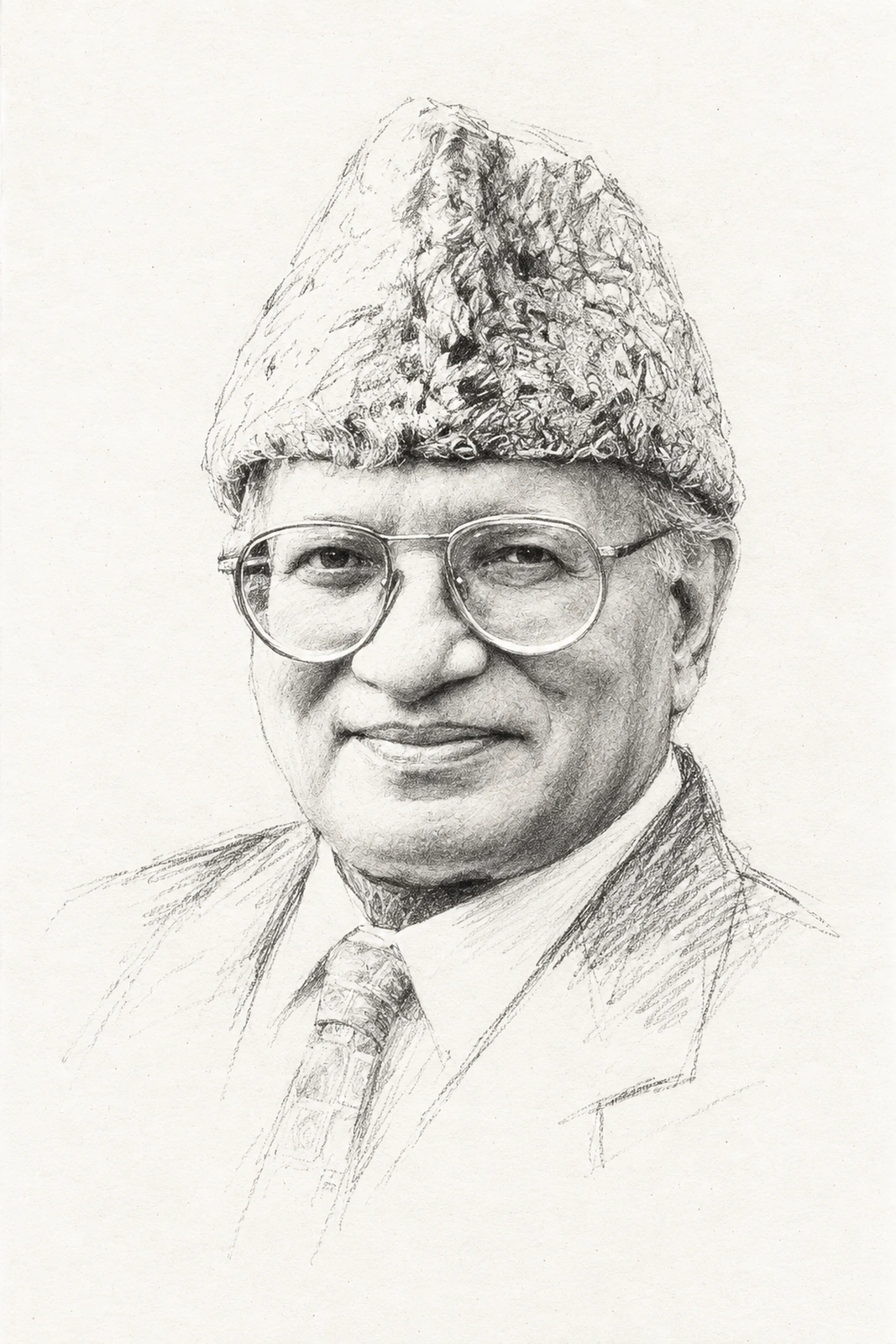
Sri Aurobindo
Paragraph references are specific to this digital edition.
Philosophy of Sri Aurobindo
Philosophy of Sri Aurobindo
If our quest of knowledge is free from pre-conceptions and dogmas, and if our search aims at discovering action that ensures the highest good of the entire world, then the study of Sri Aurobindo will be found inescapable. For such indeed was his own quest, and his voluminous works provide ample proof of that quest and they also provide to us a vast body of knowledge that he came to acquire and master and into which we can dive deeply and swim vastly for purposes of our own programme of inquiry, questioning and verification. In his The Synthesis of Yoga he has, like a scientist, given a detailed and precise exposition of the realms of knowledge in which he has travelled, covering various levels of consciousness in the individual and the universal, and in the transcendental, particularly those of the mind and the supermind, as also of the methods by which those realms can be approached, traversed and mastered. In his The Life Divine, he has fashioned in minuteness, subtlety and complexity an edifice of philosophical thought of such vastness and intricate reasoning that can provide a rational assurance of the possibility and inevitability of the evolution of the divine life on the earth and invite an earnest seeker to a long, sustained and patient inquiry at the highest levels of critical and self-critical examination. In his Savitri, he has presented a supreme poetic creation of multiple dimensions relating to a symbolic story of epical character that raises and answers the central issue of human life on the earth in which the riddle of the world is locked, and in the heart of which the secret of the highest good of humanity is shown to be discoverable and realisable. These three are his supreme works, but there are many others, more than 30, in which Sri Aurobindo has expounded his vision and work, and we can approach them for attaining the highest and the best.
Consciousness is, according to Sri Aurobindo, the greatest underlying fact; it is the universal witness; it is to that witness that the worlds and their objects appeal for their reality; we have no other evidence that they exist. It is argued that the material universe existed before life and mind made their appearances and it will survive after they have disappeared. But this argument assumes that consciousness, the universal witness, consists of the individual embodied mind born in the world. But when we extend our consciousness, we find the presence of cosmic consciousness embracing the universe and appearing as an immanent Intelligence in its entire works.
Sri Aurobindo points out that the possibility of a cosmic consciousness in humanity is coming slowly to be admitted in modern Psychology, as also the possibility of more elastic instruments of knowledge. According to Sri Aurobindo, it is only when we follow the Yogic process of quieting the mind itself that a profounder result of our self-observation becomes possible. At a certain point of this self-observation, we discover that that which observes all the activities of the mind is the mental being supporting the mind substance and mind energy. It is further found that that mental being is the upholder and source of sanctions, and without its sanction, mental operations could not exist or operate. This mental being or the mental Purusha, as it is called in Indian Philosophy, first appears as a silent witness and subsequently it is discovered to be the giver of the command, the Knower. At this stage, a question arises as to whether the entire phenomenal creation is presented to the mental being or whether it is something pre-determined by dynamic truth of Self within and only manifested on the mind surface. As Sri Aurobindo points out, in order to know that we would have to touch or to enter into cosmic state of being and consciousness in which the totality of things and their integral principle would be better manifest than to our limited mind experience.
It is here that one can discover, according to Sri Aurobindo, Overmind-Consciousness which is beyond individual mind and which is beyond even universal mind that can be found in the realm of what is called Ignorance in Indian Philosophy. According to Sri Aurobindo, Overmind-Consciousness carries in itself a first direct and masterful cognition of cosmic truth. One thing becomes clear at this level of consciousness; it is self-evident here that both the Individual and the Cosmos come from a transcendent Reality which takes form in them. But still at the level of the Overmind-Knowledge the question set out for us by the phenomenon of the universe is not solved, and three alternative views of creation are presented, and the Overmind permits each one of them to formulate itself in its own individual right and realize its own existence in cognition, in dynamic self-presentation, in substantiating experience. These three alternative views are (a) whether the building of thought, experience, the world of perceptions of the mental Person, the mind Purusha, is truly a self-expression, self-determination proceeding from some truth of his own spiritual being, a manifestation of that truth's dynamic possibilities or (b) whether it is not rather a creation or construction presented to him by Nature, by Prakriti; or else (c) whether it might be a play of a cosmic imagination, a phantasia of the Infinite imposed on the blank indeterminable of his own eternal power of existence.
According to Sri Aurobindo, Overmind gives us no final or positive solution. But there is still a higher cognition beyond the Overmind, a Supramental cognition which is the highest level of cosmic consciousness, and we are left to seek for an answer in that cognition. Sri Aurobindo describes the supramental cognition as a Supramental Truth-Consciousness and points out that it is at once the self-awareness of the Infinite and Eternal and a power of self-determination inherent in that self-awareness; the first is its foundation and status, the second is its power of being, the dynamis of its Self-Existence. In the Supermind, it is found the Supreme is not a rigid Indeterminable and all negating Absolute; an Infinite of being complete in itself in its own immutable purity of existence, and its sole power, a pure consciousness, able only to dwell on the being's changeless eternity on the immobile delight of its sheer Self-Existence, is not the whole Reality. The Infinite of Being is also be an Infinite of Power.
Sri Aurobindo speaks of triple status of the Supermind. The first poise or status of the Supermind is distinguishable from the pure unitarian Consciousness which is a timeless and spaceless concentration of the Supreme Reality. The first poise of the Supermind is an equal self-extension of the Supreme Reality, − all-comprehending, all-possessing, all-constituting. The first poise of the Supermind founds the inalienable unity of things. As the thoughts and images that occur in our mind are not separate existences to us, but forms taken by our consciousness, in somewhat similar way are all names and forms to this primary Supermind. It is the pure divine ideation and formation in the Infinite. But these names and forms are not an unreal play of mental thought but a real play of Conscious being. The names and forms are not mere Ideas; they are Real Ideas.
In the second poise of the Supermind there is an operation of apprehending consciousness, which consists of differentiation in the unifying consciousness with unequal emphasis. Apprehending consciousness is differentiating consciousness with unequal concentration; in each name and form the apprehending consciousness would realize itself as the stable Conscious-Self, the same in all; but also it would realize itself as a concentration of conscious-self following and supporting the individual play of movement and upholding its differentiation from other play of movement, − the same everywhere in soul-essence but varying in soul-form. This concentration supporting the soul-form would be the individual Divine or Jivatman as distinguished from the universal Divine or one all-constituting self. In the second poise, the One manifests the play of the One with the Many that are still one.
In the third poise, the underlying unity of supramental existence would come to be dominated by the individuals not only apprehending names and forms but even by projecting themselves into the movement of names and forms and to be in a way involved in it.
These three poises are only different ways of dealing with the truth of existence. The secondary and tertiary Supermind only develop and apply in the terms of the Divine multiplicity what the primary Supermind holds in the terms of the Divine unity. It is because in Time, the Many seem not to be eternal but to manifest out of the One and return into it as their essence that their Reality comes to be denied; but as Sri Aurobindo points out, it might equally be reasoned that the eternal recurrence of the manifestation in Time is a proof that the Divine multiplicity is an eternal fact of the Supermind beyond Time no less than the Divine unity.
According to Sri Aurobindo, Infinite consciousness holds within itself endless truth of its own self-awareness. These, in action, would appear to our cognition as aspects of its being, to our spiritual sense as powers and movements of its dynamis, to our aesthesis as instruments and formulations of its delight of existence. Creation, as Sri Aurobindo points out, would then be a self-manifestation; it would be an orderly deployment of the infinite possibility of the Infinite. But every possibility implies a truth of being beyond it, a reality in the Existence; for without that support in truth there could not be any possibility.
In the Supermind cognition, three aspects of Reality viz., an Infinite and Eternal Existence, an Infinite and Eternal Consciousness, and an Infinite and Eternal Delight of Existence, are always an inseparable Trinity, even though one can stand in front of the others and manifest its own spiritual determinates as its primal aspects or its inherent self-formulations, but all these together are original to the triune Absolute.
According to Sri Aurobindo, all deploying of powers and possibilities and their inherent consequence is held together by Supermind cognition in an intimate Oneness, it keeps them founded consciously on the original Truth and maintains the harmony of the truths they manifest. There is no imposition of imagination, no arbitrary creation, neither is there any division, fragmentation, irrecoverable contrariety or disparateness.
In the supramental consciousness, the objectivity of the objective universe attains certainty, for it is that very consciousness that puts forth the objective universe. Similarly, it is in the supramental consciousness that there is attained the certainty of the truth of the One that has inherent in it the Many, even though unmanifested, as also of the One and its relationship with the Many in various terms of identity and difference. As Sri Aurobindo points out, it is only when our human mentality lays an exclusive emphasis on one side of spiritual experience, affirms that to be the sole eternal truth and states it in the terms of our all-dividing mental logic that the necessity for mutually destructive schools of Philosophy arises. Sri Aurobindo explains the situation as follows:
“Thus, emphasising the sole truth of the Unitarian consciousness, we observe the play of the divine unity, erroneously rendered by our mentality into the terms of real difference, but, not satisfied with correcting this error of the mind by the truth of a higher principle, we assert that the play itself is an illusion. Or, emphasising the play of the One in the Many, we declare a qualified unity and regard the individual soul as a soul-form of the Supreme, but would assert the eternity of this qualified existence and deny altogether the experience of a pure consciousness in an unqualified oneness. Or, again, emphasising the play of difference, we assert that the Supreme and the human soul are eternally different and reject the validity of an experience which exceeds and seems to abolish that difference. But the position that we have now firmly taken absolves us from the necessity of these negations and exclusions: we see that there is a truth behind all these affirmations, but at the same time an excess which leads to an ill-founded negation. Affirming, as we have done, the absolute absoluteness of That, not limited by our ideas of unity, not limited by our ideas of multiplicity, affirming the unity as a basis for the manifestation of the multiplicity and the multiplicity as the basis for the return to oneness and the enjoyment of unity in the divine manifestation, we need not burden our present statement with these discussions or undertake the vain labour of enslaving to our mental distinctions and definitions the absolute freedom of the Divine Infinite.”1
It is because in the supramental consciousness, truths of various experiences are seen and comprehended in their true status and level, that supramental consciousness can be considered to be integral consciousness. A Philosophy founded on integral consciousness can rightly be termed as Integral Philosophy. What is stated above is a brief and inadequate statement of a possible starting-point of the Integral Philosophy as expounded by Sri Aurobindo. In this brief statement no attempt has been made to argue or to establish or to demolish any particular standpoint. But if we are to understand the Philosophy of Sri Aurobindo, the brief statement made here may prove to be of some initial use.
Sri Aurobindo and the Future of Humanity
I - A Synoptic Statement
Sri Aurobindo has been described as the adventure of consciousness but he can also be aptly described as the future in the process of realisation. Sri Aurobindo dreamt as a revolutionary, and every great dream that he dreamt has been realised and is being realised more and more concretely, the fruits of which can be read in the living pages of history. Of the five great dreams that he spoke in his message on the 15th of August 1947, Sri Aurobindo himself reviewed these dreams and showed how four of them had already been realised or how they were moving towards their realisation. These were relating to a free and united India, resurgence and liberation of the peoples of Asia, a world union forming the outer basis of a fairer, brighter and nobler life of all mankind, and the spiritual gift of India to the world. Of the fifth dream, which he described as a personal hope and an idea, was a step in evolution which would raise man to a higher and larger consciousness and begin the solution of the problems which have perplexed and vexed him since he first began to think and to dream of individual perfection and a perfect society. And yet this was, we might say, his key dream, since all other goals of his life were dependent on that key dream. His central aim of life was to develop in the human being and in the human race a new light which he calls supramental consciousness by the aid of which interdependence and mutuality of the individual and collective consciousness can become manifest and express themselves in lasting world harmony. At the time when he spoke of this ideal as a personal hope, he was totally engaged in bringing about the descent of the supramental consciousness on the earth, and he was at the intensest point of facing the difficulties, more formidable than in any other field of endeavour.
Sri Aurobindo has been a forerunner, visualising a great future for humanity and a pioneer in hewing a path for humanity to arrive at the next step of human evolution. As a nationalist, he ranks as an outstanding internationalist, as an internationalist, he ranks as a universal humanist, and as a leader of the human mind, he ranks as a climber to the divine supermind. As a climber to the supermind, he made himself a bridge for the descent of the supermind for the supramentalisation of the earth. Future, - a glorious future for humanity, - is the very theme of the life and work of Sri Aurobindo.
II - Sri Aurobindo and Nationalism
As is well known, Sri Aurobindo wrote blazing pages between 1906 and 1908 for Bande Mataram, which electrified the nation and defined for the whole country the meaning of Indian nationalism. In a brief but compelling statement, he provided a quintessential answer to the question as to what is nation, what is nationality and what is nationalism, and this statement would continue even for the future, as guideline of assurance of the continuous relevance of the reality of nationalism for all the national souls, including the Indian national soul. This statement can profitably be reiterated:
… there are certain essential conditions, geographical unity, a common past, a powerful common interest impelling towards unity and certain favourable political conditions which enable the impulse to realise itself in an organised government expressing the nationality and perpetuating its single and united existence. This may be provided by a part of the nation, a race or community, uniting the others under its leadership or domination, or by a united resistance to a common pressure from outside or within. A common enthusiasm coalescing with a common interest is the most powerful fosterer of nationality. We believe that the necessary elements are present in India, we believe that the time has come and that by a common resistance to a common pressure in the shape of the boycott, inspired by a common enthusiasm and ideal, that united nationality for which the whole history of India has been a preparation, will be speedily and mightily accomplished.2
Nationalism and Internationalism
There is today much contest in respect of concept of the nation and nationalism and it is even sometimes suggested that in the coming days of internationalism, globalisation and large aggregation in the formation of a possible world-unity, nations and nationalities will be overpassed and the world will enter into a post-national stage of existence. We of the present day and the coming days will need to consider these suggestions, and in determining our future course of action, Sri Aurobindo’s analysis, which he has given in his great work, “The Ideal of Human Unity”, will need to be revisited. In particular, we need to study the distinction that Sri Aurobindo made between political unity and real unity. Sri Aurobindo states that this distinction must be made because “it is of the greatest utility to a true and profound political science and involves the most important consequences. When an empire like Austria, a non-national empire, is broken to pieces, it perishes for good; there is no innate tendency to recover the outward unity, because there is no real inner oneness; there is only a politically manufactured aggregate. On the other hand, a real national unity broken up by circumstances will always preserve a tendency to recover and reassert its oneness.”3
Sri Aurobindo points out that just as the individual is an ontological Spirit, and therefore it can never be reduced to become a mere cog in a machine, even so nation is a living spirit and soul, and therefore it can never permanently be reduced to a status of a mere province of larger or even the largest aggregate. At the same time, Sri Aurobindo underlines the fact that humanity is turning today towards world unity, and the central problem for the human endeavour in this connection will be as to how the nation will adjust itself to the pressure of the forces that are today creating phenomena which are global, world-wide and planetary in character.
In this connection, Sri Aurobindo makes a distinction between national ego and national soul, corresponding to the distinction in regard to the individual life where the superficial ego is seen to be distinct from the true individual soul. The mark of egoism, according to Sri Aurobindo, is its superficiality and its ignorant attempt to arrive at superficial unity whether that ego is individual or national. The mark of the ego is its sense of division from all the rest, its pretension to be entirely independent in a poise of superiority over all the others. Corresponding to this ego, Sri Aurobindo points out, there is no real reality. There is no ontological reality, there is no independent divided entity which is superior to all the rest. The true individual, on the other hand, has indeed distinctiveness, but is not divided from the others. The true individual and the true nation-soul are characterized by mutuality, interdependence and inner oneness that manifests in diversity. Based upon this philosophical foundation, Sri Aurobindo perceives the future of nations as entities seeking and finding their inner souls by virtue of which they will remain free but mutually interdependent, and this, in turn, will provide the form of world unity that is supportive and not destructive of the nations. Sri Aurobindo speaks of a world union of free nations, each having status of equality, and all contributing through their distinctive capacities to the fund of richness and variety at the global level.
In this context, Sri Aurobindo formulates an ideal law of social development in which the truths of the individual, of the nations and of humanity are all reconciled and synthesized. This is the law as he has formulated:
Thus the law for the individual is to perfect his individuality by free development from within, but to respect and to aid and be aided by the same free development in others. His law is to harmonise his life with the life of the social aggregate and to pour himself out as a force for growth and perfection on humanity. The law for the community or nation is equally to perfect its corporate existence by a free development from within, aiding and taking full advantage of that of the individual, but to respect and to aid and be aided by the same free development of other communities and nations. Its law is to harmonise its life with that of the human aggregate and to pour itself out as a force for growth and perfection on humanity. The law for humanity is to pursue its upward evolution towards the finding and expression of the Divine in the type of mankind, taking full advantage of the free development and gains of all individuals and nations and groupings of men, to work towards the day when mankind may be really and not only ideally one divine family, but even then, when it has succeeded in unifying itself, to respect, aid and be aided by the free growth and activity of its individuals and constituent aggregates.4
Globalisation and the Concept of World-Union
We speak today of globalisation, with mixed feelings of welcome and suspicion. On the one hand, it evokes in us a noble sentiment of “one earth” and of humankind as one race born of one common Mother Earth, and it raises in us a dream of the ideal of human unity and of universal fraternity. On the other hand, it is seen as a phenomenon of a growing network spreading over the whole globe in which the old forces of competition and resultant asymmetrical relations constitute the central forum of action and reaction. Sri Aurobindo had foreseen in his “The Ideal of Humanity” how both these features of the contemporary world movement would come to characterise the contemporary global situation. Sri Aurobindo had also foreseen the possible perils of the increasing sweep of the turn towards the world unity, and had indicated the necessity of avoiding tendencies towards tyrannical mechanisation and dehumanisation. His vision of the future, therefore, advocates the growth of global consciousness which can effectively combat shortsighted visions and appetites of egoism in individual life and in collective life. In fact, Sri Aurobindo has devoted a major portion of his writings that can provide luminous guidance to the future development of humanity in realising human unity that would be free from the dangers that are likely to develop and which are likely to frustrate the highest possibilities of human fulfilment, unless a deliberate effort is made by humanity to bring about a radical change of consciousness. For this guidance, we need to study not only “The Ideal of Human Unity” but also “The Human Cycle”, “War and Self-determination”, and also “The Life Divine”.
III - Evolutionary Crisis
Sri Aurobindo considers the acute problems and difficulties of the present stage as an evolutionary crisis in which human will is called upon to make a free choice. This is the crisis where evolution of human Reason is, on the one hand, increasingly compelled to yield to the pressure that impels the creation of a life of universalised rule of economic barbarism, while on the other hand, it is increasingly obliged also to exercise its role in lifting up humanity to create a life of unity, mutuality and harmony born of a deeper and wider truth of our being. And yet there is also a possibility that the human reason might continue to spin itself into larger or narrower circles propounding great dreams but never fulfilling them. The question, therefore, is whether the human being will choose to remain arrested in some kind of intermediary typal perfection like earlier animal kinds, or whether he will consent to rise to a higher level of evolution. The necessity to make the choice has created a state of crisis, since the choice to pursue a higher level is not only difficult but appears at first sight to be almost impossible. Sri Aurobindo describes this crisis as follows:
At present mankind is undergoing an evolutionary crisis in which is concealed a choice of its destiny; for a stage has been reached in which the human mind has achieved in certain directions an enormous development while in others it stands arrested and bewildered and can no longer find its way. A structure of the external life has been raised up by man's ever-active mind and life-will, a structure of an unmanageable hugeness and complexity, for the service of his mental, vital, physical claims and urges, a complex political, social, administrative, economic, cultural machinery, an organised collective means for his intellectual, sensational, aesthetic and material satisfaction. Man has created a system of civilization which has become too big for his limited mental capacity and understanding and his still more limited spiritual and moral capacity to utilize and manage, a too dangerous servant of his blundering ego and its appetites. … A greater whole-being, whole-knowledge, whole-power is needed to weld all into a greater unity of whole-life.5
Importance of the UNO
As an aid to the higher choice that can be made by humanity, Sri Aurobindo has welcomed the increasing force of internationalism, and in that context, the formation of the United Nations Organisation as a force that now stands in the forefront of the world and struggles towards some kind of permanence and success in the great far reaching endeavour on which depends the world’s future. Emphasising the importance of United Nations Organisation, Sri Aurobindo wrote in 1949 in a postscript chapter to his The Ideal of Human Unity the following:
This is the capital event, the crucial and decisive outcome of the world-wide tendencies which Nature has set in motion for her destined purpose. In spite of the constant shortcomings of human effort and its stumbling mentality, in spite of adverse possibilities that may baulk or delay for a time the success of this great adventure, it is in this event that lies the determination of what must be.6
Following the idea of the United Nations Organisation, Sri Aurobindo foresees the development of a World-State without exclusions and on a principle of equality into which consideration of size and strength would not enter. Indeed, Sri Aurobindo raises the question of the freedom of the individual and of the nations in the context of emergence of the World-State. And in this context, Sri Aurobindo considers it necessary that a profounder spiritual ideal for the individual and for the nation and the world should emerge and vivify the world organisation in such a way that the spirit of the individual and the spirit of the nation, the freedom of the individual and the freedom of the nation are not only maintained but respected and perfected. Sri Aurobindo, therefore, speaks of a union of free people which could open the prospect of a sound and lasting order.
Spiritual Religion of Humanity
In this context, the emergence of religion of humanity is of a greater significance, although he finds its present intellectual form hardly sufficient. Sri Aurobindo, therefore, advocates the emergence of a spiritual religion of humanity and explains that he does not mean by it what is called universal religion, a system, a creed of intellectual principle and dogma and outward rite. For Sri Aurobindo emphasises the growth of the realisation that there is a secret spirit, a divine Reality, in which we are one, that humanity is its highest representation in the world, that the human being is the means by which it will progressively reveal itself here. There must be, according to Sri Aurobindo, the realisation by the individual that only in the life of his fellowmen is his own life complete. There must be, he adds, the realisation by the race that only on the free and fullness of the individual can its own perfection and happiness be founded. Finally, Sri Aurobindo points out the need of the discipline and the way by which each individual can be developed in accordance with his or her line of development towards integrality and all-embracing perfection. In defining the spiritual religion of humanity in which the ideals of liberty, equality and fraternity can be harmonised, Sri Aurobindo states:
The union of liberty and equality can only be achieved by the power of human brotherhood and it cannot be founded on anything else. But brotherhood exists only in the soul and by the soul; it can exist by nothing else. For this brotherhood is not a matter either of physical kinship or of vital association or of intellectual agreement. When the soul claims freedom, it is the freedom of its self-development, the self-development of the divine in man in all his being. When it claims equality, what it is claiming is that freedom equally for all and the recognition of the same soul, the same godhead in all human beings. When it strives for brotherhood, it is founding that equal freedom of self-development on a common aim, a common life, a unity of mind and feeling founded upon the recognition of this inner spiritual unity. These three things are in fact the nature of the soul; for freedom, equality, unity are the eternal attributes of the Spirit. It is the practical recognition of this truth, it is the awakening of the soul in man and the attempt to get him to live from his soul and not from his ego which is the inner meaning of religion, and it is that to which the religion of humanity also must arrive before it can fulfil in the life of the race.7
IV - Evolution, Supermind and the Future
As an aid to the solution that Sri Aurobindo has presented, Sri Aurobindo has provided a voluminous study of human consciousness, presenting therein the results of his herculean labour and explorations and research in yoga to which he had turned in 1901, not in search of the usual aim of personal salvation but for the sake of development of that power which yoga can develop for its utilisation in the task of attainment of Indian freedom, and subsequently, for the attainment of human solidarity and most beneficial fulfilment of the ideals for which humanity has aspired right from the earliest preoccupation in its awakened thoughts. Without this yogic endeavour and without the knowledge and the power that have been generated by it, the glimpses of which can be had in Sri Aurobindo’s writings, particularly in his The Synthesis of Yoga and his epic Savitri, Sri Aurobindo’s vision of the future of humanity might have seemed a philosopher’s speculations like those of the eminent philosophers of evolution, such as Alexander, Whitehead, Teilhard de Chardin, who have studied and critically examined the scientific theory of evolution and concluded that the future of humanity lies in the direction of the emergence of the deity or towards the progressive ingression and incorporation into the cosmic series of the eternal divine order, or else towards an omega point which can be described as a collective divinity.
The distinctive feature of Sri Aurobindo’s philosophy of evolution is that it is not speculative and that its premises and conclusions are tested on the anvil of experimentation. Sri Aurobindo pointed out that the animal is a living laboratory in which Nature has worked out man and that man himself is a thinking and living laboratory in whom and with whose conscious cooperation Nature wills to work out the divine superman. In pursuance of this hypothesis, Sri Aurobindo made an experiment upon his entire integral being, using it as an evolutionary laboratory, so as to evolve and manifest higher and higher grades of consciousness reaching up to the supermind so as to supramentalise the human body to the farthest extent possible.
In 1949, Sri Aurobindo wrote a series of articles which can be considered to be his manifesto for the future of humanity. In these articles, which have been published in a book entitled Supramental Manifestation Upon Earth, Sri Aurobinodo has spoken of the relationship between supermind and humanity, of the mind of light that will seize humanity, and even of the total transformation of human life so as to arrive at the birth of a new humanity or super-humanity.
Indeed, The Mother, to whom Sri Aurobindo had assigned the task of continuing his work even after his departure from his body, declared in 1956 that the supermind had descended, and we have in 13 volumes of Mother’s Agenda, a continuous account of the way in which the supermind that had descended was working out farther consequences for humanity and for the mutation of the human species. Indeed, we have in these 13 volumes a journal of a scientist in which are recorded meticulously both macroscopic and microscopic events relating to humanity and its future. There is here all the help that one can wish for us to understand and feel the way in which Sri Aurobindo has been contributing to the humanity’s future.
According to Sri Aurobindo, human nature can be changed and it can be changed by a method of integral yoga, having its basis in verifiable objective knowledge of the supramental consciousness and laws of the working of the supermind in the world and in the evolutionary processes as a result of which humanity has evolved so far and stands today at the threshold of its own mutation. A generalisation in humanity of the imperative necessity of spiritual transformation, if humanity is to survive and arrive at its fulfilment, is a precondition.
Development of the integral yoga that aims at supramental transformation is rightly regarded as Sri Aurobindo’s latest gift for the future of humanity. It has, however, to be noted that the task of supramental transformation is extremely difficult, although, according to Sri Aurobindo, the time has come for the generalisation of yoga in humanity.
Whether humanity will respond to the need of this new turn will depend upon its increasing perception of the necessity of spiritual transformation. Sri Aurobindo points out that a change from the vital and mental to the spiritual order of life must necessarily be accomplished in the individual and in a greater number of individuals before it can come to have an effective hold upon community. What is necessary is that the common human mind begins to admit the ideas proper to the higher order that is in the end to be, and the heart of man begins to be stirred by aspirations born of these ideas. Sri Aurobindo concludes that if this condition is fulfilled then there is hope of some advance in the not distant future.
Inevitability of the Spiritual Solution
Despite the difficulties and critical trials through which humanity may be required to pass, Sri Aurobindo underlines the need of understanding the inevitability of the spiritual solution. Indeed, in presenting this solution, Sri Aurobindo is aware that it may be objected that it puts off the consummation of a better human society to a far off date in the future evolution of the race. But Sri Aurobindo affirms forcefully:
… if this is not the solution, then there is no solution; if this is not the way, then there is no way for the human kind. Then the terrestrial evolution must pass beyond man as it has passed beyond the animal and a greater race must come that will be capable of the spiritual change, a form of life must be born that is nearer to the divine. After all there is no logical necessity for the conclusion that the change cannot begin at all because its perfection is not immediately possible. A decisive turn of mankind to the spiritual ideal, the beginning of a constant ascent and guidance towards the heights may not be altogether impossible, even if the summits are attainable at first only by the pioneer few and far-off to the tread of the race. And that beginning may mean the descent of an influence that will alter at once the whole life of mankind in its orientation and enlarge for ever, as did the development of his reason and more than any development of the reason, its potentialities and all its structure.8
According to Sri Aurobindo, the world is a mutable world and uncertainties and dangers cannot be avoided. Much will depend, according to Sri Aurobindo, on the intellectual and moral capacity of humanity to carry out what is evidently the one thing needful, namely, a concentrated effort at the spiritual change that can sustain a global and untied human family.
V
One question that we in India can ask for guidance is as to what Sri Aurobindo counsels us in respect of the tasks that India should accomplish in the light of the needs of the future of humanity. In answer, we may point to the three tasks that Sri Aurobindo has put forward in his great work The Renaissance in India:
The recovery of the old spiritual knowledge and experience in all its splendour, depth and fullness is its first, most essential work; the flowing of this spirituality into new forms of philosophy, literature, art, science and critical knowledge is the second; an original dealing with modern problems in the light of Indian spirit and the endeavour to formulate a greater synthesis of a spiritualised society is the third and most difficult. Its success on these three lines will be the measure of its help to the future of humanity.9
Sri Aurobindo’s Philosophy of Nationalism, Internationalism and Contemporary Crisis
Sri Aurobindo’s Philosophy of Nationalism, Internationalism and Contemporary Crisis-I
The central theme in Sri Aurobindo [1872-1950] is that of the contemporary evolutionary crisis of humanity, of the perception that man is a transitional being and that he is a thinking and living laboratory in whom and with whose conscious co-operation Nature wills to work out the superman.
Sri Aurobindo’s life was devoted entirely as a field of laboratory in which this evolution could be worked out. In this task, Madame Mirra Alfassa (1878-1973), who is known in India and the world as The Mother, came from France to India and collaborated in developing the integral yoga of Sri Aurobindo. Mother’s own experiences and realisations leading up to the supramental transformation and manifestation on the earth are to be found in 13 volumes of L’Agenda de Mère.
Sri Aurobindo was a supreme poet, and his most famous poetical work, Savitri, presents a new kind of poetry, which has been termed as overhead poetry. This is an epic, the longest in English literature (about 24000 lines), prophetic vision of the future. Sri Aurobindo has written a number of other short and long poems, among which Ilion (extending over 100 pages) is an innovative experimentation in an epic in quantitative hexameters in the history of English literature. Sri Aurobindo has also written five dramas, The Perseus the Deliverer, Rodogune, Viziers of Bassora, Vasavdutta and Eric. He has also translated two plays of Kalidasa from the original Sanskrit into English. Sri Aurobindo also wrote “The Future Poetry” which is an outstanding interpretation of the meaning of poetry, of the history of English poetry, and the possibilities of that poetry to turn into the higher vehicle of “mantric” poetry.
Sri Aurobindo was also in the early part of his life a prominent nationalist leader, and he has rightly been called the Prophet of Indian Nationalism. Sri Aurobindo had deeply studied and loved India. He had made original research in the Veda, Upanishads and the Gita, three greatest records of knowledge which have served as the foundations of Indian culture. Apart from his profound knowledge of Sanskrit, he had mastery over Greek and Latin, and he had made a thorough study of Western history. He has, therefore, been rightly regarded as a great synthesiser of the East and the West, and his message for human unity is of direct relevance to the contemporary effort that is now sweeping all over the world to bridge the past, present and the future and to bridge the minds and hearts of the people of the entire globe.
Sri Aurobindo’s Philosophy of Nationalism, Internationalism and Contemporary Crisis-II
A most luminous and revelatory exposition of philosophy of nationalism and of Indian nationalism is to be found in the writings of Sri Aurobindo. In fact, Sri Aurobindo’s own life is a flaming example of Indian nationalism, not only in its uniqueness but also in its universality. If we study the history of Indian nationalism, we shall find that he stands out as the most heroic nationalist who formulated in the most inspiring terms the true aim of Indian nationalism, during the early period of nationalist struggle and accomplished the task of fixing it in the national consciousness within a short period of two years (1906-8) through blazing pages of the Bande Mataram. This miracle can be regarded as an unparalleled achievement in the entire world history of nationalism.
The greatest thing done in those years was the creation of a new spirit in the country, a new electric current that awakened the people to the true meaning of nationalism and filled them with enthusiasm that created waves after waves all over the country. Repression and depression could not silence the stir of this enthusiasm. After each wave of repression and depression, it renewed the thread of the life of movement for liberation and kept it recognisably one throughout nearly fifty years of its struggle. The cry of Bande Mataram rang on all sides, and people felt it glorious to be alive and dare and act together and hope. The old apathy and timidity was broken and a force was created which nothing could destroy, and it carried India to the beginning of a complete victory.
Sri Aurobindo maintained that the contention that unity in race, religion or language is essential to nationality will not bear examination. He acknowledged that such elements of unity are very helpful to the growth of nationality, but they are not essential and will not even of themselves assure its growth. Referring to the example of the Roman Empire, he pointed out that even though it created a common language, a common religion and life, and did its best to crush out racial diversities under the heavy weight of its uniform system, failed to make one great nation.
What, then, Sri Aurobindo asked, are the essential elements of nationality? And he answered:
We answer that there are certain essential conditions, geographical unity, a common past, a powerful common interest impelling towards unity and certain favourable political conditions which enable the impulse to realise itself in an organised government expressing the nationality and perpetuating its single and united existence. This may be provided by a part of the nation, a race or community, uniting the others under its leadership or domination, or by a united resistance to a common pressure from outside or within. A common enthusiasm coalescing with a common interest is the most powerful fosterer of nationality. We believe that the necessary elements are present in India, we believe that the time has come and that by a common resistance to a common pressure in the shape of the boycott, inspired by a common enthusiasm and ideal, that united nationality for which the whole history of India has been a preparation, will be speedily and mightily accomplished.10
Philosophy of Indian nationalism is also the philosophy of patriotism. In view of this philosophy, patriotism is not limited to the love of the land of the country, janmabhumi, but it is also love for the people of the land. This philosophy goes even further and inspires love of the values of the culture that have been nourished and promoted through a long history of five thousand years and more. And beyond the values of this great culture, patriotism is in its heart illuminated worship of the smiling and beneficent and strong and powerful Shakti, which we call Mother India, Bharat Mata. As Sri Aurobindo wrote, a nation is not a piece of earth, nor a figure of spirit, nor a fiction of mind, it is a mighty Shakti composed of the Shaktis of all the millions of units that make up the nation. He further pointed out that the nation is veritably a soul, which is immortal and even when geographically fragmented or divided, it has the power to reunite itself as one unity in diversity.
In an inspired article (March 11, 1908 of Bande Mataram) Sri Aurobindo gave expression to the voices of the martyrs from their cells which cry out to us and give us an imperishable message which we can incorporate in our studies that aim at value-oriented education:
Work, but aspire, so that your work may be true to the call you have heard and which we have obeyed; labour for great things first and the small will come of themselves. Cherish the might of the spirit, the nobility of the ideal, the grandeur of the dream; the spirit will create the material it needs, the ideal will bring the real to its body and self-expression, the dream is the stuff out of which the waking world will be created. It was the strength of the spirit which stood with us before the alien tribunal, it was the force of the ideal which led us to the altar of sacrifice, it is the splendour of the dream which supports us through the dreary months and years of our martyrdom. For these are the truth and the divinity within the movement.11
Sri Aurobindo’s Philosophy of Nationalism, Internationalism and Contemporary Crisis-III
Sri Aurobindo wrote a series of articles on education in the Karma Yogin during 1909-10 under the title “A System of National Education” and “The National Value of Art”.
In “A National System of Education”, Sri Aurobindo points out that the question is not between modernism and antiquity, but between an imported civilisation and the greater possibilities of the Indian mind and nature, not between the present and the past, but between the present and the future. He pointed out that “the living spirit of the demand for national education no more requires a return to the astronomy and mathematics of Bhaskara or the forms of the system of Nalanda than the living spirit of Swadheshi, a return from railway and motor traction to the ancient chariot and the bullock-cart.”12 He, therefore, spoke not of a return to the 5th century but an initiation of the centuries to come, not a reversion but a break forward away from a present artificial falsity to India’s own greater innate potentialities, which are demanded by the soul of India.
The major question, he pointed out, is not merely what science we learn, but what we shall do with our science and how, too, acquiring the scientific mind and recovering the habit of scientific discovery, we shall relate it to other powers of the human mind and scientific knowledge to other knowledge more intimate to other and not less light-giving and power-giving parts of our intelligence and nature. Again, he pointed out that the question is not what language, Sanskrit or another, should be acquired by whatever method is most natural, efficient and stimulating to the mind, but the vital question is how we are to learn and make use of Sanskrit and the indigenous languages so as to get the heart and intimate sense of our own culture and establish a vivid continuity between the still living power of our past and the yet uncreated power of our future, and how we are to learn and use English or any other foreign tongue so as to know helpfully the life, ideas and culture of other countries and establish our right relations with the world around us. He argued that the aim and principle of a true national education is not to ignore modern truth and knowledge, but to take our foundation on India’s own beings, own mind, and own spirit.
Considering that India has seen always in the human being a soul, a portion of the divinity enwrapped in the mind and body, a conscious manifestation in Nature of the universal self and spirit, he concluded that the one central object of the national system of education should be the growth of the soul and its powers and possibilities as also the preservation, strengthening and enrichment of the nation-soul and the normative needs of its ascending movements. Not limited to these two, Sri Aurobindo put forth in its aim also the raising of both the individual soul and the national soul into the powers of the life and the ascending mind and the soul of humanity. He added, “at no time will it lose sight of man’s highest object, the awakening and development of his spiritual being.”13
There are, according to Sri Aurobindo, three instruments of the teacher: instruction, example and influence. The good teacher will seek to awaken much more than to instruct; he will aim at the growth of the faculties and the experiences by a natural process and free expansion. He will not impose his opinions on the passive acceptance of the receptive mind; he will throw in only what is productive and sure as a seed, which will grow under the benign fostering within. He will know that the example is more powerful than instruction. Actually, the example is not that of the outward acts but of the inner motivation of life and the inner states and inner activities. Finally, he will also acknowledge that influence is more important than example. For influence proceeds from the power or contact of the teacher with his pupil, from the nearness of his soul to the soul of another, infusing into the pupil, even though in silence, all that which the teacher himself is or possesses. The good teacher is himself a constant student. He is a child leading children, and a light kindling other lights, a vessel and a channel.
Sri Aurobindo’s concept of integral education finds its full relevance in the context of what Sri Aurobindo has called the evolutionary crisis, a crisis that occurs in a species at a time when some kind of mutation is imminent.
Integral education would not only aim at the integral development of personality, but it would also embrace all knowledge in its scope. It would pursue physical and psychical sciences, not merely to know the world and Nature in her processes and to use them for material human needs, but to know through them the Spirit in the world and the ways of the Spirit in its appearances. It would study ethics in order, not only to search for the good as the mind sees it, but also to perceive the supra-ethical Good. Similarly, it would pursue Art not merely to present images of the subjective and the objective world, but to see them with significant and creative vision that goes behind their appearances and to reveal the supra-rational Truth and Beauty. It would encourage the study of humanities, not in order to foster a society as a background for a few luminous spiritual figures so that the many necessarily remain for ever on the lower ranges of life, but to inspire the regeneration of the total life of the earth and to encourage voluntary optimism for that regeneration in spite of all previous failures. Finally, it would encourage unity of knowledge and harmony of knowledge, and it would strive to foster the spirit of universality and oneness.
An important characteristic of integral education is its insistence on simultaneous development of Knowledge, Will, Harmony and Skill as also various parts of the being to the extent possible from the earliest stages of education. And since each individual child is unique in the composition of its qualities and characteristics, its capacities and propensities, integral education in its practice tends to become increasingly individualised. Again, for this very reason, the methods of education become increasingly dynamic, involving active participation of the child in its own growth.
Sri Aurobindo’s Philosophy of Nationalism, Internationalism and Contemporary Crisis-IV
The theme of Indian nationalism occupied Sri Aurobindo throughout his life, and he wrote on this subject even when he had left in 1910 active participation in the political activity on account of his total occupation with the future of India and the world and with the integral yoga that he was developing and perfecting as an aid to the solution of the evolutionary crisis of humanity. This subject was developed by him in four of his books that he wrote during 1914 and 1921, namely, The Life Divine, The Foundations of Indian Culture, The Ideal of Human Unity and The Human Cycle. In these books, we find illuminating analysis and exposition of what may be called the philosophical foundations of nationalism and internationalism. These foundations, as we discern them in Sri Aurobindo’s writings, are those relating to the philosophy of the individual and the aggregate, philosophy of the national aggregate and national unity, philosophy of nationality and nation-state, and philosophy of nationalism, internationalism, and universality.
There is today much contest in respect of the concept of nation and nationalism, and it is even sometimes suggested that in the coming days of internationalism, globalisation and larger aggregation in the formation of a possible world union, nations and nationalities will be overpassed and the world will enter into post-national stage of existence. This debate and conclusion need to be considered seriously in the light of the real truth of the philosophical foundations of nationalism, Indian nationalism and its possible future.
Sri Aurobindo makes an important distinction between political unity and real unity. In this connection, he refers to the fact that there was in the ancient cycle of development a wide pre-national empire building, which is in contrast to modern cycle of nation-building. In other words, empires have been created in the past, indicating the tendency to overshoot nation-units even before they attain any maturity or stability, and that nation is not a final unit of aggregation. But at the same time, Sri Aurobindo points out that although empires have exhibited political unity, they have not shown to have in them the force of real unity. He states:
Empires exist, but they are as yet only political and not real units; they have no life from within and owe their continuance to a force imposed on their constituent elements or else to a political convenience felt or acquiesced in by the constituents and favoured by the world outside. …If the political convenience of an empire of this kind ceases, if the constituent elements no longer acquiesce and are drawn more powerfully by a centrifugal force, if at the same time the world outside no longer favours the combination, then force alone remains as the one agent of an artificial unity.14
Empires are, according to Sri Aurobindo, perishable political unities, in contrast to the nation, a real unity, which is immortal and which will remain so until a greater living unit can be found into which nation idea can harmonise in obedience to a superior attraction.
Again, dwelling upon the distinction between political unity and real unity, Sri Aurobindo states that this distinction must be made because “it is of the greatest utility to a true and profound political science and involves the most important consequences. When an empire like Austria, a non-national empire, is broken to pieces, it perishes for good; there is no innate tendency to recover the outward unity, because there is no real inner oneness; there is only a politically manufactured aggregate. On the other hand, a real national unity broken up by circumstances will always preserve a tendency to recover and reassert its oneness.”15
Sri Aurobindo has given the example of the Greek Empire which has gone the way of all empires, but the Greek nation after many centuries of political non-existence, again possesses its separate body, because it has preserved its separate ego and therefore really existed under the covering rule of the Turk. Similar is the example of Italy and the example of Germany. In all these cases, as was in many others, the unification of Saxon England, medieval France, the formation of the United States of America, Sri Aurobindo points out that there was a real unity, a psychological distinct unit which tended at first ignorantly by the subconscious necessity of its being and afterwards with a sudden or gradual awakening to the sense of political oneness, towards an inevitable external unification. It is, Sri Aurobindo concludes, a distinct group-soul which is driven by inward necessity and uses outward circumstances to constitute for itself an organized body.
Just as the individual is an ontological Spirit, and therefore it can never be reduced to become a mere cog in a machine, even so nation is a living spirit and soul, and therefore it can never permanently be reduced to a status of a mere province of larger and largest aggregates. At the same time, Sri Aurobindo underlines the fact that humanity is turning today towards world unity, and the central problem for the human endeavour in this connection will be as to how the nation will adjust itself to the pressure of the forces that are today creating phenomena which are global, world-wide and planetary in character.
In this connection, Sri Aurobindo makes a distinction between national ego and national soul, corresponding to the distinction in regard to the individual life where the superficial ego is seen to be distinct from the true individual soul. The mark of egoism, according to Sri Aurobindo, is its superficiality and its ignorant attempt to arrive at superficial unity whether that ego is individual or national. The mark of the ego is its sense of division from all the rest, its pretension to be entirely independent in a poise of superiority over all the others. Corresponding to this ego, Sri Aurobindo points out, there is no real reality. There is no ontological superficial reality, there is no independent divided entity which is superior to all the rest. The true individual, on the other hand, has indeed distinctiveness, but is not divided from the others. The true individual and the true nation-soul are characterized by mutuality, interdependence and inner oneness that manifests in diversity. Based upon this philosophical foundation, Sri Aurobindo perceives the future of nations as entities seeking and finding their inner souls by virtue of which they will remain free but mutually interdependent, and this, in turn, will provide the form of world unity that is supportive and not destructive of the nations. Sri Aurobindo speaks of a world union of free nations, each having status of equality, and all contributing through their distinctive capacities to the fund of richness and variety at the global level.
Sri Aurobindo formulates therefore an ideal law of social development in which the truths of the individual, of the nations and of humanity are all reconciled and synthesized. This is the law as he has formulated:
Thus the law for the individual is to perfect his individuality by free development from within, but to respect and to aid and be aided by the same free development in others. His law is to harmonise his life with the life of the social aggregate and to pour himself out as a force for growth and perfection on humanity. The law for the community or nation is equally to perfect its corporate existence by a free development from within, aiding and taking full advantage of that of the individual, but to respect and to aid and be aided by the same free development of other communities and nations. Its law is to harmonise its life with that of the human aggregate and to pour itself out as a force for growth and perfection on humanity. The law for humanity is to pursue its upward evolution towards the finding and expression of the Divine in the type of mankind, taking full advantage of the free development and gains of all individuals and nations and groupings of men, to work towards the day when mankind may be really and not only ideally one divine family, but even then, when it has succeeded in unifying itself, to respect, aid and be aided by the free growth and activity of its individuals and constituent aggregates.16
Sri Aurobindo’s Philosophy of Nationalism, Internationalism and Contemporary Crisis-V
Sri Aurobindo acknowledges that this ideal law has never become operative in the imperfect states through which humankind has so far travelled, and it may be very long before that law can be attained. But Sri Aurobindo maintains that the present is the stage of what he calls the subjective age of humanity, when knowledge is increasing and diffusing itself with an unprecedented rapidity, when individuals, societies and nations are attempting to discover their potentialities and their inner subjective states and selves, when capacity is generating itself, when men and nations are drawn close together, and this is the time when we can justifiably develop a conscious hope to arrive at a conscious discovery of that ideal law of social development and its conscious application. He finds that the present moment is opportune for an upward march, particularly when people of the entire globe are getting united, although partially and in an inextricable entanglement of chaotic unity. For this is the moment where we are being compelled to know each other and impelled to know more profoundly ourselves, humankind, and the world, and when the idea of self-realisation for ourselves and nations is coming consciously to the upper and outer surface. This is the time, according to Sri Aurobindo, for the human being in particular to know himself, to find the ideal law of his being and his development and to hold that law before him and to find out gradually the way by which it can become a more and more moulding principle of the individual and social existence.
At the same time, Sri Aurobindo regards the present moment of human history as a moment of acute crisis. For the process of self-realisation, both for the individual and the collectivist is always difficult and it is marked by an acute struggle of groping in the darkness and in the welter of conflicts and uncertain alternatives. In his analysis of the psychology of the process of maturation of self-finding, Sri Aurobindo examines the psychology of barbarism, philistinism, and of the rational, ethical and aesthetic culture, and examines also the means by which the society manages to arrive at some kind of cohesion at different stages of development, namely, through symbolism and later by typal thought, conventional thought and, still later, by subjective self-awakening both of the individual and collectivity. In the subjective age, which is marked by preponderance of Reason as also by a revolt against conventions, customs and traditions, Sri Aurobindo perceives the possibility of a true flowering of the inner spirit, which can harmonise the individual good and the social good and in the context of which a form of world unity could be invented whereby human beings of the entire globe can live together in durable peace and progressive harmony as in one united family. In this context, Sri Aurobindo finds those three great ideals which were put forward explicitly and forcefully during the French Revolution to be most significant, namely the ideals of liberty, equality and fraternity. He finds that these three ideals served the purpose of motivating the great experiments that humankind conducted during the curve of the Rational Age, the Age which was ushered in by Renaissance in Europe, the age through which humankind is at present passing, and which has now reached a kind of an end and which has the possibility of opening the gates of a beginning of a new age, which he calls the Spiritual Age. It is when Reason explores its possibilities and brings into operation its capabilities that the human race can arrive at a critical point of its self-realisation and self-perfection. For it is then, as it has now become clearer, that it is found that the role of Reason is not to govern but to become a medium and an intermediate power that can lift human life from the levels of blind impulse to the realms of light of the Spirit. For the real governor can be only that light and knowledge, which is integral and which unites the individual with the universal without requiring the individual to be abolished and which shows both to the individual and to be universal that their source is in the same transcendental that is the foundation of oneness and unity of existence.
The age of Reason, according to Sri Aurobindo, has shown that when the ideal of liberty is emphasized and sought to be implemented, the ideal of equality is required to be sacrificed; and when the ideal of equality is emphasized and sought to be implemented, the ideal of liberty is required to be strangulated. Towards the end of the Age of Reason, there emerges therefore the ideal of anarchism and the question arises whether anarchist thought can any more successfully find a satisfying social principle. Sri Aurobindo points out that the anarchist thought, although it is not yet formed in its assured form, cannot develop any appropriate basis or form of harmony as long as it relies on the powers of the intellect. He points out that a rational satisfaction cannot give to humanity safety from the pull from below nor deliver it from the attraction from above. It is true that the more the outer law is replaced by the inner law, the nearer will man be to his natural perfection, and the perfect State must be one in which governmental compulsion is abolished and man is able to live with his fellowmen by free agreement and cooperation. But this can truly be secured by a power greater than that of reason. According to Sri Aurobindo, it is not intellectual anarchism but a spiritual or spiritualised anarchism that will bring us nearer to the solution or at least touch something of it from afar.
According to Sri Aurobindo, the present stage of human development can become a gate for the arrival of a spiritual age in which the ideal of brotherhood can come to be practised and it is only in that condition that a new form of human unity can be forged in which the individual and the collectivity, even on a global scale or organization, can come to be harmonized. In the meantime, however, the transition from the end of the curve of Reason to the advent and progress of the spiritual age is a stage of crisis, which needs to be examined in a greater depth, since it is the crisis which has become accentuated today by the latest developments with which we are besieged today.
Sri Aurobindo’s Philosophy of Nationalism, Internationalism and Contemporary Crisis-VI
Sri Aurobindo considers the present stage of crisis as an evolutionary crisis in which human will is called upon to make a free choice. This is the crisis where evolution of human Reason is increasingly compelled to yield to the pressure that impels the creation of a life of universalised rule of economic barbarism. At the same time, Reason is increasingly obliged also to exercise its role in lifting up humanity to create a life of unity, mutuality and harmony born of a deeper and wider truth of our being. In fact, there are three forces that work today upon humanity. On the one hand, there is a force that is striving to assert the barbarism within the civilized man. For it is possible to utilize the present scientific and technical knowledge to create an order of existence in which physical and vital wants of the human being can greatly, if not fully, be satisfied, and this order of existence can be maintained by mechanical devices and application of the power of machines that can imprison the human spirit. There is also a second alternative in which human reason can continue to spin into larger or narrower circles propounding great dreams but never fulfilling them. And there is a third alternative in which the human being consents to rise to the higher levels than those of the Reason and consents to be spiritualised. The question, therefore, is whether the human being will choose to remain arrested in some kind of intermediary typal perfection like earlier animal kinds, or whether he will consent to rise to a higher level of evolution. The necessity to make the choice has created a state of a crisis, since the choice to pursue a higher level is not only difficult but appears at first sight to be almost impossible. Sri Aurobindo describes this crisis as follows:
At present mankind is undergoing an evolutionary crisis in which is concealed a choice of its destiny; for a stage has been reached in which the human mind has achieved in certain directions an enormous development while in others it stands arrested and bewildered and can no longer find its way. A structure of the external life has been raised up by man's ever-active mind and life-will, a structure of an unmanageable hugeness and complexity, for the service of his mental, vital, physical claims and urges, a complex political, social, administrative, economic, cultural machinery, an organised collective means for his intellectual, sensational, aesthetic and material satisfaction. Man has created a system of civilization which has become too big for his limited mental capacity and understanding and his still more limited spiritual and moral capacity to utilize and manage, a too dangerous servant of his blundering ego and its appetites. … A greater whole-being, whole-knowledge, whole-power is needed to weld all into a greater unity of whole-life.17
In his book The Ideal of Human Unity Sri Aurobindo refers to two important developments which indicate a prospect of the coming change in humanity. The first of these is internationalism, the idea of humanity as a single race of beings with a common life and a common general interest. Sri Aurobindo identifies those tendencies in human life at present which are favourable to the progress of the international idea.
But internationalism, according to Sri Aurobindo, is not enough; there is a need of a religion of humanity or an equivalent sentiment which recognises a single soul in humanity of which each human being and each people is an incarnation and soul form. This religion has already expressed itself in the philosophy of humanitarianism, which itself is a most prominent emotional result of the Age of Reason.
Sri Aurobindo, however, contends that the religion of humanity must be a spiritual religion of humanity, not an institutional religion, not an intellectual religion, not a sentimental religion. That humanity is pressing forward towards this spiritual religion of humanity is of great significance for all of us who are keen to find the solution to the contemporary crisis. And it is here that Sri Aurobindo’s perception of the significance of the contemporary crisis and his philosophy and yoga of supramental transformation come to us as the needed light and guidance.
Sri Aurobindo’s Philosophy of Nationalism, Internationalism and Contemporary Crisis-VII
For an adequate understanding of the Yoga of supramental manifestation, which is expounded in his Synthesis of Yoga, we need to study also three big volumes containing Sri Aurobindo’s letters on Yoga, which throw illuminating light not only on the principles of the Integral Yoga but also on multitudes of difficulties that are encountered during the process of Yoga, as also on experiences and realisations. But, above all, we need to study Savitri, that great epic of the adventure of the Spirit. For it is through Savitri that one gains a ready access to the concreteness of psychic, spiritual and supramental experiences as also their impact on all parts and planes of the being through the magic of the rhythmic word and vision in their highest intensities. To study Savitri is to enter into the realm of experiences and into a veritable process of Yogic transformation.
Whether humanity will respond to the need of this new turn will depend upon its increasing perception of the necessity of spiritual transformation. Sri Aurobindo points out that a change from the vital and mental to the spiritual order of life must necessarily be accomplished in the individual and in a greater number of individuals before it can come to have an effective hold upon community. What is necessary is that the common human mind begins to admit the ideas proper to the higher order that is in the end to be, and the heart of man begins to be stirred by aspirations born of these ideas. Sri Aurobindo concludes that if this condition is fulfilled then there is hope of some advance in the not distant future.
In spite of the difficulties and critical trials through which humanity may be required to pass, Sri Aurobindo underlines the need of understanding the inevitability of the spiritual solution. Indeed, in presenting this solution, Sri Aurobindo is aware that it may be objected that it puts off the consummation of a better human society to a far off date in the future evolution of the race. But Sri Aurobindo affirms forcefully:
… if this is not the solution, then there is no solution; if this is not the way, then there is no way for the human kind. Then the terrestrial evolution must pass beyond man as it has passed beyond the animal and a greater race must come that will be capable of the spiritual change, a form of life must be born that is nearer to the divine. After all there is no logical necessity for the conclusion that the change cannot begin at all because its perfection is not immediately possible. A decisive turn of mankind to the spiritual ideal, the beginning of a constant ascent and guidance towards the heights may not be altogether impossible, even if the summits are attainable at first only by the pioneer few and far-off to the tread of the race. And that beginning may mean the descent of an influence that will alter at once the whole life of mankind in its orientation and enlarge for ever, as did the development of his reason and more than any development of the reason, its potentialities and all its structure.18
According to Sri Aurobindo, the world is a mutable world and uncertainties and dangers cannot be avoided. Much will depend, according to Sri Aurobindo, on the intellectual and moral capacity of humanity to carry out what is evidently the one thing needful, namely, a concentrated effort at the spiritual change that can sustain a global and untied human family.
Contemporary Crisis of Humanity in the Light of Sri Aurobindo
Contemporary Crisis of Humanity in the Light of Sri Aurobindo-I
Acceleration of wheels of change – not necessarily of true progress – has been a striking feature of the century that has just closed. That century was an unquiet age of gigantic ferment, chaos of ideas and inventions, clash of enormous forces, creation, catastrophe and dissolution amid the formidable agony and tension of the body and soul of human kind. During this period, the age of reason reached its highest pinnacles and widest amplitudes. Rationalistic and experimental science, armed with efficient technology, registered phenomenal developments. The result was, however, a mixture of good and evil for humanity. For, while new heights of excellence were experienced by it, it also got dwarfed as never before. A series of rivalries among nations dominated the scene; two stupendous world devastating wars swept over the globe and they were accompanied or followed by revolutions with far-reaching consequences. A League of Nations was formed, but broke down after some time; the United Nations Organisation came to be built, but its deficiencies and weaknesses are forcing leaders to think of radical changes in its Constitution and working; even its replacement by World-State, which may be a boon or a curse, depending upon how it is constituted, has also come to be conceived and may become inevitable under certain possible circumstances. Asymmetrical relations among nations created tensions between the North and the South, and they tend to be aggravated. Armaments were piled up in huge quantities and although they have recently been reduced or restrained, military expenditures are being ruthlessly planned at the cost of many important priorities. And science still continues to minister ingeniously to the art of collective massacre. Environment came to be vastly disturbed and, in spite of warnings and wise talks, it continues to be alarmingly ruined. Expensive life styles have been fashioned and advocated, and men, women and children are being increasingly led to isolated and divided lives. Multiplying complexities of the inner and outer life have been turning into complications and unresolved dilemmas; and chaos of views of life, each with only relative validity, has been shaking, for good or evil, foundations erected by ethical systems and religions. Individualism, the child of Reason and Revolt, which at one stage encouraged discovery of the inner realms of ends, has been overtaken by egoism and selfish indulgence of impulses and passions.
This and much more has led humanity to a state of crisis of serious or even unprecedented proportions. We can, however, discern two major imperatives which seem to be pressing themselves for their fulfilment. The first is visible in a continuous pressure of events towards the unity of the entire humanity. With the unprecedented shrinking of Space and Time, there is an irresistible drive towards economic, administrative, legislative and social centralisation and there is an emerging need of unification of regions, continents, and even of establishment of a single World-State. It is being increasingly felt that the world can become safe and prosperous only if human unity can come to be built up. The second imperative that seems to have asserted itself is to impress upon human kind that unity, peace and lasting welfare can come about only if human nature can be radically changed. What exactly this would mean or entail is a matter of research and experimentation, but there is a growing feeling that, at the minimum level, human way of feeling, thinking and acting should be based upon a new foundation of universal wideness, voluntary optimism and unfailing goodwill. In a significant statement made in 1967, U.Thant, the then Secretary-General of the United Nations Organisation, expressed quite clearly these two imperatives. He had stated:
“That a fraction of the amounts that are going to be spent in 1967 on arms could finance economic, social, national and world programmes to an extent so far unimaginable is a notion within the grasp of the man in the street. Men, if they unite, are now capable of foreseeing and, to a certain point, determining the future of human development. This, however, is possible if we stop fearing and harassing one another and if together we accept, welcome and prepare the changes that must inevitably take place. If this means a change in human nature, well, it is high time we worked for it; what must surely change is certain political attitudes and habits man has”.19
As a matter of fact, almost from the beginning of our present century, themes of the ideal of human unity as also that of the necessity of change of human nature, had seized the movements of the resurgence of Asia and intellectual idealism of Europe. Asiatic peoples had begun to make bold and clear claims to equality and independence and they had behind them centuries of inner culture and discovery of spiritual knowledge, which if applied to life, could serve as effective means of the change of human nature. In Europe, the contest between Capital and Labour had entered into a crucial phase, and the Great First World War became memorable for the Russian Revolution that burst out even when that war was centred on the goal of the downfall of Germany. This Revolution was a sign that a phase of civilisation had begun to pass and the Time-Spirit was preparing a new phase, a new order. There was, at that time, a possibility of the realisation of the larger human hope as a result of the evolution of the socialistic society and the resurgence of Asia. Unfortunately, the turn of events belied the bright hopes.
Socialism soon turned into state socialism, and while it brought in greater equality and a closer association into human life, it remained confined only to a material change. It missed many other needed things and even aggravated the mechanical burden of humanity and crushed more heavily towards the earth its spirit. The resurgence of Asia, in spite of its glorious moments of achievements, meant eventually only a redressing or shifting of international balance. It became quite dormant, and in spite of great inner preparations, it has still not been able to provide the required condition of the step forward which is the one thing needful. It is also noteworthy that the international policy of labour had carried a promise of an international comity of free nations. But over a period of its development, the spirit of internationalism came to be overcome by the power of national egoism. It became clear that mere idealism of internationalism is not enough; what is truly important is the spiritual change that would make internationalism a vital need of the lives of nations and of the entire humanity.
Much hope, however, lies in the fact that despite numerous setbacks, the need for unity of human kind continues to persist. The idea of internationalism has grown in humanity and it is at work on our minds and influences from above our actions. It is also pressing itself to be turned into something more than an idea so that it may become a central motive and a fixed part of human nature as also of human organisation. It is remarkable that the First Great War gave birth to a League of Nations. It is true that the conception of this League was not happy or well-inspired, and it was destined to collapse. But that such an organised endeavour should be launched and proceed on its way for some time without an early breakdown was in itself an event of capital importance. The defects of the League arose directly from the conditions of the world at that time. Its composition proved that it was an oligarchy of big powers, each drawing behind it a retinue of small States. The absence of America and the position of Russia had helped to make the final ill-success of this venture a natural consequence. However, the significance of the League was that even when it failed, it could not be allowed to remain without a sequel. Accordingly, the League of Nations disappeared but the force of idea remained active behind the succeeding years, including the terrible years of the Second World War. That War stirred the deeper depths of humanity and its leaders, and the United Nations Organisation came into existence. Today, this Organisation stands in the forefront of the world and struggles towards some kind of secure permanence and success. It is also significant that many defects of the League of Nations have been avoided in the Constitution of the UNO. And yet, one major defect remains because of the preponderant place that has been assigned to the five great Powers in the Security Council; and this defect has been clinched by the power of veto given to these Powers. That in recent years there is a serious demand from some quarters to get this defect removed is a significant development. For, to leave this defect unmodified prolongs a malaise and absence of harmony and smooth working. In critical situations, this defect generates wide-spread feeling of futility.
But apart from this defect, the real danger to the ideal of human unity lay in the division of peoples in two camps which tended to be natural opponents. Survival of these two camps for more than 40 years, and that too, in the condition of a continuous cold war, prevented any major progress towards the growth of the inner spirit of internationalism. At the same time, the fact that this cold war did not generate into a hot war must be noted as truly remarkable. It is also a matter that gives comfort to the anxious mind and heart of humanity.
It was, of course, envisaged as a possibility that if the design of using ideological struggle as a means for world domination could come to be weakened or eliminated, then co-existence of two ideologies in the world could not be at all out of question. And, as a matter of fact, the world moved towards a greater development of the principle of State control over the life of the community and created a considerable force of balance of power through the movement of non-alignment. On the other hand, capitalism itself got modified by virtue of the welfare policies adopted by the powers of the free world. Nevertheless, tensions remained, overwhelming frictions continued to occur and it is only now when USSR collapsed and Eastern European countries asserted their independence, adopting market economy that the world has ceased to be bipolar and we find ourselves today in a new situation.
Has the climate for the human unity become more favourable under the new situation? When we ask this question, however, it must be remembered that a greater social or political unity is not necessarily a boon in itself; it is only worth pursuing in so far as it provides a means and framework for a better, richer, more happy and puissant individual and collective life. Looking at the past examples of large aggregates such as we find under the Roman Empire and others, we are likely to conclude that if there were to come about today a social, administrative and political unification of humanity, the organisation would be so massive and tremendous that both individual and regional life would become crushed and dwarfed. And this would mean for humanity, after perhaps one first outburst of satisfied and joyous activity, a long period of mere conservation, increasing stagnancy and ultimate decay. Therefore, the unity which is to be pursued as an imperative of the present state of humanity, must be under other conditions and with safeguards which will keep the human race intact in its roots of vitality and its oneness will be kept richly diverse.
The great beneficial consequence of the recent collapse of USSR is that the world has ceased to be bipolar, and consequently, the danger of the outbreak of world conflict has greatly disappeared. Another salutary consequence which has arisen is the collapse of oppressive system of state socialism. This has reduced greatly the peril of the coming into being that form of the World-State under which State machinery could suppress freedom of speech and thought. Had this form not disappeared, and if an all-regulating socialistic World-State were to be established, freedom of thought under such a regime would necessarily have meant criticism not only of the details, but of the very principles of the existing state of things. The World-State could not have afforded to tolerate for long this criticism or even its possibility. Ultimately, the State would have imposed strict regulation of the mental life and extended it to the totality of life. The necessary consequence would have been a static order of society, since without the freedom of individual, a society cannot remain progressive. We may note that a salutary form of world government must respect and encourage the freedom of the individual, and this form has now gained a new force. This is the third important consequence. For, with the break-up of the Soviet Union, several of its constituents have emerged as new independent and sovereign states. This event reaffirms the psychological and moral principle of self-determination, which was originally announced by Russia itself during the early phase of the Revolution when its idealism was fresh and sincere. Under the pressure of the need to resort to the principle of government by force, a contradictory element was brought in. This endangered the progress of nationalism, and the principle of free choice for each nation to choose its own line of development and association. It is true that the component States of Sovietic Russia were allowed a certain cultural, linguistic, and some other kind of autonomy, but in other matters they had come to be, in fact, governed by the force of a highly centralised autocracy of the Labourite despotism. That freedom which was put aside or crushed earlier, has now emerged, and this is bound to provide added force and strength to the movement towards the free world union in which the principle of free self-determination must be a preliminary movement.
The modern world, has, however, grown increasingly commercial in character. A powerful impulsion of our times is towards the industrialising of the human race and the perfection of the life of society as an economic and productive organism. The European idealism which was manifest to some extent, in Communism could not be sustained in the Socialist Soviet Union. Marxian principle itself proceeded on the premise that the reign of socialism has to be preceded by an age of bourgeois capitalism and should seize upon its work and organisation in order to turn it to its own uses and modify it by its own principles and methods. It intended, indeed, to substitute Labour as the Master instead of Capital. But this meant merely a change from one side of the economism to the other. The story of eight decades of the development of USSR did not impel change from domination of economism to the domination of some other and higher motive of human life. And now, when the socialistic economy has fallen and is being rapidly replaced by market economy, basic economism will remain unaltered, except that the capitalistic competition will become unbridled than ever before.
This competition and the goals it seeks to satisfy constitute the upper most subjects all over the world. The futuristic studies of today are concentrated on issues of economic activity, latest technologies of communication and processing of information, developing markets and commercial competitions among USA, Japan, EEC, China, and newly industrialising countries like Taiwan, South Korea, Hong Kong and Singapore. If science were not developed as it has today, if modern warfare did not require the high level of scientific and technological efficiency as today, the present situation could have witnessed a fresh invasion from the primitive peoples so as to subvert and destroy our weary and crisis-ridden civilisation. But while that peril stands eliminated, the real peril that we are faced today is the resurgence of the barbarian in ourselves, in civilised people, and this is what we see all around us.
We are not grateful that the third World War has not broken out and that prospects of peace have become brighter; we are, however, engrossed with understanding the new equations between economic change and military preparedness. We are not worried about building the defences of peace in the minds of men, and secure true foundations of human unity; - is it not the task given away to UNESCO so that we can indulge in the freedom to do something else? And what is that something else if not questions of economic concerns and financial gains? We are not grappling issues of knowledge and wisdom, but we are getting absorbed in the problems of power shift which are caused by “softnomics”, the technologies which are related to software that produces and processes information and knowledge with ever-increasing speed. In other words, we are interested in knowledge to the extent to which it gets related to money-making. What is our centre of gravity? It is the economic social ultimate – an ideal material organisation of civilisation and comfort, the use of reason and science and education for the channelisation of a utilitarian rationality which will create mechanisms and systems for vital and material satisfaction surrounded by luxuries of intellectual and aesthetic pastime.
The contemporary crisis of humanity arises from this centre of gravity; humanity is slipping more and more into the mire of this pit. While its inner soul feels mutely the agony of this plunge and wants to be uplifted and liberated, it is unable to be uplifted and liberated, it is unable to assist itself and to break its chains. There is a deeper reason for this, and we may try to understand it.
Contemporary Crisis of Humanity in the Light of Sri Aurobindo-II
Since the last five hundred years, humanity has been living in the age of Reason. In previous cycles of human history, there have been periods where intellect dominated, but they never reached the sweep, pitch and intensity as our modern Age in cultivating, subtilising and fathoming the depths and applications of our rational faculties. The Age of Reason is, therefore, of special significance, particularly when we realise that the human being is distinguishable from other species by virtue of its Reason. We can expect from the Age those results which the human beings can obtain at their maximum level of development. And, indeed, during this period, rationalism flourished uninhibitedly and produced results of highest excellence. But it also showed quite decisively what it can accomplish and what it cannot. Two articles of faith, underlying the march of Reason, came to be fully tested and disproved. The first article was the faith that Reason can arrive at Truth and can arrive at it with certainty. At the end of its march, it has come to declare that the concept of Truth has rather limited and relative meaning in terms of rationality, and that what can be known by Reason will always be circumscribed within the limits of varying degrees of probability. The second article was that Reason can, with its capacity to observe, know and govern impartially, apply itself to human life and arrive at the right relationship between the individual and collectivity. Reason also erected in this connection three great ideals of progress, - Liberty, Equality and Fraternity, - and dreamt of their harmonious fulfilment in a rational order of society. At the end of its march in our own century, Reason has now demonstrated, particularly with the collapse of the socialist experiment in USSR, that Reason can neither harmonise the individual and the collectivity nor can it synthesise freedom, equality and brotherhood. It is seen that Reason can succeed only in establishing a limited rule of Law over uneasy springs of freedom and a narrow rule of efficient organisation by imposing on all concerned a heavy hand of compulsion and uniformity. It has proved that Reason as a governor of society can secure freedom only by overriding the demands of equality, and if it attempts to secure equality, it is obliged to strangulate freedom. As for fraternity, the highest that Reason could achieve was temporary comradeship and pragmatic or utilitarian cooperation.
Having reached this end of the road; Reason now stands bereft of any agenda: its fundamental search seems to have ended; its basic experimentation seems to have come to a close; it can only turn now in expanding or contracting circles of probabilities in the field of knowledge and those of compromises in the field of practical life. It can, of course, take another course it can choose to become sufficiently revolutionary and institute an inquiry into those ulterior sources from which its articles of faith regarding Truth and certainty and the ideals of liberty, equality and fraternity sprang into its ken and sustained its long journey, which, even when declared to be unrealisable, keep on knocking and calling us insistently for their fulfilment.
But this is more a question of choice, of will, of a deliberate effort. It is easy to refuse, and to find reasons for the refusal. For it may be argued that all articles of faith, even of Reason, invite a return to the domain of religion or of the supra-rational against which Reason had declared an open revolt at the very commencement of its march into the modern age. Or else, it may be argued that the deliverances of the supra-rational create for the mental thought antinomies which are insoluble and therefore unacceptable. We, therefore, hear the cacophony of declarations that the supra rational is non-existent or unreal and that the best counsel for reason is to limit its activities to the practical and immediate problems of their material existence in the universe.
What is the consequence? Reason by itself cannot long maintain the race in its progress; it is the inner spiritual necessity, the push from what is there yet unrealised that maintains the progressive or evolutionary stress, the spiritual nisus. But if that is refused or renounced, there is bound to occur a crisis. The contemporary crisis of humanity is a crisis of this kind. It is not a sociological, political or economic crisis; it is what Sri Aurobindo calls an evolutionary crisis.
An evolutionary crisis can occur only at an extremely crucial moment of the life of a species. It is when a certain level of consciousness has effected an ascent to the next level of consciousness, integrated the powers and activities of the lower consciousness into those of the higher level of consciousness, when the integrated powers have achieved acute subtilisation and refinement, then the moment arrives for taking a leap into the still higher level of consciousness. It at that moment there is obstruction or failure to secure the necessary push, a crisis sets in which continues to concentrate on the issue of the next ascent until the necessary conditions are created which would facilitate the ascent or mutation of the species. Or else, if there is repeated failure, the concerned species gives place to a new species and gets itself either extinct or relapses into a certain type of fixed movement, bereft of a nisus for a higher ascent or mutation. With humanity today such a point of crisis has been reached; this is evidenced by the fact that its highest faculty of Reason has accomplished the tasks of maximum possible integration, subtilisation and amplitude of multisided development; having reached this stage of accomplishment; its limitations have been made bare and acknowledged; it is very clear that the deeper powers laying behind reason are in need of a surge, and they are being blocked by the achieved circuit of grooves set up by Reasons. It is only if Reason consents to allow deeper powers to rise to a new stage of the ascent of consciousness, further progress of humanity could be possible.That is why Sri Aurobindo states:
“At present mankind is undergoing an evolutionary crisis in which is concealed a choice of its destiny.”20
Elucidating the nature and basic cause of this crisis, Sri Aurobindo writes:
“… a stage has been reached in which the human mind has reached in certain directions enormous development while in others it stands arrested and bewildered and can no longer find its way. A structure of the external life has been raised up by man’s ever-active mind and life-will, a structure of an unmanageable hugeness and complexity, for the service of his mental, vital, physical claims and urges, a complex political, social, administrative, economic, cultural machinery, an organised collective means for his intellectual, sensational, aesthetic and material satisfaction. Man has created a system of civilisation which has become too big for his limited mental capacity and understanding and his still more limited spiritual and moral capacity to utilise and manage, a too dangerous servant of his blundering ego and its appetites. For no greater seeing mind, no intuitive soul of knowledge has yet come to his surface of consciousness which could make this basic fullness of life a condition for the free growth of something that exceeded it. … Man has harmonised life in the past by organised ideation and limitation; he has created societies based on fixed ideas or fixed customs, a fixed cultural system or an organic life-system, each with its own order; the throwing of all these into the melting-pot of a more and more intermingling life and a pouring in of ever new ideas and motives and facts and possibilities call for a new, a greater consciousness to meet and master the increasing potentialities of existence and harmonise them. Reasons and science can only help by standardising, by fixing everything into an artificially arranged and mechanised unity of material life. A greater whole-being, whole-knowledge, whole-power is needed to weld all into a greater unity of whole-life.”21
Unity of life, unity of humanity -- a world-union has become a necessity; but this unity must not be uniformity; it must not be mechanical; it must be fully diverse and harmonious. Reason cannot realise this goal; it has laboured intensely for five centuries and acknowledged its inability. Corresponding to the unity of life, there must be unity of consciousness, unity of knowledge. There must, therefore, be a push towards the next stage of evolution, where new powers of consciousness can manifest. This is the central issue. Shall we hope that this issue can be resolved? Let us turn to Sri Aurobindo, who has made a detailed study on this issue. Within a brief space, we can only refer to two or three passages, even though a much more detailed statement is truly required.
In his postscript chapter, that he wrote in 1949, and which is his last political testament, he wrote:
“There are dangers and difficulties, there can be an apprehension of conflicts, even of colossal conflicts that might jeopardise the future, but total failure need not be envisaged unless we are disposed to predict the failure of the race. …
The ultimate result must be the formation of a World-State and the most desirable form of it would be a federation of free nationalities in which all subjection or forced inequality and subordination of one to another would have disappeared, all would have an equal status. … The ideal of human unity would be no longer an unfulfilled ideal but an accomplished fact and its preservation given into the charge of the united human peoples.”22
At the same time Sri Aurobindo has given the following warning:
“It is the men of our day and, at the most, of tomorrow to give the answer. For, too long a postponement or too continued a failure will open the way to a series of increasing catastrophes which might create a too prolonged and disastrous confusion and chaos and render a solution too difficult or impossible; it might even end in something like an irremediable crash not only of the present world civilisation but of all civilisation. A new, a difficult and uncertain beginning might have to be made in the midst of the chaos and ruin after perhaps an extermination on a large scale, and a more successful creation could be predicted only if a way was found to develop a better humanity or perhaps a greater, a superhuman race.”23
Elsewhere too he has given a similar warning:
“… There is another danger, - for a cessation of evolutionary urge, a crystallisation into a stable comfortable mechanised social living without ideal or outlook is another possible outlook. …”24
Referring to the transition from where we stand today to the new ideal of state of divine life on the earth. Sri Aurobindo speaks of the need to fulfil two conditions simultaneously. He states:
“Therefore if the spiritual change of which we have been speaking is to be effected, it must unite two conditions which have to be simultaneously satisfied but are most difficult to bring together. There must be the individual and the individuals who are able to see, to develop, to recreate themselves in the image of the spirit and to communicate both their idea and its power to the mass. And there must be at the same time a mass, a society, a communal mind or at the least the constituents of a group-body, the possibility of a group-soul which is capable of receiving and effectively assimilating, ready to follow and effectively arrive, not compelled by its own inherent deficiencies, its defect or preparation to stop on the way or fall back before the decisive change is made. Such a simultaneity has never yet happened, although the appearance of it has sometimes been created by the ardour of a moment. That the combination must happen some day is a certainty, but none can tell how many attempts will have to be made and how many sediments of spiritual experience will have to be accumulated in the subconscient mentality of the communal human being before the soil is ready. For the chances of success are always less powerful in a difficult upward effort affecting the very roots of our nature than the numerous possibilities of failure.”25
However, Sri Aurobindo adds:
“… Even if the condition of society and the principle and rule that govern society are opposed to the spiritual change, even if these belong almost wholly to the vital, to the external, the economic, the mechanical order, as is certainly the way at present with human masses, yet if the common human mind has begun to admit the ideas proper to the higher order that is in the end to be, and the heart of man has begun to be stirred by aspirations born of these ideas, then there is a hope of some advance in the not distant future.”26
There are, indeed, number of important questions which need to be raised and answered; but they require a much more elaborate treatment that what can be undertaken here.
Notes
Sri Aurobindo, The Life Divine - I: The Triple Status of Supermind
↩Sri Aurobindo, Bande Mataram - II: The Foundations of Nationality
↩Sri Aurobindo, The Human Cycle: Nation and Empire: Real and Political Unities
↩Sri Aurobindo, The Human Cycle: The Ideal Law of Social Development
↩Sri Aurobindo, The Life Divine - II: The Divine Life
↩Sri Aurobindo, The Human Cycle: A Postscript Chapter
↩Sri Aurobindo, The Human Cycle: The Religion of Humanity
↩Sri Aurobindo, The Human Cycle: The End of the Curve of Reason
↩Sri Aurobindo, The Renaissance in India: The Renaissance in India - I
↩Sri Aurobindo, Bande Mataram - II: The Foundations of Nationality
↩Sri Aurobindo, Bande Mataram - II: The Voice of the Martyrs
↩Sri Aurobindo, Early Cultural Writings: A Preface on National Education
↩Sri Aurobindo, Early Cultural Writings: A Preface on National Education
↩Sri Aurobindo, The Human Cycle: Nation and Empire: Real and Political Unities
↩Sri Aurobindo, The Human Cycle: Nation and Empire: Real and Political Unities
↩Sri Aurobindo, The Human Cycle: The Ideal Law of Social Development
↩Sri Aurobindo, The Life Divine - II: The Divine Life
↩Sri Aurobindo, The Human Cycle: The End of the Curve of Reason
↩La Suisse, Geneva, April, 1967
↩Sri Aurobindo, The Life Divine - II: The Divine Life
↩Sri Aurobindo, The Life Divine - II: The Divine Life
↩Sri Aurobindo, The Human Cycle: A Postscript Chapter
↩Sri Aurobindo, The Human Cycle: A Postscript Chapter
↩Sri Aurobindo, The Life Divine - II: The Divine Life
↩Sri Aurobindo, The Human Cycle: Conditions for the Coming of a Spiritual Age
↩Sri Aurobindo, The Human Cycle: Conditions for the Coming of a Spiritual Age
↩