THE WRITTEN WORD
Religion
Paragraph references are specific to this digital edition.
Religion
There have been battles and wars in the history of the world; and there have been constant justifications and constant condemnations of these battles and wars.
Interfaith Harmony and Social Cohesion
JAWAHARLAL NEHRU UNIVERSITY
in collaboration with
THE TEMPLE OF UNDERSTANDING
NATIONAL SEMINAR
on
INTERFAITH HARMONY AND SOCIAL COHESION
(January 24th-25th, 2005)
KEYNOTE ADDRESS
by
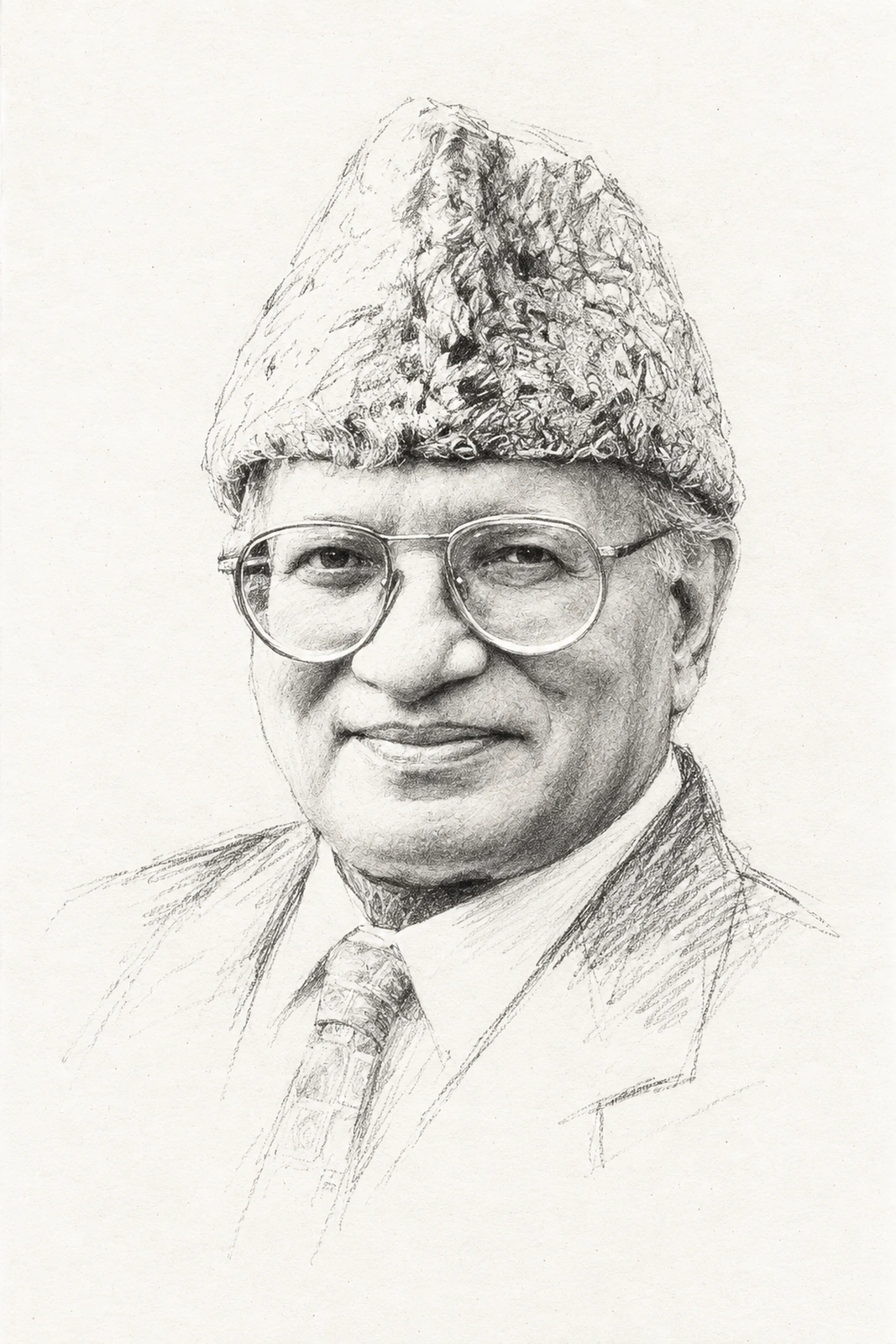
KIREET JOSHI
on
24th January 2005, 11.30 a.m.
at
COMMITTEE ROOM NO. 212, SLL&CS, SL BUILDING
JAWAHARLAL NEHRU UNIVERSITY
NEW DELHI – 110 067
Interfaith Harmony and Social Cohesion
There have been battles and wars in the history of the world; and there have been constant justifications and constant condemnations of these battles and wars. But after the Second World War, humanity has at last proclaimed the need to abolish battles and wars for ever and has even instituted huge global organisations in defence of peace. Humanity has even gone farther, and perceiving that battles and wars begin in conflicts, small or big, a great endeavour has been initiated for conflict resolution, for reduction of forces of division, and for strengthening the forces of understanding, interchange, dialogue and even for building up defences of peace in the hearts and minds of the people.
With the growing globalisation, which has become irresistible, it is being increasingly realised that there are two major factors that need urgent attention, if durable peace is to be secured: conflict of civilisations and conflict of religions. These two conflicts are in a large measure interconnected. And humanity is increasingly turning to the instrumentality of dialogue, and this dialogue is being increasingly centred on bringing civilisations and religions in close intimacy for mutual understanding. It is in this context that the movement of interfaith harmony has come to occupy a central place in the forward march of the contemporary world.
The starting-point of the programme of interfaith harmony is the recognition that the world abounds with scriptures and with religions, and sects and their corresponding dogmas and structures and systems and ways of life. And we are required to notice that there is the phenomenon in the field of religions of exclusiveness and passion in favour of this book or the other book or this Word or the other Word. It is true that we do not frequently slaughter our fellows in the name of God’s truth or because they have minds differently trained or differently constituted from ours. We are even ready to admit that Truth is everywhere and can not be our sole monopoly. But we still declare that our truth gives us the supreme knowledge which other religions or philosophies have missed or imperfectly grasped so that they deal with subsidiary and inferior aspects of things or can merely prepare less evolved minds for the heights to which we have arrived. And it is at this point that we look for harmonisation.
The task is extremely difficult. The question here is not merely that of mere good neighbourliness, even though that, too, has to be admitted and practised. We have to admit that there is multiplicity of religions in the world and that they encounter each other more and more sharply in the contemporary world which is rapidly shrinking. Religions have become neighbours, and we have to find ways and means by which these neighbours can live and flourish without clash or conflict and cultivate positive harmony amongst themselves.
Religions need to revisit their own scriptures with a fresh sense of inquiry. This inquiry must ask at least two questions: How does my scripture and what precisely does my scripture affirm what is affirmed in other scriptures? Secondly, in spite of the common areas of agreement, why are there differences amongst religions? In particular, are these differences due to mere historical reasons or because of some more fundamental reasons that pertain to the grasp of the eternal truth which every religion claims to possess?
There are, we find, wide areas of agreement among religions. Every religion speaks of the supra-physical. Every religion affirms the source of revelation or the source of knowledge of the Truth as something that lies beyond body, life and mind. Every religion speaks of the Truth and regards that Truth as eternal. Every religion speaks of the need to develop a way of life that embodies disciplines that are supposed to be conducive to the promotion of the practice of the Truth. Every religion aims at the advancement of all human beings on the earth. All religions describe goodwill for all, — goodwill that all should see the truth, all should practise the truth and all should receive the ultimate fulfilment. Finally, all religions promise the attainment of fulfilment, provided that their methods and prescriptions are followed faithfully.
Beyond these important areas of agreement, there are differences, and even wide differences. And we must address ourselves to these differences. Here, too, we need to ask some questions. If all the religions speak of the eternal truth, do they maintain that eternal truth is not one and that there are many eternal truths, such that each religion grasps more luminously only one set truths? It will, however, be found that every religion claims that the truth or the set of truths is one and must be one and eternal.
How are we, then, to explain the phenomenon of differences? If one does not identify oneself with the realm of religions and examines neutrally the differences among the claims in regard to the eternal truth, one may have a good ground to suppose that none of the claims is valid, and that the claim of each religion to have possession of the eternal truth is questionable or even false. Against this argument all religions will be equally obliged to find some valid ground for differences in their claim to Truth or claims in regard to the eternal Truth in such a way that the argument of the neutral critic is met successfully. Could it not be, we may ask, that even though truth is one and eternal, it can not be shut up in a single trenchant formula? Is it not likely that the eternal Truth is not found in its entirety or in all its bearings in any single philosophy or Scriptures or uttered altogether and for ever by any one teacher, thinker, prophet or avatar? Could it not be that the truth, though it is one and eternal, expresses itself in time and through the mind of man, and therefore, every Scripture must necessarily contain two elements, one temporary, perishable, belonging to the ideas of the period and country in which it was produced and the other eternal and imperishable and applicable in all ages and countries? Moreover, could it not be that in the statement of the Truth the actual form given to it, the system and arrangement, the metaphysical and intellectual mould, the precise expression used must be largely subject to the mutations of Time and cease to have the same force? Is it not a fact, it may be asked, that we can never be quite sure of understanding an ancient book – scriptural book or the book of the Words expressing the eternal truth -- precisely in the same sense and spirit it bore to its contemporaries? And, could we not contend that that which is entirely permanent in its value is that which besides being universal has been and is being experienced, lived and seen with higher than the intellectual vision?
Indeed, this entire process of questioning may be prohibited at the very starting point on the ground that religions often prohibit questioning, and that no dogmas can be questioned or should not be allowed to be questioned. This is, it may be admitted, is an understandable position. But in that case, no religion should question the claims of other religions, and no religion should judge or proclaim that only its own dogmas are unquestionable and that not the claims of other religions are questionable and they even deserve to be combated or even deserve to be set aside. How can harmony be attained in this situation? It may be answered that harmonisation can be achieved if we can effectively persuade adherents of religions to leave altogether the effort to determine the nature of the eternal truths, if any, and to ask them to refrain discussion of their respective claims in regard to the eternal truth.
It is not impossible that for the sake of maintaining good relationships among religions, adherents may agree with this course of action. But considering the actual fact that each religion maintains that its own discovery of truth is the best, there will be a genuine ground to profess that claim and even to influence others to convert them justifiably to its own professed truth.
There is, indeed, an answer that all religions are true, and even though all may not seem to be equally true, and even if in any free inquiry, they may not be found to be equally true, religions must cultivate among themselves an attitude of equal respect for the rival claims of truth. This, again, may be a good policy and even sincere policy in a process of interfaith harmony. But the question is whether this attitude and this position can be sustained in the progressive development of the climate in which intellectual, moral and spiritual questioning which aims at the determination of the truth on the anvil of experience which has to be subjectively and objectively validated.
Interfaith harmony can, therefore, be sustained if, besides many several other requirements which need to be fulfilled, it welcomes a programme of research that aims to answer the above question. Indeed, this programme of research, even though its timeframe can not be determined, will create a welcome atmosphere and will contribute to the lessening of tension in respect of conflict among religions.
In the meantime, several other proposals could be made to augment the force of the movement of interfaith harmony which will also contribute to communal harmony and social cohesion. Three such proposals can briefly be spelt out for consideration:
- A major effort could be initiated where one major hurdle that lies in the path of interfaith harmony can be addressed with some kind of focal attention. This is related to what may be called exclusivism of religions. It seems that the reason why adherents of religions do not easily come together is that each religion claims an access to some kind of essential element which alone contributes to the attainment of the highest human well-being, and yet which is not available in other religions. How, it may be asked, can this exclusivism be viewed? Is it not possible for adherents of religions to initiate a dialogue with an aim of possibly arriving at the meeting of religions by avoiding or by excluding exclusivism? For it could be contended that each religion brings to humanity an important perception or vision or realisation of the truth, but it can harmonise and even be enriched by admission of the perceptions or visions or realisations of the truth which are to be found in other religions. If this contention could be looked upon as a starting-point of a new dialogue among religions, the movement of interfaith harmony will greatly be strengthened.
- There is one aspect in the contemporary thought which stands as a great challenge to all religions, and adherents of all religions could unite together to meet that challenge. This challenge has come to be formulated in various forms during the last two hundred years. Its basic premise is that physical senses are the only means of developing acceptable systems of knowledge. Often this premise remains hidden in the body of arguments that challenges religions. There is agreement among all religions, namely, that the truth that the religions put forward is derived from that source of knowledge which transcends both sense experience and reason, even though knowledge gained or the knowledge advocated can in varying degrees be shown to be seizeable in rational thought or even in sense-experience. A dialogue among religions on this issue could be considered to be salutary for the strengthening of interfaith harmony and social cohesion. In this context, a significant development that has taken place is a growing interest in themes like science and religion, and science and spirituality. But frequency of dialogues on these themes among adherents among all religions has not been as great as it could be or should be. And it is here that institutions like Temple of Understanding could play a major role.
- On account of the conflict among religions something that is very precious in all religions remains neglected, and this needs to be remedied. All religions impart the spirit and atmosphere of holiness, of reverence, and of humility that is generated in the presence of a vision of the vast, of the universal, of the transcendental. All religions agree that human consciousness suffers from the malady of egoism and that the remedy lies in the deliverance from egoism. It can, therefore, be suggested that a vast effort can be initiated by all adherents of religions by coming together in promoting the perception and vision of vastness, universality and transcendence that can infuse in human consciousness the sense of holiness, reverence and humility in which false egoism of human consciousness can melt or disappear.
One can perhaps think of several other programmes for strengthening the movement of interfaith harmony, and this seminar is to be welcomed warmly as it will provide an excellent opportunity to show new directions, including some radical ones which advocate transcendence of all religions in the realm of spiritual experiences and unity of these experiences or which advocate the development of spiritual religion of humanity.
Postmodernism, Religion and Future Spirituality
Postmodernism is a signal of the end of confidence in objective or scientific truth as also in Utopian visions of perfection, and it signals the denial of any fixed reality and truth or fact to be the object of inquiry. In a sense, it is an end of the curve of Reason which began its ascent five hundred years ago all over the world of multisided questioning and inquiry and ushered in the hope of establishing by means of rational and scientific methods a new world of liberty, equality and fraternity. Great achievements have been registered during these five hundred years but it has become clear that rationality can never deliver infallibility and possession of knowledge on the grounds of which the fond hopes of Reason can be realized. Postmodernism can be looked upon as a seal of certainty on the uncertainties of the adventures of Reason.
Where does humanity proceed from here?
Is postmodernism a stage of equilibrium? Or is it not a call to rest in disequilibrium? At the best, it is an invitation to a quest and to a state of humility to seek, to build temporary edifices of structures of knowledge and society, knowing very well that they can be no more than makeshifts through which we may hopelessly hope to manage to live and survive but never to arrive. But will this arrest the movements and invasions of certainties of instincts and impulses of the infra-rational, on the one hand, and the movements and invasions of certainties of religious beliefs that claim to be derived from the supra-rational, on the other? Post modernistic rationality will be found, it appears, too weak to prevent these two invasions, and considering that globalization is irreversible, it is not difficult to envisage that the global age will witness a critical struggle between the infra-rational forces and the forces that will claim the right to prevail on real or supposed guarantees of the supra-rational.
During the course of this struggle, there is a possibility that the human mind may seek refuge in a return to the religious idea and a society governed and sanctioned by religion. It may be argued that postmodernism will weaken the power of religions and that, in any case, in the sharp struggle that is likely to be waged between science and religion, the influence of religion over humanity will decline. It is true that the relevance of religions has been greatly changing during the last five hundred years during which humanity has been passing through various phases of skepticism, and even today religion or religions have no answer to the scientific demand for public demonstrability of the validity of the claims of the truths that they have proclaimed. That this demand of science has come to occupy a nerve-centre of the latest trends in epistemology implies a challenge that can be met only by a very great effort, which is likely to occupy all defenders of religions, particularly when, in the context of globalization, the plurality of religions will impel sharp conflicts among religions themselves. The shield of dogmatism which has long remained a powerful armour against rationalistic questioning will be found now vulnerable where one dogma will be required to defend against another dogma.
If each religion insists on the authority of its own revelation and its dogmatic assertion, how can the conflict be resolved? Thinkers like Hick and Cottingham have in recent decades endeavoured to answer this question. According to Hick, the truth-claims of religions need to be subordinated to the wider realizations that the truth of religions or spiritual systems is inexpressible, and therefore cannot be brought into the field of debate where articulate formulation is indispensable. In that light, adherents of different religions need not quarrel, and acceptance of the available formulations need not be insisted upon, but can be left to the cultural climate to which one is familiar for acceptance, realizing, however, that basically the truths of religion and spiritual experience are fundamentally ineffable. But this solution is hardly likely to satisfy the adherents of different religions.
The issue is much more fundamental. Even the thinker like Cottingham, in his recent work “The Spiritual Dimension”, has admitted the inadequacy of this solution and tried to find some better solution. He admits that salvation of the human soul cannot and need not be tied up with a banner of a religion on which it is supposed to fly out in its return to its ultimate destined place, and there is no alternative to the development of the sense of toleration among all religions. But even then, he admits that religions do claim superiority of the truths that they proclaim; at the same time, since their claims cannot be examined as they are all based on revelations, and since each one claims finality to its own respective revelations, some other criteria for determining their veracity have to be found. The solution that he suggests is to judge the validity of a given revelation in terms of its power to infuse in the adherents inspiration to cultivate higher and higher degrees of morality culminating to the ideal morality proposed by Aristotle who defined Virtue as a mean between two excesses. He also suggests another criterion. Which religious doctrine guides the adherents better and better in arriving at the highest possible integration? And by integration, he means the kind of integration that Jung and others have advocated, so that the collective subconscious and the individual conscious can attain integration and balance by the discovery of a deeper integrating centre in the human personality. It will be evident that neither the criteria of moral excellence nor of integration will be able to resolve the problem. Each religion claims to provide the best possible ethical inspiration and each religion, if pressed, will suggest that its own method of integration is the best method.
If religions cannot resolve their conflicts among themselves, we shall have to fall back on the state of crisis that humanity is confronted with today. On the one hand, there is a force that is striving to assert the powers of the infra-rational which are likely to develop new forms of barbarism within the civilized state of society. For it is possible to utilize the present scientific and technical knowledge to create an order of existence in which physical and vital wants of the human being can greatly, if not fully, be satisfied, and this order of existence can be maintained by mechanical devices and application of the power of machines that can imprison the human spirit. It can be said that the latest trends of competitive individualism and capitalism as also of the materialistic communism are likely to nourish the modern economic barbarism, unless some radical changes occur in the ideals of Capitalism and Communism. On the other hand, there is likely to be still a new lease of life for the scientific and philosophical or anthropological rationalism; postmodernism may be overpassed, and new avenues of rationalism may come to develop. Rationalism may come to drop its dogmatism that binds it to assume that only the sensible is intelligible. But these developments will take time, and, in the meantime, intellectual thought can only hope at the best to continue to spin larger or narrower circles of dreams but will never be able to fulfill them. There is, of course, a third alternative in which the human being consents to rise to higher levels than those of Reason and of Religions and consents to be spiritualized under the illumining light of living spiritual experiences and realizations. The question, therefore, is whether the human being will choose to remain arrested in some kind of intermediary typal perfection of economic barbarism like earlier animal kinds or whether the human being will consent to rise to higher levels of illumination and spiritual realizations that transcend the limitations of dogmatic religions.
That the choice has to be made by humanity during this emerging global age will be found to be an imperative, and this imperativeness creates a state of crisis, particularly because the choice to pursue higher levels of illumined spiritual realization is not only difficult but appears to be at first sight almost impossible.
Sri Aurobindo, the foremost philosopher of our times, has, therefore, designated the present crisis as an evolutionary crisis, since the higher choice that is available to humanity requires on the part of humanity or at least on the part of the leading portion of humanity to make an evolutionary choice, -- a choice that would require a process of transition and evolution from mental consciousness to supramental consciousness.
Indeed, religions can play a crucial role, provided they arrive at a very important point of agreement among themselves. Can religions agree to exclude exclusivism? This is the central question for religions and societies in the twenty first century. Admittedly, the issue is perhaps the hardest among all the issues of the contemporary world. But the conditions of the contemporary world demand from religions a new critical research, a new critique of Reason and Revelation and a more comprehensive opening to enriching understanding and more ennobling and more integral spiritual experience.
At one time, it was believed that revelations were special gifts of Prophets and Founders of religions and that therefore they could not be subjected to any scrutiny. Happily, however, in recent times there is increasing acknowledgement of Yoga, which lays down methods of cultivating powers of revelation, inspiration and intuition, and the resulting knowledge can be tested on the anvil of repetition and confirmation and even modification by the employment of the same methods and arriving at the same predicted results.
Thus, as we begin the 21st century, the promise of yoga as scientific method of the knowledge opens out the possibilities of a new turning-point in the climate of the global world. Philosophy of Yoga seems to be a promising possibility as the philosophy of the emerging global age. Already, in the statements of the advanced yogins of the world, there is the affirmation of harmony among the revelations of Christ, Krishna and Buddha, and they have found no difficulty in embracing them and many others who have left in the human heritage the messages of their revelations. It is contended that it is possible to rise to higher levels of consciousness, and as there is a wise counsel to be as perfect as the Father in Heaven is perfect, it is possible to dwell in higher and higher levels of consciousness in which all conflicts are transcended.
And where is the limit of the heights of consciousness, once the gates of Yoga are opened? Sri Aurobindo conceives of the possibility and inevitability not only of ascending to the supramental levels of consciousness but even of such radical transformation of the human body by the descent of the supramental consciousness on the earth that it could even satisfy the demands of science to have public demonstrability of the claims of the truths of the supramental consciousness. That would, indeed, mean an eventual harmony and synthesis of science and spirituality.
But in the meantime, one cannot minimize the gravity of the crisis, and the necessity of the seriousness and sincerity on the part of humanity to confront the crisis with full sense of responsibility to itself and to posterity.
We stand today at a critical point of development, but if we trust in the power of human spirit to triumph eventually, we shall have the privilege to surpass the dawns of the past and to come to dwell in the noons of the future.
Let us, therefore, look upon the future with voluntary optimism.
Religion and Its Relevance
19.11.2006
The question whether relevance of religions is changing is, in a sense, an extremely important question, considering that during the last five hundred years humanity has been passing through various phases of skepticism, and even today we do not have answer to the scientific demand for public demonstrability of the validity of the claims of the truth that religions have been proclaiming. That this demand of sciences has come to occupy a nerve-centre of the latest trends in epistemology implies a challenge that can be met only by a very great effort, which is likely to occupy all seekers of knowledge and all seekers of the highest welfare of humanity during the 21st Century.
In the meantime, as has been seen throughout the history of human civilization, the aspiration for God, Light, Freedom, Bliss, Immortality, has been constantly witnessed since the human thought grew to be more and more self-conscious. The earliest records of human wisdom, namely, the Vedas, testify to this aspiration, and even the last five hundred years where the relevance of religions has come under heavy attack, have not blunted the power of its resurgence. In the meantime, there has come about a great weakening of the claims of certainty of knowledge that philosophical reasoning and scientific empiricism had aspired for; and this is bound to lead to the reassessment of both science and religion or spirituality, and it is this mood of reassessment that is likely to characterize the intellectual and scientific climate of the 21st Century.
This reassessment is likely to be thorough-going, since both in Thought and Life humanity has reached a stage of dire need to find workable or practicable solutions. Human survival itself demands understanding of the right equations between humanity and its total environment and, more importantly, voluntary and sincere application of the policies that emerge from the advancing knowledge of the right equations between humanity and environment. Has humanity the right wisdom and will, and will it agree to impose on itself a vast discipline? That is the issue. But apart from the question of environment, there is a deeper question of the wisdom that is required to counteract the constant danger that we are all facing on account of the sheer pressure of the nuclear arms that have already been piled up and which have most disastrous consequences, if we do not wake up and seek urgent answers and true answers which will have transforming power to convert the present aggressive mentality into a highly cooperative mentality. But even if enough time is given to the human race, and nothing disastrous happens, how are we to deal with that question that the human Reason, at its highest, has put forward as its ideal dream of realization, namely, the harmonious blending of Liberty, Equality and Fraternity? If we speak today of democracy, it is because of the ideal of liberty, and if we speak of social cohesion, it is because of the pressure of the ideals of equality and fraternity. The insistence of these three ideals has, evidently, not been uniformly persistent, and, in the march of globalization, the predominant tendency that has become manifest is the overwhelming search of material well-being, particularly of the dominant groups who have the facilities to expand and to manipulate favourable opportunities.
It is even believed that over-all enrichment of humanity will provide to everyone enough to be materially secure and will automatically pave way for social cohesion and even for the needed breath of liberty. A dream of this possible scenario for humanity might drug us into a world-wide acceptance of economic barbarism. And it is here that the Religions and Spiritual Systems which have constantly striven to awaken humanity to what they believe to be ideal pursuits for highest fulfillment may have a great duty and opportunity for their resurgence and renewed relevance. But will this relevance and will this resurgence have the needed effect?
Religions have long programmes and in fulfillment of these programmes, there have been acute problems of conflict among themselves. If we examine carefully, we shall find that these conflicts rest ultimately on the claim to the superior truths which cannot be proved wholly on rational basis and in the last resort, it has to be sustained on the authority of revelation. But if each religion insists on the authority of its own revelation, how can the conflict be resolved? Religions have to come up with some satisfactory answer. Thinkers like Hick and Cottingham have in recent decades endeavoured to answer this question. According to Hick, the truth-claim of religions needs to be subordinated to a wider realization and that the truth of religion or spirituality is inexpressible, and therefore cannot be brought into the field of debate where articulate formulation is indispensable. In that light, adherent of different religions need not quarrel and acceptance of the available formulations need not be insisted upon, but can be left to the cultural climate to which one is familiar for his acceptance of a given formulation, realizing, however, that basically the truth of religion or spiritual experience is fundamentally ineffable.
But this solution is hardly likely to satisfy the adherents of different religions. The issue is much more fundamental. Even the thinker like Cottingham, in his recent work “The Spiritual Dimension” has admitted the inadequacy of this solution and tried to find some better solution. He admits that salvation of the human soul cannot and need not be tied up with a banner of a religion on which it flies out in its return to its ultimate destined place and there is no alternative to the development of a sense of toleration among all religions and that does not need to have rivalry among religions in their campaigns of conversion. But even then, he admits that religions do claim superiority of the truths that they proclaim, but since their claims cannot be examined, as they are all based on revelations, each one claims finality to its own respective revelations. As a result, some other criteria have to be found. The solution that he suggests is to judge the validity of a given revelation in terms of its power to infuse in the adherents to cultivate higher and higher degrees of morality culminating to the ideal morality proposed by Aristotle, who defined virtue a Mean between excess of aggrandizement, on the one hand, and excess of humility, on the other. He also suggests another criterion. Which religious doctrines guide the adherents better and better in arriving at highest possible integration? And by integration, he means the kind of integration that Jung and others have advocated, so that the collective subconscious and the conscious can attain integration and balance by the discovery of a deeper integrating center in the human personality.
It will be evident that neither the criteria of moral excellence nor of integration will able to resolve the problem. Each religion claims to provide the best possible ethical inspiration, and each religion, if pressed, will suggest that its own method of integration is the best method.
This is, of course, a vast subject and there has to be a long debate among religions, and attempts have to be made to break the impasse.
Can religions agree to exclude exclusivism? This is the central question of religions and societies in the 21st Century. Admittedly, the issue is perhaps the hardest among all the issues amongst all the issues of the contemporary world. But the conditions of the contemporary world demand from religions a new critical research, a new critique of Reason and Revelation and a more comprehensive and a more enriching understanding and more ennobling and more integral spiritual experience.
At one time, it was believed that revelations were special gifts of Prophets and Founders or Religion and that therefore they could not be subjected to any scrutiny. At the same time, recent accounts of discoveries of scientists have underlined that those discoveries were visitations of revelations or intuitions, and that they could be tested in due course of time. Also; in recent times there is increasing acknowledgement of yoga, which lays down methods of cultivating powers of revelation, inspiration and intuition and the resulting knowledge can be tested on the anvil of repetition of the same method and same results. Thus, as we begin the 21st Century, the promise of yoga as scientific method of the knowledge by means of supra-rational faculties opens out the possibilities of a new turning point in the climate of the global world. Already, in the statements of the advance yogins of the world, there is a possibility and actuality of harmony among the revelations of Christ, Krishna and Buddha, and they have found no difficulty in embracing them and many others who have left in the human heritage the messages of their revelations. It is contended that God transcends religion and has the capacity to communicate with the human soul irrespective of the dogmas, rituals, ceremonies and prescriptions of religions.Is it not possible to be like God Himself or to dwell in that consciousness in which all conflicts are transcended? Has not Jesus bidden us to be as perfect as the Father in Heaven is perfect?. The great mystic, Ekhart defined God as the denial of denials, and cannot the denial of denials be explored as a cure of conflict of religions? Let us explore this route, as it appears to lead us to the amity that we are all seeking so ardently.
Science, Society and Religion
1 MAY 1999
Science is a manifestation of the dual operation of Reason, dispassionate and interested. In its dispassionate movement, science pursues truth for the sake of truth and knowledge for the sake of knowledge; in this movement, science is performing its natural function; it is exercising its highest right. In the work of the scientist labouring to add something to the stock of our ascertainable knowledge, there is a perfect purity and satisfaction. It may even be said that even if there is any individual error or limitation, it will not matter; for the collective and progressive knowledge of the race can be trusted to get rid of the error.
But difficulties and faults arise when science turns to its interested operations and tries to apply its discoveries and inventions to life situations. For there it becomes the plaything of forces over which it has little control. Science then becomes subject to what it studies and the servant and counsellor of the forces in whose obscure and ill-understood struggle it intervenes. This is the reason why the balance sheet of science is a mixed one, and in many respects the negative aspects outweigh the positive ones. While, on the one hand, science has made discoveries which have served practical humanitarianism, it has, one the other hand, supplied monstrous weapons to egoism and mutual destruction; while, on the one hand, it has made a gigantic efficiency of organisation utilisable for the economic and social amelioration of the nations, it has, on the other hand, placed the same efficiency of organisation in the hands of national rivalries for mutual aggression, ruin and slaughter; while, on the one hand, it has given rise to a large rationalistic altruism, it has, on the other hand, justified a godless egoism, vitalism, vulgar will to power and success; while, on the one hand, it has drawn mankind together and given it a new hope, it has, on the other hand, crushed it with the burden of a monstrous commercialism. Actually, this commercialism, which can be called another kind of barbarism, — economic barbarism, — marks a terrible regression that has sunk humanity in mud of desire and hunger on a massive scale. For it makes the satisfaction of wants and desires and accumulation of possessions its standard and aim. Its concept of the ideal man is not that of the cultured or noble or thoughtful or moral or spiritual, but the successful man. To this barbarism, the opulent plutocrat and the successful mammoth capitalist and organiser of industry are the supermen, and it is to them that this barbarism assigns the actual power to rule the society. Pursuit of vital success, satisfaction, productiveness, accumulation, possession, enjoyment, comfort, convenience for their own sake ‒ these are essential ingredients of economic barbarism. To the barbaric economic man, beauty is a nuisance, art and poetry a frivolity or a means of advertisement.
His idea of civilisation is comfort, his idea of morality social respectability, and his idea of politics the encouragement of industrialisation, opening of markets and exploitation.
It is not surprising that increasing number of sensitive and refined thinkers in recent decades have come to equate science and technology with domination and violence. We also find new trends of thought which advocate new philosophies of growth; the idea of the "small is beautiful" has achieved a wide appeal. There is a growing awareness that all is not well with science, particularly with technology, that things cannot be allowed to develop unchecked and unchallenged, that fundamental issues of humanity’s future are involved, and that we are required to consider urgently as to how to deal with our present state of society.
According to one trend of thought, science is knowledge and knowledge is power, but power for evil just as much as for good. The conclusion that is drawn is that unless human beings increase in wisdom as much as in knowledge, increase of knowledge will be increase of sorrow.
This brings us sharply to the theme which has recently come to be discussed prominently, the theme of science and spirituality.
First of all, we may consider the relationship between science and materialism. It is true that the first tendencies of science have been materialistic; scientific explanations of the universe were for a long time mechanistic, which laid emphasis on inexorable and rigid laws, leaving no room for freedom or intelligent purpose; and the indubitable triumphs of science have been confined to the knowledge of the physical universe and the body and the physical life. But, fundamentally, this materialism has been an expression of the mind turning its gaze upon its vital and physical frame and environment to know and conquer and dominate Life and Matter. From the point of view of advancing knowledge, there was a need to know the processes of Life and Matter so that they can rightly be transcended. It may even be said that the perfection of the physical sciences was a prior necessity and had to be the first field for the training of the mind of man in his new endeavour to know Nature and possess his world.
If modern Materialism, it may be urged, were simply an unintelligent acquiescence in the material life, the advance might be indefinitely delayed. But we find that the latest trends are highly significant of a freer future. For as the outposts of scientific knowledge come more and more to be set on the borders that divide the material from the immaterial, so also the highest achievements of practical science are those which tend to simplify and reduce to the vanishing-point the machinery by which the greatest effects are produced. Wireless telegraphy is a signal for a new orientation, since the sensible physical means for the intermediate transmission of the physical force is removed, preserving it only at the points of impulsion and reception. It is also being increasingly acknowledged that materialism can be maintained only by ignoring or explaining away a vast field of evidence and experience which contradicts it. The arbitrariness of the materialistic premises is also being admitted in disguised or explicit forms. At one time, it was confidently asserted that the physical senses are our sole means of knowledge and that reason, therefore, cannot escape beyond their domain. But today it is being acknowledged more and more widely that physical senses cannot give any disproof of anything that may be lying beyond their domain, if any, and that therefore there is no warrant to assert that physical senses are the only means of knowledge. In other words, physical senses cannot find any justification for the universal sweep contained in the orthodox premises of materialism. There is also today an overwhelming view among philosophers of science that the function of science is to describe the processes of Nature and not to venture on what may or may not be lying behind the observable and measurable processes. Science, it has been urged, is precluded from making metaphysical or ontological affirmations or negations. It is even being maintained by many, if not most, that the so-called metaphysical statements of materialism or idealism or of any other school of thought are literally nonsensical.
The orthodox theory of mechanistic materialism has been overpassed. The idea of causal necessity that had denied freedom in the universe has ceased to dominate the realm of science. Materialism as an ontological theory is no more in the field; the last fort of materialism as an ontological theory and as a sociological theory was Marxism — and that, too, has now almost collapsed. And yet, all this has not amounted to the denial of materialism. Materialism is still lingering in subtle forms. While Matter is no more placed as the ultimate reality, there have emerged formidable methodologies of analysis or empiricism which do away with any conception of ultimate reality, thus preventing the formulation of any possible theory of Spirit as an alternative to crumbling theory or theories of materialism. At the same time, the climate has greatly changed. Science has become less rigid, and it is unable to reject a priori any claim of supraphysical experience. This does not mean that Science has come to accept the realm of supraphysical experience; but when pressed to do so, it does not deny it outright. It stands thus in a middle position, and from there, it is able to throw the ball in the court of the advocates of the supraphysical and the spiritual with a demand to come up with clinching evidence. This is where the conflict between science and spirituality stands today.
In the meantime, several theories are emerging which tend to weaken the sting of materialism or the outlook that is still fixed on Matter with some kind of exclusive concentration. First, both physics and biology seem to concede that while it is not their business to come up with any ultimate or final explanation of the universe, there seems to be a great deal even in the processes of the universe which are mysterious and in regard to which not any laws but some kind of magical chance could be the only possible answer. But if theory of chance is pressed far enough, it becomes clear that in its very nature it can be put forward not as an inevitable or clinching theory but only as a possible plausible theory.
This clearly opens up the possibility of other alternative theories and gives room for the consideration of those theories which are based upon experiences of the supraphysical or spiritual realities. We may also observe that in the field of biology, while the Darwinian theory of evolution by random chance, natural selection, struggle for existence and survival of the fittest is still surviving, powerful trends have emerged to challenge it through such theories as those of vitalism of Bergson, emergent evolution of Alexander, holism of Smutts, ingressive idealism of Whitehead, and spiritual evolution of Teilhard de Chardin. In our own country, Sri Aurobindo’s theory of supramental evolution is a formidable answer to Darwinism and to materialism in general.
A major difficulty involved in a possible dialogue between science and spirituality lies in the insistence laid by physical sciences on the application of their methods on all sciences, even when the subject matters are not physical in character. The scientific method is so conceived that no evidence could be accepted of a fact unless it is objective and physical in character; even if the fact be very apparently supra-physical, this method refuses to accept as such unless it is totally unexplainable by any other imaginable hypothesis or conceivable conjecture. But it should be evident that this demand for physical valid proof of a supra-physical fact is irrational and illogical. For the method of knowledge should be appropriate to the object of knowledge. If the nature of the object is itself supra-physical, would it be reasonable to demand that it should be physical and should be scrutinisable by means of physical senses? The occult, psychic and spiritual sciences have developed various kinds of evidence of the existence of other planes of being and communication with them. They include objectivisation to the outer sense, subtle sense contacts, mind contacts, life contacts, contacts through the subliminal in special states of consciousness exceeding our ordinary range. It is normally argued that subjective experience of subtle-sense images can easily be deceptive, since we have no recognised method or standard of verification and a too great tendency to admit the extraordinary and miraculous or supra-natural at its face value or on the ground of belief.
This argument has a great force, and it may be conceded that belief by itself is not evidence of reality, and that it must base itself on something more valid before one can accept it. All truth, supra-physical or physical, must be founded not on mental belief alone, but on experience, — but in each case experience must be of the kind, physical, occult or spiritual, which is appropriate to the order of truths into which we are empowered to enter; their validity and significance must be scrutinised, but according to their own law and by a consciousness which can enter into them and not according to the law of another domain. In any field of experience, error is possible; error is not the prerogative of the inner subjective or occult parts of us; even where physical and objective methods are employed, there is room for error. Mere liability to error cannot be a reason for shutting out a large and important domain of experience. As in the physical sciences, so in the supra-physical sciences, it is a reason for scrutinising it and finding out in it its own true standards and its characteristic appropriate and valid means of verification. It is important to observe that the very basis of our objective experience is our subjective being; hence it is not probable that only its physical objectivisations are true and the rest unreliable. The supra-physical consciousness, when rightly interrogated, is a witness to truth and its testimony is confirmed again and again even in the physical and the objective field; that testimony cannot, then, be disregarded when it calls our attention to things within us or to things that belong to planes or worlds of a supra-physical experience.
The question is whether there is or there can be a science of supra-physical data, the scientific character of which is as great as that of the sciences of the physical data. Often we seem to be hesitant to answer this question, and often our claim for spiritual knowledge and its validity is sought to be authenticated on the basis of only a few examples of intuitions, divinations, inspirations, or random radical experiences of the soul and the spirit. It does not occur to us that our Indian culture has developed over millennia a multi-sided science through the pursuit of which faculties which lie above the ranges of physical senses and rational intelligence can be developed. This science has developed assured methods resulting from the principles, powers and processes that govern experiences and realisations of the highest possible objects of knowledge.
This science is, what Swami Vivekananda called, science par excellence. This is Indian yoga, developed and matured by Rishis and yogins of the Veda and the Upanishads and still further perfected in an unbroken chain throughout the history of India right up to our own times. This yoga has been looked upon as practical psychology and yogic methods have something of the same relation to the customary psychological workings of man as has the scientific handling of the natural force of electricity or of steam to the normal operations of steam and of electricity. And they, too, are formed upon a knowledge developed and confirmed by regular experiment, practical analysis and constant result. Indeed, yoga is a science — an intuitive science — which deals with the ranges of psychological and spiritual being and discovers greater secrets of physical, psycho-physical and other higher worlds. As in physical sciences, so in yoga, the object is an assured method of personal discovery or living repetition and possession of past discovery and a working out of all the things found.
Spirituality is thus not a matter merely of sporadic or occasional experience, but a matter of authentic possession of knowledge and effective power of realisation and action. It is on the basis of this science that we can bridge the gulf that seems to be existing between science and spirituality.
It is on the basis of the yogic knowledge that one can confidently hope to seek enlargement of physical sciences and also to develop the required power of transformation of human limitations, human passions, human ignorance and all the frailties which are found in human nature. The dreams of science can come true, the developments of science can be guided properly, the evil uses to which scientific knowledge normally becomes subject in its application can also be prevented or cured, provided that humanity consents to undertake a great effort that yoga demands. Indeed, mere ethical control, rational control or social control are not enough; even religious piety and religious life of ritualistic worship is not enough; spirituality transcends the limitations of ethics and religion and opens our mind and heart and our total being to the light and power by the infusion of which human nature can begin to be changed, converted and transformed. Science has so far produced its own effects on society, the time has come now when society needs to awaken and produce effects on science and technology.
When sciences of the physical and those of the supra-physical and the spirit will meet in one spectrum, the individualist age, which brought forth and nourished the modern epoch of science, could culminate into the spiritual age. Problems of this transition and culmination deserve a special and separate study. Fortunately, a detailed study has been made by Sri Aurobindo, particularly in his three major works, "The Human. Cycle", "The Ideal of Human Unity",and"The Foundations of Indian Culture."
Let us hope that research in this study will form a part of the immediate Agenda of India, which needs to be chalked out as a fitting conclusion of these important celebrations.
The Climate for Religions in the 21st Century
Aspiration for God, Light, Freedom, Bliss, and Immortality has been witnessed throughout all the ages of human civilization, since the human thought grew to be more and more self-conscious. The earliest records of human wisdom, namely the Vedas, testify to this aspiration, and although there have been short or long periods of skepticism, this aspiration appears to return, and even new religions owe their origin to this periodic return. The present period of skepticism has been rather too long, and even more devastating. But the Reason which, at one time, admitted only the evidence of physical senses, has been under great strain and there is a secret compulsion to admit higher sources of knowledge. On the other hand, while at one time, it was believed that revelations were special gifts of Prophets and Founders of Religions, and that therefore they could not be challenged to any scrutiny, rational or supra-rational, recent accounts of scientists have pointed out that their most precious discoveries were visitations of revelations or intuitions, and that they could be tested in due course of time. Also, in recent times there is increasing acknowledgement of Yoga, which lays down methods of cultivating powers of revelation, inspiration and intuition and the resulting knowledge can be tested on the anvil of repetition of the same methods and same results. Thus, as we begin the twenty-first century, the promise of yoga as scientific method of the knowledge by means of supra-rational faculties opens out the possibility of a new turning-point in the climate of the global world, where on account of increasing sweep of democratic and pluralistic systems, the rigid stand point of religion which regarded the realm of revelation to be beyond rationality or scientific scrutiny, will, it seems, tend to become less rigid.
Already dialogues of civilizations and dialogues of religions have compelled or facilitated exchange of notes, and the divisions amongst religions are diminishing. But it will be too facile to suggest that the core beliefs of religions will easily give up their exclusiveness or their claim to have access to superior realms of truth. But the modern trends of critical knowledge will not permit dogmatism, and conflicts of religions can rest on the validity of the theory of dogmatism. The relevance of religions, which advocate dogmatism has, therefore, undoubtedly undergone radical changes, and it is impossible to sustain the belief that in due course of time only one religion and only one dogma will ultimately sway over the world and bring about social cohesion which is increasingly and imperatively demanded by rapid democratization and rapid development of philosophy of pluralism.
With globalization, whatever its merits or demerits, people are obliged to travel, to migrate and to create new cultural settings, and they demand, for purposes of social cohesion, that their religion comes forward and provides new attitudes in connection with spiritual knowledge and restore to contemporary humanity a deeper appreciation of differences among religions and their points of unity, so that in democratic and pluralistic frameworks, they aid the causes of unity and cohesion.
Can religions agree to give up exclusivism? This is the central question of religions and societies in the twenty first century. Admittedly, the issue is perhaps the hardest among all the issues of the contemporary world. But the conditions of the contemporary world demand from religions a new critical research, a new critique of Reason and Revelation and a more comprehensive and more enriching understanding and more ennobling and more integral spiritual experience.
Why should I not be able to embrace Christ, simply because I have so far not experienced the Presence of Christ and the great revelation that He is the Son of God and that the Son and the Father are one? Am I precluded from making an experiment, as the great Sri Ramakrishna conducted such an experiment and found the truth of Christ? Why should Krishna be barred from the totality of spiritual knowledge, simply because of my lack of understanding of the mystery of the incarnation of God, even though I may be prepared to accept the mystery of the incarnation of Christ? If it were the fringes of religions that come in the way, let us cross them and set them aside, but enter into the realm of spiritual experience boldly only in order to know the Truth and the Truth in all aspects. My cultural heritage may impede my plunge into the vastness of the realm of the Spirit, but the cultural climates of the worlds are changing. In my own neighborhood, I find devout Muslims conducting five times a day the Namaz truly and obediently, and shall I say that because they are not worshiping Christ or Krishna or Buddha, God will not respond to them? Surely, there is something wrong in our conception of God. God transcends religions and has the capacity to communicate with the human soul irrespective of the dogmas, rituals, ceremonies of religions. Let us all be like God Himself or like that consciousness in which all conflicts are transcended. Denial of denials seems to be the cure of the conflict of the religions.
The twenty first century will, it seems, be marked by three important movements: First, a radical and critical examination of the role of reason in the acquisition of true knowledge that will liberate reason from the present rigidities of logic, which have for long erected barriers between different modes of knowledge and prevented their harmonization. Second, religions will increasingly agree to understand each other and remove the barriers which have for long prevented harmonization of the realms of pure spiritual knowledge. Finally, the democratic and pluralistic framework of human societies will tend to grow towards democratic democracy and facilitate the growth of free access of human spirit to multiple ways of pursuit and communion with the spiritual realities. Religions are bound to return to their spiritual roots and seek harmonization in developments like spiritual religion of humanity, which will allow each individual to develop his own method of contact with the spiritual reality, and in the vastness of the framework of free spiritual pursuits, roads will be built for synthesis of religions which will exclude their exclusivism.
These three movements are already on the horizon; and the sooner we read the message of these movements, the quicker will be the arrival of universal harmony, fraternity, social cohesion and solidarity. These three movements are likely to be pushed forward by new adventures of science, which, in the interest of pursuit of knowledge, will demand new methodology of scientific investigation, so that methods which were relevant to Matter will give way to the methods which are relevant to realm of life and the phenomenon of evolution. Evolutionary epistemology is already a developing domain, and this domain will encourage the understanding of the laws of evolution of instincts, impulses, unconscious and subconscious pressures on the formations of living organisms, and the birth of laws of attractions and repulsions, the laws of desires and ambitions and their insatiable hunger which has given rise to the developments of higher forms of consciousness. Darwinism, which rules out design in the evolutionary process, is likely to be over passed by a greater understanding which demands the operation of Intelligent Will as has already been speculated by great philosophers like Whitehead, Teilhard de Chardin and Sri Aurobindo.
The riddle of the world is likely to occupy the 21st century. Why is the world what it is? For long science has refused to address this question under the excuse that it is a metaphysical question and beyond its specific boundaries of enquiry. The metaphysician has also escaped this problem under the pretext of limitations of language. But the human enquiry will refuse to be silenced. If science and metaphysics are not competent to answer this riddle, a new branch of knowledge will have to be developed. For the eternal questions that have so far been answered by religions but found not sufficiently satisfactory on account of conflict of religions, humanity will be obliged to find better ways and secure valid basis of the right directions of human progress, which are imperatively demanded by the pressures of globalization and the imperatives of social cohesion.
We stand today at the great gates of a new synthesis, where religions and spiritual systems of the past will need to recognize the mystery of Matter and admit the truths of science which are not being sufficiently assimilated in the totality of knowledge. A bridge has to be built between Spirit and Matter, and that demands a new methodology and a new experiment. Freed from the burdens of the conflicts, let us have a great concert of Wisdom, where fresh knowledge is welcomed and pursued.
Christianity
(Extempore Speech)
(Inaugural Address)
Chairman Sir, Dr. Raman, Professor Afonso, distinguished scholars and friends.
In the first place I would like congratulate Professor Chattopadhyayaji for having conceived a huge programme of research where history of science, philosophy and culture in Indian civilisation is being studied both in wideness and in its depth. India has been rightly regarded as a laboratory, a laboratory where problems of the world can be crystallised at one point so that microscopically each aspect of the problem can be studied in depth to arrive at a kind of synthetical solution. One of the important problems of the world is the presence of number of religions and this presence of variety of religions is a stimulation even a challenge to all the religious fields of world.
Why should there come about a number of religions? People speak of historical reasons but also at a deeper level, the founders of religions have been declared to be those who have discovered the truth and propounded the truth and given truth for mankind and our normal idea is that the truth is something singular and this where the problem arises for philosophers of religions. If truth is singular then those who claim to have discovered the truth should all agree on what has been discovered but this is not the case. Therefore, for philosophers of religions there is a step to be taken and that step is to be dealt with all the concern not in the spirit of polemics. It is much easier to be inimical but the spirit of inquiry, the spirit of largeness, in which the problem is discussed with all kinds of commitment of harmony and this is what I think has happened in India in particular where so many religions co-exists, all the world religions are congregated in India in a very powerful manner.
In regard to Christianity, there are three important items which need to be looked into in depth. First, there is the immortal life of Christ, the immortal work of Christ, and immortal words of Christ. The personality of Christ as Christians believe it is a divine personality. It is God himself who has come on the earth as son of God but a son of God who is one with the Father and he has come on the earth to give a message and not only to give a message but to represent divine action in the history of the earth so that mankind may be uplifted and may be shown the path of salvation. His life is the life of tremendous love. It is a state of consciousness which symbolised in that final act of Christ where he washes the feet of his disciples. This is his spirit. He has not come here to command but to serve and he is prepared to do any kind of sacrifice even to give his blood for the sake that the truth is established. In fact this is the question which has remained in the world what is truth and the charge against him was is it truth that he is the king and he answer was that he has spoken the truth and for that reason he had to give his body and he was crucified. The crucifixion of Christ, according to me, is one of the most momentous events in the world history. It has been force of humanisation of humanity. Humanity which is normally barbaric, primitive in the words of Hobbs, selfish, and brutish and short. This humanity is humanised by this one act of crucifixion. This I think is the sum and substance very briefly of what I think is the divine significance of Jesus Christ.
And then there is the question of immortal words of Christ. The Sermon on the Mount and various messages that he has given to those who followed him, those whom he served, those for whom he performed miracles so as to declare he had come to give a message of salvation to the people of the earth and three important messages we can derive from his immortal words are first, love thy neighbours as thyself, one of the most difficult things in the world as Bernard Shaw said only thing that is difficult is that you cannot love your neighbour. You can love everybody else and yet it is this.
The second is, that in utter humility, utter meekness, in a state of being an utter child that you can enter into heaven. This message of utter humility. And the third is, be thou as perfect as thy father in heaven is perfect, this message of perfectibility of man, the perfectibility in the image of God. I think that these are three great messages should be underlined while studying Christianity. But this is one of aspect of the study.
The second aspect is the philosophy of Christianity, theology of Christianity naturally it is an interpretation of Christ, his life and his works and his words, -- one of the most difficult things in terms of philosophy. Philosophy utilise the intellect as the instrument of search for the truth and as judgement of the truth, finds it very difficult to sustain the basic propositions of Christ. The mystery of the Father, the Son and the Holy Ghost and their interrelationship, how intricate is to understand this mystery and that is why in Christianity we have a tremendous discussion of revelation and reason and the conflict between the two and the necessity to declare the limitations of reasons so that there is an acceptance of revelation. Right or wrong it is a different question and it requires a great philosophical debate but it is a question which has got to be addressed not only by theologians of Christianity but all. It is a philosophical question in itself and no philosopher can avoid this question.
The second important question the relationship between God and Man, God and Earth, the question of freedom given to Man and the idea of freedom in Christianity and freedom as the source of the possibility of the rise of evil and reconciliation of God, Man and Evil and the dilemma that is faced by Christianity if God is omnipotent we could have avoided evil or destroyed evil not even allowed the rise of evil. But if he is good and able to do it, he is not omnipotent, he may be good but not omnipotent, the dilemma of omnipotence and goodness and the conflict between the two is one the very important questions for Christian theology. And according to me for all philosophy of religions and for philosophy of culture of itself, this great question freedom and its relationship with evil and the possibility of alienation of evil from this world. The entire philosophy of sin, the sin of man, the idea of original sin of man.
Finally there is a question of the history of Christianity; Christianity as an institution; Christianity as an authority contained in the Bible; Christianity as epitomised in the Pope and Christianity in the authority of the entire Church. This is a very important issue — the organisational religion. And then there is the question of the spread of Christianity and the method of spread of Christianity and the idea of conversion in Christianity and the various issues which lie at the root. If truth is known, it must be given to the people, how can it be hidden and if it is to be given, it is to be given by all possible means so that truth is spread. This is the basic philosophy underline the whole idea of spread of Christianity.
And then the coming of Christianity in India and the story of this encounter with Hinduism and with other religions which have developed in India and the problems are confronted today in the contemporary India and need for everyone to understand the truth of Christianity, the truth of Hinduism, the truth of Islam, truth of Zoroastrianism, the truth of Jainism and the truth of Buddhism and others, Judaism also.
I am very happy that Professor Afonso has in his programme dwelt into many of these problems and it is a very stimulating programme and I think these problems will be dealt with due concern and in considerable depth. One day is nothing for discussing these very important problems and I am sure that we shall at least enter into these problems to certain extent. We are full of expectations and I feel that this is a very good starting point for a new dialogue on this very important issue.
Zoroastrianism
(Extempore Speech)
Mr. Chairman, distinguished scholars and friends.
It is true that since I come from Gujarat, I have long association with Parsis. In fact, I was one time Assistant Collector Sanjan to which you made a reference and Navasari was a part of district Surat and I had a very close connection with people of Navasari. In Navasari there is a big colony of Parsis and apart from this initial fact I came into contact with some of the biggest names in the Parsis community like Mr. J.R.D. Tata who was a very close friend of mine and Mr. Nariman the eminent jurist and several others and I must say that my association with Parsisim extremely warm and some of the insights of Zoroastrianism have emerged from this association.
I believe that Veda and Avesta have a close connection with each and just Veda is symbolic and even Avesta is symbolic and some of the concepts are very similar. You just now made a reference to dualism of Zoroastrianism. In fact many of the Veda if you read them without interconnection all of them, you will also find dualism also in the Veda but if you read as a whole and if you take a few verses from the Veda: ekam sad vipra bahuda vadanti and others, then you get the idea of monism or sometimes it is called monotheism.
In fact Dayananda Saraswati said that Veda does not believe in monism but it is monotheism in which there are three ultimate realities are recognised, god, soul and nature. So there are many ways by which you can look upon the Vedic thinking. I think even the name Ahura Mazda is very often praised to Asura Mahan. This is one of the names of Indra in the Rigveda and if you philological see how this word can be developed, it comes to Ahura Mazda. Aryaman is also Anga Manju and Manju is also a Vedic word and Agra is also a Vedic word. The chief of Manju you might say agramanyu.
The concept of the evil in the Veda is a subordinate concept not the ultimate concept and I think also in Zoroastrianism evil is not an ultimate concept because there is fight between the good and the evil and the good is supposed to prevail ultimate and this is because it is subordinate, ultimately conquerable and the conquerable cannot be ultimate. I think that in the Veda we have origin of evil.
We have a very important verse in the Veda, Aghamarshan Mantra. The mantra by repetition of which the sin can be eliminated and the sin that is evil doing can be eliminated by what; if you know the whole process by which it has arisen, by the knowledge of the rise of evil you can eliminate it, ritam ca satyam ca abhiddhat tapaso’dhyajayat. Tato ratyajayat tadah samudro arnavah. This is the beginning of the Aghamarshana Mantra and it is said that first was ritam ca satyam, out of tapas arises ritam ca satyam – the right and the truth, they arise first. If I speak in the Parsi language, it is Ahura Mazda who arises first and then tato ratyajayat– then comes the darkness, tatoh samudro arnavah – samudra is the intensity of darkness, ratri is not complete darkness, because there are still stars in the night, therefore, there is some kind of a light. It is a partial knowledge and partial darkness but then comes tatoh samudra arnavah, thereafter complete darkness comes about and in Zoroastrianism there is a great reference to darkness and there is further proposition in Zoroastrianism, it is darkness which is cause of the death and a great importance is given in Zend Avesta to the whole phenomenon of death. The Zend Avesta begins with the whole idea of purification which is a very important concept also in the Veda, purity is the fundamental process by which the yoga of the Veda, the yajna of the Veda can be performed and I personally feel as a result of this, awakening or rise of darkness and this darkness is also referred to in one of the suktas of the Rigveda, where darkness is supposed to enveloped in darkness. There is a legend of which we speak in the tradition of Chaldea, in the tradition of the Veda, in Kabala according to which the original reality put forth first for a narration, truth, light, life and delight. These are the four narrations according to this legend. And then they found such a huge empire to govern and there was a fall and a result of fall these four became opposed to themselves. Truth became falsehood, life became death, light became darkness, and delight became sorrow and as result of development this conflict arose between the original from the emanation had come out and these emanation which had now become darkened and there is a battle and if one of the ways by which the Veda is to be understood it is exactly in terms of the discovery that the world is in the grip of a battle and that all human beings are a part of that battle whether you like it or not, you are the part of the battle and this is also the Vedic teaching, the battle between the good and the evil.
And I there is a great need therefore to understand, one of the ways by which we can understand, also the fire worship which is both in the Veda and in the Zoroastrian system. I think even the Zoroastrian has the system of yajnopavitaof a different kind, they don’t put in this way but they put it around the waist but the same system is present in the Zoroastrianism.
I think there is a great need to understand Zoroastrianism basically to my mind in a symbolical manner not as an historical genealogy, but in a symbolical manner, a psychological story of the world creation and therefore the psychological battle between good and evil which is going on the world of which you are a partner and therefore for need for purification by means of which we can rise from death, we conquer death. And that was also the message of the Veda where the conquest of immortality is conceived the highest goal of the Vedic Yoga. The reason why Zoroastrianism and Indian ethos have coalesced together so well is because that the root I feel is a great identity and similarity. And as India always open to new truths which have come up, it has been easier for Zoroastrianism to be mingled up with Indian ethos and Zoroastrianism has made a tremendous contribution to the development of India.
Professor Chattopadhyaya always tells me that it was the advise of Swami Vivekananda to the grandfather of J.R.D. Tata that he should establish the steel industry in India and also to establish the Institute of Advanced Study. That the beginnings of steel and the industrialisation of India in the modern India and the rise of science in modern India were founded by Zoroastrianism or the representatives of Zoroastrianism. We can see once again that Swami Vivekananda represents the Vedic culture and the grandfather of J.R.D. Tata, representative of Zoroastrianism coming together and building up the bridges and creating the foundation of modern India.
I am extremely happy that this Conference is being organised today and we shall have much to learn from it and this will also once again bring us both, both the trends – the Vedic and Zoroastrianism trends together in a great harmony.