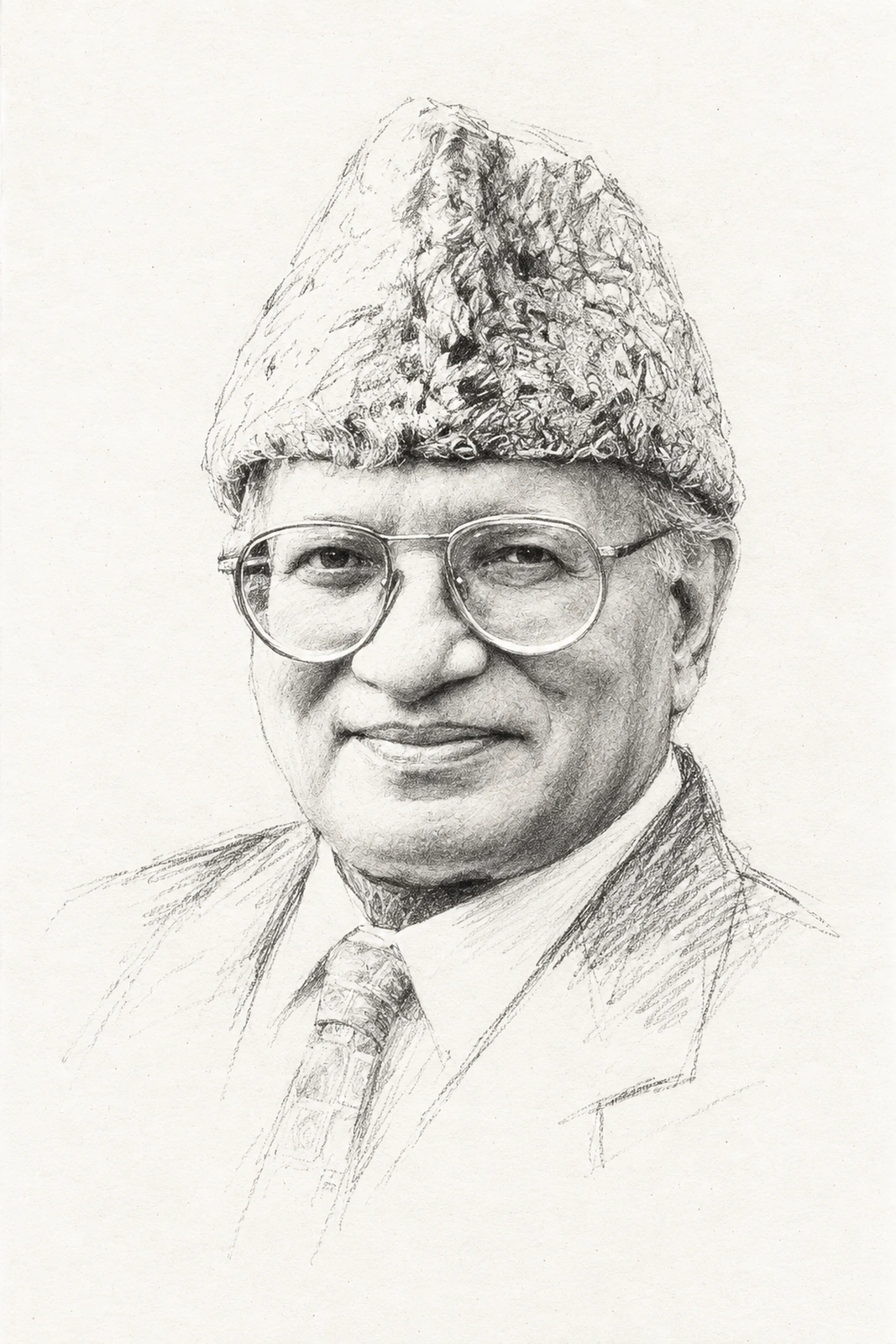
THE WRITTEN WORD
Philosophy of Sri Aurobindo
Paragraph references are specific to this digital edition.
Philosophy of Sri Aurobindo
If our quest of knowledge is free from pre-conceptions and dogmas, and if our search aims at discovering action that ensures the highest good of the entire world, then the study of Sri Aurobindo will be found inescapable.
PHILOSOPHY OF SRI AUROBINDO
If our quest of knowledge is free from pre-conceptions and dogmas, and if our search aims at discovering action that ensures the highest good of the entire world, then the study of Sri Aurobindo will be found inescapable. For such indeed was his own quest, and his voluminous works provide ample proof of that quest and they also provide to us a vast body of knowledge that he came to acquire and master and into which we can dive deeply and swim vastly for purposes of our own programme of inquiry, questioning and verification. In his The Synthesis of Yogahe has, like a scientist, given a detailed and precise exposition of the realms of knowledge in which he has travelled, covering various levels of consciousness in the individual and the universal, and in the transcendental, particularly those of the mind and the supermind, as also of the methods by which those realms can be approached, traversed and mastered. In his The Life Divine, he has fashioned in minuteness, subtlety and complexity an edifice of philosophical thought of such vastness and intricate reasoning that can provide a rational assurance of the possibility and inevitability of the evolution of the divine life on the earth and invite an earnest seeker to a long, sustained and patient inquiry at the highest levels of critical and self-critical examination. In his Savitri, he has presented a supreme poetic creation of multiple dimensions relating to a symbolic story of epical character that raises and answers the central issue of human life on the earth in which the riddle of the world is locked, and in the heart of which the secret of the highest good of humanity is shown to be discoverable and realisable. These three are his supreme works, but there are many others, more than 30, in which Sri Aurobindo has expounded his vision and work, and we can approach them for attaining the highest and the best.
Consciousness is, according to Sri Aurobindo, the greatest underlying fact; it is the universal witness; it is to that witness that the worlds and their objects appeal for their reality; we have no other evidence that they exist. It is argued that the material universe existed before life and mind made their appearances and it will survive after they have disappeared. But this argument assumes that consciousness, the universal witness, consists of the individual embodied mind born in the world. But when we extend our consciousness, we find the presence of cosmic consciousness embracing the universe and appearing as an immanent Intelligence in its entire works.
Sri Aurobindo points out that the possibility of a cosmic consciousness in humanity is coming slowly to be admitted in modern Psychology, as also the possibility of more elastic instruments of knowledge. According to Sri Aurobindo, it is only when we follow the Yogic process of quieting the mind itself that a profounder result of our self-observation becomes possible. At a certain point of this self-observation, we discover that that which observes all the activities of the mind is the mental being supporting the mind substance and mind energy. It is further found that that mental being is the upholder and source of sanctions, and without its sanction, mental operations could not exist or operate. This mental being or the mental Purusha, as it is called in Indian Philosophy, first appears as a silent witness and subsequently it is discovered to be the giver of the command, the Knower. At this stage, a question arises as to whether the entire phenomenal creation is presented to the mental being or whether it is something pre-determined by dynamic truth of Self within and only manifested on the mind surface. As Sri Aurobindo points out, in order to know that we would have to touch or to enter into cosmic state of being and consciousness in which the totality of things and their integral principle would be better manifest than to our limited mind experience.
It is here that one can discover, according to Sri Aurobindo, Overmind-Consciousness which is beyond individual mind and which is beyond even universal mind that can be found in the realm of what is called Ignorance in Indian Philosophy. According to Sri Aurobindo, Overmind-Consciousness carries in itself a first direct and masterful cognition of cosmic truth. One thing becomes clear at this level of consciousness; it is self-evident here that both the Individual and the Cosmos come from a transcendent Reality which takes form in them. But still at the level of the Overmind-Knowledge the question set out for us by the phenomenon of the universe is not solved, and three alternative views of creation are presented, and the Overmind permits each one of them to formulate itself in its own individual right and realize its own existence in cognition, in dynamic self-presentation, in substantiating experience. These three alternative views are (a) whether the building of thought, experience, the world of perceptions of the mental Person, the mind Purusha, is truly a self-expression, self-determination proceeding from some truth of his own spiritual being, a manifestation of that truth’s dynamic possibilities or (b) whether it is not rather a creation or construction presented to him by Nature, by Prakriti; or else (c) whether it might be a play of a cosmic imagination, a phantasia of the Infinite imposed on the blank indeterminable of his own eternal power of existence.
According to Sri Aurobindo, Overmind gives us no final or positive solution. But there is still a higher cognition beyond the Overmind, a Supramental cognition which is the highest level of cosmic consciousness, and we are left to seek for an answer in that cognition. Sri Aurobindo describes the supramental cognition as a Supramental Truth-Consciousness and points out that it is at once the self-awareness of the Infinite and Eternal and a power of self-determination inherent in that self-awareness; the first is its foundation and status, the second is its power of being, the dynamis of its Self-Existence. In the Supermind, it is found the Supreme is not a rigid Indeterminable and all negating Absolute; an Infinite of being complete in itself in its own immutable purity of existence, and its sole power, a pure consciousness, able only to dwell on the being’s changeless eternity on the immobile delight of its sheer Self-Existence, is not the whole Reality. The Infinite of Being is also be an Infinite of Power.
Sri Aurobindo speaks of triple status of the Supermind. The first poise or status of the Supermind is distinguishable from the pure unitarian Consciousness which is a timeless and spaceless concentration of the Supreme Reality. The first poise of the Supermind is an equal self-extension of the Supreme Reality, – all-comprehending, all-possessing, all-constituting. The first poise of the Supermind founds the inalienable unity of things. As the thoughts and images that occur in our mind are not separate existences to us, but forms taken by our consciousness, in somewhat similar way are all names and forms to this primary Supermind. It is the pure divine ideation and formation in the Infinite. But these names and forms are not an unreal play of mental thought but a real play of Conscious being. The names and forms are not mere Ideas; they are Real Ideas.
In the second poise of the Supermind there is an operation of apprehending consciousness, which consists of differentiation in the unifying consciousness with unequal emphasis. Apprehending consciousness is differentiating consciousness with unequal concentration; in each name and form the apprehending consciousness would realize itself as the stable Conscious-Self, the same in all; but also it would realize itself as a concentration of conscious-self following and supporting the individual play of movement and upholding its differentiation from other play of movement, − the same everywhere in soul-essence but varying in soul-form. This concentration supporting the soul-form would be the individual Divine or Jivatman as distinguished from the universal Divine or one all-constituting self. In the second poise, the One manifests the play of the One with the Many that are still one.
In the third poise, the underlying unity of supramental existence would come to be dominated by the individuals not only apprehending names and forms but even by projecting themselves into the movement of names and forms and to be in a way involved in it.
These three poises are only different ways of dealing with the truth of existence. The secondary and tertiary Supermind only develop and apply in the terms of the Divine multiplicity what the primary Supermind holds in the terms of the Divine unity. It is because in Time, the Many seem not to be eternal but to manifest out of the One and return into it as their essence that their Reality comes to be denied; but as Sri Aurobindo points out, it might equally be reasoned that the eternal recurrence of the manifestation in Time is a proof that the Divine multiplicity is an eternal fact of the Supermind beyond Time no less than the Divine unity.
According to Sri Aurobindo, Infinite consciousness holds within itself endless truth of its own self-awareness. These, in action, would appear to our cognition as aspects of its being, to our spiritual sense as powers and movements of its dynamis, to our aesthesis as instruments and formulations of its delight of existence. Creation, as Sri Aurobindo points out, would then be a self-manifestation; it would be an orderly deployment of the infinite possibility of the Infinite. But every possibility implies a truth of being beyond it, a reality in the Existence; for without that support in truth there could not be any possibility.
In the Supermind cognition, three aspects of Reality viz., an Infinite and Eternal Existence, an Infinite and Eternal Consciousness, and an Infinite and Eternal Delight of Existence, are always an inseparable Trinity, even though one can stand in front of the others and manifest its own spiritual determinates as its primal aspects or its inherent self-formulations, but all these together are original to the triune Absolute.
According to Sri Aurobindo, all deploying of powers and possibilities and their inherent consequence is held together by Supermind cognition in an intimate Oneness, it keeps them founded consciously on the original Truth and maintains the harmony of the truths they manifest. There is no imposition of imagination, no arbitrary creation, neither is there any division, fragmentation, irrecoverable contrariety or disparateness.
In the supramental consciousness, the objectivity of the objective universe attains certainty, for it is that very consciousness that puts forth the objective universe. Similarly, it is in the supramental consciousness that there is attained the certainty of the truth of the One that has inherent in it the Many, even though unmanifested, as also of the One and its relationship with the Many in various terms of identity and difference. As Sri Aurobindo points out, it is only when our human mentality lays an exclusive emphasis on one side of spiritual experience, affirms that to be the sole eternal truth and states it in the terms of our all-dividing mental logic that the necessity for mutually destructive schools of Philosophy arises. Sri Aurobindo explains the situation as follows:
“Thus, emphasising the sole truth of the Unitarian consciousness, we observe the play of the divine unity, erroneously rendered by our mentality into the terms of real difference, but, not satisfied with correcting this error of the mind by the truth of a higher principle, we assert that the play itself is an illusion. Or, emphasising the play of the One in the Many, we declare a qualified unity and regard the individual soul as a soul-form of the Supreme, but would assert the eternity of this qualified existence and deny altogether the experience of a pure consciousness in an unqualified oneness. Or, again, emphasising the play of difference, we assert that the Supreme and the human soul are eternally different and reject the validity of an experience which exceeds and seems to abolish that difference. But the position that we have now firmly taken absolves us from the necessity of these negations and exclusions: we see that there is a truth behind all these affirmations, but at the same time an excess which leads to an ill-founded negation. Affirming, as we have done, the absolute absoluteness of That, not limited by our ideas of unity, not limited by our ideas of multiplicity, affirming the unity as a basis for the manifestation of the multiplicity and the multiplicity as the basis for the return to oneness and the enjoyment of unity in the divine manifestation, we need not burden our present statement with these discussions or undertake the vain labour of enslaving to our mental distinctions and definitions the absolute freedom of the Divine Infinite.”
It is because in the supramental consciousness, truths of various experiences are seen and comprehended in their true status and level, that supramental consciousness can be considered to be integral consciousness. A Philosophy founded on integral consciousness can rightly be termed as Integral Philosophy. What is stated above is a brief and inadequate statement of a possible starting-point of the Integral Philosophy as expounded by Sri Aurobindo. In this brief statement no attempt has been made to argue or to establish or to demolish any particular standpoint. But if we are to understand the Philosophy of Sri Aurobindo, the brief statement made here may prove to be of some initial use.
Sri Aurobindo and the Future of Humanity
NATIONAL SEMINAR
on
Sri Aurobindo and The Future of Humanity
(17th to 19th JANUARY 2005)
Organised
by
University Grants Commission
PLENARY LECTURE
by
KIREET JOSHI on 17th January at 12.00 Noon
Venue:
CONFERENCE ROOM NO.3
INDIA INTERNATIONAL CENTRE (ANNEXE)
NEW DELHI
SRI AUROBINDO AND THE FUTURE OF HUMANITY
I
A Synoptic Statement
Sri Aurobindo has been described as the adventure of consciousness but he can also be aptly described as the future in the process of realisation. Sri Aurobindo dreamt as a revolutionary, and every great dream that he dreamt has been realised and is being realised more and more concretely, the fruits of which can be read in the living pages of history. Of the five great dreams that he spoke in his message on the 15th of August 1947, Sri Aurobindo himself reviewed these dreams and showed how four of them had already been realised or how they were moving towards their realisation. These were relating to a free and united India, resurgence and liberation of the peoples of Asia, a world union forming the outer basis of a fairer, brighter and nobler life of all mankind, and the spiritual gift of India to the world. Of the fifth dream, which he described as a personal hope and an idea, was a step in evolution which would raise man to a higher and larger consciousness and begin the solution of the problems which have perplexed and vexed him since he first began to think and to dream of individual perfection and a perfect society. And yet this was, we might say, his key dream, since all other goals of his life were dependent on that key dream. His central aim of life was to develop in the human being and in the human race a new light which he calls supramental consciousness by the aid of which interdependence and mutuality of the individual and collective consciousness can become manifest and express themselves in lasting world harmony. At the time when he spoke of this ideal as a personal hope, he was totally engaged in bringing about the descent of the supramental consciousness on the earth, and he was at the intensest point of facing the difficulties, more formidable than in any other field of endeavour.
Sri Aurobindo has been a forerunner, visualising a great future for humanity and a pioneer in hewing a path for humanity to arrive at the next step of human evolution. As a nationalist, he ranks as an outstanding internationalist, as an internationalist, he ranks as a universal humanist, and as a leader of the human mind, he ranks as a climber to the divine supermind. As a climber to the supermind, he made himself a bridge for the descent of the supermind for the supramentalisation of the earth. Future, - a glorious future for humanity, - is the very theme of the life and work of Sri Aurobindo.
II
Sri Aurobindo and Nationalism
As is well known, Sri Aurobindo wrote blazing pages between 1906 and 1908 for Bande Mataram, which electrified the nation and defined for the whole country the meaning of Indian nationalism. In a brief but compelling statement, he provided a quintessential answer to the question as to what is nation, what is nationality and what is nationalism, and this statement would continue even for the future, as guideline of assurance of the continuous relevance of the reality of nationalism for all the national souls, including the Indian national soul. This statement can profitably be reiterated:
… there are certain essential conditions, geographical unity, a common past, a powerful common interest impelling towards unity and certain favourable political conditions which enable the impulse to realise itself in an organised government expressing the nationality and perpetuating its single and united existence. This may be provided by a part of the nation, a race or community, uniting the others under its leadership or domination, or by a united resistance to a common pressure from outside or within. A common enthusiasm coalescing with a common interest is the most powerful fosterer of nationality. We believe that the necessary elements are present in India, we believe that the time has come and that by a common resistance to a common pressure in the shape of the boycott, inspired by a common enthusiasm and ideal, that united nationality for which the whole history of India has been a preparation, will be speedily and mightily accomplished.1
Nationalism and Internationalism
There is today much contest in respect of concept of the nation and nationalism and it is even sometimes suggested that in the coming days of internationalism, globalisation and large aggregation in the formation of a possible world-unity, nations and nationalities will be overpassed and the world will enter into a post-national stage of existence. We of the present day and the coming days will need to consider these suggestions, and in determining our future course of action, Sri Aurobindo’s analysis, which he has given in his great work, “The Ideal of Human Unity”, will need to be revisited. In particular, we need to study the distinction that Sri Aurobindo made between political unity and real unity. Sri Aurobindo states that this distinction must be made because "it is of the greatest utility to a true and profound political science and involves the most important consequences. When an empire like Austria, a non-national empire, is broken to pieces, it perishes for good; there is no innate tendency to recover the outward unity, because there is no real inner oneness; there is only a politically manufactured aggregate. On the other hand, a real national unity broken up by circumstances will always preserve a tendency to recover and reassert its oneness.”2
Sri Aurobindo points out that just as the individual is an ontological Spirit, and therefore it can never be reduced to become a mere cog in a machine, even so nation is a living spirit and soul, and therefore it can never permanently be reduced to a status of a mere province of larger or even the largest aggregate. At the same time, Sri Aurobindo underlines the fact that humanity is turning today towards world unity, and the central problem for the human endeavour in this connection will be as to how the nation will adjust itself to the pressure of the forces that are today creating phenomena which are global, world-wide and planetary in character.
In this connection, Sri Aurobindo makes a distinction between national ego and national soul, corresponding to the distinction in regard to the individual life where the superficial ego is seen to be distinct from the true individual soul. The mark of egoism, according to Sri Aurobindo, is its superficiality and its ignorant attempt to arrive at superficial unity whether that ego is individual or national. The mark of the ego is its sense of division from all the rest, its pretension to be entirely independent in a poise of superiority over all the others. Corresponding to this ego, Sri Aurobindo points out, there is no real reality. There is no ontological reality, there is no independent divided entity which is superior to all the rest. The true individual, on the other hand, has indeed distinctiveness, but is not divided from the others. The true individual and the true nation-soul are characterized by mutuality, interdependence and inner oneness that manifests in diversity. Based upon this philosophical foundation, Sri Aurobindo perceives the future of nations as entities seeking and finding their inner souls by virtue of which they will remain free but mutually interdependent, and this, in turn, will provide the form of world unity that is supportive and not destructive of the nations. Sri Aurobindo speaks of a world union of free nations, each having status of equality, and all contributing through their distinctive capacities to the fund of richness and variety at the global level.
In this context, Sri Aurobindo formulates an ideal law of social development in which the truths of the individual, of the nations and of humanity are all reconciled and synthesized. This is the law as he has formulated:
Thus the law for the individual is to perfect his individuality by free development from within, but to respect and to aid and be aided by the same free development in others. His law is to harmonise his life with the life of the social aggregate and to pour himself out as a force for growth and perfection on humanity. The law for the community or nation is equally to perfect its corporate existence by a free development from within, aiding and taking full advantage of that of the individual, but to respect and to aid and be aided by the same free development of other communities and nations. Its law is to harmonise its life with that of the human aggregate and to pour itself out as a force for growth and perfection on humanity. The law for humanity is to pursue its upward evolution towards the finding and expression of the Divine in the type of mankind, taking full advantage of the free development and gains of all individuals and nations and groupings of men, to work towards the day when mankind may be really and not only ideally one divine family, but even then, when it has succeeded in unifying itself, to respect, aid and be aided by the free growth and activity of its individuals and constituent aggregates.3
Globalisation and the Concept of World-Union
We speak today of globalisation, with mixed feelings of welcome and suspicion. On the one hand, it evokes in us a noble sentiment of “one earth” and of humankind as one race born of one common Mother Earth, and it raises in us a dream of the ideal of human unity and of universal fraternity. On the other hand, it is seen as a phenomenon of a growing network spreading over the whole globe in which the old forces of competition and resultant asymmetrical relations constitute the central forum of action and reaction. Sri Aurobindo had foreseen in his “The Ideal of Humanity” how both these features of the contemporary world movement would come to characterise the contemporary global situation. Sri Aurobindo had also foreseen the possible perils of the increasing sweep of the turn towards the world unity, and had indicated the necessity of avoiding tendencies towards tyrannical mechanisation and dehumanisation. His vision of the future, therefore, advocates the growth of global consciousness which can effectively combat shortsighted visions and appetites of egoism in individual life and in collective life. In fact, Sri Aurobindo has devoted a major portion of his writings that can provide luminous guidance to the future development of humanity in realising human unity that would be free from the dangers that are likely to develop and which are likely to frustrate the highest possibilities of human fulfilment, unless a deliberate effort is made by humanity to bring about a radical change of consciousness. For this guidance, we need to study not only “The Ideal of Human Unity” but also “The Human Cycle”, “War and Self-determination”, and also “The Life Divine”.
III
Evolutionary Crisis
Sri Aurobindo considers the acute problems and difficulties of the present stage as an evolutionary crisis in which human will is called upon to make a free choice. This is the crisis where evolution of human Reason is, on the one hand, increasingly compelled to yield to the pressure that impels the creation of a life of universalised rule of economic barbarism, while on the other hand, it is increasingly obliged also to exercise its role in lifting up humanity to create a life of unity, mutuality and harmony born of a deeper and wider truth of our being. And yet there is also a possibility that the human reason might continue to spin itself into larger or narrower circles propounding great dreams but never fulfilling them. The question, therefore, is whether the human being will choose to remain arrested in some kind of intermediary typal perfection like earlier animal kinds, or whether he will consent to rise to a higher level of evolution. The necessity to make the choice has created a state of crisis, since the choice to pursue a higher level is not only difficult but appears at first sight to be almost impossible. Sri Aurobindo describes this crisis as follows:
At present mankind is undergoing an evolutionary crisis in which is concealed a choice of its destiny; for a stage has been reached in which the human mind has achieved in certain directions an enormous development while in others it stands arrested and bewildered and can no longer find its way. A structure of the external life has been raised up by man’s ever-active mind and life-will, a structure of an unmanageable hugeness and complexity, for the service of his mental, vital, physical claims and urges, a complex political, social, administrative, economic, cultural machinery, an organised collective means for his intellectual, sensational, aesthetic and material satisfaction. Man has created a system of civilization which has become too big for his limited mental capacity and understanding and his still more limited spiritual and moral capacity to utilize and manage, a too dangerous servant of his blundering ego and its appetites. … A greater whole-being, whole-knowledge, whole-power is needed to weld all into a greater unity of whole-life.4
Importance of the UNO
As an aid to the higher choice that can be made by humanity, Sri Aurobindo has welcomed the increasing force of internationalism, and in that context, the formation of the United Nations Organisation as a force that now stands in the forefront of the world and struggles towards some kind of permanence and success in the great far reaching endeavour on which depends the world’s future. Emphasising the importance of United Nations Organisation, Sri Aurobindo wrote in 1949 in a postscript chapter to his The Ideal of Human Unity the following:
This is the capital event, the crucial and decisive outcome of the world-wide tendencies which Nature has set in motion for her destined purpose. In spite of the constant shortcomings of human effort and its stumbling mentality, in spite of adverse possibilities that may baulk or delay for a time the success of this great adventure, it is in this event that lies the determination of what must be.5
Following the idea of the United Nations Organisation, Sri Aurobindo foresees the development of a World-State without exclusions and on a principle of equality into which consideration of size and strength would not enter. Indeed, Sri Aurobindo raises the question of the freedom of the individual and of the nations in the context of emergence of the World-State. And in this context, Sri Aurobindo considers it necessary that a profounder spiritual ideal for the individual and for the nation and the world should emerge and vivify the world organisation in such a way that the spirit of the individual and the spirit of the nation, the freedom of the individual and the freedom of the nation are not only maintained but respected and perfected. Sri Aurobindo, therefore, speaks of a union of free people which could open the prospect of a sound and lasting order.
Spiritual Religion of Humanity
In this context, the emergence of religion of humanity is of a greater significance, although he finds its present intellectual form hardly sufficient. Sri Aurobindo, therefore, advocates the emergence of a spiritual religion of humanity and explains that he does not mean by it what is called universal religion, a system, a creed of intellectual principle and dogma and outward rite. For Sri Aurobindo emphasises the growth of the realisation that there is a secret spirit, a divine Reality, in which we are one, that humanity is its highest representation in the world, that the human being is the means by which it will progressively reveal itself here. There must be, according to Sri Aurobindo, the realisation by the individual that only in the life of his fellowmen is his own life complete. There must be, he adds, the realisation by the race that only on the free and fullness of the individual can its own perfection and happiness be founded. Finally, Sri Aurobindo points out the need of the discipline and the way by which each individual can be developed in accordance with his or her line of development towards integrality and all-embracing perfection. In defining the spiritual religion of humanity in which the ideals of liberty, equality and fraternity can be harmonised, Sri Aurobindo states:
The union of liberty and equality can only be achieved by the power of human brotherhood and it cannot be founded on anything else. But brotherhood exists only in the soul and by the soul; it can exist by nothing else. For this brotherhood is not a matter either of physical kinship or of vital association or of intellectual agreement. When the soul claims freedom, it is the freedom of its self-development, the self-development of the divine in man in all his being. When it claims equality, what it is claiming is that freedom equally for all and the recognition of the same soul, the same godhead in all human beings. When it strives for brotherhood, it is founding that equal freedom of self-development on a common aim, a common life, a unity of mind and feeling founded upon the recognition of this inner spiritual unity. These three things are in fact the nature of the soul; for freedom, equality, unity are the eternal attributes of the Spirit. It is the practical recognition of this truth, it is the awakening of the soul in man and the attempt to get him to live from his soul and not from his ego which is the inner meaning of religion, and it is that to which the religion of humanity also must arrive before it can fulfil in the life of the race.6
IV
Evolution, Supermind and The Future
As an aid to the solution that Sri Aurobindo has presented, Sri Aurobindo has provided a voluminous study of human consciousness, presenting therein the results of his herculean labour and explorations and research in yoga to which he had turned in 1901, not in search of the usual aim of personal salvation but for the sake of development of that power which yoga can develop for its utilisation in the task of attainment of Indian freedom, and subsequently, for the attainment of human solidarity and most beneficial fulfilment of the ideals for which humanity has aspired right from the earliest preoccupation in its awakened thoughts. Without this yogic endeavour and without the knowledge and the power that have been generated by it, the glimpses of which can be had in Sri Aurobindo’s writings, particularly in his The Synthesis of Yoga and his epic Savitri, Sri Aurobindo’s vision of the future of humanity might have seemed a philosopher’s speculations like those of the eminent philosophers of evolution, such as Alexander, Whitehead, Teilhard de Chardin, who have studied and critically examined the scientific theory of evolution and concluded that the future of humanity lies in the direction of the emergence of the deity or towards the progressive ingression and incorporation into the cosmic series of the eternal divine order, or else towards an omega point which can be described as a collective divinity.
The distinctive feature of Sri Aurobindo’s philosophy of evolution is that it is not speculative and that its premises and conclusions are tested on the anvil of experimentation. Sri Aurobindo pointed out that the animal is a living laboratory in which Nature has worked out man and that man himself is a thinking and living laboratory in whom and with whose conscious cooperation Nature wills to work out the divine superman. In pursuance of this hypothesis, Sri Aurobindo made an experiment upon his entire integral being, using it as an evolutionary laboratory, so as to evolve and manifest higher and higher grades of consciousness reaching up to the supermind so as to supramentalise the human body to the farthest extent possible.
In 1949, Sri Aurobindo wrote a series of articles which can be considered to be his manifesto for the future of humanity. In these articles, which have been published in a book entitled Supramental Manifestation Upon Earth, Sri Aurobinodo has spoken of the relationship between supermind and humanity, of the mind of light that will seize humanity, and even of the total transformation of human life so as to arrive at the birth of a new humanity or super-humanity.
Indeed, The Mother, to whom Sri Aurobindo had assigned the task of continuing his work even after his departure from his body, declared in 1956 that the supermind had descended, and we have in 13 volumes of Mother’s Agenda, a continuous account of the way in which the supermind that had descended was working out farther consequences for humanity and for the mutation of the human species. Indeed, we have in these 13 volumes a journal of a scientist in which are recorded meticulously both macroscopic and microscopic events relating to humanity and its future. There is here all the help that one can wish for us to understand and feel the way in which Sri Aurobindo has been contributing to the humanity’s future.
According to Sri Aurobindo, human nature can be changed and it can be changed by a method of integral yoga, having its basis in verifiable objective knowledge of the supramental consciousness and laws of the working of the supermind in the world and in the evolutionary processes as a result of which humanity has evolved so far and stands today at the threshold of its own mutation. A generalisation in humanity of the imperative necessity of spiritual transformation, if humanity is to survive and arrive at its fulfilment, is a precondition.
Development of the integral yoga that aims at supramental transformation is rightly regarded as Sri Aurobindo’s latest gift for the future of humanity. It has, however, to be noted that the task of supramental transformation is extremely difficult, although, according to Sri Aurobindo, the time has come for the generalisation of yoga in humanity.
Whether humanity will respond to the need of this new turn will depend upon its increasing perception of the necessity of spiritual transformation. Sri Aurobindo points out that a change from the vital and mental to the spiritual order of life must necessarily be accomplished in the individual and in a greater number of individuals before it can come to have an effective hold upon community. What is necessary is that the common human mind begins to admit the ideas proper to the higher order that is in the end to be, and the heart of man begins to be stirred by aspirations born of these ideas. Sri Aurobindo concludes that if this condition is fulfilled then there is hope of some advance in the not distant future.
Inevitability of the Spiritual Solution
Despite the difficulties and critical trials through which humanity may be required to pass, Sri Aurobindo underlines the need of understanding the inevitability of the spiritual solution. Indeed, in presenting this solution, Sri Aurobindo is aware that it may be objected that it puts off the consummation of a better human society to a far off date in the future evolution of the race. But Sri Aurobindo affirms forcefully:
… if this is not the solution, then there is no solution; if this is not the way, then there is no way for the human kind. Then the terrestrial evolution must pass beyond man as it has passed beyond the animal and a greater race must come that will be capable of the spiritual change, a form of life must be born that is nearer to the divine. After all there is no logical necessity for the conclusion that the change cannot begin at all because its perfection is not immediately possible. A decisive turn of mankind to the spiritual ideal, the beginning of a constant ascent and guidance towards the heights may not be altogether impossible, even if the summits are attainable at first only by the pioneer few and far-off to the tread of the race. And that beginning may mean the descent of an influence that will alter at once the whole life of mankind in its orientation and enlarge for ever, as did the development of his reason and more than any development of the reason, its potentialities and all its structure.7
According to Sri Aurobindo, the world is a mutable world and uncertainties and dangers cannot be avoided. Much will depend, according to Sri Aurobindo, on the intellectual and moral capacity of humanity to carry out what is evidently the one thing needful, namely, a concentrated effort at the spiritual change that can sustain a global and untied human family.
V
One question that we in India can ask for guidance is as to what Sri Aurobindo counsels us in respect of the tasks that India should accomplish in the light of the needs of the future of humanity. In answer, we may point to the three tasks that Sri Aurobindo has put forward in his great work The Renaissance in India:
The recovery of the old spiritual knowledge and experience in all its splendour, depth and fullness is its first, most essential work; the flowing of this spirituality into new forms of philosophy, literature, art, science and critical knowledge is the second; an original dealing with modern problems in the light of Indian spirit and the endeavour to formulate a greater synthesis of a spiritualised society is the third and most difficult. Its success on these three lines will be the measure of its help to the future of humanity.8
Theories of Evolution and Sri Aurobindo’s Concept of Complete Person
We are in search of an adequate concept of complete person.
The search that has been presented to us so far cannot be considered to be as complete as it might seem, considering that important evolutionary theories also need to be presented and considered.
The process of evolution was detected in ancient times. Both in India and in Greece, there were important ideas of evolution. In modern times, the theory of evolution is mainly the work of Linnaeus (1707-78), Buffon (1707), Erasmus Darwin (1731-1802), Lamarck (1744-1829), Charles Darwin (1809-82) and his followers.
On the Origin of Species written by Charles Darwin (1859) gave details and demonstrations of his scientific theory of evolution, according to which, life on the earth evolved by a gradual and yet continuous process from the earliest forms of living organisms to the latest product, man. Natural selection, variation and heredity are said to be the factors through the operation of which new species arise out of existing ones. When new characters are produced by the variability of organisms, natural selection decided their survival or death. If the characters do not adapt to their environment, they are eliminated in the competition. If, on the other hand, they equip themselves better for the struggle, they tend to survive. The offsprings of the successful tend to resemble the parents in exhibiting the favoured variation to a greater degree than the parents, and a new type becomes established by a continuous piling up of small useful accretions through many generations.
The two original components of Darwin’s theory were (i) that evolution is gradual, and (ii) that the nature of the change is dictated by natural, not divine, selection. Both of these are closely interlinked, and both are at the heart of controversy today, as they were in Darwin’s time.
Many naturalists accepted Darwin’s gradualism because it accorded well with what they saw in living species. But critics could not accept that all the world’s marvellous species and their extraordinary structures such as those of the eye, could have arisen only by chance. Some biologists accepted that minor changes might be the result of natural selection, but held that beyond extremes within a range of variation, a new species could not arise by natural selection alone. The only way in which the boundaries of species might be breached, they contended, would be through a sudden jump.
Palaeontologists who dug up and classified the remains of extinct species raised another major objection to gradualism. They argued that if Darwin were right, they should be able to find a series of specimens that could be laid out in a gradual continuum from one major type of animal to another. If, for example, reptiles evolved into mammals, there should be fossils representing every gradation between these two groups. Instead, the palaeontologists found more gaps than continua. Darwin conceded this, but he thought that further researches would reveal the intermediate links. As it turned out, only a few links have been found, and this issue is a part of today’s controversy.
But there is still a deeper question. Why do variations occur? Whether they are small or great, gradual or abrupt, we cannot trace them to the influence of the environment. For types without variations seem to be just as well adapted as those with them. Darwin’s view of chance variations is virtually a confession of his inability to explain the source of variations.
Modifications and variations do not come singly but in complexes, involving many minor and consequential modifications and variations. Each single small variation is not independently selected. In other words, the organisms seem to ’vary’ as a whole.
Bergson pointed out that the molluscs in the order of evolution proceed by steady steps to develop an eye, which resembles very much the eye developed by the independent line of vertebrates. How does it happen, he asked, that similar effects appear in different lines of evolution brought about by different means? How could the same small variations occur in two independent lines of evolution if they were purely accidental? According to Bergson, the two series must have been governed by a common vital impulse to this useful end. There is something more in evolution than merely mechanical urge. He is inclined to attribute a ‘rudiment of choice’ to the species which, travelling by different paths, reach the same goal. Given a new situation, the ’urge’ (élan vital), common to all members, leads them to meet it by new method.
According to Bergson, it is the inner urge, or life force, or an upward drive that incites the whole species in a definite direction. The striving of the organism is the creative effort to which evolution is due.
The biological theory of evolution assumes that life always came from life. Herbert Spencer questioned this assumption and attempted to give a philosophical account of the rise of the living from the non-living, the mental from the non-mental. According to him, the differences between these are due to the degree of the complexity of the organisation. But still the question why life should evolve out of Matter or in Matter is not explained. Why should life occur at all? The theory of the survival of the fittest does not carry us far. Life has little survival value as compared with matter from which it is supposed to have sprung. A rock survives for hundreds of millions of years, while even the oldest tree is only a few thousand years old. If survival was the aim of nature, life would never have appeared.
Other significant philosophical theories have also come to be formulated. According to Samuel Alexander, the whole process of the universe is a historic growth from space-time. The original matrix is space-time. Time is the mind of space. In course of time, space-time breaks up into finites of ever-increasing complexity. At certain points in the history of things, finites assume new empirical qualities which are distinctive levels of experience ‒ primary qualities, matter; and secondary qualities, life and mind. As explained in his book Space, Time and Deity, the cosmic process has now reached the human level, and man is looking forward to the next higher quality of deity. According to him, men of religious genius are preparing mankind for this next stage of development. The divine quality or deity is a stage in time beyond the human. The whole world is now engaged in the production of deity. As time is the very substance of reality, no being can exhaust the future. Even God is a creature of time.
Lloyd Morgan, who comes very close to Alexander in his account of emergent evolution, acknowledges God as the nisus through whose Activity emergents emerge, and the whole course of emergent evolution is directed. According to him, God is not the emergent deity, but an Activity within which qualities emerge. God is the breath from the whole movement, the deep root which feeds the whole tree. The course of history is the gradual coming of God to Himself. Lloyd Morgan contends that emergent evolution is not predictable. But it is not strictly undetermined like Bergson’s creative evolution, not only unpredictable for human minds, but in principle for all minds. Lloyd Morgan infers the coming of divinity from the purposeful direction of the universe, and he is inclined to make his God completely immanent. He maintains that the whole course of events subsumed under evolution is the expression of God’s purpose.
Lloyd Morgan is basically an adherent of Spinoza, and although he speaks of emergence in the evolutionary process, one suspects that changes occur according to rule, and there is no spontaneity.
According to Pierre Teilhard de Chardin (1881-1955), the evolutionary process cannot be described or evaluated in terms of its origin. What comes later is more than what was there earlier. There is, according to him, a developing process marked by increasing complexity. It is true that the powers and properties of matter, life, mind, history and values are not entirely different. They interpenetrate and produce an increasing complexity and concentration. In man evolution becomes conscious of itself. Tracing the story of evolution, he examines the phenomena, big and small, from subatomic particles and cells to stellar galaxies, biospheric and noo-spheric. There are, according to him, two complementary tendencies in the evolutionary process, differentiationandintegration. In his paleontological studies, he found that evolution tends towards unification.
According to him, all energy is essentially psychic. In his book The Phenomenon of Man, he conceives for man a superhuman future and presents a transcendental vision of omega-workings. Evolution is pushing man towards a higher goal, an omega point, which can be described as collective divinity. A cosmic divine manifestation is in the making.
Whitehead, who recalls the Platonic view of the cosmic process, maintains that nothing can emerge in the evolutionary process of the universe if its constituents were not already in existence. The qualities which are said to emerge historically in the philosophy of Alexander are ingredients into events from the beginning, according to Whitehead. The ingredience of eternal objects into events is the explanation of the historical becoming. He admits that at every step there is the emergence of what is genuinely new. Every event, according to him, is a miracle, but it embodies an idea from beyond the developing series of events in the universe. Whitehead suggests an eternal order and a creative reality. The cosmic series has a nisus towards the eternal order which is beyond itself, though it is increasingly realised in the cosmic.
’Ingressive evolution’ is a phrase that aptly describes Whitehead’s theory. There is, according to Whitehead, a progressive ingression and incorporation into the cosmic series of the eternal order which God embraces in himself. The ’primordial’ nature of God is the conceptual consciousness of the possibilities capable of harmonious concurrent realisation. These possibilities are called by Whitehead ’eternal objects’. They are eternal forms or ideas, to use the Platonic expression, but unlike Platonic ideas, they are not substances, but possibilities, conceptually realised in God. They are not imaginary or abstract. Some of them are apprehended as possibilities logically prior to their manifestation in existence, and others as symbols of values that we pursue. The relation of form to the temporal world is that of potentialities to actualities. In the view of Whitehead, the temporal actualities realise the possibilities surveyed in God’s nature. The order and purpose we see in the world is the result of actuality fulfilling the highest possibilities it sees before itself, which is the vision of God as relevant for it.
According to Sri Aurobindo, the urge to exceed oneself is inherent in the human being. This urge of self-exceeding manifests in the divination of the Godhead, the impulse towards perfection, the search after pure Truth and unmixed Bliss, the sense of a secret immortality. He points out that this aspiration can be discerned in the texts of the ancient dawns of human civilisation, and we find that even when it is banished during the periods of scepticism, it returns and seizes humankind. Referring to the contemporary humanity, he points out that even though satiated, it is not satisfied by victorious analysis of the externalities of Nature and that it is preparing to return to its primeval longings. He concludes: "The earliest formula of Wisdom promises to be its last, − God, light, freedom and immortality."9
Sri Aurobindo admits that these persistent ideals of the race contradict its normal experience, but he points out that they are affirmed by verifiable and repeatable experiences which are attainable at higher and deeper levels of consciousness. Sri Aurobindo states:
"To know, possess and be the divine being in an animal and egoistic consciousness, to convert our twilit or obscure physical mentality into the plenary supramental illumination, to build peace and a self-existent bliss where there is only a stress of transitory satisfactions besieged by physical pain and emotional suffering, to establish an infinite freedom in a world which presents itself as a group of mechanical necessities, to discover and realise the immortal life in a body subjected to death and constant mutation, ‒ this is offered to us as the manifestation of God in Matter and the goal of Nature in her terrestrial evolution. To the ordinary material intellect which takes its present organisation of consciousness for the limit of its possibilities, the direct contradiction of the unrealised ideals with the realised fact is a final argument against their validity. But if we take a more deliberate view of the world’s workings, that direct opposition appears rather as a part of Nature’s profoundest method and the seal of her completest sanction."10
According to Sri Aurobindo (1872-1950), evolution presupposes an involutionary process. If Life evolves in Matter, and Mind in Life, it must be because Life is involved in Matter and Mind in Life. The material Inconscience is the involved Super-conscience. Evolution is fundamentally a spiritual phenomenon. It is a phenomenon of an evolutionary self-building of Spirit on a base of Matter, which is itself a formation of spiritual reality. There is first an involutionary foundation in which all that is to evolve is present, although not yet manifested or not yet organised. An original Inconscience without any previous deployment from consciousness cannot evolve consciousness. In the evolutionary process, there is a development of a triple character. An evolution of forms of Matter, more and more subtly and intricately organised so as to admit the action of a growing, a more and more complex and subtle and capable organisation of consciousness is the indispensable physical foundation. An upward evolutionary progress of the consciousness itself from grade to higher grade, an ascent, is the evident spiral line or emerging curve that, on this foundation, the evolution must describe. A taking up of what has already been evolved into each higher grade as it is reached and a transformation more or less complete so as to admit of a total changed working of the whole being and nature, an integration, must be also part of the process, if the evolution is to be effective.
Man is a transitional being, and the spiritual man is the sign of the new evolution. The intention of Nature in the evolution of the spiritual man is not merely to awaken him to the supreme Reality and release him from herself. There is a further intention — not only a revelation of the Spirit but a radical and integral transformation of Nature. The spiritual man has evolved, but not the supramental being who shall thenceforward be the leader of that nature. There is thus something that is not yet accomplished, and there becomes clear to view the much that has still to be done; ’there is a height still to be reached, a wideness still to be covered by the eye of vision, the wing of the will, the self-affirmation of the Spirit in the material universe.’
A distinctive feature of Sri Aurobindo’s philosophy of evolution is that it is not speculative; its premises and conclusions are tested on the anvil of experimentation. "The animal is a living laboratory in which Nature has, it is said, worked out man. Man himself may well be a thinking and living laboratory in whom and with whose conscious cooperation she wills to work out the superman, the god. Or shall we not say, rather, to manifest God?"11
Indeed, Sri Aurobindo made an experiment upon his entire integral being, using it as an evolutional laboratory, so as to evolve and manifest higher and higher grades of consciousness reaching up to the supermind and to supramentalise the human body to the furthest extent possible. Even when he left his body, he assigned the task to his collaborator, whom he called The Mother (1878-1973), to continue the task of the supramentalisation and integral transformation.
Sri Aurobindo discovered in the ancient systems of Yoga some of the basic clues for the experiment. He did not, however, find in any one of them the secret that would enable him to eventually bring about the mutation of the human species. He and The Mother, therefore, experimented, day after day, for years and decades, and they developed a synthesis of Yoga and laboured to perfect it.
The practical necessity of this experiment was not merely to advance knowledge; nor was this experiment directed towards seeking any personal gain, gratification or glory. But Sri Aurobindo and The Mother saw that the contemporary human crisis cannot truly be met without the evolutionary saltation or mutation. There are, according to them, only two alternatives before mankind today; either a revolutionary and evolutionary ascent towards the supramental manifestation on the earth or abyss.
An account of the momentous experiments undertaken by Sri Aurobindo and The Mother cannot truly be given; they can only be glimpsed from the records they have left. Sri Aurobindo’s The Life Divine, The Synthesis of Yoga, Letters on Yoga, The Mother, The Surpamental Manifestation upon Earth, and The Mother’s own account of the supramental action on the earth, recorded by Satprem (1924-2007) and published in 13 volumes as l’Agenda de Mère, give us some indications of both the secret and the fulfilment of their momentous experiments.
The concept of complete person that emerges from this vast and unprecedented experiment is that of a being whose self-exceeding has reached a point where the limitations of egoistic consciousness have been broken and who has become capable of universality and transcendence as also of that mutuality of relationships correspond to a state of consciousness that is described as follows in the Isopanishad:
यस्तु सर्वाणि भूतान्यात्मन्येवानुपश्यति । सर्वभूतेषु चात्मानं ततो न विजुगुप्सते ॥ ६ ॥
यस्मिन्सर्वाणि भूतान्यात्मैवाभूद्विजानतः । तत्र को मोहः कः शोक एकत्वमनुपश्यतः ॥ ७ ॥
But he who sees everywhere the Self in all existences and all existences in the Self, shrinks not thereafter from aught.
He in whom it is the Self-Being that has become all existences that are Becomings, for he has the perfect knowledge, how shall he be deluded, whence shall he have grief who sees everywhere oneness?12
According to Sri Aurobindo, this state of consciousness for the individual is prepared by a long and conscious development of fourfold personality of knowledge, power, harmony and skill. The individual moving towards the growth of complete person will not only continue to transcend the limitations of inertia, obscurity, of tamas, but also the limitations of rajasic feverish and egoistic and blind impulse of egoistic assertion and dynamism, and even the limitations of light and balance or equilibrium that are limited to the narrow grooves of mental consciousness that manifests in rationality, ethical character and aesthetic sensitivity and creativity. In the course of the development towards ever-progressive completeness, the individual will break the limitations of what Indian psychology terms the rajasic and sattvic nature; there will be the growth and development of what can be called super-nature or of what Bhagavadgita terms as parā prakriti. Powers of knowledge, heroism, harmony and skills will manifest the super-nature that is marked by calm strength, luminous love and will that is guided by illumination and enthused by the motive of service to be rendered to all and to uplift all by developing and utilising skills that can remove progressively the causes of suffering and ignorance.
The fourfold personality will mark not any static poise of stagnation but a continuous dynamic poise of equilibrium expressing internal integrality of all the parts and planes of being. Such an integral personality may properly be called a member of a growing nucleus of a new humanity or even of super-humanity. The complete person is an evolutionary being, but a stage will be reached where the evolutionary process crosses the limitations of Ignorance which is a constant movement from error to knowledge and will dwell more and more in a new consciousness that will be liberated from ignorance so as to permit movement from knowledge to knowledge. Such a being that lives in knowledge and manifests dynamics of knowledge integrally may properly be described as superman. But Sri Aurobindo’s concept of superman is totally different from the superman conceived by Nietzsche. Nietzcheian superman manifests an enlarged personality, a magnified and exaggerated ego, an increased power of mind, an increased power of vital force, a force that aims at domination over humanity, and enlarges but does not transform the forces of human Ignorance. The superman conceived by Sri Aurobindo will be a self-realised being which serves humanity to find its own self-exceeding and self-fulfilment by the revelation of the divinity that is striving for birth within it. While describing supermanhood, Sri Aurobindo states:
"Unity is the secret, a complex, understanding and embracing unity. When the full heart of Love is tranquillised by knowledge into a calm ecstasy and vibrates with strength, when the strong hands of Power labour for the world in a radiant fullness of joy and light, when the luminous brain of knowledge accepts and transforms the heart’s obscure inspirations and lends itself to the workings of the high-seated Will, when all these gods are founded together on a soul of sacrifice that lives in unity with all the world and accepts all things to transmute them, then is the condition of man’s integral self-transcendence. This and not a haughty, strong and brilliant egoistic self-culture enthroning itself upon an enslaved humanity is the divine way of supermanhood."13
It is significant that the aim of education for the complete person is rising at frontiers of the highest endeavours of the contemporary world and is being pressed forward in the field of education. It is significant that there is undeniable pressure to explore human personality at different levels of consciousness — subconscious, conscious and superconscious. It is significant that the theme of value-oriented education is being explored more and more intensively and imperatively so as to develop education that is devoted not only to the domain of moral values but also to the integration of rational, scientific, ethical and aesthetic values. Above all, it is salutary for humanity that educationists are now obliged to define and devise ways and methods of integral education that admits the sovereignty of spiritual education as distinguished clearly from religious education.
It is in this context that the exercise that we have undertaken now will be considered to be directly relevant to the highest purposes of education for today and tomorrow.
Contemporary Crisis of Humanity in The Light of Sri Aurobindo
August 2003
I
Acceleration of wheels of change – not necessarily of true progress – has been a striking feature of the century that has just closed. That century was an unquiet age of gigantic ferment, chaos of ideas and inventions, clash of enormous forces, creation, catastrophe and dissolution amid the formidable agony and tension of the body and soul of human kind. During this period, the age of reason reached its highest pinnacles and widest amplitudes. Rationalistic and experimental science, armed with efficient technology, registered phenomenal developments. The result was, however, a mixture of good and evil for humanity. For, while new heights of excellence were experienced by it, it also got dwarfed as never before. A series of rivalries among nations dominated the scene; two stupendous world devastating wars swept over the globe and they were accompanied or followed by revolutions with far-reaching consequences. A League of Nations was formed, but broke down after some time; the United Nations Organisation came to be built, but its deficiencies and weaknesses are forcing leaders to think of radical changes in its Constitution and working; even its replacement by World-State, which may be a boon or a curse, depending upon how it is constituted, has also come to be conceived and may become inevitable under certain possible circumstances. Asymmetrical relations among nations created tensions between the North and the South, and they tend to be aggravated. Armaments were piled up in huge quantities and although they have recently been reduced or restrained, military expenditures are being ruthlessly planned at the cost of many important priorities. And science still continues to minister ingeniously to the art of collective massacre. Environment came to be vastly disturbed and, in spite of warnings and wise talks, it continues to be alarmingly ruined. Expensive life styles have been fashioned and advocated, and men, women and children are being increasingly led to isolated and divided lives. Multiplying complexities of the inner and outer life have been turning into complications and unresolved dilemmas; and chaos of views of life, each with only relative validity, has been shaking, for good or evil, foundations erected by ethical systems and religions. Individualism, the child of Reason and Revolt, which at one stage encouraged discovery of the inner realms of ends, has been overtaken by egoism and selfish indulgence of impulses and passions.
This and much more has led humanity to a state of crisis of serious or even unprecedented proportions. We can, however, discern two major imperatives which seem to be pressing themselves for their fulfilment. The first is visible in a continuous pressure of events towards the unity of the entire humanity. With the unprecedented shrinking of Space and Time, there is an irresistible drive towards economic, administrative, legislative and social centralisation and there is an emerging need of unification of regions, continents, and even of establishment of a single World-State. It is being increasingly felt that the world can become safe and prosperous only if human unity can come to be built up. The second imperative that seems to have asserted itself is to impress upon human kind that unity, peace and lasting welfare can come about only if human nature can be radically changed. What exactly this would mean or entail is a matter of research and experimentation, but there is a growing feeling that, at the minimum level, human way of feeling, thinking and acting should be based upon a new foundation of universal wideness, voluntary optimism and unfailing goodwill. In a significant statement made in 1967, U.Thant, the then Secretary-General of the United Nations Organisation, expressed quite clearly these two imperatives. He had stated:
“That a fraction of the amounts that are going to be spent in 1967 on arms could finance economic, social, national and world programmes to an extent so far unimaginable is a notion within the grasp of the man in the street. Men, if they unite, are now capable of foreseeing and, to a certain point, determining the future of human development. This, however, is possible if we stop fearing and harassing one another and if together we accept, welcome and prepare the changes that must inevitably take place. If this means a change in human nature, well, it is high time we worked for it; what must surely change is certain political attitudes and habits man has”.14
As a matter of fact, almost from the beginning of our present century, themes of the ideal of human unity as also that of the necessity of change of human nature, had seized the movements of the resurgence of Asia and intellectual idealism of Europe. Asiatic peoples had begun to make bold and clear claims to equality and independence and they had behind them centuries of inner culture and discovery of spiritual knowledge, which if applied to life, could serve as effective means of the change of human nature. In Europe, the contest between Capital and Labour had entered into a crucial phase, and the Great First World War became memorable for the Russian Revolution that burst out even when that war was centred on the goal of the downfall of Germany. This Revolution was a sign that a phase of civilisation had begun to pass and the Time-Spirit was preparing a new phase, a new order. There was, at that time, a possibility of the realisation of the larger human hope as a result of the evolution of the socialistic society and the resurgence of Asia. Unfortunately, the turn of events belied the bright hopes.
Socialism soon turned into state socialism, and while it brought in greater equality and a closer association into human life, it remained confined only to a material change. It missed many other needed things and even aggravated the mechanical burden of humanity and crushed more heavily towards the earth its spirit. The resurgence of Asia, in spite of its glorious moments of achievements, meant eventually only a redressing or shifting of international balance. It became quite dormant, and in spite of great inner preparations, it has still not been able to provide the required condition of the step forward which is the one thing needful. It is also noteworthy that the international policy of labour had carried a promise of an international comity of free nations. But over a period of its development, the spirit of internationalism came to be overcome by the power of national egoism. It became clear that mere idealism of internationalism is not enough; what is truly important is the spiritual change that would make internationalism a vital need of the lives of nations and of the entire humanity.
Much hope, however, lies in the fact that despite numerous setbacks, the need for unity of human kind continues to persist. The idea of internationalism has grown in humanity and it is at work on our minds and influences from above our actions. It is also pressing itself to be turned into something more than an idea so that it may become a central motive and a fixed part of human nature as also of human organisation. It is remarkable that the First Great War gave birth to a League of Nations. It is true that the conception of this League was not happy or well-inspired, and it was destined to collapse. But that such an organised endeavour should be launched and proceed on its way for some time without an early breakdown was in itself an event of capital importance. The defects of the League arose directly from the conditions of the world at that time. Its composition proved that it was an oligarchy of big powers, each drawing behind it a retinue of small States. The absence of America and the position of Russia had helped to make the final ill-success of this venture a natural consequence. However, the significance of the League was that even when it failed, it could not be allowed to remain without a sequel. Accordingly, the League of Nations disappeared but the force of idea remained active behind the succeeding years, including the terrible years of the Second World War. That War stirred the deeper depths of humanity and its leaders, and the United Nations Organisation came into existence. Today, this Organisation stands in the forefront of the world and struggles towards some kind of secure permanence and success. It is also significant that many defects of the League of Nations have been avoided in the Constitution of the UNO. And yet, one major defect remains because of the preponderant place that has been assigned to the five great Powers in the Security Council; and this defect has been clinched by the power of veto given to these Powers. That in recent years there is a serious demand from some quarters to get this defect removed is a significant development. For, to leave this defect unmodified prolongs a malaise and absence of harmony and smooth working. In critical situations, this defect generates wide-spread feeling of futility.
But apart from this defect, the real danger to the ideal of human unity lay in the division of peoples in two camps which tended to be natural opponents. Survival of these two camps for more than 40 years, and that too, in the condition of a continuous cold war, prevented any major progress towards the growth of the inner spirit of internationalism. At the same time, the fact that this cold war did not generate into a hot war must be noted as truly remarkable. It is also a matter that gives comfort to the anxious mind and heart of humanity.
It was, of course, envisaged as a possibility that if the design of using ideological struggle as a means for world domination could come to be weakened or eliminated, then co-existence of two ideologies in the world could not be at all out of question. And, as a matter of fact, the world moved towards a greater development of the principle of State control over the life of the community and created a considerable force of balance of power through the movement of non-alignment. On the other hand, capitalism itself got modified by virtue of the welfare policies adopted by the powers of the free world. Nevertheless, tensions remained, overwhelming frictions continued to occur and it is only now when USSR collapsed and Eastern European countries asserted their independence, adopting market economy that the world has ceased to be bipolar and we find ourselves today in a new situation.
Has the climate for the human unity become more favourable under the new situation? When we ask this question, however, it must be remembered that a greater social or political unity is not necessarily a boon in itself; it is only worth pursuing in so far as it provides a means and framework for a better, richer, more happy and puissant individual and collective life. Looking at the past examples of large aggregates such as we find under the Roman Empire and others, we are likely to conclude that if there were to come about today a social, administrative and political unification of humanity, the organisation would be so massive and tremendous that both individual and regional life would become crushed and dwarfed. And this would mean for humanity, after perhaps one first outburst of satisfied and joyous activity, a long period of mere conservation, increasing stagnancy and ultimate decay. Therefore, the unity which is to be pursued as an imperative of the present state of humanity, must be under other conditions and with safeguards which will keep the human race intact in its roots of vitality and its oneness will be kept richly diverse.
The great beneficial consequence of the recent collapse of USSR is that the world has ceased to be bipolar, and consequently, the danger of the outbreak of world conflict has greatly disappeared. Another salutary consequence which has arisen is the collapse of oppressive system of state socialism. This has reduced greatly the peril of the coming into being that form of the World-State under which State machinery could suppress freedom of speech and thought. Had this form not disappeared, and if an all-regulating socialistic World-State were to be established, freedom of thought under such a regime would necessarily have meant criticism not only of the details, but of the very principles of the existing state of things. The World-State could not have afforded to tolerate for long this criticism or even its possibility.
Ultimately, the State would have imposed strict regulation of the mental life and extended it to the totality of life. The necessary consequence would have been a static order of society, since without the freedom of individual, a society cannot remain progressive. We may note that a salutary form of world government must respect and encourage the freedom of the individual, and this form has now gained a new force. This is the third important consequence. For, with the break-up of the Soviet Union, several of its constituents have emerged as new independent and sovereign states. This event reaffirms the psychological and moral principle of self-determination, which was originally announced by Russia itself during the early phase of the Revolution when its idealism was fresh and sincere. Under the pressure of the need to resort to the principle of government by force, a contradictory element was brought in. This endangered the progress of nationalism, and the principle of free choice for each nation to choose its own line of development and association. It is true that the component States of Sovietic Russia were allowed a certain cultural, linguistic, and some other kind of autonomy, but in other matters they had come to be, in fact, governed by the force of a highly centralised autocracy of the Labourite despotism. That freedom which was put aside or crushed earlier, has now emerged, and this is bound to provide added force and strength to the movement towards the free world union in which the principle of free self-determination must be a preliminary movement.
The modern world, has, however, grown increasingly commercial in character. A powerful impulsion of our times is towards the industrialising of the human race and the perfection of the life of society as an economic and productive organism. The European idealism which was manifest to some extent, in Communism could not be sustained in the Socialist Soviet Union. Marxian principle itself proceeded on the premise that the reign of socialism has to be preceded by an age of bourgeois capitalism and should seize upon its work and organisation in order to turn it to its own uses and modify it by its own principles and methods. It intended, indeed, to substitute Labour as the Master instead of Capital. But this meant merely a change from one side of the economism to the other. The story of eight decades of the development of USSR did not impel change from domination of economism to the domination of some other and higher motive of human life. And now, when the socialistic economy has fallen and is being rapidly replaced by market economy, basic economism will remain unaltered, except that the capitalistic competition will become unbridled than ever before.
This competition and the goals it seeks to satisfy constitute the upper most subjects all over the world. The futuristic studies of today are concentrated on issues of economic activity, latest technologies of communication and processing of information, developing markets and commercial competitions among USA, Japan, EEC, China, and newly industrialising countries like Taiwan, South Korea, Hong Kong and Singapore. If science were not developed as it has today, if modern warfare did not require the high level of scientific and technological efficiency as today, the present situation could have witnessed a fresh invasion from the primitive peoples so as to subvert and destroy our weary and crisis-ridden civilisation. But while that peril stands eliminated, the real peril that we are faced today is the resurgence of the barbarian in ourselves, in civilised people, and this is what we see all around us.
We are not grateful that the third World War has not broken out and that prospects of peace have become brighter; we are, however, engrossed with understanding the new equations between economic change and military preparedness. We are not worried about building the defences of peace in the minds of men, and secure true foundations of human unity; - is it not the task given away to UNESCO so that we can indulge in the freedom to do something else? And what is that something else if not questions of economic concerns and financial gains? We are not grappling issues of knowledge and wisdom, but we are getting absorbed in the problems of power shift which are caused by “softnomics”, the technologies which are related to software that produces and processes information and knowledge with ever-increasing speed. In other words, we are interested in knowledge to the extent to which it gets related to money-making. What is our centre of gravity? It is the economic social ultimate – an ideal material organisation of civilisation and comfort, the use of reason and science and education for the channelisation of a utilitarian rationality which will create mechanisms and systems for vital and material satisfaction surrounded by luxuries of intellectual and aesthetic pastime.
The contemporary crisis of humanity arises from this centre of gravity; humanity is slipping more and more into the mire of this pit. While its inner soul feels mutely the agony of this plunge and wants to be uplifted and liberated, it is unable to be uplifted and liberated, it is unable to assist itself and to break its chains. There is a deeper reason for this, and we may try to understand it.
II
Since the last five hundred years, humanity has been living in the age of Reason. In previous cycles of human history, there have been periods where intellect dominated, but they never reached the sweep, pitch and intensity as our modern Age in cultivating, subtilising and fathoming the depths and applications of our rational faculties. The Age of Reason is, therefore, of special significance, particularly when we realise that the human being is distinguishable from other species by virtue of its Reason. We can expect from the Age those results which the human beings can obtain at their maximum level of development. And, indeed, during this period, rationalism flourished uninhibitedly and produced results of highest excellence. But it also showed quite decisively what it can accomplish and what it cannot. Two articles of faith, underlying the march of Reason, came to be fully tested and disproved. The first article was the faith that Reason can arrive at Truth and can arrive at it with certainty. At the end of its march, it has come to declare that the concept of Truth has rather limited and relative meaning in terms of rationality, and that what can be known by Reason will always be circumscribed within the limits of varying degrees of probability. The second article was that Reason can, with its capacity to observe, know and govern impartially, apply itself to human life and arrive at the right relationship between the individual and collectivity. Reason also erected in this connection three great ideals of progress, - Liberty, Equality and Fraternity, - and dreamt of their harmonious fulfilment in a rational order of society.
At the end of its march in our own century, Reason has now demonstrated, particularly with the collapse of the socialist experiment in USSR, that Reason can neither harmonise the individual and the collectivity nor can it synthesise freedom, equality and brotherhood. It is seen that Reason can succeed only in establishing a limited rule of Law over uneasy springs of freedom and a narrow rule of efficient organisation by imposing on all concerned a heavy hand of compulsion and uniformity. It has proved that Reason as a governor of society can secure freedom only by overriding the demands of equality, and if it attempts to secure equality, it is obliged to strangulate freedom. As for fraternity, the highest that Reason could achieve was temporary comradeship and pragmatic or utilitarian cooperation.
Having reached this end of the road; Reason now stands bereft of any agenda: its fundamental search seems to have ended; its basic experimentation seems to have come to a close; it can only turn now in expanding or contracting circles of probabilities in the field of knowledge and those of compromises in the field of practical life. It can, of course, take another course it can choose to become sufficiently revolutionary and institute an inquiry into those ulterior sources from which its articles of faith regarding Truth and certainty and the ideals of liberty, equality and fraternity sprang into its ken and sustained its long journey, which, even when declared to be unrealisable, keep on knocking and calling us insistently for their fulfilment.
But this is more a question of choice, of will, of a deliberate effort. It is easy to refuse, and to find reasons for the refusal. For it may be argued that all articles of faith, even of Reason, invite a return to the domain of religion or of the supra-rational against which Reason had declared an open revolt at the very commencement of its march into the modern age. Or else, it may be argued that the deliverances of the supra-rational create for the mental thought antinomies which are insoluble and therefore unacceptable. We, therefore, hear the cacophony of declarations that the supra rational is non-existent or unreal and that the best counsel for reason is to limit its activities to the practical and immediate problems of their material existence in the universe.
What is the consequence? Reason by itself cannot long maintain the race in its progress; it is the inner spiritual necessity, the push from what is there yet unrealised that maintains the progressive or evolutionary stress, the spiritual nisus. But if that is refused or renounced, there is bound to occur a crisis. The contemporary crisis of humanity is a crisis of this kind. It is not a sociological, political or economic crisis; it is what Sri Aurobindo calls an evolutionary crisis.
An evolutionary crisis can occur only at an extremely crucial moment of the life of a species. It is when a certain level of consciousness has effected an ascent to the next level of consciousness, integrated the powers and activities of the lower consciousness into those of the higher level of consciousness, when the integrated powers have achieved acute subtilisation and refinement, then the moment arrives for taking a leap into the still higher level of consciousness. It at that moment there is obstruction or failure to secure the necessary push, a crisis sets in which continues to concentrate on the issue of the next ascent until the necessary conditions are created which would facilitate the ascent or mutation of the species. Or else, if there is repeated failure, the concerned species gives place to a new species and gets itself either extinct or relapses into a certain type of fixed movement, bereft of a nisus for a higher ascent or mutation. With humanity today such a point of crisis has been reached; this is evidenced by the fact that its highest faculty of Reason has accomplished the tasks of maximum possible integration, subtilisation and amplitude of multisided development; having reached this stage of accomplishment; its limitations have been made bare and acknowledged; it is very clear that the deeper powers laying behind reason are in need of a surge, and they are being blocked by the achieved circuit of grooves set up by Reasons. It is only if Reason consents to allow deeper powers to rise to a new stage of the ascent of consciousness, further progress of humanity could be possible.
That is why Sri Aurobindo states:
“At present mankind is undergoing an evolutionary crisis in which is concealed a choice of its destiny.”15
Elucidating the nature and basic cause of this crisis, Sri Aurobindo writes:
“… a stage has been reached in which the human mind has reached in certain directions enormous development while in others it stands arrested and bewildered and can no longer find its way. A structure of the external life has been raised up by man’s ever-active mind and life-will, a structure of an unmanageable hugeness and complexity, for the service of his mental, vital, physical claims and urges, a complex political, social, administrative, economic, cultural machinery, an organised collective means for his intellectual, sensational, aesthetic and material satisfaction. Man has created a system of civilisation which has become too big for his limited mental capacity and understanding and his still more limited spiritual and moral capacity to utilise and manage, a too dangerous servant of his blundering ego and its appetites. For no greater seeing mind, no intuitive soul of knowledge has yet come to his surface of consciousness which could make this basic fullness of life a condition for the free growth of something that exceeded it. … Man has harmonised life in the past by organised ideation and limitation; he has created societies based on fixed ideas or fixed customs, a fixed cultural system or an organic life-system, each with its own order; the throwing of all these into the melting-pot of a more and more intermingling life and a pouring in of ever new ideas and motives and facts and possibilities call for a new, a greater consciousness to meet and master the increasing potentialities of existence and harmonise them. Reasons and science can only help by standardising, by fixing everything into an artificially arranged and mechanised unity of material life. A greater whole-being, whole-knowledge, whole-power is needed to weld all into a greater unity of whole-life.”16
Unity of life, unity of humanity -- a world-union has become a necessity; but this unity must not be uniformity; it must not be mechanical; it must be fully diverse and harmonious. Reason cannot realise this goal; it has laboured intensely for five centuries and acknowledged its inability. Corresponding to the unity of life, there must be unity of consciousness, unity of knowledge. There must, therefore, be a push towards the next stage of evolution, where new powers of consciousness can manifest. This is the central issue. Shall we hope that this issue can be resolved? Let us turn to Sri Aurobindo, who has made a detailed study on this issue. Within a brief space, we can only refer to two or three passages, even though a much more detailed statement is truly required.
In his postscript chapter, that he wrote in 1949, and which is his last political testament, he wrote:
“There are dangers and difficulties, there can be an apprehension of conflicts, even of colossal conflicts that might jeopardise the future, but total failure need not be envisaged unless we are disposed to predict the failure of the race. …
The ultimate result must be the formation of a World-State and the most desirable form of it would be a federation of free nationalities in which all subjection or forced inequality and subordination of one to another would have disappeared, all would have an equal status. … The ideal of human unity would be no longer an unfulfilled ideal but an accomplished fact and its preservation given into the charge of the united human peoples.”17
At the same time Sri Aurobindo has given the following warning:
“It is the men of our day and, at the most, of tomorrow to give the answer. For, too long a postponement or too continued a failure will open the way to a series of increasing catastrophes which might create a too prolonged and disastrous confusion and chaos and render a solution too difficult or impossible; it might even end in something like an irremediable crash not only of the present world civilisation but of all civilisation. A new, a difficult and uncertain beginning might have to be made in the midst of the chaos and ruin after perhaps an extermination on a large scale, and a more successful creation could be predicted only if a way was found to develop a better humanity or perhaps a greater, a superhuman race.”18
Elsewhere too he has given a similar warning:
“… There is another danger, - for a cessation of evolutionary urge, a crystallisation into a stable comfortable mechanised social living without ideal or outlook is another possible outlook. …”19
Referring to the transition from where we stand today to the new ideal of state of divine life on the earth. Sri Aurobindo speaks of the need to fulfil two conditions simultaneously. He states:
“Therefore if the spiritual change of which we have been speaking is to be effected, it must unite two conditions which have to be simultaneously satisfied but are most difficult to bring together. There must be the individual and the individuals who are able to see, to develop, to recreate themselves in the image of the spirit and to communicate both their idea and its power to the mass. And there must be at the same time a mass, a society, a communal mind or at the least the constituents of a group-body, the possibility of a group-soul which is capable of receiving and effectively assimilating, ready to follow and effectively arrive, not compelled by its own inherent deficiencies, its defect or preparation to stop on the way or fall back before the decisive change is made. Such a simultaneity has never yet happened, although the appearance of it has sometimes been created by the ardour of a moment. That the combination must happen some day is a certainty, but none can tell how many attempts will have to be made and how many sediments of spiritual experience will have to be accumulated in the subconscient mentality of the communal human being before the soil is ready. For the chances of success are always less powerful in a difficult upward effort affecting the very roots of our nature than the numerous possibilities of failure.”20
However, Sri Aurobindo adds:
“… Even if the condition of society and the principle and rule that govern society are opposed to the spiritual change, even if these belong almost wholly to the vital, to the external, the economic, the mechanical order, as is certainly the way at present with human masses, yet if the common human mind has begun to admit the ideas proper to the higher order that is in the end to be, and the heart of man has begun to be stirred by aspirations born of these ideas, then there is a hope of some advance in the not distant future.”21
There are, indeed, number of important questions which need to be raised and answered; but they require a much more elaborate treatment that what can be undertaken here.
Sri Aurobindo’s Philosophy of Nationalism, Internationalism and Contemporary Crisis
NATIONAL SEMINAR
on
SRI AUROBINDO’S CONTRIBUTION TO EDUCATION AND CULTURE
(18th to 20th JANUARY 2005)
Organised
by
Department of Philosophy Jadavpur University
INAUGURAL ADDRESS
by
KIREET JOSHI
on
SRI AUROBINDO’S PHILOSOPHY OF NATIONALISM, INTERNATIONALISM AND CONTEMPORARY CRISIS
at
DR. H.L. AUDITORIUM
JADAVPUR UNIVERSITY
KOLKATA
Sri Aurobindo’s Philosophy of Nationalism, Internationalism and Contemporary Crisis
I
The central theme in Sri Aurobindo [1872-1950] is that of the contemporary evolutionary crisis of humanity, of the perception that man is a transitional being and that he is a thinking and living laboratory in whom and with whose conscious co-operation Nature wills to work out the superman.
Sri Aurobindo’s life was devoted entirely as a field of laboratory in which this evolution could be worked out. In this task, Madame Mirra Alfassa (1878-1973), who is known in India and the world as The Mother, came from France to India and collaborated in developing the integral yoga of Sri Aurobindo. Mother’s own experiences and realisations leading up to the supramental transformation and manifestation on the earth are to be found in 13 volumes of L’Agenda de Mère.
Sri Aurobindo was a supreme poet, and his most famous poetical work, Savitri, presents a new kind of poetry, which has been termed as overhead poetry. This is an epic, the longest in English literature (about 24000 lines), prophetic vision of the future. Sri Aurobindo has written a number of other short and long poems, among which Ilion(extending over 100 pages) is an innovative experimentation in an epic in quantitative hexameters in the history of English literature. Sri Aurobindo has also written five dramas, The Perseus the Deliverer, Rodogune, Viziers of Bassora, Vasavduttaand Eric. He has also translated two plays of Kalidasa from the original Sanskrit into English. Sri Aurobindo also wrote “The Future Poetry” which is an outstanding interpretation of the meaning of poetry, of the history of English poetry, and the possibilities of that poetry to turn into the higher vehicle of “mantric” poetry.
Sri Aurobindo was also in the early part of his life a prominent nationalist leader, and he has rightly been called the Prophetof Indian Nationalism. Sri Aurobindo had deeply studied and loved India. He had made original research in the Veda, Upanishads and the Gita, three greatest records of knowledge which have served as the foundations of Indian culture. Apart from his profound knowledge of Sanskrit, he had mastery over Greek and Latin, and he had made a thorough study of Western history. He has, therefore, been rightly regarded as a great synthesiser of the East and the West, and his message for human unity is of direct relevance to the contemporary effort that is now sweeping all over the world to bridge the past, present and the future and to bridge the minds and hearts of the people of the entire globe.
II
A most luminous and revelatory exposition of philosophy of nationalism and of Indian nationalism is to be found in the writings of Sri Aurobindo. In fact, Sri Aurobindo’s own life is a flaming example of Indian nationalism, not only in its uniqueness but also in its universality. If we study the history of Indian nationalism, we shall find that he stands out as the most heroic nationalist who formulated in the most inspiring terms the true aim of Indian nationalism, during the early period of nationalist struggle and accomplished the task of fixing it in the national consciousness within a short period of two years (1906-8) through blazing pages of the Bande Mataram. This miracle can be regarded as an unparalleled achievement in the entire world history of nationalism.
The greatest thing done in those years was the creation of a new spirit in the country, a new electric current that awakened the people to the true meaning of nationalism and filled them with enthusiasm that created waves after waves all over the country. Repression and depression could not silence the stir of this enthusiasm. After each wave of repression and depression, it renewed the thread of the life of movement for liberation and kept it recognisably one throughout nearly fifty years of its struggle. The cry of Bande Mataram rang on all sides, and people felt it glorious to be alive and dare and act together and hope. The old apathy and timidity was broken and a force was created which nothing could destroy, and it carried India to the beginning of a complete victory.
Sri Aurobindo maintained that the contention that unity in race, religion or language is essential to nationality will not bear examination. He acknowledged that such elements of unity are very helpful to the growth of nationality, but they are not essential and will not even of themselves assure its growth. Referring to the example of the Roman Empire, he pointed out that even though it created a common language, a common religion and life, and did its best to crush out racial diversities under the heavy weight of its uniform system, failed to make one great nation.
What, then, Sri Aurobindo asked, are the essential elements of nationality? And he answered:
We answer that there are certain essential conditions, geographical unity, a common past, a powerful common interest impelling towards unity and certain favourable political conditions which enable the impulse to realise itself in an organised government expressing the nationality and perpetuating its single and united existence. This may be provided by a part of the nation, a race or community, uniting the others under its leadership or domination, or by a united resistance to a common pressure from outside or within. A common enthusiasm coalescing with a common interest is the most powerful fosterer of nationality. We believe that the necessary elements are present in India, we believe that the time has come and that by a common resistance to a common pressure in the shape of the boycott, inspired by a common enthusiasm and ideal, that united nationality for which the whole history of India has been a preparation, will be speedily and mightily accomplished.22
Philosophy of Indian nationalism is also the philosophy of patriotism. In view of this philosophy, patriotism is not limited to the love of the land of the country, janmabhumi, but it is also love for the people of the land. This philosophy goes even further and inspires love of the values of the culture that have been nourished and promoted through a long history of five thousand years and more. And beyond the values of this great culture, patriotism is in its heart illuminated worship of the smiling and beneficent and strong and powerful Shakti, which we call Mother India, Bharat Mata. As Sri Aurobindo wrote, a nation is not a piece of earth, nor a figure of spirit, nor a fiction of mind, it is a mighty Shakti composed of the Shaktis of all the millions of units that make up the nation. He further pointed out that the nation is veritably a soul, which is immortal and even when geographically fragmented or divided, it has the power to reunite itself as one unity in diversity.
In an inspired article (March 11, 1908 of Bande Mataram) Sri Aurobindo gave expression to the voices of the martyrs from their cells which cry out to us and give us an imperishable message which we can incorporate in our studies that aim at value-oriented education:
Work, but aspire, so that your work may be true to the call you have heard and which we have obeyed; labour for great things first and the small will come of themselves. Cherish the might of the spirit, the nobility of the ideal, the grandeur of the dream; the spirit will create the material it needs, the ideal will bring the real to its body and self-expression, the dream is the stuff out of which the waking world will be created. It was the strength of the spirit which stood with us before the alien tribunal, it was the force of the ideal which led us to the altar of sacrifice, it is the splendour of the dream which supports us through the dreary months and years of our martyrdom. For these are the truth and the divinity within the movement.23
III
Sri Aurobindo wrote a series of articles on education in the Karma Yogin during 1909-10 under the title “A System of National Education” and “The National Value of Art”.
In “A National System of Education”, Sri Aurobindo points out that the question is not between modernism and antiquity, but between an imported civilisation and the greater possibilities of the Indian mind and nature, not between the present and the past, but between the present and the future. He pointed out that “the living spirit of the demand for national education no more requires a return to the astronomy and mathematics of Bhaskara or the forms of the system of Nalanda than the living spirit of Swadheshi, a return from railway and motor traction to the ancient chariot and the bullock-cart.”24
The major question, he pointed out, is not merely what science we learn, but what we shall do with our science and how, too, acquiring the scientific mind and recovering the habit of scientific discovery, we shall relate it to other powers of the human mind and scientific knowledge to other knowledge more intimate to other and not less light-giving and power-giving parts of our intelligence and nature. Again, he pointed out that the question is not what language, Sanskrit or another, should be acquired by whatever method is most natural, efficient and stimulating to the mind, but the vital question is how we are to learn and make use of Sanskrit and the indigenous languages so as to get the heart and intimate sense of our own culture and establish a vivid continuity between the still living power of our past and the yet uncreated power of our future, and how we are to learn and use English or any other foreign tongue so as to know helpfully the life, ideas and culture of other countries and establish our right relations with the world around us. He argued that the aim and principle of a true national education is not to ignore modern truth and knowledge, but to take our foundation on India’s own beings, own mind, and own spirit.
Considering that India has seen always in the human being a soul, a portion of the divinity enwrapped in the mind and body, a conscious manifestation in Nature of the universal self and spirit, he concluded that the one central object of the national system of education should be the growth of the soul and its powers and possibilities as also the preservation, strengthening and enrichment of the nation-soul and the normative needs of its ascending movements. Not limited to these two, Sri Aurobindo put forth in its aim also the raising of both the individual soul and the national soul into the powers of the life and the ascending mind and the soul of humanity. He added, “at no time will it lose sight of man’s highest object, the awakening and development of his spiritual being.”25
There are, according to Sri Aurobindo, three instruments of the teacher: instruction, example and influence. The good teacher will seek to awaken much more than to instruct; he will aim at the growth of the faculties and the experiences by a natural process and free expansion. He will not impose his opinions on the passive acceptance of the receptive mind; he will throw in only what is productive and sure as a seed, which will grow under the benign fostering within. He will know that the example is more powerful than instruction. Actually, the example is not that of the outward acts but of the inner motivation of life and the inner states and inner activities. Finally, he will also acknowledge that influence is more important than example. For influence proceeds from the power or contact of the teacher with his pupil, from the nearness of his soul to the soul of another, infusing into the pupil, even though in silence, all that which the teacher himself is or possesses. The good teacher is himself a constant student. He is a child leading children, and a light kindling other lights, a vessel and a channel.
Sri Aurobindo’s concept of integral education finds its full relevance in the context of what Sri Aurobindo has called the evolutionary crisis, a crisis that occurs in a species at a time when some kind of mutation is imminent.
Integral education would not only aim at the integral development of personality, but it would also embrace all knowledge in its scope. It would pursue physical and psychical sciences, not merely to know the world and Nature in her processes and to use them for material human needs, but to know through them the Spirit in the world and the ways of the Spirit in its appearances. It would study ethics in order, not only to search for the good as the mind sees it, but also to perceive the supra-ethical Good. Similarly, it would pursue Art not merely to present images of the subjective and the objective world, but to see them with significant and creative vision that goes behind their appearances and to reveal the supra-rational Truth and Beauty. It would encourage the study of humanities, not in order to foster a society as a background for a few luminous spiritual figures so that the many necessarily remain for ever on the lower ranges of life, but to inspire the regeneration of the total life of the earth and to encourage voluntary optimism for that regeneration in spite of all previous failures. Finally, it would encourage unity of knowledge and harmony of knowledge, and it would strive to foster the spirit of universality and oneness.
An important characteristic of integral education is its insistence on simultaneous development of Knowledge, Will, Harmony and Skill as also various parts of the being to the extent possible from the earliest stages of education. And since each individual child is unique in the composition of its qualities and characteristics, its capacities and propensities, integral education in its practice tends to become increasingly individualised. Again, for this very reason, the methods of education become increasingly dynamic, involving active participation of the child in its own growth.
IV
The theme of Indian nationalism occupied Sri Aurobindo throughout his life, and he wrote on this subject even when he had left in 1910 active participation in the political activity on account of his total occupation with the future of India and the world and with the integral yoga that he was developing and perfecting as an aid to the solution of the evolutionary crisis of humanity. This subject was developed by him in four of his books that he wrote during 1914 and 1921, namely, The Life Divine, The Foundations of Indian Culture, The Ideal of Human Unity and The Human Cycle. In these books, we find illuminating analysis and exposition of what may be called the philosophical foundations of nationalism and internationalism. These foundations, as we discern them in Sri Aurobindo’s writings, are those relating to the philosophy of the individual and the aggregate, philosophy of the national aggregate and national unity, philosophy of nationality and nation-state, and philosophy of nationalism, internationalism, and universality.
There is today much contest in respect of the concept of nation and nationalism, and it is even sometimes suggested that in the coming days of internationalism, globalisation and larger aggregation in the formation of a possible world union, nations and nationalities will be overpassed and the world will enter into post-national stage of existence. This debate and conclusion need to be considered seriously in the light of the real truth of the philosophical foundations of nationalism, Indian nationalism and its possible future.
Sri Aurobindo makes an important distinction between political unity and real unity. In this connection, he refers to the fact that there was in the ancient cycle of development a wide pre-national empire building, which is in contrast to modern cycle of nation-building. In other words, empires have been created in the past, indicating the tendency to overshoot nation-units even before they attain any maturity or stability, and that nation is not a final unit of aggregation. But at the same time, Sri Aurobindo points out that although empires have exhibited political unity, they have not shown to have in them the force of real unity. He states:
Empires exist, but they are as yet only political and not real units; they have no life from within and owe their continuance to a force imposed on their constituent elements or else to a political convenience felt or acquiesced in by the constituents and favoured by the world outside. …If the political convenience of an empire of this kind ceases, if the constituent elements no longer acquiesce and ‑are drawn more powerfully by a centrifugal force, if at the same time the world outside no longer favours the combination, then force alone remains as the one agent of an artificial unity.26
Empires are, according to Sri Aurobindo, perishable political unities, in contrast to the nation, a real unity, which is immortal and which will remain so until a greater living unit can be found into which nation idea can harmonise in obedience to a superior attraction.
Again, dwelling upon the distinction between political unity and real unity, Sri Aurobindo states that this distinction must be made because "it is of the greatest utility to a true and profound political science and involves the most important consequences. When an empire like Austria, a non-national empire, is broken to pieces, it perishes for good; there is no innate tendency to recover the outward unity, because there is no real inner oneness; there is only a politically manufactured aggregate. On the other hand, a real national unity broken up by circumstances will always preserve a tendency to recover and reassert its oneness.”27
Sri Aurobindo has given the example of the Greek Empire which has gone the way of all empires, but the Greek nation after many centuries of political non-existence, again possesses its separate body, because it has preserved its separate ego and therefore really existed under the covering rule of the Turk. Similar is the example of Italy and the example of Germany. In all these cases, as was in many others, the unification of Saxon England, medieval France, the formation of the United States of America, Sri Aurobindo points out that there was a real unity, a psychological distinct unit which tended at first ignorantly by the subconscious necessity of its being and afterwards with a sudden or gradual awakening to the sense of political oneness, towards an inevitable external unification. It is, Sri Aurobindo concludes, a distinct group-soul which is driven by inward necessity and uses outward circumstances to constitute for itself an organized body.
Just as the individual is an ontological Spirit, and therefore it can never be reduced to become a mere cog in a machine, even so nation is a living spirit and soul, and therefore it can never permanently be reduced to a status of a mere province of larger and largest aggregates. At the same time, Sri Aurobindo underlines the fact that humanity is turning today towards world unity, and the central problem for the human endeavour in this connection will be as to how the nation will adjust itself to the pressure of the forces that are today creating phenomena which are global, world-wide and planetary in character.
In this connection, Sri Aurobindo makes a distinction between national ego and national soul, corresponding to the distinction in regard to the individual life where the superficial ego is seen to be distinct from the true individual soul. The mark of egoism, according to Sri Aurobindo, is its superficiality and its ignorant attempt to arrive at superficial unity whether that ego is individual or national. The mark of the ego is its sense of division from all the rest, its pretension to be entirely independent in a poise of superiority over all the others. Corresponding to this ego, Sri Aurobindo points out, there is no real reality. There is no ontological superficial reality, there is no independent divided entity which is superior to all the rest. The true individual, on the other hand, has indeed distinctiveness, but is not divided from the others.
The true individual and the true nation-soul are characterized by mutuality, interdependence and inner oneness that manifests in diversity. Based upon this philosophical foundation, Sri Aurobindo perceives the future of nations as entities seeking and finding their inner souls by virtue of which they will remain free but mutually interdependent, and this, in turn, will provide the form of world unity that is supportive and not destructive of the nations. Sri Aurobindo speaks of a world union of free nations, each having status of equality, and all contributing through their distinctive capacities to the fund of richness and variety at the global level.
Sri Aurobindo formulates therefore an ideal law of social development in which the truths of the individual, of the nations and of humanity are all reconciled and synthesized. This is the law as he has formulated:
Thus the law for the individual is to perfect his individuality by free development from within, but to respect and to aid and be aided by the same free development in others. His law is to harmonise his life with the life of the social aggregate and to pour himself out as a force for growth and perfection on humanity. The law for the community or nation is equally to perfect its corporate existence by a free development from within, aiding and taking full advantage of that of the individual, but to respect and to aid and be aided by the same free development of other communities and nations. Its law is to harmonise its life with that of the human aggregate and to pour itself out as a force for growth and perfection on humanity. The law for humanity is to pursue its upward evolution towards the finding and expression of the Divine in the type of mankind, taking full advantage of the free development and gains of all individuals and nations and groupings of men, to work towards the day when mankind may be really and not only ideally one divine family, but even then, when it has succeeded in unifying itself, to respect, aid and be aided by the free growth and activity of its individuals and constituent aggregates.28
V
Sri Aurobindo acknowledges that this ideal law has never become operative in the imperfect states through which humankind has so far travelled, and it may be very long before that law can be attained. But Sri Aurobindo maintains that the present is the stage of what he calls the subjective age of humanity, when knowledge is increasing and diffusing itself with an unprecedented rapidity, when individuals, societies and nations are attempting to discover their potentialities and their inner subjective states and selves, when capacity is generating itself, when men and nations are drawn close together, and this is the time when we can justifiably develop a conscious hope to arrive at a conscious discovery of that ideal law of social development and its conscious application. He finds that the present moment is opportune for an upward march, particularly when people of the entire globe are getting united, although partially and in an inextricable entanglement of chaotic unity. For this is the moment where we are being compelled to know each other and impelled to know more profoundly ourselves, humankind, and the world, and when the idea of self-realisation for ourselves and nations is coming consciously to the upper and outer surface. This is the time, according to Sri Aurobindo, for the human being in particular to know himself, to find the ideal law of his being and his development and to hold that law before him and to find out gradually the way by which it can become a more and more moulding principle of the individual and social existence.
At the same time, Sri Aurobindo regards the present moment of human history as a moment of acute crisis. For the process of self-realisation, both for the individual and the collectivist is always difficult and it is marked by an acute struggle of groping in the darkness and in the welter of conflicts and uncertain alternatives. In his analysis of the psychology of the process of maturation of self-finding, Sri Aurobindo examines the psychology of barbarism, philistinism, and of the rational, ethical and aesthetic culture, and examines also the means by which the society manages to arrive at some kind of cohesion at different stages of development, namely, through symbolism and later by typal thought, conventional thought and, still later, by subjective self-awakening both of the individual and collectivity. In the subjective age, which is marked by preponderance of Reason as also by a revolt against conventions, customs and traditions, Sri Aurobindo perceives the possibility of a true flowering of the inner spirit, which can harmonise the individual good and the social good and in the context of which a form of world unity could be invented whereby human beings of the entire globe can live together in durable peace and progressive harmony as in one united family. In this context, Sri Aurobindo finds those three great ideals which were put forward explicitly and forcefully during the French Revolution to be most significant, namely the ideals of liberty, equality and fraternity. He finds that these three ideals served the purpose of motivating the great experiments that humankind conducted during the curve of the Rational Age, the Age which was ushered in by Renaissance in Europe, the age through which humankind is at present passing, and which has now reached a kind of an end and which has the possibility of opening the gates of a beginning of a new age, which he calls the Spiritual Age. It is when Reason explores its possibilities and brings into operation its capabilities that the human race can arrive at a critical point of its self-realisation and self-perfection. For it is then, as it has now become clearer, that it is found that the role of Reason is not to govern but to become a medium and an intermediate power that can lift human life from the levels of blind impulse to the realms of light of the Spirit. For the real governor can be only that light and knowledge, which is integral and which unites the individual with the universal without requiring the individual to be abolished and which shows both to the individual and to be universal that their source is in the same transcendental that is the foundation of oneness and unity of existence.
The age of Reason, according to Sri Aurobindo, has shown that when the ideal of liberty is emphasized and sought to be implemented, the ideal of equality is required to be sacrificed; and when the ideal of equality is emphasized and sought to be implemented, the ideal of liberty is required to be strangulated. Towards the end of the Age of Reason, there emerges therefore the ideal of anarchism and the question arises whether anarchist thought can any more successfully find a satisfying social principle. Sri Aurobindo points out that the anarchist thought, although it is not yet formed in its assured form, cannot develop any appropriate basis or form of harmony as long as it relies on the powers of the intellect. He points out that a rational satisfaction cannot give to humanity safety from the pull from below nor deliver it from the attraction from above.
It is true that the more the outer law is replaced by the inner law, the nearer will man be to his natural perfection, and the perfect State must be one in which governmental compulsion is abolished and man is able to live with his fellowmen by free agreement and cooperation. But this can truly be secured by a power greater than that of reason. According to Sri Aurobindo, it is not intellectual anarchism but a spiritual or spiritualised anarchism that will bring us nearer to the solution or at least touch something of it from afar.
According to Sri Aurobindo, the present stage of human development can become a gate for the arrival of a spiritual age in which the ideal of brotherhood can come to be practised and it is only in that condition that a new form of human unity can be forged in which the individual and the collectivity, even on a global scale or organization, can come to be harmonized. In the meantime, however, the transition from the end of the curve of Reason to the advent and progress of the spiritual age is a stage of crisis, which needs to be examined in a greater depth, since it is the crisis which has become accentuated today by the latest developments with which we are besieged today.
VI
Sri Aurobindo considers the present stage of crisis as an evolutionary crisis in which human will is called upon to make a free choice. This is the crisis where evolution of human Reason is increasingly compelled to yield to the pressure that impels the creation of a life of universalised rule of economic barbarism. At the same time, Reason is increasingly obliged also to exercise its role in lifting up humanity to create a life of unity, mutuality and harmony born of a deeper and wider truth of our being. In fact, there are three forces that work today upon humanity. On the one hand, there is a force that is striving to assert the barbarism within the civilized man. For it is possible to utilize the present scientific and technical knowledge to create an order of existence in which physical and vital wants of the human being can greatly, if not fully, be satisfied, and this order of existence can be maintained by mechanical devices and application of the power of machines that can imprison the human spirit. There is also a second alternative in which human reason can continue to spin into larger or narrower circles propounding great dreams but never fulfilling them. And there is a third alternative in which the human being consents to rise to the higher levels than those of the Reason and consents to be spiritualised. The question, therefore, is whether the human being will choose to remain arrested in some kind of intermediary typal perfection like earlier animal kinds, or whether he will consent to rise to a higher level of evolution. The necessity to make the choice has created a state of a crisis, since the choice to pursue a higher level is not only difficult but appears at first sight to be almost impossible. Sri Aurobindo describes this crisis as follows:
At present mankind is undergoing an evolutionary crisis in which is concealed a choice of its destiny; for a stage has been reached in which the human mind has achieved in certain directions an enormous development while in others it stands arrested and bewildered and can no longer find its way. A structure of the external life has been raised up by man’s ever-active mind and life-will, a structure of an unmanageable hugeness and complexity, for the service of his mental, vital, physical claims and urges, a complex political, social, administrative, economic, cultural machinery, an organised collective means for his intellectual, sensational, aesthetic and material satisfaction. Man has created a system of civilization which has become too big for his limited mental capacity and understanding and his still more limited spiritual and moral capacity to utilize and manage, a too dangerous servant of his blundering ego and its appetites. … A greater whole-being, whole-knowledge, whole-power is needed to weld all into a greater unity of whole-life.29
In his book The Ideal of Human UnitySri Aurobindo refers to two important developments which indicate a prospect of the coming change in humanity. The first of these is internationalism, the idea of humanity as a single race of beings with a common life and a common general interest. Sri Aurobindo identifies those tendencies in human life at present which are favourable to the progress of the international idea.
But internationalism, according to Sri Aurobindo, is not enough; there is a need of a religion of humanity or an equivalent sentiment which recognises a single soul in humanity of which each human being and each people is an incarnation and soul form. This religion has already expressed itself in the philosophy of humanitarianism, which itself is a most prominent emotional result of the Age of Reason.
Sri Aurobindo, however, contends that the religion of humanity must be a spiritual religion of humanity, not an institutional religion, not an intellectual religion, not a sentimental religion. That humanity is pressing forward towards this spiritual religion of humanity is of great significance for all of us who are keen to find the solution to the contemporary crisis. And it is here that Sri Aurobindo’s perception of the significance of the contemporary crisis and his philosophy and yoga of supramental transformation come to us as the needed light and guidance.
VII
For an adequate understanding of the Yoga of supramental manifestation, which is expounded in his Synthesis of Yoga, we need to study also three big volumes containing Sri Aurobindo’s letters on Yoga, which throw illuminating light not only on the principles of the Integral Yoga but also on multitudes of difficulties that are encountered during the process of Yoga, as also on experiences and realisations. But, above all, we need to study Savitri, that great epic of the adventure of the Spirit. For it is through Savitrithat one gains a ready access to the concreteness of psychic, spiritual and supramental experiences as also their impact on all parts and planes of the being through the magic of the rhythmic word and vision in their highest intensities. To study Savitriis to enter into the realm of experiences and into a veritable process of Yogic transformation.
Whether humanity will respond to the need of this new turn will depend upon its increasing perception of the necessity of spiritual transformation. Sri Aurobindo points out that a change from the vital and mental to the spiritual order of life must necessarily be accomplished in the individual and in a greater number of individuals before it can come to have an effective hold upon community. What is necessary is that the common human mind begins to admit the ideas proper to the higher order that is in the end to be, and the heart of man begins to be stirred by aspirations born of these ideas. Sri Aurobindo concludes that if this condition is fulfilled then there is hope of some advance in the not distant future.
In spite of the difficulties and critical trials through which humanity may be required to pass, Sri Aurobindo underlines the need of understanding the inevitability of the spiritual solution. Indeed, in presenting this solution, Sri Aurobindo is aware that it may be objected that it puts off the consummation of a better human society to a far off date in the future evolution of the race. But Sri Aurobindo affirms forcefully:
… if this is not the solution, then there is no solution; if this is not the way, then there is no way for the human kind. Then the terrestrial evolution must pass beyond man as it has passed beyond the animal and a greater race must come that will be capable of the spiritual change, a form of life must be born that is nearer to the divine. After all there is no logical necessity for the conclusion that the change cannot begin at all because its perfection is not immediately possible. A decisive turn of mankind to the spiritual ideal, the beginning of a constant ascent and guidance towards the heights may not be altogether impossible, even if the summits are attainable at first only by the pioneer few and far-off to the tread of the race. And that beginning may mean the descent of an influence that will alter at once the whole life of mankind in its orientation and enlarge for ever, as did the development of his reason and more than any development of the reason, its potentialities and all its structure.30
According to Sri Aurobindo, the world is a mutable world and uncertainties and dangers cannot be avoided. Much will depend, according to Sri Aurobindo, on the intellectual and moral capacity of humanity to carry out what is evidently the one thing needful, namely, a concentrated effort at the spiritual change that can sustain a global and untied human family.
Sri Aurobindo’s Philosophy of Humanity
I
"Globalisation” is an attractive word; for it evokes in us a noble sentiment of "one earth” and of humankind as one race born of one common Mother Earth; it raises in us a dream of the ideal of human unity and of universal fraternity. But when we examine the current phenomenon of globalisation, we find that it is a growing network spreading over the whole globe in which the old forces of competition and resultant asymmetrical relations constitute the central forum of action and reaction. Here globality is the globality of market forces that are free to develop hegemony of dominant and rich nations. We do not find here global relations of cooperation, even of friendliness. This is manifestation of global consciousness in which unity and oneness predominate.
At its root, contemporary globalisation is a result of the material circumstances where scientific discoveries have made our earth so small that its vastest kingdoms seem now no more than the provinces of a single country. Considering also that the human intellect has at present been so mechanised that it is likely to push forward the tide of globalisation through mechanical means and through social and political adjustments. This is where we can foresee the perils of the coming day, unless normative consciousness of humanity intervenes in a decisive way.
Globalisation cannot be arrested; mechanical means for their operations and rapid advancements have been set to work, and there is no agency of wisdom which has yet come to the surface to control and to guide; and, in reality, wisdom cannot become mechanical and cannot translate itself into any artificial agency. If, therefore, perils of globalisation are to be avoided, efforts have to be made to effect a great change in the heart and mind of the human race; people have to awake to wisdom in time and accept the difficult process of inner change, even though external adjustments will also need to be effected. The truth behind globalisation is, indeed, that of the ideal unity of the human race, but to bring forth that truth and to make it operative, we seem to be in need of a deeper study of the issues and of a greater opening to profounder meaning and remedies.
At this juncture, we are impelled to think afresh of globality, global consciousness and the ideal of human unity. For globalisation can be turned into a favourable circumstance if we consciously strive at the concrete manifestation of unity of the human race, which has always been latent and secretly operative. It can even be said that the ideal of human unity seems to be making its way to the front of our consciousness because this is the opportune moment when that ideal can be actualised.
II
Four factors have combined together to generate the present phenomenon of globalisation. Firstly, there is the amazing triumph of science and technology which have been applied on a large scale to the production of services and goods and their transportation across the globe. Secondly, social, political, commercial and industrial institutions have tended towards standardisation, mechanisation and dehumanisation in the processes of management, governance and even in human relationships. Thirdly, there has been a grim battle between the ideals of capitalism, socialism and communism which stands today at a point of disequilibrium that tilts heavily towards privatisation and capitalistic forces which favour the growth of multinationals and expansions of markets that promote multiplication of physical and vital wants, consumerism and motivations of economic security, competitive methods of enrichment, and profit-making. And, fourthly, science and philosophy, the two great magnets that uplift the powers of Reason towards greater heights of the truth, beauty and goodness, have tended towards the denials that emerge from materialism resulting in refusals to inquire into claims of ethical and spiritual domains. The general climate that rules the globe today is that of the pull of humanity downward towards confinement to the demands of physical and vital life.
In terms of the history of civilisation, humankind is turning more and more decisively and globally, not only towards philistinism but even a kind of barbarism where the barbarian can roam about the world taking full advantages of civilisation that has been created so far by the past achievements of culture of reason, ethics, aesthetics and religious and spiritual pursuits. This is a kind of invasion of barbarism that aims at physical stability in what seems to be a hostile world. In the past, history has witnessed the floods of the overpowering invasions that have devastated the cultures that had reached some kind of climactic points of achievements. In the present stage of history, on account of the fact that science has reached such a triumph of knowledge and its application that the invasion of the barbarians from outside, except in terms of terrorism and allied forms, may become impossible. But the peril is that of the invasion of the barbarian from within, from the circle of civilised world itself. And this peril, ‒ the peril of the monstrous barbarian controlling the civilised world on a global scale, ‒ needs to be combated if the future is to be saved from the suffocations and sufferings that afflict the inner spirit when it is denied its natural upward urge towards its highest cultural fulfilment.
Indeed, there are behind the contemporary globalisation higher and nobler motives at work, the most important of which is the drive towards the fulfilment of the dream of humanity to arrive at a form of organisation that would foster united family of humanity in a state of perpetual progress, prosperity and multi-layered happiness that comes from constant ascension from height to greater heights. These nobler and higher motives that have inspired the ideal of human unity and brought about the birth of noble and momentous institutions such as those of the United Nations and its international agencies do not, however, seem to be strong enough to meet the present perilous situation that confronts us today. We need to study the reasons for this so that we may arrive at better propositions of solution than what has been offered to us so far. This study will lead us to the consideration of the problems of centralisation and decentralisation, of the relationship between the individual and the collectivity, the drift of history at the present juncture, and the possibilities of the future in the light of the nature of the human situation in its horizontal and vertical possibilities.
III
Human history may, in a sense, be perceived as a multi-layered and complex struggle to harmonise the claims of the individual and those of the collectivity. The development of this struggle seems to be cyclic or spiral rather than linear in character. This has also to be seen in terms of the evolution of the human species and the laws of that evolution. For these laws follow the curve of the development of the faculties of the body, life and mind in which the concern for the physical base and infusion of the developing and developed powers of life and mind in a very zigzag swinging curve of advance appears to be predominant. There are, what we may call, the laws of ascent and integration, as a result of which the relationships between the individual and the collectivity are being built up in such a way that as soon as lower elements of achievement reach a point of maturity they tend to higher grades of achievement in a gradual manner so as to interweave the lower and the higher in a complex series of harmony of conflicting claims. If we study these laws, we find that evolution is a continuous process and humanity is one of the crucial links in the process that seems to lead it to levels of progression that in turn lead the development of the mind to that which lies beyond the mind and even higher grades of consciousness which are appropriate to the spirit, and its wider, deeper and higher domains.
The evolutionary study of humanity has its origin in our times in the Darwinian theory, but it has found developments in the writings of philosophers like Bergson, Alexander, Smutts, Whitehead and Teilhard de Chardin. But the most elaborate and comprehensive study is to be found in the writings of Sri Aurobindo, particularly, in his The Life Divine, The Synthesis of Yoga, The Human Cycle and The Ideal of Human Unity. In one of the important passages, Sri Aurobindo states:
“The animal is a living laboratory in which Nature has, it is said, worked out man. Man himself may well be a thinking and living laboratory in whom and with whose conscious cooperation she wills to work out the superman, the god. Or shall we not say, rather, to manifest God? For if evolution is the progressive manifestation by Nature of that which slept or worked in her, involved, it is also the overt realisation of that which she secretly is. We cannot, then, bid her pause at a given stage of her evolution, nor have we the right to condemn with the religionist as perverse and presumptuous or with the rationalist as a disease or hallucination any intention she may evince or effort she may make to go beyond. If it be true that Spirit is involved in Matter and apparent Nature is secret God, then the manifestation of the divine in himself and the realisation of God within and without are the highest and most legitimate aim possible to man upon earth.”31
According to Sri Aurobindo, the evolution of human being in regard to the development of human faculties and those that are beyond human limitations is conducted, firstly, by a conscious effort of the human mind, and it is not confined to unconscious progression of Nature.
Secondly, this evolution takes into account the sense of freedom that emerges along with the development of self-consciousness, and with the process of rational and normative consciousness. The evolutionary process is, therefore, marked by alternative possibilities which can even be perilous, as in any great adventure. Evolution, as conceived by Sri Aurobindo, is a great adventure of consciousness, in which operation of free will is a necessary component.
It is against this background that the conflict between the individual and the collectivity needs to be understood.
Human history may be considered as a long story of the sway of developing consciousness between three preoccupations of human idealism, ‒ the complete single development of the human being himself, the perfectibility of the individual, a full development of the collective being, the perfectibility of the society, and, more pragmatically restricted, the perfect or best possible relation of individual with individual and society or of community with community. Hence, we find in history that sometimes an exclusive or dominant emphasis is laid on the individual, sometimes on the collectivity and society, sometimes on a right and balanced relations between the individual and the collective human whole. According to one ideal, freedom and growth of perfection of the individual is to be held up as a true objective of our existence. This ideal is sometimes conceived as that of a mere free self-expression of the personal being or as self-governed whole of complete mind, fine and ample life and perfect body, or a spiritual perfection and liberation. In the perspective of this view, society is conceived only as a field of activity and growth for the individual mind and serves best its function when it gives as far as possible a wide room, ample means, a sufficient freedom or guidance of development to his thought, his action, his growth, his possibility of fullness of being. The opposite ideal gives the collective life the first or sole importance; the existence, the growth of the race is of the highest value in this view; the individual is expected to live for the society or for mankind or even, he is considered only a cell of the society, and he has no other use or purpose of birth, no other meaning of his presence in Nature, no other foundation. Or, it is sometimes held that the nation, the society, the community is a collective being, revealing its soul in its culture, power of life, ideals, institutions, or its ways of self-expression.
In this context, the individual life has to cast itself in the social mould, serving the power of its life, consent only to exist as an instrument for the maintenance and efficient existence of the society. In a third ideal, the perfection of man lies in his ethical and social relations with other human beings, his social being and his love for society, for others, for his utility to the race. In this view, society exists for the service of all, to give them their right framework of relations, education, training, economical opportunity, right frame of life.
Sri Aurobindo points out that in the ancient cultures, the greatest emphasis was laid on the community and fitting of the individual into the community. Even then, however, there grew up an ideal of a perfect individual and it is found that the idea of the spiritual individual was dominant in ancient India, although the society was of extreme importance and the individual had to pass first to the social states of the physical, vital, mental being with satisfaction of interest, desire, pursuit of knowledge and right living — kama, artha and dharma — before he could reach fitness for the truer state of free spiritual existence (moksha). In contrast to this, Sri Aurobindo finds that in recent times the whole stress has fallen on the life of the race, to search for a perfect society, and the right organisation and scientific mechanisation of the life of mankind as a whole. Under this circumstance, the individual now tends to be regarded only as a member of the collectivity, a unit of the race whose existence must be subordinated to the common aims and total interest of the organised society, and much less or not at all as a mental or spiritual being with his own right and power of existence. Again, under the same circumstances, the modern State erects its godhead and demands his obedience, subjugation, and self-immolation. The individual is then required to affirm, against this exorbitant claim, the rights of his ideals, his ideas, his personality.
The conflict between the individual and the collectivity seems at this stage to have reached, according to Sri Aurobindo, the stage of an acute conflict of standards, which presses us towards a search for a unifying and harmonising knowledge, and even integrality of knowledge. The individual in Sri Aurobindo’s view is the key of the evolutionary movement; for it is the individual who finds himself and becomes conscious of the Reality and its relationship with the collectivity. According to this vision, the individual does not owe his allegiance, either to the State which is a machine or to the community which is part of life and not the whole of life; his allegiance to use Sri Aurobindo’s own words, “must be to the Truth, the Self, the Spirit, the Divine which is in him and in all; not to subordinate or lose himself in the mass, but to find and express that truth of being in himself and help the community and humanity in its seeking for its own truth and fullness of being must be his real object of existence."32
Indeed, Sri Aurobindo acknowledges that so long as human being is undeveloped, he has to subordinate in many ways his undeveloped self to whatever is greater than it. As he develops, he moves towards spiritual freedom, but this freedom is not something entirely separate from all existence. As he moves towards the spiritual freedom, he moves also towards spiritual oneness. In the words of Sri Aurobindo:
“The spiritually realised, the liberated man is preoccupied, says the Gita, with the good of all beings; Buddha discovering the way of Nirvana must turn back to open that way to those who are still under the delusion of their constructive instead of their real being — or non-being; Vivekananda, drawn by the Absolute also feels the call of the disguised Godhead in humanity and most the call of the fallen and the suffering, the call of the self to the self in the obscure body of the universe. For the awakened individual the realisation of his truth of being and his inner liberation and perfection must be his primary seeking, — first, because that is the call of the Spirit within him, but also because it is only by liberation and perfection and realisation of the truth of being that man can arrive at truth of living. A perfected community also can exist only by the perfection of its individuals, and perfection can come only by the discovery and affirmation in life by each of his own spiritual being and the discovery by all of their spiritual unity and a resultant life of unity. There can be no real perfection for us except by our inner self and truth of spiritual existence taking up all truth of the instrumental existence into itself and giving to it oneness, integration, harmony. As our only real freedom is the discovery and disengagement of the spiritual Reality within us, so our only means of true perfection is the sovereignty and self-effectuation of the spiritual Reality in all the elements of our nature."33
In the light of this larger vision, when Sri Aurobindo examines, in his book The Ideal of Human Unity, interesting periods of human life, he finds that the scenes in which life was most richly lived and has left behind it the most precious fruits are to be seen in those periods, and in those countries in which humanity was able to organise itself in small independent centres, but infused into a single unity. Sri Aurobindo marks out particularly three such moments in human history to which modern Europe owes two-third of its civilisation. The first of these moments is to be found in the religious life of tribes in Israel; the second moment was that of many-sided life of the small Greek city states; and the third was the smaller, though more restricted artistic and intellectual life of medieval Italy. Similarly, as far as Asia is concerned, no age was so rich in energy, so well worth living in, so productive of the best and the most enduring fruits as the heroic period of India when she was divided into small kingdoms, many of them no larger than a modern district. The second best period of India, according to Sri Aurobindo, came afterwards in larger, but still comparatively small, nations and kingdoms like those of Pallavas, Chalukyas, Pandyas, Cholas and Cheras.
Again, Sri Aurobindo finds that even when there developed the organisation of nations, kingdoms and empires, it was groupments of smaller nations which have had the most intense life and not the huge States and colossal empires. His conclusion is that collective life, when it diffuses itself in very vast spaces, seems to lose intensity and productiveness. As illustrations, he points out that Europe has lived in England, France, Netherlands, Spain, Italy, the small states of Germany, — not in the huge mass of the Holy Roman or the Russian Empire. He also notices that in the organisation of nations and kingdoms, those which have had the most vigorous life have gained it by a sort of artificial concentration of the vitality into some head, centre or capital, London, Paris, Rome. Sri Aurobindo sees in these examples the basic argument in favour of decentralisation and this favourable argument derives a special force from the fact that it is in the climate of decentralisation that the individual gains greater freedom from his subordination to the group or the community. On the other hand, in such examples as that of the Roman Empire, Sri Aurobindo finds that the individual freedom is greatly subordinated to the needs of the forces of centralisation which tend towards uniformity rather than towards freedom and diversity. Considering, however, that there is today a turn towards the formation of the larger human aggregate encompassing the whole world, Sri Aurobindo analyses the example of the Roman Empire from the point of view of the theme of freedom and the conditions under which the individual can attain through freedom his self-realisation and fullness, That Empire provides historical illustration of advantages of organisation, peace, widespread security, order, and material well-being. But the disadvantages arose from its tendency to centralise, to impose union, and as a result the individual, the city, the region had to sacrifice their independent life and they became mechanical parts — a machine. As Sri Aurobindo remarks, the organisation was great and admirable, but the individual dwindled and life lost its colour, richness, variety, freedom, and victorious impulse towards creation. Eventually, therefore, the Roman Empire declined and failed; the huge mechanism of centralisation and union brought about smallness and feebleness of the individual; mechanisation prevailed and the Empire lost even its conservative vitality and died of an increasing stagnation.
The problems of the individual and the collectivity, of centralisation and decentralisation, of freedom and diversity and consequent richness and vigour of life without which community cannot prolong its health and cohesion, these problems are extremely important, and Sri Aurobindo formulates an ideal law of social development that needs to be applied, if the world is to be united and which is yet to provide to the individual the needed freedom for his growth, self-discovery, self-realisation and self-perfection. Sri Aurobindo states this law in the following words:
“Thus the law for the individual is to perfect his individuality by free development from within, but to respect and to aid and be aided by the same free development in others. His law is to harmonise his life with the life of the social aggregate and to pour himself out as a force for growth and perfection on humanity. The law for the community or nation is equally to perfect its corporate existence by a free development from within, aiding and taking full advantage of that of the individual, but to respect and to aid and be aided by the same free development of other communities and nations. Its law is to harmonise its life with that of the human aggregate and to pour itself out as a force for growth and perfection on humanity. The law for humanity is to pursue its upward evolution towards the finding and expression of the Divine in the type of mankind, taking full advantage of the free development and gains of all individuals and nations and groupings of men, to work towards the day when mankind may be really and not only ideally one divine family, but even then, when it has succeeded in unifying itself, to respect, aid and be aided by the free growth and activity of its individuals and constituent aggregates. "34
Sri Aurobindo acknowledges that this ideal law has never become operative in the imperfect states through which humankind has so far travelled, and it may be very long before that law can be attained. But Sri Aurobindo maintains that the present is the stage of what he calls the subjective age of humanity, when knowledge is increasing and diffusing itself with an unprecedented rapidity, when individuals, societies and nations are attempting to discover their potentialities and their inner subjective states and selves, when capacity is generating itself, when men and nations are drawn close together, and this is the time when we can justifiably develop a conscious hope to arrive at a conscious discovery of that ideal law of social development and its conscious application. He finds that the present moment is opportune for an upward march, particularly when people of the entire globe are getting united, although partially and in an inextricable entanglement of chaotic unity. For this is the moment where we are being compelled to know each other and impelled to know more profoundly ourselves, humankind, and the world, and when the idea of self-realisation for ourselves and nations is coming consciously to the upper and outer surface. This is the time, according to Sri Aurobindo, for the human being in particular to know himself, to find the ideal law of his being and his development and to hold that law before him and to find out gradually the way by which it can become more and more a moulding principle of the individual and social existence.
IV
At the same time, Sri Aurobindo regards the present moment of human history as a moment of acute crisis. For the process of self-realisation, both for the individual and the collectivity is always difficult and it is marked by an acute struggle of groping in the darkness and in the welter of conflicts and uncertain alternatives. In Sri Aurobindo’s analysis of the psychology of the process of maturation of self-finding, Sri Aurobindo examines the psychology of barbarism, philistinism, and of the rational, ethical and aesthetic culture, and examines also the means by which the society manages to arrive at some kind of cohesion at different stages of development, namely, through symbolism and later by typal thought, conventional thought and by subjective self-awakening both of the individual and collectivity. In the subjective age, which is marked by preponderance of Reason as also by a revolt against conventions, customs and traditions, Sri Aurobindo perceives the possibility of a true towering of the inner spirit, which can harmonise the individual good, and the social good and in the context of which a form of world unity could be invented whereby human beings of the entire globe can live together in durable peace and progressive harmony as in one united family. In this context, Sri Aurobindo finds the three great ideals that were put forward explicitly and forcefully during the French Revolution to be most significant, namely the ideals of liberty, equality and fraternity. He finds that these three ideals served the purpose of motivating the great experiments that humankind conducted during the curve of the Rational Age, the Age which was ushered in by Renaissance in Europe, the age through which humankind is at present passing, and which has now reached a kind of an end and which has the possibility of opening the gates of a beginning of a new age, which he calls the Spiritual Age. It is when Reason explores its possibilities and brings into operation its capabilities that the human race can arrive at a critical point of its self-realisation and self-perfection. For it is then, as it has now become clearer, that it is found that the role of Reason is not to govern but to become a medium and an intermediate power that can lift human life from the levels of blind impulse to the realms of light of the Spirit. For the real governor can be only that light and knowledge, which is integral and which unites the individual with the universal without requiring the individual to be abolished and which shows both to the individual and to the universal that their source is in the same transcendental that is the foundation of oneness and unity of existence.
The age of Reason, according to Sri Aurobindo, has shown that when the ideal of liberty is emphasised and sought to be implemented, the ideal of equality is required to be sacrificed; and when the ideal of equality is emphasised and sought to be implemented, the ideal of liberty is required to be strangulated. Towards the end of the Age of Reason, there emerges therefore the ideal of anarchism and the question arises whether anarchist thought can any more successfully find a satisfying social principle. Sri Aurobindo points out that the anarchist thought, although it is not yet formed in its assured form, cannot develop any appropriate basis or form of harmony as long as it relies on the powers of the intellect. He points out that a rational satisfaction cannot give to humanity safety from the pull from below nor deliver it from the attraction from above. It is true that the more the outer law is replaced by the inner law, the nearer will man be to his natural perfection, and the perfect State must be one in which governmental compulsion is abolished and man is able to live with his fellowmen by free agreement and cooperation.
But this can truly be secured by a power greater than that of reason. According to Sri Aurobindo, it is not intellectual anarchism but a spiritual or spiritualised anarchism that will bring us nearer to the solution or at least touch something of it from afar. In the words of Sri Aurobindo:
"It is a spiritual, an inner freedom that can alone create a perfect human order. It is a spiritual, a greater than the rational enlightenment that can alone illumine the vital nature of man and impose harmony on its self seekings, antagonisms and discords. A deeper brotherhood, a yet unfound law of love is the only sure foundation possible for a perfect social evolution, no other can replace it. But this brotherhood and love will not proceed by the vital instincts or the reason where they can be met, baffled or deflected by opposite reasonings and other discordant instincts. Nor will it found itself in the natural heart of man where there are plenty of other passions to combat it. It is in the soul that it must find its roots; the love which is founded upon a deeper truth of our being, the brotherhood or, let us say, — for this is another feeling than any vital or mental sense of brotherhood, a calmer durable motive-force, the spiritual comradeship which is the expression of an inner realisation of oneness. For so only can egoism disappear and the true individualism of the unique godhead in each man found itself on the true communism of the equal godhead in the race; for the Spirit, the inmost Self, the universal Godhead in every being is that whose very nature of diverse oneness it is to realise the perfection of its individual life and nature in the existence of all, in the universal life and nature."35
According to Sri Aurobindo, the present stage of human development can become a gate for the arrival of a spiritual age in which the ideal of brotherhood can come to be practised and it is only in that condition that a new form of human unity can be forged in which the individual and the collectivity, even on a global scale or organisation, can come to be harmonised. In the meantime, however, the transition from the end of the curve of Reason to the advent and progress of the spiritual age is a stage of crisis, which needs to be examined in a greater depth, since it is the crisis which has become accentuated today by the latest developments with which we are besieged today.
V
Sri Aurobindo considers the present stage of crisis as an evolutionary crisis in which human will is called upon to make a free choice. This is the crisis where evolution of human Reason is required to make a choice under the pressure that impels the creation of a life of universalised rule of economic barbarism. At the same time, Reason is increasingly obliged also to exercise its role in lifting up humanity to create a life of unity, mutuality and harmony born of a deeper and wider truth of our being. For there are three forces that work today upon humanity. On the one hand, there is a force that is striving to assert the barbarism within the civilised man. For it is possible to utilise the present scientific and technical knowledge to create an order of existence in which physical and vital wants of the human being can greatly, if not fully be satisfied, and this order of existence can be maintained by mechanical devices and application of the power of machines that can imprison the human spirit. There is also a second alternative in which human reason can continue to spin into larger or narrower circles propounding great dreams but never fulfilling them. And there is a third alternative in which the human being consents to rise to the higher levels than those of the Reason and consents to be spiritualised. The question, therefore, is whether the human being will choose to remain arrested in some kind of intermediary typal perfection like earlier animal kinds, or whether he will consent to rise to a higher level of evolution. The necessity to make the choice has created a state of a crisis, since the choice to pursue a higher level is not only difficult but appears at first sight to be almost impossible. Sri Aurobindo describes this crisis as follows:
“At present mankind is undergoing an evolutionary crisis in which is concealed a choice of its destiny; for a stage has been reached in which the human mind has achieved in certain directions an enormous development while in others it stands arrested and bewildered and can no longer find its way. A structure of the external life has been raised up by man’s ever-active mind and life-will, a structure of an unmanageable hugeness and complexity, for the service of his mental, vital, physical claims and urges, a complex political, social, administrative, economic, cultural machinery, an organised collective means for his intellectual, aesthetic and material satisfaction. Man has created a system of civilisation which has become too big for his limited mental capacity and understanding and his still more limited spiritual and moral capacity to utilise and manage, a too dangerous servant of his blundering ego and its appetites. ... A greater whole-being, whole-knowledge, whole-power is needed to weld all into a greater unity of whole-life."36
VI
As a part of this crisis, and as an aid to the higher choice that can be made by humanity, Sri Aurobindo perceives two important phenomena of the modern world which present a great sign of hope. These two phenomena are those of internationalism and religion of humanity. But these two phenomena need to be understood in their inner implications. For internationalism seems to oppose the truth and force of nationalism, and this opposition can be fatal to a harmonious transition to a new world of harmony. There is today a sentiment helped and stimulated by the trend of forces that favours the creation of an international world organisation that may ultimately result in a possible form of unification. This sentiment is a cosmopolitan and international sentiment. At one stage, it came to be presented concretely in the conception of the League of Nations. As Sri Aurobindo points out, this conception was not well inspired in its form or destined to have a considerable longevity or a supremely successful career. But the very fact that this idea was presented and even manifested in a concrete form, even though for a short term, was in itself an event of capital importance and meant the ushering in of a new era in world history. Sri Aurobindo points out that even though it failed, it could not be allowed to remain without a sequel. Accordingly, the League of Nations was replaced by the United Nations Organisation which now stands in the forefront of the world and struggles towards some kind of secure permanence and success in the great far reaching endeavour on which depends the world’s future. Emphasising the importance of the United Nations Organisation, Sri Aurobindo wrote in 1949 (in a Postscript Chapter to his The Ideal of Human Unity) the following:
“This is the capital event, the crucial and decisive outcome of the worldwide tendencies which Nature has set in motion for her destined purpose. In spite of the constant shortcomings of human effort and its stumbling mentality, in spite of adverse possibilities that may baulk or delay for a time the success of this great adventure, it is in this event that lies the determination of what must be. All the catastrophes that have attended this course of events and seem to arise of purpose in order to prevent the working out of her intention have not prevented, and even further catastrophes will not prevent, the successful emergence and development of an enterprise which has become a necessity for the progress and perhaps the very existence of the race."37
Following the idea of the United Nations Organisation, Sri Aurobindo foresees the development of a World-State without exclusions and on a principle of equality into which consideration of size and strength would not enter. Indeed, Sri Aurobindo raises the question of the freedom of the individual and of the nations in the context of the emergence of the World-State. And in this context, Sri Aurobindo considers it necessary that a profounder spiritual ideal of the individual and of the nation should emerge and vivify the world organisation in such a way that the spirit of the individual and the spirit of the nation, the freedom of the individual and the freedom of the nation are not only maintained but respected and perfected. Sri Aurobindo, therefore, speaks of a union of free people which could open the prospect of a sound and lasting order.
In this context, the emergence of religion of humanity is of a greater significance, although he finds its present intellectual form hardly sufficient. Sri Aurobindo, therefore, advocates the emergence of a spiritual religion of humanity and explains that he does not mean by it what is called universal religion, a system, a creed of intellectual principle and dogma and outward rite. For Sri Aurobindo emphasises the growth of the realisation that there is a secret spirit, a divine Reality, in which we are one, that humanity is its highest representation in the world, that the human being is the means by which it will progressively reveal itself here. There must be, according to Sri Aurobindo, the realisation by the individual that only in the life of his fellowmen is his own life complete. There must be, he adds, the realisation by the race that only on the free and fullness of the individual can its own perfection and happiness be founded. Finally, Sri Aurobindo points out the need of the discipline and the way by which each individual can be developed in accordance with his or her line of development towards integrality and all-embracing perfection. In defining the spiritual religion of humanity in which the ideals of liberty, equality and fraternity can be harmonised, Sri Aurobindo states:
“Yet is brotherhood the real key to the triple gospel of the idea of humanity. The union of liberty and equality can only be achieved by the power of human brotherhood and it cannot be founded on anything else. But brotherhood exists only in the soul and by the soul; it can exist by nothing else. For this brotherhood is not a matter either of physical kinship or of vital association or of intellectual agreement. When the soul claims freedom, it is the freedom of its self-development, the self-development of the divine in man in all his being. When it claims equality, what it is claiming is that freedom equally for all and the recognition of the same soul, the same godhead in all human beings. When it strives for brotherhood, it is founding that equal freedom of self-development on a common aim, a common life, a unity of mind and feeling founded upon the recognition of this inner spiritual unity. These three things are in fact the nature of the soul; for freedom, equality, unity are the eternal attributes of the Spirit. It is the practical recognition of this truth, it is the awakening of the soul in man and the attempt to get him to live from his soul and not from his ego which is the inner meaning of religion, and it is that to which the religion of humanity also must arrive before it can fulfil itself in the life of the race."38
In spite of the difficulties and critical trials through which humanity may be required to pass, Sri Aurobindo underlines the need of understanding the inevitability of the spiritual solution. Indeed, in presenting this solution, Sri Aurobindo is aware that it may be objected that it puts off the consummation of a better human society to a far off date in the future evolution of the race. But Sri Aurobindo affirms forcefully:
"... if this is not the solution, then there is no solution; if this is not the way, then there is no way for the human kind. Then the terrestrial evolution must pass beyond man as it has passed beyond the animal and a greater race must come that will be capable of the spiritual change, a form of life must be born that is nearer to the divine. After all there is no logical necessity for the conclusion that the change cannot begin at all because its perfection is not immediately possible. A decisive turn of mankind to the spiritual ideal, the beginning of a constant ascent and guidance towards the heights may not be altogether impossible, even if the summits are attainable at first only by the pioneer few and far-off to the tread of the race. And that beginning may mean the descent of an influence that will alter at once the whole life of mankind in its orientation and enlarge for ever as did the development of his reason and more than any development of the reason, its potentialities and all its structure."39
According to Sri Aurobindo, the world is a mutable world and uncertainties and dangers cannot be avoided. But he places before us a vision of the way in which a World-Union could come into being that would ensure the freedom and perfection of the individual and the freedom of nationalities could be ensured in a world federation. Perils are on the way, but Sri Aurobindo maintains that the ideal of human unity will no more remain an unfulfilled ideal but an accomplished fact and its preservation come into charge of the united human peoples. Much will depend, according to Sri Aurobindo, on the intellectual and moral capacity of humanity to carry out what is evidently the one thing needful, namely, a concentrated effort at the spiritual change that can sustain a global and untied human family.
Sri Aurobindo’s Philosophy of National Education
Sri Aurobindo had attached much importance to national education. As a Professor in the Baroda College, he had full experience of the education given by the British system in the schools and colleges and in the universities, and he had been disgusted with it. That system, he had felt tended to dull and impoverish and tie up the naturally quick and brilliant and supple Indian intelligence, and to teach bad intellectual habit and spirit by narrow information and mechanical instruction its originality and brevity. It is to be noted that the movement of national education had begun well and many national schools were established in Bengal and many able men had become teachers. The development was, however, insufficient and the chemical position of the schools was precarious. Sri Aurobindo had decided to take up the movement personally and see whether it could be given a greater expansion in a stronger foundation, but his departure from Bengal cut short that plan. In the process of repression and the chance departure caused by it, most of the schools failed to survive. But the idea has lived on, and the perpetual continuity of the National Council of Education, which is alive organisation even today, can become a catalytic agent of major and revolutionary changes in the present system of education. In that process, Sri Aurobindo’s own writings on national system of education and the experiments carried out subsequently at the Sri Aurobindo Ashram, Pondicherry as also those which are being conducted at Auroville and many other institutions which have been inspired by Sri Aurobindo’s philosophy of education, can provide that powerful support and guidance.
As is well known, Sri Aurobindo wrote a series of articles on education in the Karmayogin during 1909-10 under the titles “A System of National Education” and “The National Value of Art”. He also wrote a preface on “National Education” which appeared in the Arya in 1920 in two parts. His book “The Synthesis of Yoga” in which we find extraordinary insights in regard to education appears serially in the Arya from August 1914 to January 1921 in four parts.
Sri Aurobindo had stated the basic issue in the national system of education not between modernism and antiquity but between an important civilisation and the greater possibility of the Indian mind and nature, not between the present and the past, but between the present and the future. According to him, the national system of education should mark a break forward away from the present artificial falsity to India’s own greater innate potentialities which are demanded by the soul of India. He argued that the aim and principle of a true national education is not to ignore modern truth and knowledge, but to take our foundation on India’s own being, own mind and own spirit. He further argued that the idea of national education challenges the efficiency of the assumption that the modern European civilisation as a thing that we have to acquire and fit ourselves for and so only can be lived and prosper and that what our education must do for us. He pointed out that India would do better, taking over whatever new knowledge or just idea the West has to offer to assimilate to its own knowledge and culture, its native temperament and spirit, mind and social genius and create there from the civilisation of the future.
Sri Aurobindo considered that India has seen always in the human being his soul, a part of the divinity enwrapped in the mind and the body, a conscious manifestation in Nature of the universal self and spirit. He concluded that the one central object of the national system of education should be the growth of the soul and its powers and possibilities has also the observation, strengthening and enrichment of the national soul and normative needs of its ascending movement. He also put forth in its aim the raising of both the individual soul and the national soul into the powers of life and ascending mind and soul of the humanity.
Sri Aurobindo has given to us a great heritage of profoundest philosophy of education which, if implemented, can prepare in men and women of India to become powerful instruments of Indian culture, its universality and its natural harmony and unity with the progressive forces of human civilisation which can culminate in the realisation of the ideal of human unity that recognises at once the freedom of each nation and the underlying oneness of the human species.
It is extremely gratifying that we are meeting here today under the patronage of the National Council of Education, which was founded by great leaders of the nationalist movement, including Bipin Chandra Pal, Sri Aurobindo, Rabindranath Tagore and Surendranath Banerjee. It is also befitting on this occasion that we here today to join together in initiating a research project on “Sri Aurobindo and Nationalism”, and that a memorial fund has been constituted for the purpose in the name of Shri Prithvi Singh Nahar, who was an ardent and illumined disciple of Sri Aurobindo, and he had offered his entire life to the study and practice of the integral yoga of Sri Aurobindo and the Mother. He was a poet and an art critic as also a profound philosopher who had entire mastery over Sri Aurobindo’s integral yoga. In fact, one of the immortal services that he has rendered to this philosophy is his 100-page Index of “The Life Divine”, the philosophical magnum opusof Sri Aurobindo.
I would like to mention also in this connection that during my college days, it was that Index which helped me immeasurably to understand interconnection of complex and difficult ideas of this great philosophical work of Sri Aurobindo, and I am greatly indebted to him. I am also happy that this memorial fund has been created by the members of the family of Shri Prithvi Singh Nahar, all of whom have been my senior colleagues and whom I have respected and loved ever since I met them in 1956. On this occasion, I should also like to remember Shri Abhay Singh Nahar, one of the distinguished sons of Shri Prithvi Singh Nahar who has recently passed away but with whom I had intimate level of friendship. His entire life was devoted to Sri Aurobindo and the Mother as an inmate of Sri Aurobindo Ashram at Pondicherry, and after his education under the direct guidance of the Mother, he had ably organised several services of the Ashram ranging from carpentry to automobile workshop and transport. He was, indeed, heroic, courageous and scrupulously loyal to Sri Aurobindo and the Mother and the ideals that they had put forward for the integral yoga. I feel particularly happy that today, the 30th April is his birthday, and that this fund should occur on his birthday is to me a matter of special significance.
I am sure that the research project “Sri Aurobindo and Nationalism”, which is being launched today will prosper and will result in the production of numerous works that will being to light Sri Aurobindo’s pioneering work in the discovery of the soul of India and in the birth of Indian nationalism of which the freedom of India has been one of the victorious results. There is so much to learn from Sri Aurobindo, and there in him a perennial inspiration to practice the greatest lessons of the Indian heritage and Indian spirituality all contributing the evergreen fruits to the world of its dynamic spirituality, robust intellectuality and victorious vitality.
I feel greatly grateful to the National Council of Education for having invited me on this occasion and giving me a valuable opportunity to be a part of this programme and the launching of the research project on Sri Aurobindo and Nationalism.
Philosophical Approaches to the Ultimate Reality
PART – I
An Axiological Approach - Based upon the first four chapters of “The Life Divine" by Sri Aurobindo.
I
If we examine the history of the world and ask what is it that the human being has been aspiring for throughout the ages, we shall be obliged to answer that this aspiration, right from the time that the human being began to have awakened thought, has been for God, Light, Freedom and Bliss. It is true that there have been periods of scepticism during which these aspirations have been questioned; but at the end of this period, humanity has returned to these primeval longings. Even today, scientific search has reached extremities of analysis of externalities of Nature, but although it has led to state of satiation but not to that of satisfaction. But humanity is once again seems to be returning to those ancient seekings. We may even say that the ancient formula of wisdom promises also to be its last, — God, Light, Freedom, Immortality and Bliss.
The question is whether these ideals have their root in Ultimate Reality and whether they are realisable so as to fulfil the highest human aspiration.
At first sight, it may appear that these ideals contradict our present actual experience, and therefore, they seem to be unrealisable. On the other hand, it is claimed that they are in conformity with the highest experiences, which are available to humanity, although they are obtained only by the individual revolutionary effort or by collective evolutionary progression. These highest experiences present to us a fourfold goal:
- To know, to possess and to be the divine being in our transient animal body;
- To arrive at the plenary supramental consciousness in mind which is subject to ignorance and error;
- To realise inalienable delight in the complex of being which is besieged by disease, pain, suffering, and transitory pleasures; and
- To build freedom in conditions of mechanical necessities.
To the materialist the direct contradiction of the actual material existence in which we live with those ideals proves their invalidity.
But when we look at all the issues with the help of deliberate reason, we shall find that Nature progresses in the world through a process and method of affirmation and opposition. Therefore, the opposition of the ideals with the actual holds out the promise of the eventual emergence of the ideals through its profound method of working in the world.
All problems of existence are essentially problems of harmony. They arise from the perception of an unrealised ideal, which has still an inherent instinct that strives to realise the ideal. Emergence of Life in Matter illustrates Nature’s method of opposition between the actual and the ideal and subsequent realisation of the ideal. In a world of Matter, which is mechanical, obscure and inert, emergence of life, which is fluid and free and dynamic could have been impossible, — because of the opposition between Matter and Life. And it was precisely this opposition that Nature has striven to resolve and it is still striving to resolve better and better. Emergence of life in Matter is still striving to arrive at Life, which will not be subject to death. The perfect solution that the Nature seems to be working out is to evolve undying or immortal life in Matter.
The opposition between life and mind also seems obvious. Life is instinctive, mind is rational; life is a dynamic drive of force, mind is an observant and quiet force that arranges perceptions in order. Life appears to be whimsical and disorderly, whereas mind is intentional, purposive and orderly. The emergence of mind in life may, therefore, seem to be an impossibility. And yet, it is precisely the mind of rationality and order that has emerged in living forms of matter. The opposition of life and mind has thus been greatly resolved by Nature, and it is still striving to arrive at a condition where obscurities of life are transformed by plenary states of knowledge and consciousness.
At the stage where we stand today, mind and super-mind seem to be opposed to each other. Mind is rational, super-mind is supra-rational, mind gropes for knowledge through trial and error, while the super-mind possesses the knowledge and manifests that knowledge progressively without the intervention of error. Mind is limited in its scope, even when it builds up largest possible synthesis, while super-mind is infinitely vast and perceives underlying unity as a dominant fact behind all multiplicity. The emergence of the super-mind in the mind seems, therefore, to be an impossibility. But if we examine what exactly mind is striving to attain, it is precisely the transcendence of its limitations, which can be fulfilled by the emergence of the super-mind. If in the past, impossibilities of the emergence of life in matter and of mind in life have proved to be untenable, would it not be logical to propose that the apparent impossibility of the emergence of the super-mind in mind is also untenable? Let us look at evolution of which we speak today. Unfortunately, evolution describes the process and does not explain the ultimate rationale of that process. The evolution of life in matter and of mind in life cannot be explained unless we accept the Vedantic solution, which states that matter is a veiled form of life and life is a veiled form of mind and that life evolves in matter because it is involved in matter and mind evolves in life because mind is involved in life.
Would it not be logical to suppose that mind is a veiled form of supermind and the super-mind is involved in mind. Hence, evolution of the super-mind in the mind would only prove to be logical and natural link in the progressive evolution. It can then be said that just as the animal was a living laboratory in which Man was produced, Man, too, is a living and thinking laboratory in whom by his willing collaboration, superman is being fabricated.
It is true that attempts are being made to deny this great possibility. The rationalistic philosophy and materialism counsel us that the present organisation of consciousness is the highest and there can be nothing beyond it. In effect, it advises us to limit our efforts to the maximum possibilities of the material mind and not to strive to go beyond. The religionist, who admits higher possibilities advises us, however, not to cross the limits of religious consciousness that is circumscribed within the limits of dogma, creed and religious piety. But both these counsels can be seen as a revolt against the mighty movement of Nature, which seems to be striving towards transcendence of all limitations. If there are flashes of lights in the North Pole, even so there are flashes of light in the highest skies of our mind; and just as those flashes indicate sources of plenary light, these flashes also indicate sources of plenary light, which we call super-mind. We are then led to the conclusion that the ideals of God, Freedom, Immortality, Bliss, Light are not only realisable but are also in the process of being realised by Nature through its irresistible strivings. We may, therefore, not fear to aspire.
II
The manifestation of the supermind in the mental life that we live now may be described as the divine life.
If the objective of the divine life on the earth is to be justified, it would be necessary to establish the following three statements:
- The body is the fit robe of the spirit and that is why the body can be an instrument of the manifestation of the Divine on the earth. In other words, matter is to be shown as harmonious with the spirit.
- The harmony of matter with spirit can be shown only if we can establish the fundamental unity and oneness of spirit and matter.
- In our ordinary experience, matter is very remote from the spirit, and between matter and spirit are intermediate domains of Life, Mind and Supermind. Therefore, it will be necessary to show the inner harmony and identity of Matter, Life, Mind, Supermind and Spirit.
If spirit and matter are both assumed to be real, but if they are both considered to be independent of each other, then two consequences will follow. First will be that both Life and Thought will ultimately be obliged to choose one or the other. Hence, there will be affirmation of the spirit and refusal to accept the reality or significance of Matter. This will be the Refusal of the Ascetic. Or else, there will be affirmation of matter and rejection of the reality or significance of the spirit. This will be the materialist denial.
And, secondly, neither the refusal of the ascetic nor the denial of the materialist will be able to sustain its position without involving self-contradictions
The refusal of the ascetic, as illustrated in the Samkhya Philosophy or the philosophy of Shankara, show how they are riddled with self-contradictions, and they cannot be cured without arriving at a reconciliation of Spirit and Matter. The materialist denial, even though at the initial stages is convincing and successful, deeper investigations of the nature of matter end in self-contradictions. For while it begins with the statement that only that which is physically sensible is real, it discovers or it is obliged to admit the deeper investigations in the nature of Matter, and it is found that sub-atomic facts of matter are not sensible and not seizable by physical senses. Hence, human mind cannot rest satisfied with the materialist denial.
In fact, the nature of Thought and the nature of Life is such that they can never rest satisfied with self-contradictions, and can never rest in a state of equilibrium in exclusive affirmations or exclusive denials. Both Thought and Life must seek totality and reconciliation of all the elements of the totality, even though they might appear to be remote from each other or opposed to each other. It is only in a state of equilibrium brought about by reconciliation that thought ceases to wander in circles and becomes concentrated in That, which like the Brahman of the Upanishads, permits movement of itself even while its stability remains undisturbed. It is only then that Life finds its stable base on the support of which it can manifest securely without any blind groping or any vitiating deviation.
But when this equilibrium is somehow disturbed, the human mind cannot recover it except by traversing degrees of existence, in the course of which it tends to affirm exclusively one term of existence and reject all the others. It, therefore, passes through main stages of exclusive affirmations and denials. It affirms Matter only; it affirms Life only; it affirms Mind only; it affirms Spirit alone. But in none of these, the human mind can find its ultimate destination or resting-place. It is true that it can remain stationed longer in its exclusive affirmation of Matter or in its exclusive affirmation of Spirit than in its exclusive affirmation of Life and Mind. For in the affirmation of Life it can easily feel the need to explain the currents of life emerging from an underlying stable resource, and in the affirmation of Mind it can more easily perceive that behind Idea there must be a stable substance. It is only in the affirmation of matter or of spirit, that the human mind feels a more lasting satisfaction because both are found to be of the nature of stable substance. But even with regard to the exclusive affirmation of Matter or of Spirit, the human mind cannot permanently find ever-lasting state of equilibrium. Ultimately, it is obliged to arrive at the identity of all terms of existence without any exclusive process. These arrivals can come about either by completing the circuit of successive exclusive affirmations and negations or by over-leaping itself into a synthetic vision of knowledge by identity. But whether we follow one road or the other, That which reconciles and embraces all elements integrally is always the end at which we arrive.We can only escape it by refusing to complete the journey.
We can see the truth of this statement by the present experience of thought and life. We find that after many experiments and verbal solutions, spirit which has been exclusively come to be affirmed in the cyclical development of India and the exclusive affirmation of matter which has come to be made in Europe in its own cyclical way of development, have now come to realise their respective inadequacies and are getting ready to arrive at a synthesis. In India, while there has been a heaping of treasures of the Spirit, there has also been a great bankruptcy of Life; in Europe, the fullness of riches and the triumphant mastery of this world’s powers and possessions has also resulted in spiritual bankruptcy.
Therefore, the time grows ripe and the tendency of the world moves towards a new and comprehensive affirmation in Thought and a new self-fulfilment of Life in an integral human existence for the individual and for the race.
But before this reconciliation is effected, it will be necessary to observe and note the respective strengths and weaknesses of the denial of the materialist and the spiritual refusal of matter.
The denial of the materialist is more insistent and immediately successful, more facile in its appeal to the generality of mankind. But it will be found that it is less enduring and less effective finally than the absorbing and perilous refusal of the ascetic.
For the denial of materialist carries within itself its own cure. Its most powerful element is agnosticism, which ultimately comes to posit the unknowable, which is really found to be merely unknown. The strong element of materialism is its search for knowledge, and this search will ultimately lead the materialist into fields, which lie beyond Matter.
The starting-point of materialism is its premise that the physical senses are our sole means of knowledge and that Reason, therefore, even its most extended and vigorous flights, cannot escape beyond their domain.
It will be seen that this premise is so arbitrary that it pronounces on itself its own sentence of insufficiency. As soon as we begin to investigate the operations of mind and of Supermind, impartially and without pre-judgement, we come into contact with the mass of phenomena, which cannot be explained by the materialistic formula. And the moment we recognise this, the premise of materialistic Agnosticism disappears. We are ready for a large statement and an ever-developing inquiry.
But before we enter into that inquiry, it would be useful how the recent brief period of rationalistic materialism through which humanity has been passing has proved itself to be indispensable as a preface to the next stage of the development of knowledge into which we are bound to enter.
That next stage will open up the evidence of the phenomenon of subtler fields of Life, Mind and Spirit. In the past, whenever these phenomena had come to be studied, the human mind had fallen into the trap of superstition and dogmatism. In order that the humanity may not fall once again into that trap, it is necessary that it gets trained in advance into rigorous and critical habit of thought, experimentation and affirmation of knowledge through a process of verification in actual and repetitive experience. It is this training which the materialistic period of our recent time has provided. Because of this training, it will be safer for humanity to enter into explorations of the subtler fields without being caught into the danger of confusions, which wear the appearance of illuminations.
There is also another utility of the recent materialistic period. It has obliged mankind to affirm Matter so strongly that in the new age the truths and claims of Matter will not be easy to be dismissed. It is always useful in the process of advancing knowledge, that we, the children of the earth, return to the Earth to affirm it. This touch of the earth will be found as ever re-invigorating. By rejecting matter, it is always possible to rise to great heights, but along with the affirmation of the higher, by affirming Matter, — with the reinvigorating touch of the earth, — we are able to arrive at the highest knowledge and arrive also at full mastery. It is the fact that the wider we extend and the surer we make our knowledge of the physical world, the wider and surer becomes our foundations for the higher knowledge, even for the highest, even for the Brahma vidya.
Therefore, when we emerge from the materialistic period, we must be careful that we do not ruthlessly condemn materialism or throw away even one tittle of its gains. Rather we should observe with respect and wonder at the work that Atheism has done for the Divine and admire the services that Agnosticism has rendered in preparing the illimitable increase of knowledge. Even if we reject ultimately materialism as an error, we have to admit that error is really a half-truth that stumbles because of its limitations, often it is Truth that wears a disguise in order to arrive unobserved near to its goal.
Materialism stands out ultimately as Agnosticism. And we must admit that Agnosticism has behind it a truth. As long as we try to arrive at the truth by means of rational thought or through a process which requires expression in words, we shall have to declare that all that we can know, or all that we do know is an appearance of an unknowable Reality.
Agnosticism can, however, come to be so exaggerated as to arrest us in our advancing inquiry by its very exaggeration. But when we begin to approach Reality not through verbal processes or through processes of thought but through a supreme effort of consciousness and through a kind of knowledge, which is one with identity, we realise that It can be known, even though we may not be able to reproduce that knowledge in terms of thought and speech. However, we can reproduce it in terms of our inner state of consciousness and in our new modes in dealing with the life and the world.
It is then that we can affirm that the Unknown is not the Unknowable. There are in our consciousness faculties corresponding to various orders of reality, and our highest faculty, even though it may be potential today, can, when it is fully developed, bring us to the attainment of the highest knowledge, of the highest order of Reality. Whenever, we have fully developed a certain order of faculties, we are inevitably pushed even by those forces, which have so far been resisting our advancement, with a cry like the Vedic Restrainers, “Forth now and push forward also in other fields.”
If modern materialism were simply an advocacy of mechanical arrestation in material life, it would have blocked the advancement of knowledge indefinitely. But the very soul of modern materialism is the search of knowledge. Hence, it would push the frontiers of knowledge and when knowledge by senses reaches its utmost boundaries, it will push itself beyond those boundaries and rush forward with the same rapidity and sureness which have characterised its march in the field of the knowledge of Matter. Already such an advance is visible in its obscure beginnings.
Knowledge, by whatever path it is pursued, tends to result in unity or oneness. This is what we see illustrated when we compare the conclusions of modern science with the conclusions of ancient Vedanta of the Upanishads. Modern science confirms the very formulas even in language and not merely in conceptions, which were arrived at by a very different method in the Upanishads. Again, these formulas of Upanishads reveal their full significance and their richness when they are viewed in the new light shed by the discoveries of the modern science. The Upanishads have declared that the things in the cosmos are one seed arranged by the Universal Energy in multitudinous forms. On the other hand, the drive of science is also significantly towards a monism, which is consistent with multiplicity.
The only obstacle to this monism is the dualistic appearance of Matter and Force; but this appearance does not really stand in the way of monism. The reason is that essential matter is being increasingly acknowledged as a thing non-existent to the senses and it is being conceived as a conceptual form of substance, just as the Pradhana of the Samkhyas is conceived as conceptual form of substance. Moreover, a point is being reached increasingly where the distinction between form of substance and form of energy seems to be arbitrary.
As we move forward in our search of knowledge, matter is found to be a formulation of some unknown Force. Similarly, life, too, begins to reveal itself as an obscure energy. And when we are able to cure our ignorance, which thinks in terms of division, it will be difficult to suppose that Mind, Life and Matter are anything else but manifestations of a single Energy, triply formulated.
On the same basis, it will be impossible to sustain the theory that a brute Material Force is the mother of Mind. We shall be led to the conclusion that the energy that creates the world is not merely material, not even vital and mental but a Will, which is nothing but consciousness applying itself to a work and a result. And when we examine that work and result, we shall find that it consists of a self-involution of consciousness in form and a self-evolution out of form so as to actualise some mighty possibility in the Universe. This mighty possibility is already visible in the form of a Will in Man to arrive at unending Life, unbounded knowledge, unfettered Power. Already that Will is expressed by science which has begun to dream of the physical conquest of death, in insatiable thirst for knowledge, in its enterprise to manifest terrestrial omnipotence for humanity. Space and Time are already contracting to the vanishing point, and hundred trends are beginning to make man the master of circumstance and to make him increasingly free from the fetters of causality. Humanity is striving for limitlessness, and it appears that whatever man constantly wills, he must be in the end able to do. His will to attain a goal is able to find eventually the means. Fundamentally, this is nothing but the God in man, the Infinite identity, the omniscient, the omnipotent. The modern world, without quite knowing its own aim is working out that vast cosmic impulse which the self-evolving consciousness impels to arrive at its fulfilment.
But it is to be noted that in the material world, there is always a limit in the knowledge; there is also a limit in the material machinery. But even here we find that as the borders of materialistic knowledge are being crossed, and we are pushed to the immaterial, even so in practical science and technology, material machinery tends to be reduced to the vanishing point in order to produce the greatest effects. For example, wireless telegraphy has done away with dependence on material communicating lines between two points of impulsion and reception. Eventually, even these two material points must disappear; for with the advancement of the knowledge of the supraphysical, means will infallibly be found for Mind to directly seize on the physical energy for impulsion and reception of the message. When this will happen, we shall find the opening of the gates upon the enormous vistas of the future.
But even if we go beyond matter, we shall find a limitation, and we shall be led to further beyond. Crossing borders after borders, we shall be able to dissolve our last knot of bondage that is fixed in the machinery of the ego, and we shall be able to unite with the universal and possess multiplicity in some figure of unity. There we shall find the central throne of cosmic Knowledge; there we shall be able to find life in the eternally consummate Being, and we can realise divine nature in our human existence.
III
But even if we reach the cosmic consciousness, we have not yet reached the summit. There is still a beyond. It is transcendent not only of the ego but of the Cosmos itself. That transcendental supports the universal, — or perhaps only tolerates it; it embraces Life with its vastness, or else rejects it from its infinitudes.
Just as the Materialist bases his philosophy on the ground of the all-engrossing experience of Matter, even so the sanyasin, basing on his experience of the all-engrossing experience of the Spirit, declares that Spirit alone is real.
Just as the Materialist rejects the experience of the spirit as a dream of the Mind or as an abstraction of Thought, and, therefore, divorced from reality, even so the sanyasin declares the world of Matter as a creation of the Mind and the senses, and even a dream and an abstraction.
Every philosophy tries to argue on the basis of logic and of experience.
But surprisingly, what justification of logic or of experience can be put forth in support of one extreme philosophy is met by a justification of logic or of experience, which supports the exactly opposite standpoint of philosophy.
In this situation, the resolution of the conflict can be arrived at only by extension of consciousness, which in its universality, can unite the two opposing tendencies and arrive at a synthesis in which the truths of the opposing standpoints are so reconciled that each of the opposites finds in it a full affirmation and fulfilment.
Let us take the position of the materialist. He affirms the world of Matter on the ground that physical senses experience Matter alone, and therefore, Matter alone is real. This argument is valid as far as it goes; but does it remain sustainable? We discover, first of all, that the argument of the Materialist commits the fallacy of a vicious circle. It assumes precisely what it sets out to prove, and in the conclusion it reiterates its premise without proving it. That Matter is real is of course established by the fact that physical senses can experience only the physical reality. But it does not prove the following statement, which is its first premise, namely, that physical senses are the only means of knowledge.
Hence, it can be said that Materialism is a primitive form of thought and it does not go beyond the premise with which it starts. We argue like an uninstructed villager who tries to prove the conclusion by the premise and the premise by the conclusion. There is actually no argument, but only non-philosophical statement of the existence of Matter and the sole reality of Matter.
However, if the Materialist wishes to prove his position, he can do so only by disproving the existence of the supra-physical or the existence of the supra-physical senses. But that will require extension of consciousness which can enter into supra-physical world and can exercise supra-physical faculties. And the moment this extension of consciousness is effected or even attempted, one finds that Matter itself has supra-physical states, which do exist but which cannot be experienced physically. Similarly, there are also senses, which are supra-physical.
These supra-physical senses can experience the physical world without the aid of the physical organs; it can also bring us into contact with other realities which are supra-physical and which belong to another world.
In fact, human experience and belief have constantly asserted the supra-physical reality and the supra-physical faculties. But in our own times, fresh evidences are increasing through the phenomena of telepathy and similar other experiences. These evidences can no more be resisted unless one remains shut up in the brilliant shell of the past or by minds which are acute but limited through the limitation of their field of experience and inquiry. They are also being resisted by those who confuse enlightenment and reason with the faithful repetition of the formulas left to us from the recent century of the dominance of the Materialist thought.
It is true that the results of research in telepathy and similar phenomena are yet ill-affirmed because of the imperfection of the methods of the research. But the existence of the subtle senses have been found to be true witnesses to physical facts, which are beyond the range of the corporeal organs. There is, therefore, no justification to deny when they give report of supra-physical facts which lie beyond the domain of the material world.
When we, thus, extend consciousness, it becomes possible to affirm that worlds beyond the material world exist, that they have their own laws of formations and movements and their own just and luminous means of knowledge. It is also found that they exercise influence on our physical existence and in our physical body; they have also their means of manifestation and they can communicate their messages to our physical consciousness, to our physical organs and to our physical world.
But once we admit the supra-physical, we are led to affirm the supremacy of experience and of consciousness that is involved in experience. As a consequence, it has come to be argued that the physical world comes to be affirmed only because of experience and because of consciousness in experience; there is no proof of the existence of anything except through consciousness; it is even argued that the physical world depends for its existence on our consciousness and that our consciousness is the creator of the physical world or of all the worlds of experience.
As against this contention, it is argued that consciousness cannot be regarded as the creator of the physical world; for the physical world existed in the evolutionary history as we know it, as self-existent and that consciousness came to exist much later.
These two arguments have remained in conflict, and they have remained sharply divided not only in their metaphysical positions but also in respect of the effects they have produced in regard to the aim of life which they have attempted to promote. The materialistic conclusion, when pushed far enough, arrives at the insignificance and unreality in the life of the individual and the race. From this, two options arise logically. One option is to advocate a feverish effort of the individual to snatch what he may from a transient existence, and to "live his life". Another is to advocate a dispassionate and objectless service of the race knowing that the individual is a transient fiction of the nervous mentality and the race is only a little more long lived collective form of the same nervous mentality, — nervous spasm of Matter. It will be seen that materialism is like the exclusive form of spiritual monism in several aspects: both look upon the life of the individual and the race as insignificant and unreal, and both look upon the world as manifested as phenomenal and transient — something that is and yet is not, a character that characterizes Maya. Actually, exclusive spiritual monism stresses too much the unreality of the objective world and advocates more trenchant conclusions. It advocates very sharply the fictitious character of the individual ego; it advocates also and equally sharply the unreality and purposelessness of human existence. Finally, it proposes the return into the Non-Being or relationless Absolute as the sole rational escape from the meaningless tangle of phenomenal life.
We may ask the question as to how these two positions — exclusive materialistic monism and exclusive spiritualistic monism — can be reconciled or how their respective arguments can be answered with definitive conclusiveness.
When we reflect upon this question, we shall find that we cannot arrive at the required solution by logic arguing on the data of our ordinary physical existence. These data are incomplete; they betray always a hiatus of experience; hence all arguments based on these data are rendered inconclusive. For example, is there any definitive experience among our data of physical existence which would justify us in supposing that our subjective self really depends upon the physical frame and can neither survive it nor enlarge itself beyond the individual body? We have at this stage no definitive experience of a cosmic mind or supermind not bound up with the life of an individual body. In order to arrive at a conclusive argument, the only way left is to institute an extension of the field of our consciousness. Or else, we should bring about an incredible increase in our instruments of knowledge.
If our programme of extension of consciousness has to be satisfied, we must be able to bring about an inner enlargement from the individual into the cosmic existence. It is then that we shall see that the world is not a product of the individual embodied mind but a cosmic consciousness. This cosmic consciousness is not merely a witness of cosmic existence but even its Lord who embraces the universe and works in the universe as its Immanent Intelligence.
In recent times, the possibility of cosmic consciousness in humanity is coming slowly to be admitted. Modern psychology admits also the possibility of experiences of more elastic instruments of knowledge, even though they are still pronounced to be hallucinations. On the other hand, cosmic consciousness has always been recognised as a reality and the aim of our subjective progress.
According to the data of the cosmic consciousness, we can, when we enter into that consciousness, continue to dwell upon universal existence. We can become aware of Matter as one Existence and of bodies as its formations. Similarly, we can also experience life as one existence and mind as one existence, manifesting that oneness in its multiplicity. We can also, if we choose, become aware by rising upwards through many linking stages to a supermind and find that the supermind is the key to all lesser activities. A time can come when we can live in it as we now live today in the ego-sense. And when we live in that consciousness, we find ourselves unified more and more with other minds, other lives, other bodies, and we can even produce effects even on the physical world and events.
Therefore, one who has contact with the cosmic consciousness and one who lives in it, this cosmic consciousness is real in itself, real also in its effects and works. It is then that we conclusively find that the world is real precisely because it exists only in consciousness; for it is a conscious Energy one with Being that creates it.
But that conscious being with which the conscious energy is one and which is the truth of infinite supermind, is more than the universe. That conscious Being lives independently in its inexpressible own infinity as well as in the cosmic harmonies. World lives by That; That does not live by the world.
And just as we can enter into the cosmic consciousness, even so we can enter into that, into the world-transcending consciousness and become superior to all cosmic existence.
It is here that a most important question arises: does this transcendent necessarily imply a rejection of the universe? In other words, what relation has this universe to the Beyond?
This question arises because at the gates of the Transcendent stands that mere and perfect Spirit of the Upanishads, luminous, pure, sustaining the world but inactive in it, without sinews of energy, without flow of duality, without scar of division, unique, identical, free from all appearance of relation and multiplicity. This is the spirit described as the pure self by the Vedantic monists, Advaitins. This pure Self is the inactive Brahman, the transcendent silence. And it is a fact that the mind when it passes its gates suddenly, without intermediate transitions, receives a sense of the unreality of the world and sole reality of the Silence, which is one of the most powerful and convincing experiences of which the human mind is capable. It is also possible not only to have the experience and realisation of this Silence but even of a greater Silence, which has been described as the Non-Being. It is on the basis of this perception that has given rise to the second negation; exactly opposite of the first negation, ‒ the materialistic denial.
This second negation is that of the ascetic, the refusal which is more complete, more final, more perilous in its effects on the individuals or collectivities that hear its potent call to the wilderness.
This refusal of the ascetic, which declares insignificance and meaninglessness of individuality and even of universality, has dominated increasingly the Indian mind since the last two thousand years, — since Buddhism disturbed the balance of the old Aryan world. The sense of cosmic illusion is not, indeed, the whole of Indian thought. There are many other philosophical statements; there other religious are aspirations. Even the most extreme philosophies have made some attempts to arrive at some adjustment between the Spirit and Matter. But the great refusal has tended to overshadow them all, and its message of the garb of asceticism as the final end for all has influenced dominantly all other messages. There has been a further associated doctrine that has been derived from the Buddhistic theory of the chain of Karma, which declares that Karma is not consistent with liberation, that Karma implies bondage, that bondage comes by birth, and the liberation comes by cessation from birth. Therefore, all voices are joined in declaring that this world of ours cannot ever become a kingdom of heaven, that that kingdom of heaven is beyond this world in which we live, — in the eternal Vrindavan of joys and ecstasies, the Brahmaloka of high beatitude, or else it is the only right thing to go beyond all manifestations in some ineffable Nirvana or where all separate experience is lost in the featureless unity of the indefinable Existence. This negativistic message has filled many centuries in Indian history and a great army of saints and teachers have contributed to the reiteration of the same lofty and distant appeal which declares: "Renunciation is the sole path of Knowledge; acceptation of life is the act of the ignorance; cessation from birth is the right use of human birth. This is the call of the Spirit, which pronounces the recoil from Matter."
How shall we react to the Refusal of the Ascetic?
Our present age is the age of dynamism; it is the age of the affirmation of Matter; it is the age of world-affirmation. It is opposed to the ascetic spirit. In this age, therefore, it is easy to criticise asceticism; it is easy to argue that asceticism arises in an ancient race when it gets tired out by its burden, when vital energy begins to fail, and when it is exhausted by its many-sided contributions to the sum of human knowledge and effort. But none of these explanations of the rise of asceticism can be fully justified. The real justification of asceticism rests upon a truth, and that truth corresponds to a state of conscious realisation, which stands at a very summit of our possibility. That state of conscious realisation is that of the Brahman, of inactive Silence, of Silence beyond Silence, of the Transcendental, which, when entered into suddenly, results in a state of stupendous reality of the Spirit and vanity or even unreality of all the world-existence. We should not minimise the truth of this experience and the value of this experience in its capacity to liberate us from the limitations of our egoistic life.
We should also underline that the ascetic spirit is an indispensable element in human perfection. And even its separate affirmation cannot be avoided so long as the human race remains obstinately bound to the insistent animalism. It is only when the race returns from that animalism that exclusive asceticism can cease to be an indispensable phase or part of human history. But even then, the ascetic spirit will always remain an indispensable element in human perfection.
IV
THE REALITY OMNIPRESENT
In the Cosmic consciousness Matter becomes real to Spirit and Spirit becomes real to Matter, and Mind and Life are disclosed at once as figures and instruments of the Supreme Being. In the light of this conception, we can perceive this possibility of the divine life on the earth, which will also reconcile science and the great ideal dream of all high religions.
But question arises as to whether this conception is not rendered untenable in the light of the claim of the experience of the silent Self, inactive, pure, self-existent, self-enjoying, which rejects the reality of the world and even of cosmic consciousness.
In answer to this objection, it may be asked if the silence and inactivity of the Self, of theBrahman, necessarily implies the inability of expression. In fact, it is found that it is out of this Silence that the Word, which creates the worlds forever, proceeds; for the word expresses that which is self-hidden in the Silence. We also find that man, too, becomes perfect only when he has found within himself the absolute calm of the Brahman and supports by it a free and inexhaustible activity. There is the higher experience of the silence, which does not reject the world; it sustains it.
But again, there is a claim of the absolute withdrawal, the claim of the experience of the Non-Being. The Taittiriya Upanishad even declares: “In the beginning all this was the Non-Being. It was thence that Being was born." The Nihilists of certain Buddhist schools give support to the rejection of the Self, of the Being. But here, again, we must ask whether the Non-Being corresponds to a real experience or whether it is an expression to describe the Being which is so utterly free that to describe it as Being is to limit its utter freedom. As a matter of fact, another Upanishad rejects the birth of Being out of Non-Being as an impossibility. Being, it says, can only be born from Being. In other words, Non-Being is a state of Being, or else it can be said that the Non- Being permits the Being even as the silence permits the activity. It is on this ground that we can say that it was possible for the Buddha to attain to the state ofNirvana and yet act puissantly in the world, impersonal in his inner consciousness, in his action the most powerful personality that we know of as having lived and produced results upon the earth.
It is possible to pass into a Silence beyond the Silence. But this is not the whole of our ultimate experience, nor the single and all-excluding truth. For we find that this Nirvana, this self-extinction, while it gives an absolute peace and freedom to the soul within, is yet consistent in practice with a desireless but effective action without. If we study the real gist of the Buddha’s teachings, we find that he did not put forward the petty ideal of an escape from the trouble and suffering of the physical birth, but he presented the possibility of an entire motionless impersonality and void calm within doing outwardly the works of the eternal verities, Love, Truth and Righteousness.
Thus, after reconciling Spirit and Matter in the Cosmic consciousness, we perceive that in the transcendental consciousness we arrive at the reconciliation of the final assertion of all and its negation. The Reality is something truly supreme, wonderful and ineffable, unknowable to our ordinary mental consciousness, but which continually formulates Itself to our consciousness and continually escapes from the formulation It has made. That Reality is the omnipresent Reality, that is the Brahman that transcends the world but also affirms the world and activity.
This is the real monism, the true Advaita, which admits all things as the one Brahman and does not seek to bisect its Existence into two incomplete entities, an Eternal Truth and the Eternal Falsehood, Brahman and Not-Brahman, Self and Not-Self, a real Self and an unreal perpetual Maya. If it be true that the Self alone exists, it must be also true that all is the Self.
And if this Self, God or Brahman is no helpless state, no bounded power, no limited personality but the "self-conscient All”, there must be some good and inherent good reason in it for the manifestation, to discover which we must proceed on the hypothesis of some potency, some wisdom, some truth of being in all that is manifested. This does not oblige us to deny the existence of discord and the presence of evil in the world in this present stage of development; but the deepest instinct of humanity seeks always and seeks wisely wisdom as the last word of the universal manifestation, not an eternal mockery and illusion. It seeks a secret and finally triumphant good, not an all creative and invincible evil.
It seeks an ultimate victory and fulfilment, not the disappointed recoil of the soul from its great adventure.
We would be justified in arguing that if there is only one Reality, it cannot be compelled by something outside or other than Itself since no such thing exists. We cannot suppose that It submits unwillingly to something partial within Itself which is holistic to its whole Being. It is only our relative consciousness, alarmed and baffled by the phenomena of evil, ignorance and pain in the cosmos, that seeks to deliver the Brahman from responsibility for Itself and Its workings by erecting some opposite principle, Maya or Mara, conscious Devil or self-existent principle of evil. There is one Lord and Self and the many are only his representations and becomings.
We must face the Reality, the Reality, which is one without the second, squarely. We accept that if the world is a dream or an illusion or a mistake, it must have been built by the Self. If it is a dream existing in a Reality, the Brahman must be the material of that dream, of that world, both its base and content. In fact, the word "dream", when analysed properly, will be found to be other than mere phantasm and hallucination of the mind. The world, even if it is a dream, is a phenomenon and not phantasm; and phenomenon is a substantial form of Truth. If evil and pain are to be explained, they must be explained on this uncompromising position. We must start with the conception of the omnipresent Reality. And this is to be based on the highest experience of the Reality which we can have of it in the universe; this experience shows that that omnipresent reality is not only a conscious existent but a supreme Intelligence and Force and a self-existing Bliss; and beyond the universe, it is still some other unknowable existence, some other and ineffable Bliss.
Starting from this experience, we shall be justified in supposing that even the dualities of the universe, when interpreted by our liberated intelligence and experience, will be also resolved into some corresponding highest terms. Until this is done, this perception must support itself on an act of faith, but a faith, which the highest Reason, the widest and most patient reflection do not deny but rather affirm. Given this basis, we can arrive at a stage of development when faith will be turned into knowledge and perfect knowledge and wisdom will be justified of her works.
PART II
An Epistemological Approach
I
The question as to what is the ultimate Reality can be approached through several approaches. One of these approaches is epistemological, which considers the instruments of knowledge and limitations and possibilities of knowledge within which the question of the ultimate reality can be discussed and determined.
According to one view, the only thing that can be posited as real must have evidence for its existence or subsistence. It is contended that we have and can have no evidence of any independent self-existence of things, since our consciousness is the only means by which we can have evidence. This view would ultimately end in affirming that all that exists is a subjective creation of Mind, a structure of consciousness, and that the idea of an objective reality, self-existent, independent of consciousness, is an illusion. It may further be contended on this line of argument that creative consciousness is the sole reality and considering that the consciousness of which we are aware is only a flux of perceptions and since the objects that are created by that flux of perceptions are also in a state of flux, it may be concluded that neither the constructing consciousness nor the objects of consciousness are truly real; the seer and the seen both can disappear; there would be then a complete self-extinction, the disappearance of the Purusha, the seer, and the cessation of Prakriti, that which is seen. But this view of the universe would be true only if consciousness is nothing more than our surface mind. But when we explore the deeper and higher knowledge of consciousness, we find that this view can no longer be sustained. For if there is a greater and deeper self-knowledge and world-knowledge, a knowledge by identity and if there is a consciousness to which that knowledge is normal, and furthermore, if there is a Being of which that consciousness is the eternal self-awareness, then the subject and the object can both be real, — they can both be two sides of the same identity.
It may, however, be suggested that constructing Mind is real and that it is solely real because only of that we have direct and indubitable evidence, and the consequence is that the universe of material beings derives reality only from the consciousness as pure structures real to that consciousness. In that case, a question is whether the constructing mind has behind it any essential Existence or Being; for if there is no Existence or Being, that constructing Mind must be an unreality, a perceptive Force of a Void, — a proposition, which is not easily acceptable, unless all other rival hypotheses prove to be invalid.
The other alternative hypothesis is to consider the existence of the Being that supports the consciousness or which has some kind of a connection with the consciousness.
The question is what is the nature of relationship between the Being and Consciousness? Here we have two alternative positions, exemplified respectively, by Vedanta and Samkhya. According to Vedanta, Being is originally one that is without the second; according to Samkhya, there is a plurality of Beings. According to Vedanta, the Being and Consciousness are identical. According to the Samkhya, each of the plurality of Beings is conscious but the energy which constructs the objects of the world is unconscious even though it can present these structures to the plurality of Beings only through structural movements of consciousness, which are alien to the nature of the Energy. In either case, one is obliged to conclude that there is only a single energy which creates plurality of things. The energy even if it is assumed to be unconscious can enter into relationship with the Beings only through the instrumentality of the consciousness. But if we can suppose one consciousness or a one Energy, creating a multitude of figures of itself and accommodating in its world a plurality of Beings, there is no difficulty in supposing a one original Being who supports or expresses himself in plurality of Beings. This would be to reduce the Samkhyan position to the Vedantic position. It would then follow that all objects, all the figures of consciousness are the figures of the Being.
But it is clear that the consciousness, which is one with the Being, cannot be of the nature of the Mind that we experience at the level of our surface intelligence. For that Mind bears the stamp of incapacity and ignorance as a sign that it is derivative. We see that Mind has to acquire a laboriously built knowledge without controlling power. This initial incapacity would not be there if these objects were the Mind’s own structures. If it be argued that the structures are not of ordinary mind of the nature of our surface intelligence but of the nature of the universal Mind that possesses the essential and integral knowledge, then that Mind is no longer Mind as we ordinarily know it, but a perfect Truth- Consciousness. Under that hypothesis, it can be affirmed that there is no such thing as an objective reality independent of consciousness; but at the same time they are not subjective in the sense in which we use that term normally. For normally subjective consciousness is not one with the Being; the consciousness which is one with the Being can create substantial structures of the Being which are objective because they can be sustained even in the absence of the consciousness, which we normally call subjective, a consciousness of nature of our surface intelligence. We may then conclude that in this view the world cannot be purely subjective creation of the consciousness, — the subjective and the objective truth of things are both real, they are two sides of the same Reality.
The world can be seen as a symbol, and even certain concepts through which the mind tries to understand the world are expressed through symbols. The infinity of unity is one symbol, the infinity of the multiplicity is another symbol; all objects, happenings, idea-formations, are in their turn each a clue and a symbol. But this way of seeing things belongs to the action of the mind, interpreting the relation between the Being and the external Becoming. But since the mind is not the original constructor of the universe, we have to go beyond it, and we then realise that the real creatrix of the universe is consciousness far superior to mental consciousness, which acts as Energy inherent in the transcendent and cosmic spiritual Being. Epistemologically, therefore, we come to conclude that our instruments and methods of knowledge can find their full justification and fulfilment only in a Reality which is describable as a Being that is conscious or as a consciousness that is one with the Being.
But there is precisely an opposite view of reality and knowledge; it starts with the commonsense view that the world as an objective reality is prior to the consciousness that is subservient to sense-experience and which records the physical reality, which it perceives. It erects the materialistic premise that physical existence is the one fundamental existence, and it relegates consciousness, mind, soul or spirit to the position of a temporary outcome of the physical Energy in its cosmic action, ‒ if indeed, soul and spirit has any existence. This theory asserts that all that is not physical and objective has a lesser reality dependent on the physical and objective sense-experience; it has to justify itself to the physical mind by objective evidence. If pushed to its extreme, it would give to a stone a greater reality and to thought or to qualities like love and courage, an inferior reality. But on examining this theory in depth, we find that the objective assumes value only in relation to our conscious Being or to our soul. The outer senses can bear reliable evidence only when they refer their version of the object to the consciousness. And it can then be reasonably argued that if the inner or supra-physical objects of the consciousness are unreal, the objective physical universe has also every chance of being unreal. It may also be argued that the subject and the supra-physical must have another method of verification than that which we apply successfully to the physical and external objective. Subjective experience cannot be referred to the evidence of the external senses; it has its own standard of seeing and its inner method of verification.
It has, however, been argued that if we depart from the physical standard of verification through sense-experience, we shall be led to gross delusion and errors. In reply, it may be argued that even when we apply physical standard of verification, we are apt to commit errors and delusions. Merely because we commit errors, we cannot be justified in dismissing subjective methods of inquiry. Just as in the physical field, we have methods of eliminating errors and delusions, even so, in the field of the subjective and the supra-physical domain, we have methods by which errors and delusions can be eliminated. Just as in the physical domain, discoveries have to be referred for physical verification, and just as even there a training of capacities is needed before one can truly understand and judge, ‒ even so, in the subjective and supra-physical domain, we have to refer to supra-physical verification and even there a training of capacity is needed before one can truly understand and judge. Thus, once we establish the claims of subjective and supra-physical knowledge, we become free from the limiting confines of the materialistic premise; and once we arrive at this liberation, we become free to explore higher and higher domains of knowledge. At their culmination, we realise that the subjective and the objects are only two ways of looking at the relationship between the Being and Consciousness and their interrelationship based upon their essential identity.
AN EPISTEMOLOGICAL APPROACH (SUMMARY)
II
- Reality is that for which we have evidence. Consciousness is the only means of obtaining the evidence. Objects perceived by consciousness have on them the imprint of consciousness, and only these imprints are actually perceived and not any objects, for which we have no further evidence in respect of their existence. Therefore, objects are creation of perceiving consciousness.
- In other words, all that exists is a subjective creation of Mind, a structure of consciousness; and the idea of an objective reality self-existent, independent of consciousness is an illusion. The perceiving consciousness is a flux and the objects which are the creation of the consciousness are also in flux; therefore, both of them become extinct, the seer and the seen — both the Purusha and Prakriti.
- But this view can be sustained only if the perceiving consciousness is of the nature of the surface mind.
- But when we explore the higher and deeper layers of consciousness, we find that there is knowledge by identity, there is world-knowledge and there is even knowledge of Reality, which is the Being of which the consciousness is an eternal self-awareness.
- Therefore, the objective and the subjective can be both real; they can both be sides of identity.
- If the perceiving mind which constructs the world has not behind it a Being or an essential Existence, it is a pure flux in the void — a position which is untenable unless all other alternative positions are found to be invalid. If it has a Being behind it, then the subjective and the objective are the two sides of the same identity.
- There are three questions: those relating to the relationship between consciousness and Being, consciousness and Energy, and Energy and Being. It is in regard to these questions that the Vedanta and Samkhya differ from each other. These differences can be overcome when, with Samkhya, we agree that one Energy can produce multiplicity of forms. It would then follow that there should be no logical difficulty in the Vedantic position that one Being can produce multiplicity of beings or souls. Again, if we admit, with Samkhya, that Prakriti, in order to present its forms to Purusha, it has to borrow from Purusha its consciousness, the relationship between Prakriti and the Purusha cannot be built without Prakriti assuming consciousness. It follows that there is nothing inadmissible in admitting energy being Conscious Force, which is the Vedantic position. Finally, if energy is conscious, and if we admit Vedantic position and also the Samkhyan position that Being is conscious, we arrive at the identity of the Energy and the Being. The conclusion is that Energy has not only Being behind it, but Energy is itself Being
- We may now clarify that consciousness which is one with the Being is not of the nature of Mind as we know it. The reason is that the mind has to labour to understand the objects, which would not be the case if Mind were original. Mind betrays itself to be derivative.
If consciousness and Being are one, consciousness can be considered to be the creative force producing all that we experience in the world. But this creation cannot be called subjective in the sense in which we use this word normally, — for the subjective is that which lacks Being. But if the consciousness is one with the Being, its creation will necessarily be manifestation of Being. In that sense, created objects will be objective, in the sense that they carry Being in them. This would reconcile subjectivism and objectivism.
- It is argued that the world is the subjective creation of the mind, because world is Infinite and world is multiple. Both Infinity and multiplicity do not exist in themselves but are symbols of the mind, created by the mind when it tries to understand the Being. But this is not true. Infinity and multiplicity are not merely symbols but they are expressions of the Being. Therefore, they are not subjective.
- Epistemologically, therefore, we come to conclude that our instruments and methods of knowledge can find their full justification and fulfilment only in a Reality which is describable as a Being that is consciousness or as a consciousness of a Being.
- An exactly opposite standpoint starts with the common sense view that the objective world exists independent of consciousness. It relies on evidence of physical senses, which are supposed to register the impression of the objective world. This is the materialistic standpoint, the premise of which is that the physical senses are the only means of knowledge. It contends that the physical senses give us the knowledge of the physical world and even adds that the physical world alone exists, the contention which is unwarranted and which commits the error of arguing in a circle. Materialistic position relegates to a subordinate position the qualities like love and assigns primacy to things like stones. Actually, this position is untenable because the valuation of the physical world is dependent upon its relationship with consciousness. Even the evidence of the physical senses derives its value from the quality of consciousness that manifests in the physical senses.
- Consciousness gives us also the knowledge of the supra-physical world. But if that knowledge is condemned as illusory, then what guarantee is there that the knowledge which it gives of the physical world is also not illusory?
- If it is argued that the knowledge derived from physical senses is verifiable and has method by which errors, if any, are eliminated, it can be countered by urging that the knowledge given by consciousness of the supra-physical reality can also be verified by suitable methods applicable to the supra-physical reality and errors, if any, can also be eliminated by the relevant appropriate methods.
- Thus once we establish the claims of supra-physical knowledge gained by subjective methods of knowledge, we become free from the limiting formula of materialism. This culminates in the explorations of higher levels of consciousness and higher levels of reality, until we reach a point where the subjective and the objective are found to be two modes of consciousness that is one with the Being.
ULTIMATE REALITY
PART III
A COSMOLOGICAL APPROACH
The cosmos and its processes seem to be more easily understandable, if we keep ourselves confined to the apparent processes and their limited beginnings and sequels. But as soon as we begin to inquire into the deeper questions of the intrinsic how and why of these processes, we find ourselves more and more perplexed. There are uniformities and variations, there are quantities and qualities, and there are necessary and freak movements of the inexplicable chance.
Science in its present state of knowledge finds Existence revealing itself as Energy. Even Energy is not known by itself but by its works. Our modern knowledge tells us how different groupings and a varying number of electric infinitesimals can produce larger atomic infinitesimals of different natures, qualities and powers. But we do not know the secret connection between the number and the quality or power. Why should a change in the number of electric infinitesimals produce a change in quality and power? We observe that oxygen and hydrogen, when combined in a certain fixed quantity come to give rise to the appearance of water; but we are unable to explain the magic of that formula of combinations which produces a new form of substance. Again, we see that a seed develops into a tree, but we are unable to discover how a tree can grow out of a seed. We are told that the genes and chromosomes are the cause of hereditary transmission, not only of physical but of psychological variations. But we do not discover how psychological characteristics can be contained and transmitted through the inconscient material vehicle.
It is even expounded that a certain play of electrons, of atoms, of cells and glands produce activities on the nerves and brain of a dramatist like Shakespeare or a philosopher like Plato to produce such remarkable productions as Hamletor Symposium or The Republic. But we fail to explain how those material movements would have necessitated the composition of these highest points of thought and literature.
There are further phenomena that lead us to greater perplexities. An electric energy produces positive, negative and neutral forms of itself, forms that are at once waves and particles; a life-principle produces different kinds of plants, trees and flowers; a principle of animal life produces a number of species and individual variations; and in human life, we find countless mind types and even growing new types because the evolutionary chapter of life does not seem to be ended. Throughout we find uniformity and variation, and we do not know what necessitates the uniformity and variation
It is sometimes argued that the entire cosmos and its processes are just occurrences without any cause or any explaining principle of necessity. They are, it is contended, events of chance. It is admitted that there are some regularities and uniformities in the world. But these uniformities and regularities are a feature of Chance, and even though it may sound a paradox, we may speak of a self-organising dynamic Chance that is at work. On the other hand, it is argued that there is a persistent order and a rigorous movement of determinism; and these facts forbid the theory of a random action of Chance. This argument insists on mechanical necessity in things. But the theory of mechanical necessity cannot explain endless unaccountable variations and the phenomenon of multiplicity. Again, the emergence of consciousness out of the Inconscient is a stumbling block in the way of this theory. Moreover, consciousness implies the perception of order and design, and it is difficult to explain how out of the Inconscient, there can arise intelligence, which insists on design and order. Confronted with these difficulties, an argument comes to be advanced that we need to go back from the necessity to chance as the basis of our existence. It admits the double contradiction of consciousness emerging from the fundamental Inconscient and of a Mind of order and reason manifesting as the brilliant final consequence of a world created by Inconscient Chance. It is argued that chance does not care for contradictions and chance as the only mode of action of Energy can accommodate all so-called necessities, all variations, all freaks of freedom. But it is evident that under this answer, if it is the ultimate answer, it can be ultimate only as a matter of chance without any obligatory force, and we are then left free to look for any other explanation, which may satisfy us better.
This opens up the way for other explanations, which make consciousness the creator of this world. This consciousness can be viewed under three alternative modes of explanations: (i) the creative consciousness may be an extra-cosmic creator or (ii) the creator may be conceived as immanent in the cosmos; but in either case, one difficulty remains; it is the arbitrary nature of the creation, the incomprehensibility of its purpose, the crude meaninglessness of its law of unnecessary ignorance, strife and suffering. (iii) A third explanation, therefore, suggested is that what we see worked out in the world is the thoughts of God; but in answer it is retorted that God could well have had better thoughts and the best thought of all would have been to refrain from the creation of an unhappy and unintelligible universe. This difficulty can be overcome only if the Creator were, even though exceeding the creation, yet immanent in it, himself in some sort both the player and the play and Infinite casting infinite possibilities into the set of an evolutionary cosmic order. It is only under this hypothesis that the unexplained processes of nature would find their meaning and their place.
But even if this theory may be found to be satisfactory in intellectual terms, it may still not satisfy our demand for an experiential proof. In our experience, we start from the material end of existence, and in the material sense-experience we can have no substitute of validity from this hypothesis or for that matter for any other explanation of Nature and her processes. It is only when we follow the Yogic process of quieting the mind itself that a profounder result of our self-observation becomes possible. But even here there arise three alternative experiences: first is the experience of Purusha on which determinations of nature are cast; the second gives us the sense of illusoriness of the determinations cast by Nature on the Purusha, the silence of which is found to be so overwhelming and complete as to provide no possibility of a room for any movement of Nature or any activity of Nature casting its forms on the silence which is termed no more as Purusha but as Brahman. The third experience is that of the Purusha himself or Self determining both the Nature and manifesting forms of Nature as its own self-determinations.
But none of these three can be conclusive because all the three claim to be ultimate experiences, and even intellectually, all the three claim the support of their appropriate logic and rationality. This necessitates the search for the higher level of experience, if there is any such. The question is if there is any integral principle in the experience of which the totality of things and varieties of experiences would be comprehended and understood.
It is claimed that there is a principle of Overmind, which is beyond the individual mind and which is even beyond the universal mind in the Ignorance. But even in the Overmind, those three experiences remain unreconciled, and the overmind seems to add to the perplexities, for the overmental view of things allows each possibility to formulate itself in its own independent right and realise its own existence in cognition, in dynamic self-presentation, in substantiating experience.
There is, however, a still higher principle, namely, that of the supermind. The supermind is at once the self-awareness of the Infinite and Eternal and a power of self-determination inherent in that self-awareness. In the supramental experience, the supreme is an infinite of being complete in itself in its own immutable purity of existence but also it is an Infinite of Power. It is found that the supreme contains in itself an eternal repose and quiescence, and it is also capable of an eternal action and creation. Creation is then a self-manifestation, and it is an ordered deploying of the infinite possibilities of the Infinite. Out of the fundamental reality of the Existent there emerge all possible manifestations each developing its own becoming, swarupa, swabhava.
It is on this basis of supramental experience that the perplexities of cosmic phenomena can find their rationale and justification. It is then found that the Absolute is not a mystery of infinite blankness nor a supreme sense of negation; nothing can manifest that is not justified by some self-power of the original and omnipresent Reality.
ULTIMATE REALITY PART - IV
(AN ONTOLOGICAL APPROACH)
References to chapters are related to Chapters 9, 10, 11, 12 of "The Life Divine" by Sri Aurobindo.
I
The Pure Existent
Ordinarily our ego is self-centred and regards the whole universe as a field meant to sub-serve its interests.
But when we withdraw ourselves from the egoistic preoccupation, we find ourselves in the presence of a vast movement in comparison with which the highest magnitudes that we can conceive of are only petty swarms.
This vast movement seems to care nothing for our egoistic demands and desires. And it seems to have only an ironic smile at them. And yet in the true account of things, we come to realise that nothing is unimportant in the design of the vast movement.
In a certain sense, we seem to be more important, even though quantitatively we are petty, than huge magnitudes of the world because qualitatively we possess consciousness which huge material bodies do not possess. An ant seems to be superior to the anthill. But this again is the illusion of the quality. Big or small, superior, inferior, strong or weak, have all behind them the same force or energy.
There is one, vast movement which is equal, "sammam brahman", in respect of everything in which it is at work.
Perception of this vast movement, without the illusion of quality and quantity, is the first necessity, if we are to inquire into what really exists and what is really real.
It is here that we come to a farther complication. Just as we find that ego is subordinate to the vastness of the movement, even so, the pure reason asserts that this vast movement is subordinate to the stable Reality. And this perception of the pure reason is further confirmed by the highest experience of the Vedanta which declares the unmoving stable base of the whole universe, the pure stability, “sthanu” the Pure Existence.
It has, however, been argued that there is no such thing as stability. There is movement, and what we call stability, is a mere appearance, — like the earth which seems to be stable even though it is constantly rotating or when we find our train in which we are travelling to be stationary in a rushing landscape.
But can it be argued that there cannot be stability behind the movement?
If there is stable existence behind the movement, it must be like the movement, infinite.
We need to be clear about the infinity of the movement. Infinity is imposed upon us because neither reason, nor intuition nor imagination nor experience bears witness to an absolute beginning or an absolute end. Every beginning pre-supposes anterior beginning, every end opens up to ulterior end.
This infinity is what we call the infinity of space and time — beginningless and endless extension and beginningless and endless duration.
When we reflect on Space and Time, we are obliged to perceive successive extensions of Space and successive movements of Time. But succession cannot be sustained without a basis, which is non-successive. For succession implies a division and yet a continuity and this strange combination can be supported only if succession is a psychological way of dividing an indivisible flow of extension and duration — an all containing point without magnitude and all-containing ever-new moment.
But even this is not the end of the matter. Even the non-successive extension and non-successive duration imply a stable ground or cause, and this cannot itself be of the nature of Space and Time. When we perceive existence in itself, space and time disappear.
Are we really sure? Could there not be a sheer movement or a mere Nihil — without supporting base? The pure reason asserts that a pure movement without a stable ground or cause contradicts its perception and therefore cannot be. It is like a stair, which is suspended in a void, which cannot be.
If such a timeless and spaceless existence is, it must be not only infinite but also absolute. It is something in which all the characteristics of the movements, — quantity and quality, name and form enter and which is itself self-existent, independent of all that has entered into it and from which it can again manifest as quantity, quality, name and form.
It may be argued that all this is true from the point of view of the pure reason, but we must judge existence not by what reason conceives but by what can be obtained in experience, and it can be again argued that what is experienced is only movement and nothing else.
As against this argument, it can be contended that apart from an ordinary experience, there is a higher and highest experience in which Reality is experienced to be pure existent, stable, one without the second, absolute and infinite, in which the Universe is contained, — an experience affirmed in ancient Vedanta.
But what is the relationship between the stable Reality and this movement? If the stable one is the only reality, movement cannot be other than that reality. The Indian answer that Shiva and Kali are one, that this stable reality and dynamic movement are one, is entirely rational because it will be contrary to reason that reality being one, movement could have entered into it from some where else.
We have thus seen what pure reason and highest experience has declared about the pure existence, sat, we have still to see what the pure reason and the highest experience have to say about the movement and ask whether it is only an inert force like Samkhyan Prakriti or whether it is a conscious force, chit. All the rest will hinge on the answer that is obtained to this question.
ULTIMATE REALITY (AN ONTOLOGICAL APPROACH)
II
CONSCIOUS FORCE
Two indubitable facts with which we start:
- Circumstances 2. Our self that deals with the circumstances.
The circumstances, when examined, are found to be extending beginninglessly and endlessly.
This is what is called infinity of Space and Time.
This infinity is found to be successive in character.
The question is whether this successive character is ultimate or derivative?
Succession implies division and continuity. These being contradictory of each other, successive Space and Time cannot be ultimate. There must be something behind it when this contradiction disappears.
There must be, therefore, non-successive, holistic, all-containing extension — all-containing point without magnitude and all-containing ever-new moment.
But all extension needs a ground or source from which extension has spread. For otherwise it would be like a stair suspended in the void.
Therefore, there must be extensionless, spaceless, timeless pure existence.
This pure Existence can then be regarded as a source of non-successive extension which, in turn, will be regarded as a source of successive extension.
All extension can be reduced to the action of force. Action of force is twofold: (1) it can remain in a state of rest or (2) it can spread out in motion. The spreading out in motion can be reduced to the original vibrations, and the entire gamut of the world can be explained in terms of complexity of vibrations starting from the least complex movement of vibrations — as explained by the Sankhya which reduces all the 24 elements of the world to the original vibration of Vyakta Prakriti which in its turn derives from the original unmanifest Prakriti, the force that is at rest.
The force is by its very nature capable of remaining in rest or exploding in vibratory movement. This explains how all that seems to be moving in the world moves, — that is, by realising that to be in motion or not to be in motion is the very nature of Force.
At that stage, a question can be asked as to why the force remains in motion or remains in rest?
This question can be raised only if the force is conscious. For "why” can be answered only in terms of purpose, and purposiveness is a characteristic of consciousness.
If, therefore, there is to be a ground to the question regarding the why of the movement, we have to inquire and establish the relationship between force and consciousness and Pure Existence, which must be also conscious and inquire and establish if force is in its very nature conscious Force
Chapter X deals with this question and argues that:
A. Force is inherent in the Pure Existent;
B. Force derives its thrust towards rest and motion from the Pure Existent, since there is nothing besides the Pure Existent.
If Force is consciousness then it must be inherent in the Pure Existent, who must be also the consciousness-controller of the force.
Therefore, the question is to why the force should remain at rest or at motion must ultimately be put to the Pure Existent, and that question can be formulated as follows:
Why should the Pure Existent, which exists and requires nothing for its existence, and which can rest or which can move without the need of one or the other, — why does he impel the movement — the movement that we do see around us?
This question arises only if the force contained in the pure existent is conscious, force and in the existent in which it is contained is a conscious being. We must, therefore, inquire whether force is conscious and whether Pure Existent is also conscious?
At the outset, we have to ask ourselves as to what we mean by consciousness. Normally, mean by consciousness mental consciousness that which senses, that which thinks and that which is self-aware. If this is the only meaning of consciousness, then it is clear that it is not found to be operating in the whole of the material universe, nor in the world of plants and vegetation. Even in the animal there is very little of self-awareness or of thinking processes, although it has quite developed sensations and perceptions. Hence, it can be said that mental consciousness is an exception rather than a matter of a general rule in the world.
But are we sure that we ought to define consciousness so as to equate it with mental consciousness? Is there not a kind of consciousness, which is awake when we are asleep? Is there not a kind of consciousness, which begins to operate and manifest when one is drugged or in a state of swoon? Recent discoveries in respect of consciousness show that what we call mentality is only a superficial layer of consciousness and that there is something that can be called subconscient and something that can be called subliminal and even superconscient. Therefore, equating consciousness with mental consciousness must now definitely disappear out of philosophical thinking.
It is true that materialism still insists that consciousness is only a manufactured product of the functioning of the physical organs. But as more and more data are collected, this contention of materialism seems to come under greater and greater strain. There are states of consciousness, which surpass the capacities of sense organs. There are even abnormal instances where heartbeats are not essentially necessary for the continuance of life and organised brain cells are not essentially necessary for the operation of thought. Just as the engine is not the manufacturer of steam but it is steam that propels the engine and it is anterior to the engine, even so consciousness is not the product of sense organs but is itself the propeller of the sense organs and anterior to the sense organs.
Hence, momentous logical consequences follow. Consciousness is no more identical with mental consciousness and even where mental consciousness does not seem to be manifest overtly, such as in material objects, that consciousness could be still acting in some other form than that of mental consciousness. The example of human sleep teaches us that it is not a suspension of consciousness but it is a gathering inward away from consciousness and physical response to the impacts of external things. In that case, can it not be that the external physical world is a kind of a sleep of consciousness, or could it not be that there is a conscious soul, a Purusha who wakes forever in all that sleeps?
While the subconscious mind is not very different from the outer mentality, we find that the subliminal mind is quite different from what we know as mentality and has an action, which is immensely superior in terms of capacities. And we have a right to suppose that there is a superconscient, which would be still farther from mentality both in its nature and its capacity. We may, therefore, conclude that there are ranges of consciousness and they do not cease with the ranges of mental consciousness and rise upwards and fall below to what we can call vital consciousness or still lower consciousness in the plant, as discovered by an Indian scientist.
The development of research seems to go even farther and seems to point to a sort of obscure beginning of life and suppressed consciousness in the metal and in the earth. Although it is difficult to imagine the kind of consciousness that will be working in matter, and it is possible even to deny the operation of such consciousness in matter, still it is incredible that there should be a sudden gulf in nature as to think that while consciousness is in the plant, it should not be in inanimate material objects. Indeed, thought has a right to suppose a unity where that unity is confessed by all other classes of phenomena and in one class only, not denied, but merely more concealed than in others.
In the new view that now emerges, consciousness indicates self-aware force of existence of which mentality is a middle term, the subconscient is the lower term and the supramental is the higher term. But in all it is the one and the same chit of the Indian conception, which organises itself differently and which as energy creates the worlds.
But consciousness implies some kind of intelligence, purposefulness, and self-knowledge. And we may ask whether these characteristics can be found in various forms of existence that we see in the world. And, indeed, when we examine this matter properly, everything supports rather than contradicts the idea of a universal conscious Force. For example, we see in the animal and even in the insect operations of the perfect purposefulness and the proof of a conscious Force, which is more intelligent, more purposeful, more aware of its intention, its ends, its means, its conditions than the highest mentality yet manifested in any individual form on the earth. Even in the operations of inanimate Nature we find the presence of a supreme hidden intelligence.
But is there not what we call waste in the operations of Nature and does it not provide an argument against a conscious and intelligent and purposeful force at work? But if we examine the idea of waste, we find it to be a relative idea, ‒ relative to the limitations of our human intellect. Obviously, our intellect sees only part of Nature’s purpose and all that does not subserve that part we call waste. We also notice that what is waste from individual point of view serves a useful purpose from the collective point of view. Hence, it is not impossible that there is really no waste from the point of view of Nature’s total operations and its total purpose, although we may not be able to detect yet what are all these operations and what are their total purposes.
Finally, it has now been sufficiently established that matter is not the Alpha and Omega and that matter is the base in which life emerges and consciousness too emerges; and these emergences cannot be easily explained unless matter itself was an involved state of life as life also an involved state of mind and consciousness. It is then easy to perceive that man’s consciousness can be nothing else than a form of Nature’s consciousness and that just as there is a lower formation of consciousness below the human mind, there can also be ascension into yet superior forms beyond Mind.
We shall then conclude that there is Pure Existent with the inherent self-consciousness, inseparable from its being which throws itself out as a force of movement of consciousness, which is creative of all formations of the world or even of the worlds.
ULTIMATE REALITY (AN ONTOLOGICAL APPROACH)
III
DELIGHT OF EXISTENCE ‒ THE PROBLEM
If the pure existent is Infinite, the one other than whom none or nothing exists or can exist;
If the pure existent is conscious, and is not only self-aware but is also aware of the force which is one with itself, and therefore controller of the force and of all that the force can manifest;
If, therefore, the sole conscious existent has everything in it, lacks nothing, and is in need of nothing, then the question can legitimately be asked as to why, even when It can rest in eternal repose, It wills to throw itself in movement; and the only answer that can be given to the question is that in throwing itself out in motion, It does not forfeit its state of eternal repose, and its force of movement can have only one motive, and none other, namely, Delight of self-expression, which, however, does not add to its eternal delight of eternal repose.
This means that the Reality is not only pure existent, is not only conscious of itself and of the force that is inherent in it, is not only a controller of the repose and the movement of Its force. It is also Delight. In other words, Reality is Sachchidananda.
This is the view that the Vedantins have declared long ago in the Upanishads.
But intellectually, the description of the Reality as delight appears to be inconsistent with important phenomena that we experience in the world;
first, the experience of the emotional and sensational consciousness of pain, and secondly, of the presence of evil which looms so large in our ethical considerations. It may, therefore, be argued that if the reality is self-delight, and there is nothing else than that self-delight, there cannot be any such thing as grief or suffering, or pain.
There is a view that the entire world is nothing but a world of pain and suffering. However, if we study impartially the experiences of the world, we shall find that there is a triple experience, ‒ experience of pleasure, of pain, and of neutrality. And the sum of pleasant and neutral experiences is much greater than the sum of the experiences of pain, even though in certain individual cases and in certain appearances the sum of pain appears to be or may actually be greater than the sum of pleasure and neutrality.
But even if it is admitted that the sum of pain is much less than the sum of its opposites, the root problem is not answered. The root problem is as to how, all being Sachchidananda, can there be experience of pain and suffering?
This root problem is often further confused by a false issue, which attempts to view Sachchidananda as a personal extra-cosmic God. It is also still farther confused by another issue, which is not a false issue, but which may be called a partial issue, namely, the issue of the ethical difficulty.
Let us state both these issues.
It may be argued that Sachchidananda is God, is a conscious Being who is the author of existence; but if so, how then can God create the world in which there is the presence of suffering, and not only that, but He Himself inflicts suffering on his creatures, sanctions pain, permits evil?
In answer, it is suggested that the presence of pain that we find in the world is nothing but a part of the trial and an ordeal through which God is training the individual souls to grow out of their imperfections, their evil tendencies and their sins.
But this answer does not solve the problem.
For one is obliged to argue as to how God who is all good has to invent pain as a part of training, which even the human beings, who are his creatures, are able to design methods of training from which the element of pain is attempted to be eliminated. In this respect, therefore, God is reduced to a position much lower than that of his creatures. And yet, if this argument is insisted upon, the only conclusion derived is that God may be an excellent world mechanist or a cunning psychologist and a God of might, but he cannot be a God of Good and Love whom we can worship.
To escape from this indictment of God, it has been argued that actually God has not invented pain as a part of his method of training, but pain is only a natural result of the actions of the individuals, that pain is only a natural punishment of moral evil.
But even with this answer, the problem is not met. For, in the first place, this answer implies the theory of Karma and Rebirth, and further it implies that God is not able to eliminate pain from the chain of Karma and Rebirth. And one can go even farther and argue as to how if there is nothing else than Sachchidananda, Karma at all started having in its chain moral evil that entails the punishment of pain and suffering. And this argument becomes much more formidable when it is seen that what we call moral evil is in reality a form of mental disease and ignorance. For then it may be argued as to who or what created this law or inevitable connection which punishes a mental disease or act of ignorance by a recoil so terrible, by tortures often so extreme and monstrous.
It then becomes evident that the inexorable law of Karma is irreconcilable with a Supreme God, the author of creation, both omnipotent and All-Good and All-Love. It was for that reason that the Buddha who accepted the law of Karma showed clearly that logically it cannot be upheld with the belief in a free and all-governing personal God. He, therefore, rejected the existence of any such God.
But if we start with Sachchidananda but not conceive of him as an extra-cosmic Deity, the difficulty can be greatly overcome. In fact, the Vedantic Sachchidananda is not an extra-cosmic Deity, but he is himself identical with all that exists in the world and above it, and he is indwelling reality supporting, experiencing and participating in all that exists and in all that occurs. On the basis of this premise, the problem certainly remains but not in the form in which it presented itself earlier under the Deistic conception of God, where it was insoluble.
Under the Deistic hypothesis, the question was as to how God came to create for his creatures a suffering and evil of which He Himself is incapable and therefore immune. But under the monistic Vedantic hypothesis, the question is as to how the sole and Infinite Existence, Consciousness, Bliss came to admit into itself that which is not bliss, that which seems to be its positive negation. If there is pain or even cruelty in the world it is not God inflicting pain and cruelty on the others or God permitting pain and cruelty for others, while himself remaining immune or only participating in the sufferings of others by subsequent repentance or belated pity. If there is suffering, it is self-inflicted suffering, and God himself suffers. It is clear that there is a distinction between two positions: inflicting pain and permitting pain on others, while remaining oneself immune from it; — this is evidently unethical and immoral. The second position is that the suffering is self-inflicting suffering, and God himself suffers; — and here one cannot charge God of cruelty and of unethicality. Thus under the Vedantic hypothesis, the problem presents itself in a much less acute form; half of the moral difficulty actually disappears. But still, the ethical difficulty may be brought back in a modified form. And let us state this difficulty quite clearly as follows:
All Delight — being necessarily All Good — and all Love, how can evil and suffering exist in Sachchidananda, since he is not mechanical existence, but free and conscious being, free to condemn and reject evil and suffering?
But even this statement states an issue which is fundamentally a false issue for the statement uses the term evil and suffering as though they are applicable to the entirety of the world and its movements. Similarly, the words Good and Love which are used in the statement seem to connote only that kind of goodness and love that are found in our dualistic and divisional state of consciousness — the consciousness which is restricted to the relations between creature and creature where one creature feels itself to be divided and removed from other creatures.
Surely, this cannot be applied to consciousness where this division does not exist, since Sachchidananda is one without the second and all that is here is a manifestation of oneness.
Let us, therefore, see how the problem arises when we clarify to ourselves that the phenomena of pain, suffering and evil are to be understood and explained on the assumption that at the root is one Reality which manifests itself in varieties of things in the world, and that root-reality is all Love and all Good, — where love and goodness are quite other than love and goodness which are ordinarily experienced by us in our divisional consciousness and in our divisional relationships.
The world as we see it has at least three levels: there is, first, material nature; there is, secondly, animal or vital Nature; and there is, thirdly, mental nature. We shall notice that material nature is not ethical; the law that governs the material phenomena is a coordination of fixed habits which takes no cognisance of good and evil, but we see in it the operation of force that creates, the force that arranges and preserves and the force that disturbs and destroys impartially, non-ethically. Even if there is a secret will in it, it operates impartially, and does not look upon creation as evil. Phenomena of material nature are neither good nor evil, — they are what they are, neutral and non-ethical. When we come to animal and vital nature, we see the same non-ethicality in its operations.
We do not blame the tiger because it slays and devours its prey, just as we do not blame the storm because it destroys and we do not blame the fire because it tortures and kills. It is only when we come to the mental nature that the notions of blame or condemnation or the conceptions of approval and disapproval begin to arise. At its rudimentary level, we call that to be pleasant and approvable which pleases us, and we condemn or
disapprove that which displeases and hurts us. But even this primary sense of good and evil is not merely ethical, although it can be considered to be the first origin of ethics. For all ethics begins when we commence to have the use of the word "ought” in our conceptions. Fundamentally, at the level of personal pleasure and pain, we begin to approve that which is pleasant and disapprove which is painful, and consequently, we begin to feel that we ought to seek pleasure and we ought to avoid pain. But when we rise to a higher level, we perceive that real ethics is to be found only at the point where we discover a law of conduct, in the light of which we blame others only when we apply it to ourselves equally. At that stage, we realise that the true ethical law leads us to do unto others what we want others to do unto ourselves.
There is still a higher stage where the distinction between the good and the evil, the distinction between the approvable and disapprovable is transcended, and as a result, we arrive at supra-ethical consciousness where all that is called good is only a partial good and all that we call evil is only a partial evil. In other words, that which we call good is also in a certain sense evil, and what we call evil is in a certain sense good. We even see how the so-called good produces a great deal of evil and how what we call evil produces what we can legitimately call good. These considerations and experiences bring into our picture perceptions of supra-ethicality, and we begin to rise above the ordinary notions of good and evil. At that stage, we find that at every stage, — from the stage of non-ethicality to the stage of supra-ethicality, there is only one fundamental thing, which remains the same. That thing is self-expression, self-development, — and the conception of self-expression and self-development becomes higher and wider at every stage until we reach the point where it is the oneness that is a unified totality which is expressing itself and which is developing itself. In that perception, the only criterion of the good is that which promotes the self-expression and self-development of the universal oneness; and what is evil is that which appears to be obstructing self-expression and self-development.
It is thus clear that our ordinary ethical standpoint applies only to a temporary, though all-important passage from one level of universal non-ethicality to another supra-ethical universality. It follows, therefore, that we cannot apply the ethical standpoint to the total solution of the problem of the universe, but can be only admitted as one element in that solution.
Let us then restate the problem. We notice that there is a constant self-expression and self-development, and only at one stage there intervenes the phenomenon of pain and suffering which seems to contradict the fundamental nature of delight. How does that phenomenon of pain and suffering arise? This and this alone is the root problem.
Having thus stated the problem, we may proceed farther to solve it.
One way of solving this problem has been suggested by arguing that there is at the bottom or at the root an impartial void, which contains all potentialities of existence or non-existence of consciousness or non- consciousness of delight or undelight. But this is no solution. For how can we conceive an impartial void, which is still a container of all potentialities? This is a pure self-contradiction, and it fails to explain how all potentialities came to be contained in an original void, a Nihil.
Let us face the problem squarely and begin with the original conception of Sachchidananda and see whether on that foundation a complete solution is possible.
In the first step towards the true solution, we begin to perceive that just as when we spoke of universal consciousness, we came to perceive it as something different from mental consciousness, even so when we speak of universal delight of existence we mean something different and more essential and wider than the ordinary emotional and sensational pleasure of the individual human creature. We realise that pleasure, joy and delight are limited words and they cannot be identified with the universal, illimitable and self-existent delight. In the egoistic human being, this universal, illimitable and self-existent delight is broken by limited consciousness and it emerges as pleasure, pain and neutral experiences. But the egoistic consciousness of man is only a transitory stage. When the underlying delight works itself out fully, this triple experience of pleasure, pain and neutrality will get devoured, and the underlying delight will replace mortal pleasure by the immortal ecstasy.
ULTIMATE REALITY
(An Ontological Approach)
IV
THE SOLUTION
In the light of the explanation elucidated earlier, it can be said that the true solution of the problem, which we are examining, could be arrived at in the conception of an inalienable underlying delight of existence. To make it clearer, it has to be pointed out that that inalienable underlying delight is something different, — more essential and wider than the ordinary emotional and sensational pleasure of the individual human creature. That inalienable delight is at the root of but is not identical with what we call pleasure, pain and indifference. These latter are only outward or surface sensations, — positive, negative or neutral, — waves and foams of that infinite and deep and inalienable delight.
The delight of which we speak is the infinite delight of being. That being is the self of things, and it is an infinite indivisible existence, which we have already established earlier; again, as we have seen, of that existence the essential nature is power, which is an infinite, imperishable force of self-conscious being; and of that self-consciousness the essential nature is again an infinite and inalienable delight of being.
This Sachchidananda is discovered when our soul grows out of its bondage and it comes to attune itself to an infinite consciousness, and delight, imperturbable, ecstatic, all-embracing. Although it is present everywhere, to our ordinary view it remains hidden, — profound, subconscious. We discover that that delight enables and compels things to remain in existence; it is the fundamental Will to be, which translates itself vitally as the instinct of self-preservation, physically as the imperishability of matter, and mentally as the sense of immortality through all phases of self-development. It is that which is present even behind the occasional impulse of self-destruction, which is only a reverse form, or an attraction, which is a consequence of a recoil from present state of being. It is then that we find the truth of the Upanishads, which declares: “From Ananda, all existences are born, in Ananda they remain, and to Ananda they depart."
This view that the world is a manifestation of Sachchidananda is likely to appear to be different from or even in conflict with three other views that we find in Indian systems of philosophy, where, again, they are presented as in mutual conflict with each other. These three theories are: (1) the theory that the world is a manifestation or creation of illusory Maya, behind which is the Inactive Sachchidananda; (2) that this world is a manifestation or an evolutionary unfolding of Prakriti; (3) that this world is Lila or a sport of the Divine. If, however, we begin with a comprehensive concept of Sachchidananda, we shall find that there will be no inconsistency in stating that the world is a manifestation of Sachchidananda and that the world is creation of Maya, Prakriti and Lila. In a comprehensive statement, therefore, the divergent formulas of the old philosophies get reconciled and become one. And their age-long controversy can come to an end.
Let us begin with a theory according to which world is a creation of Maya. We may begin with the original meaning of Maya where it meant a power of all-comprehending consciousness and all-apprehending consciousness, a consciousness, which is unitary and yet capable of differentiating various aspects and elements, which are united. Maya, in that sense, is the power that differentiates potentialities and in the act of differentiation it works by distinguishing one from the other. Consequently, it delimits one from the other, it measures one in relation to another. Maya is thus really the power of measurement, true to its etymological sense, namely, ya mamati sa maya that which measures is Maya. At a subsequent stage, the word Maya came to imply knowledge, skill, intelligence, but at a still later stage it acquired a pejorative sense of cunning, fraud, illusion, and this sense has become prominent in the philosophical systems of India.
But we need not be limited to this later understanding of the word Maya, but try to explicate the original sense of this word and show that in the original sense, the world is Maya, that it has a certain association with a state which can be felt as unreal but is not really so. If the world were only unreal, it could not have been related to or located in a reality, which is one without the second. If the world exists, and if there is only one reality without the second, it must be the manifestation of that reality, and it must be located in it. But even if the world is thus related to Reality, even if it is real because of its relationship with reality and because of its location in the Reality, there is no doubt that the world is phenomenal, where the word “phenomenal” is used to indicate that which is not permanent, ‒ that which is temporary. While this meaning is quite acceptable, it should not mean that that which is temporary is unreal or that it has no permanence of any kind. A given formation emerges, is sustained temporarily and is dissolved; because it appears and disappears temporarily, it is stigmatised as unreal. But can we say that appearance and disappearance imply pre-existent void or subsequent abolition? If there was pre-existent void, it could not have appeared, and its subsequent disappearance were to mean abolition, it would seem inexplicable as to into what it is abolished. Again, a form that disappears can and does reappear, and the power of formation does not appear only temporarily, but it is permanent, and it is inherent, or must be inherent in that Reality, since there is one and only one Reality.
This power of formation and the various forms, which appear and reappear, may be regarded as phenomenal but not unreal, although distinguishable from the immobile Reality which is eternally permanent and does not itself appear or disappear temporarily. Only in this sense, the world which appears and disappears but which reappears can be termed as phenomenal, and in that sense, it can be called Maya. In other words, Maya is the power of the Immobile, as permanent as the Immobile, one with the Immobile, a power that is capable of presenting formations which appear, disappear and reappear. This may be called the play of the power of the Reality. This play is the manifestation of Reality that is Sachchidananda.
There is a Samkhyan way of looking at the world-existence, where the world movement is placed in relation to consciousness and to force. The world movement then is seen as obeying some secret will. Although this philosophy is dualistic, its explanation of the world-movement brings dualism to a vanishing-point, since the world movement is the play of Prakriti, the executive Force, which obeys Purusha for the enjoyment of Purusha. The world is then a play, but a play of the executive force that obeys the will of consciousness. The Executive Force is the source or the mother of infinite forms providing unending experiences for the enjoyment of conscious Being or Purusha. Hence, we return to some kind of unity of Force and Being, unity that is consistent with the monism of Sachchidananda.
The world-existence can also be viewed in relation to the self-delight of eternally existent being and realise it as Lila, as the joy of the existent Being in creating and re-creating Himself, in Himself for the sheer bliss of that self-creation, of that self-representation. He is himself the play, the player, and he himself the playground.
These three states of himself correspond to three conceptions of Maya, Prakriti and Lila. When he is himself the play, the relationship is that of Brahman and Maya; when he is himself the player, the relationship is that of Purusha and Prakriti, when he is himself the play-ground, the relationship is that of Ishwara and Shakti and Lila of Shakti. These three can then be seen not as mutually contradictory relationships, and the philosophical systems explicating them not as mutually contradictory philosophies, but they are in reality perfectly consistent with each other, complementary and necessary in their totality to an integral view of the life and of the world. This triple or triune view must be the starting point of all our understanding of the Universe.
We have then the starting point of eternal and immutable delight, as a first premise. Behind all our experiences that inalienable delight is the support, and that is our real self. This is the second premise. That which experiences the triple vibration is the mental being, which can be nothing else than a representation of our real self which that real self has put in front for the purposes of sensational experience of things which arises from the divided consciousness in its response to the multiple contacts of the universe. The mental being can only give an imperfect response because his consciousness is divided, although if one can enter into sympathy with the indivisible consciousness of the One, one can have the experience of acute and perfect sympathy.
As a result, it follows that in our depths we are indivisible consciousness and therefore the inalienable all-bliss, and our experience of pain, pleasure and indifference can only be a superficial arrangement of the waking consciousness in its uppermost part in which divided consciousness is exclusively concentrated on itself. In our depths, there must be equality and impartiality. If that impartial delight allows the surface experience of pleasure, pain and indifference, it must be for its own purposes of delight, for purposes of profiting from the surface experiences. That profit is the gradual return of the inner delight upon each experience of the surface, and that return creates on the surface greater and greater experience of the delight through its formations of strength, character, knowledge and impulsion.
Although this truth is hidden from us in our ordinary life, it becomes more and more realisable when we begin to live more and more within.
We can even come to smile at the pleasures and pains of our surface being even as we smile at the error and passion of the child. We discover that there is within us a vast Bliss-Self, anandamaya, behind the limited mental self, manomaya.
We may even go farther. Even in the surface being, pleasure, pain, indifference have no absoluteness and have no necessity. We are not obliged to be happy or unhappy or to remain indifferent. If we feel such an obligation, it is only because we have formed the habit or because our outer nature has formed that habit. If we so decide, we can change and we can experience pleasure when we used to have pain, and we can have pain where we use to have pleasure. We can even train our superficial being to such an extent that in all states of experience there is only a direct reply of our inmost inalienable delight.
At the level of the mind, it is easy to see how pleasure and pain are purely habitual. But at the level of the nervous being, one feels some kind of absoluteness and unalterableness of pleasure and pain. To our nervous mentality, victory, success, honour, and good fortune seem to be unalterably present, just as sugar unalterably tastes sweet. On the other hand, defeat, failure, disappointment, disgrace, evil fortune of all kinds are unpleasant things for themselves and they seem to produce inalterably the experience of grief, even as wormwood must taste bitter. At the mental level, all these experiences can be varied, pleasant can be turned into painful and the painful can be turned into pleasant; the mind can be so trained as to meet them with a perfect gladness. That is the reason why by inner development the mind begins to enjoy greater freedom, since one is no longer a slave of external touches. But in the domain of physical pleasure and pain, where nerves and physical consciousness play a dominant part, it is extremely difficult to change pleasure into pain and vice versa.
But even there one can achieve mastery. Instances of hypnosis have shown how the pain of painful experiences becomes suspended during the hypnotic stage; there are even instances where during the hypnotic stage deeper consciousness is allowed to enter and dominate the surface consciousness; and where this is successfully done, pain can be eliminated even after the hypnosis has been removed and when one is returned to normal waking consciousness. What is done through a hypnotist, where the help of hypnotiser is required, can also be achieved by one’s own will.
If we look at the deeper reason as to why there should be pain at all, it will be seen that pain is a helpful reaction to prevent the nervous and physical being from entering into a harmful contact; pain is a part of what the Upanishads call Jugupsa, the shrinking of the limited being from that which is not himself and not sympathetic and not with harmony with himself. At the level of material existence, there is no pleasure and pain; there is complete insensitivity. It is when life enters into matter, and when mind grows in life that pain and pleasure begin and even grow more and more intense. But if and when mind learns to give up its exclusive concentration of consciousness and its egoistic impulses, mind becomes harmonious with the entire universal existence; there is then nothing which is in disharmony with it, and therefore in every contact there is only the experience of inner gladness, and if there is still any pain it is only as a result of the mechanical repetition of past habits.
In due course, the eventual elimination of pain, pleasure, indifference must be an essential point in the destined conquest of the soul over subjection to Matter and egoistic limitation in Mind.
If it is possible to eliminate pain and pleasure it is so because they are themselves imperfect and perverse currents of the delight of existence.
They are the results of imperfections. When imperfection enlarges into universality, — pleasure and pain cease. Even if they remain in the surface, the universal consciousness in us which is not tied up with the imperfection of the surface consciousness can experience equal delight or Rasa in all experiences of the surface being, pleasant, unpleasant, indifferent. Something of this kind happens when we witness a creation of art, and poetry. For in that experience we become detached and watch the characters, events, and various states of things without the need of self-defense; we become wide enough to experience the rasa for taste and enjoy it, even when what is witnessed is sorrowful, terrible and even horrible and repellent. Actually, aesthetic experience is not the accurate image of a higher experience, which is supramental and supra-aesthetic. In the supramental and supra-aesthetic experience one can eliminate all that is sorrowful and terrible or horrible and repellent. Because it can eliminate its very cause, namely, imperfection of consciousness.
There are three stages through which one grows out of the ordinary limitations to the state of full liberation. There is first, titiksha, a state in which one endures all shocks of existence, and one is able to achieve a state of equal indifference to all contacts; the next step is that of the elimination of ego consciousness and the third is the stage of self-surrender. The ascetic path lays stress on the path of equal indifference, and then by arriving by aloofness from everything, one can attain to a transcendental Sachchidananda Consciousness. The Vedic sages followed the path of the loss of ego and surrender and they attained Sachchidananda consciousness, which is at once transcendental and universal. In any case, neutrality to all experience precedes the conversion in which one can experience equal delight in all contacts. There is also a process by which pleasure, pain, indifference can be directly transformed into Ananda or Delight, but that is less easy to the human being.
Such then is the view of the Universe, and such is the solution, which arises out of the integral Vedantic affirmation. Beginning with delight at the origin, and involved in the physical universe where insensitivity is the result of complete concentration of consciousness in its exclusiveness; the subsequent movements emerge, and with the emergence of the mind and ego, triple vibration of pain, pleasure, indifference originate as ever-developing experiences of limited consciousness in its ascent towards the higher consciousness. Finally, there can emerge full Sachchidananda, by processes of universality, equality, self-possession and conquest of nature.
One question still remains. Why does the one Existence or why should it take delight in such a movement in which all kinds of pleasures and pains and all kinds of discords and chaotic movements arise and baffle all of us? The answer is that the Sachchidananda is infinite and has varieties of possibilities, each one of which expresses the Sachchidananda as well as any other. Any of these possibilities can be freely chosen, and Sachchidananda has chosen this particular possibility in which there is first self-concealment and then there is the gradual self-finding. But both in its self-concealment and its gradual self-finding, the delight remains inalienable, and even the creature, — which is Sachchidananda himself — experiences discords and pain, pleasure, neutrality, has not only within itself that inalienable delight, but has also secret delight in the experiences of discordance and even in pain. The result is that the man, the individual, while remaining the individual can become and live as the universal being. His mental consciousness becomes ultimately an instrument of the universal superconscient unity; his emotions and his heart come to learn the infinite embrace of love; his vital being becomes a vehicle of the universal life-force bearing within itself universal delight; his very physical being, without ceasing to be physical or without escaping from the physical, becomes conscious of its oneness with the indivisible course of delight. The whole nature is reproduced in the individual — the unity, the harmony, the oneness in all of the supreme Sachchidananda, Existence, Consciousness, Bliss.
The delight of existence remains the same in this play of variation and starts from matter and ends with super-conscient self-possession, into which the individual must wake and become one with the indivisible Sachchidananda. This is the play of the One, who is also the Lord, and who is himself all that manifests here, and this play reveals itself when we become liberated from our mental consciousness.
Sri Aurobindo and Nationalism
Sri Aurobindo who is rightly described by Satprem as Adventure of Consciousness, is a striking example of the irresistibility of the soul and spirit and an outstanding refutation of the thesis that man is a machine that can be tuned by external stimuli and behaviouristic methods of education. For here was the one over whose upbringing, scrupulous instructions were carried out to ensure that he should receive an entirely European education and should not be allowed to make the acquaintance of any Indian or undergo any Indian influence, and while from the age of seven to twenty one (1879-1893), he grew up in England in entire ignorance of India, her people, her religion and her culture, his attention from the age of eleven began to be drawn to India and his feeling was soon canalized into the idea of the liberation of India. And if we study the series of articles that he wrote at the age of twenty two, soon after his return to India, under the title "New Lamps for the Old", we realize that the author was the Soul that belonged to Mother India and that his Spirit was a vast universality that had intimations from the pinnacles of some transcendental reality. He had the courage to subject the-then leaders of the Congress to scathing criticism for their petitions and cravings for ineffective and minor Reforms. His revolutionary spirit is seen here already ablaze with the fire of nationalism that was to turn into ashes the iron fetters of bondage and slavery in a foreseeable future. Let us listen to some of the first words of the soul of the nation that were penned by Sri Sri Aurobindo:
"Our appeal, the appeal of every high-souled and self-respecting nation, ought not to be to the opinion of the Anglo-Indians, no, nor yet to the British sense of justice, but to our own reviving, sense of manhood, to our own sincere fellow-feeling so far as it can be called sincere with the silent and suffering, people of India. I am sure that eventually the nobler part of us will prevail, ‒ that when we no longer obey the dictates of a veiled self-interest, but return to the profession of a large and genuine patriotism, when we cease to hanker after the soiled crumbs which England may cast to us from her table then it will be to that sense of manhood, to that sincere fellow-feeling that we shall finally and forcibly appeal."40
The most important things of history have remained unacknowledged, and the early story of the inspiring force of Indian Nationalism illustrates this truth quite vividly. How many of us really know the thoughts and stirrings of the soul of India that were being incubated in the fire that was burning in Sri Aurobindo right from the time of the series of those articles that were offering New Lamps for the Old? And how many of us can today recall the unparalleled event of the world history when within three brief years the great daily "Bande Mataram", edited by Sri Aurobindo, discovered the soul of the Indian nation day after day, infusing in the country wave after wave new currents of electricity of thought and changed the entire atmosphere and fixed in the awakened mind of the people the goal of the attainment of complete independence, complete swaraj? And how many of us are able to see that it was during those three years, the basic programmes of the struggle for freedom of India were already visualized and empowered for their eventual unfoldment leading up to the victorious fulfilment during the next 40 years? The programmes of boycott and non-cooperation, the programme of swadeshi and National Council of Education and programmes of creation of arbitration courts and of reaching out to the masses of the people were not only advocated but were greatly and warmly responded through the powerful messages that emanated from Bande Mataram and spread over the whole country. Sri Aurobindo points out:
"In the enthusiasm that swept surging everywhere with the cry of Bande Mataram ringing on all sides men felt it glorious to be alive and dare and act together and hope; the old apathy and timidity was broken and a force created which nothing could destroy and which rose again and again in wave after wave till it carried India to the beginning of a complete victory."41
One of the great illuminations that were given to India at that stage of those three brief years was to define with sunlight clarity the meaning and force of Indian Nationalism. At a time when confusing notions of Nationalism were being enunciated and the leaders of the so-called extremist party were being denounced not only by British bureaucracy and rulers but even by the Moderates and editors of important journals, Sri Aurobindo rejected the theory that the essential conditions of nationality are unity of language, unity of religion and life, and unity of race. He pointed out that the English nation itself was built out of various races, that Switzerland has distinct racial-strains speaking three different languages and professing different religions, that in America the candidates for White House addressed at that time the nation in fourteen languages, that Austria is a congeries of races and languages and that the division in Russia are hardly less acute. He argued that the idea that unity in race, religion or language is essential to nationality is an idea which will not bear examination. He referred to the example of the Roman Empire, which created a common language, a common religion and life, and tried its best to crush out racial diversities under the weight of its uniform system, but it failed to make one great nation. In an illuminating passage, Sri Aurobindo defined the essential elements of nationality. He wrote:
"We answer that there are certain essential conditions, geographical unity, a common past, a powerful common interest impelling towards unity and certain favourable political conditions which enable the impulse to realize itself in an organized government expressing the nationality and perpetuating its single and united existence. This may be provided by a part of the nation, a race or community, uniting the others under its leadership or domination, or by an united resistance to a common pressure from outside or within. A common enthusiasm coalescing with a common interest is the most powerful fosterer of nationality. We believe that the necessary elements are present in India, we believe that the time has come and that by a common resistance to a common pressure in the shape of the boycott, inspired by a common enthusiasm and ideal, that united nationality for which the whole history of India has been a preparation, will be speedily and mightily accomplished."42
Sri Aurobindo published a series of articles on passive resistance, another developing a political philosophy of revolution and wrote many leaders aimed at destroying the shibboleths and superstitions of the Moderate party, such as the belief in British justice and benefits bestowed by foreign government in India, faith in British law courts and in the adequacy of the education given in schools and universities in India and stressed more strongly and persistently than had been done the emasculation, stagnation or slow progress, poverty, economic dependence, absence of a rich industrial activity and all other evil results of a foreign government. Assisted by this publicity the ideas of Nationalism gained ground everywhere, especially in the Punjab which had before been predominantly Moderate. The golden message that wove together various threads of the Nationalist programme was that of Swaraj, not merely of home rule or colonial Swaraj, but of complete independence.
In stirring words, Sri Aurobindo wrote in the issue of Bande Mataram of February 18, 1908,
"Swaraj no longer a mere word, no longer an ideal, distant and impossible, for the heart of Bengal has seized upon it, and the intellect of Bengal has acknowledged it. We hold no brief for anyone, but we believe that Srijut Manoranjan Guha was an inspired speaker when he told the Conference never to lose sight of God in the movement. Mighty aspirations are in the heart of the people and he is false to the inspiration within him who tries to dwarf them. Let us work practically at the smallest details, but let us never forget that the work is not for its own sake but for the sake of Swaraj... Village Samitis are good, not for the sake of Village Samitis but for the sake of Swaraj. Boycott is good, not for the sake of Boycott but for the sake of Swaraj. Swadeshi is good, not for the sake of Swadeshi but for the sake of Swaraj. Arbitration is good, not for the sake of arbitration but for the sake of Swaraj. If we forget Swaraj and win anything else we shall be like the seeker whose belt was turned indeed to gold but the stone of alchemy was lost to him for ever".43
Let us note that the purely political elements of the Nationalist programme and activities were those which lasted and after each wave of repression and depression renewed the thread of the life of the movement for liberation and kept recognizable one throughout nearly fifty years of its struggle. But unfortunately, the one important programme that did not survive effectively was that of National Education, in spite of the fact that some of the greatest nationalist leaders had joined together to establish the National Council of Education, to establish the Bengal National College.
Sri Aurobindo had attached much importance to national education. As a Professor in the Baroda College, he had full experience of the education given by the British system in the schools and colleges and in the universities, and he had been disgusted with it. That system, he had felt, tended to dull and impoverish and tie up the naturally quick and brilliant and supple Indian intelligence, and to teach bad intellectual habit and spirit by narrow information and mechanical instruction its originality and productivity. It is to be noted that the movement of National Education had begun well and many national schools were established in Bengal and many able men had become teachers. The development was, however, insufficient and the financial position of the schools was precarious. Sri Aurobindo had decided to take up the movement personally and see whether it could be given a greater expansion and a stronger foundation, but his departure from Bengal cut short that plan. In the process of repression and the general depression caused by it, most of the schools failed to survive.
But the idea has lived on, and the perpetual continuity of the National Council of Education, which is a live organisation even today, can become a catalytic agent of major and revolutionary changes in the present system of education. In that process, Sri Aurobindo’s own writings on national system of education and the experiments carried out subsequently at the Sri Aurobindo Ashram, Pondicherry, as also those which are being conducted at Auroville and many other institutions which have been inspired by Sri Aurobindo’s philosophy of education, can provide a powerful support and guidance.
As is well known, Sri Aurobindo wrote a series of articles on education in the Karmayogin during 1909-10 under the titles "A System of National Education" and "The National Value of Art". He also wrote a preface on "National Education" which appeared in the Arya in 1920 in two parts. His book "The Synthesis of Yoga" in which we find extraordinary insights in regard to education appeared serially in the Arya from August 1914 to January 1921 in four parts.
Sri Aurobindo had stated that the basic issue lay, in the national system of education, not between modernism and antiquity but between an imported civilisation and the greater possibility of the Indian mind and nature, not between the present and the past, but between the present and the future. According to him, the national system of education should mark a break forward away from the present artificial falsity to India’s own greater innate potentialities which are demanded by the soul of India. He argued that the aim and principle of a true national education is not to ignore modern truth and knowledge, but to take our foundation on India’s own being, own mind and own spirit. He further argued that the idea of national education challenges the sufficiency of the assumption that the modern European civilisation is a thing that we have to acquire and fit ourselves for, and so only can we live and prosper and that is what our education must do for us. He pointed out that India would do better, taking over whatever new knowledge or just idea the West has to offer to assimilate to its own knowledge and culture, its native temperament and spirit, mind and social genius and create there from the civilisation of the future.
Sri Aurobindo considered that India has seen always in the human being his soul, a part of the divinity enwrapped in the mind and the body, a conscious manifestation in Nature of the universal self and spirit. He concluded that the one central object of the national system of education should be the growth of the soul and its powers and possibilities as also the preservation, strengthening and enrichment of the national soul and normative needs of its ascending movement. He also put forth in its aim the raising of both the individual soul and the national soul into the powers of life and ascending mind and soul of the humanity.
Sri Aurobindo has given to us a great heritage of profoundest philosophy of education which, if implemented, can prepare in young men and women of India the inspiration and method to become powerful instruments of Indian culture, its universality and its natural harmony and unity with the progressive forces of human civilisation which can culminate in the realisation of the ideal of human unity that recognises at once the freedom of each nation and the underlying oneness of the human species.
KY It is extremely gratifying that we are meeting here today under the patronage of the National Council of Education, which was founded by great leaders of the nationalist movement, including Bipin Chandra Pal, Sri Aurobindo, Rabindranath Tagore and Surendranath Banerjee. It is also befitting on this occasion that we are here today to join together in initiating a research project on "Sri Aurobindo and Nationalism", and that a memorial fund has been constituted for the purpose in the name of Shri Prithvi Singh Nahar, who was an ardent and illumined disciple of Sri Aurobindo, and who had offered his entire life to the study and practice of the integral yoga of Sri Aurobindo and the Mother. He was a poet and an art critic as also a profound philosopher who had entire mastery over Sri Aurobindo’s integral philosophy and yoga. In fact, one of the immortal services that he has rendered to this philosophy and yoga is his 100-page Index of "The Life Divine", the philosophical magnum opus of Sri Aurobindo. I would like to mention also in this connection that during my college days, it was that Index which helped me immeasurably to understand interconnection of complex and difficult ideas of this great philosophical work of Sri Aurobindo, and I am greatly indebted to him. I am also happy that this memorial fund has been created by the members of the family of Shri Prithvi Singh Nahar, all of whom have been my senior colleagues and whom I have respected and loved ever since I met them in 1956. On this occasion, I should also like to remember Shri Abhay Singh Nahar, one of the distinguished sons of Shri Prithvi Singh Nahar, who has recently passed away but with whom I had intimate level of friendship. His entire life was devoted to Sri Aurobindo and the Mother as an inmate of the Sri Aurobindo Ashram at Pondicherry, and after his education under the direct guidance of the Mother, he had ably organised several services of the Ashram ranging from carpentry to construction and automobile workshop and transport. He was, indeed, heroic, courageous and scrupulously loyal to Sri Aurobindo and the Mother and the ideals that they had put forward for the integral yoga. I feel particularly happy that today, the 30th April, is his birthday, and that this fund is created on his birthday is to me a matter of special significance.
I am sure that the research project "Sri Aurobindo and Nationalism", which is being launched today will prosper and will result in the production of numerous works that will bring to light Sri Aurobindo’s pioneering work in the discovery of the soul of India and in the birth of Indian nationalism of which the freedom of India has been one of the victorious results. There is so much to learn from Sri Aurobindo, and there is in him a perennial inspiration to practise the greatest lessons of the Indian heritage and Indian spirituality that can contribute the evergreen fruits to the world of its dynamic divine life, robust intellectuality and victorious vitality.
I feel deeply grateful to the National Council of Education for having invited me on this occasion and giving me a valuable opportunity to be a part of this programme and of the launching of the research project on Sri Aurobindo and Nationalism.
Notes
Sri Aurobindo: Bande Mataram, Centenary Edition, Vol. 1, p.507
↩Sri Aurobindo: Social and Political Thought, Centenary Edition, Vol.15, pp.286-87.
↩Sri Aurobindo: Social and Political Thought, Centenary Edition, Vol.15, pp.63-64.
↩Sri Aurobindo: The Life Divine, Centenary Edition, Vol.19, pp.1053-55.
↩Sri Aurobindo: The Ideal of Human Unity, Centenary Edition, Vol.15, pp.556-57.
↩Sri Aurobindo: The Ideal of Human Unity, Centenary Edition, Vol.15, pp.546-47
↩Sri Aurobindo: The Human Cycle, Centenary Edition, Vol.15, p.207.
↩Sri Aurobindo: The Foundations of Indian Culture, Centenary Edition, Vol.14, p.409.
↩Sri Aurobindo, The Life Divine, American Edition, p.3
↩Sri Aurobindo, The Life Divine, American Edition, p.4
↩Sri Aurobindo: The Life Divine, Centenary Edition, Vol. 18, pp.3-4
↩Ishopanishad, 6, 7.
↩Sri Aurobindo, Essays In Philosophy And Yoga, The complete works of Sri Aurobindo, Vol. 13, p. 157
↩La Suisse, Geneva, April, 1967
↩Sri Aurobindo: The Life Divine, Centenary Edition, Vol.19. p.1053
↩Sri Aurobindo: The Life Divine, Centenary Edition, Vol.19. pp.1053-1055
↩Sri Aurobindo: Social And Political Thought, Centenary Edition, Vol.15, pp.570-571
↩Ibid. Vol.15. p.563
↩Sri Aurobindo: The Life Divine, Centenary Edition, Vol.19. p.1053
↩Sri Aurobindo: Social And Political Thought, Centenary Edition, Vol.15, p.232
↩Sri Aurobindo: Social And Political Thought, Centenary Edition, Vol.15, p.233
↩Sri Aurobindo: Bande Mataram, Centenary Edition, Vol.1, p.507.
↩Sri Aurobindo: Bande Mataram, Centenary Edition,Vol.1, p.745.
↩Sri Aurobindo: A Preface on National Education, Centenary Edition, Vol.17, p.194. He, therefore, spoke not of a return to the 5th century but an initiation of the centuries to come, not a reversion but a break forward away from a present artificial falsity to India’s own greater innate potentialities, which are demanded by the soul of India.
↩Sri Aurobindo: The Hour of God, A Preface on National Education, Centenary Edition, Vol.17, p.200.
↩Sri Aurobindo: Social and Political Thought, Centenary Edition, Vol.15, pp.285-86.
↩Ibid. pp.286-87.
↩Sri Aurobindo: Social and Political Thought, Centenary Edition, Vol.15, pp.63-64.
↩Sri Aurobindo: The Life Divine, Centenary Edition, Vol.19, pp.1053-55.
↩Sri Aurobindo: The Human Cycle, Centenary Edition, Vol.15, p.207.
↩Sri Aurobindo, The Life Divine, American Edition, pp. 5-6
↩Ibid., page 930
↩Ibid., pp. 930-31
↩Sri Aurobindo: The Human Cycle, Centenary Edition, Volume 15, pp. 63-4
↩Ibid., pp.206-7
↩Sri Aurobindo: The Life Divine, American Edition, pp.933-34
↩Sri Aurobindo: The Ideal of Human Unity, Centenary Edition, Volume 15, pp.556-57.
↩Ibid, pp.546-7
↩Ibid., page 207
↩Sri Aurobindo, Birth Centenary Edition, Volume 1, p. 13
↩Sri Aurobindo, Birth Centenary Edition, Vol.26, p.32.
↩Sri Aurobindo, Birth Centenary Edition, Volume 1, p.507. Citation from Bande Mataram, August 17, 1907.
↩Sri Aurobindo, Birth Centenary Edition, Volume 1, pp.698-99.
↩