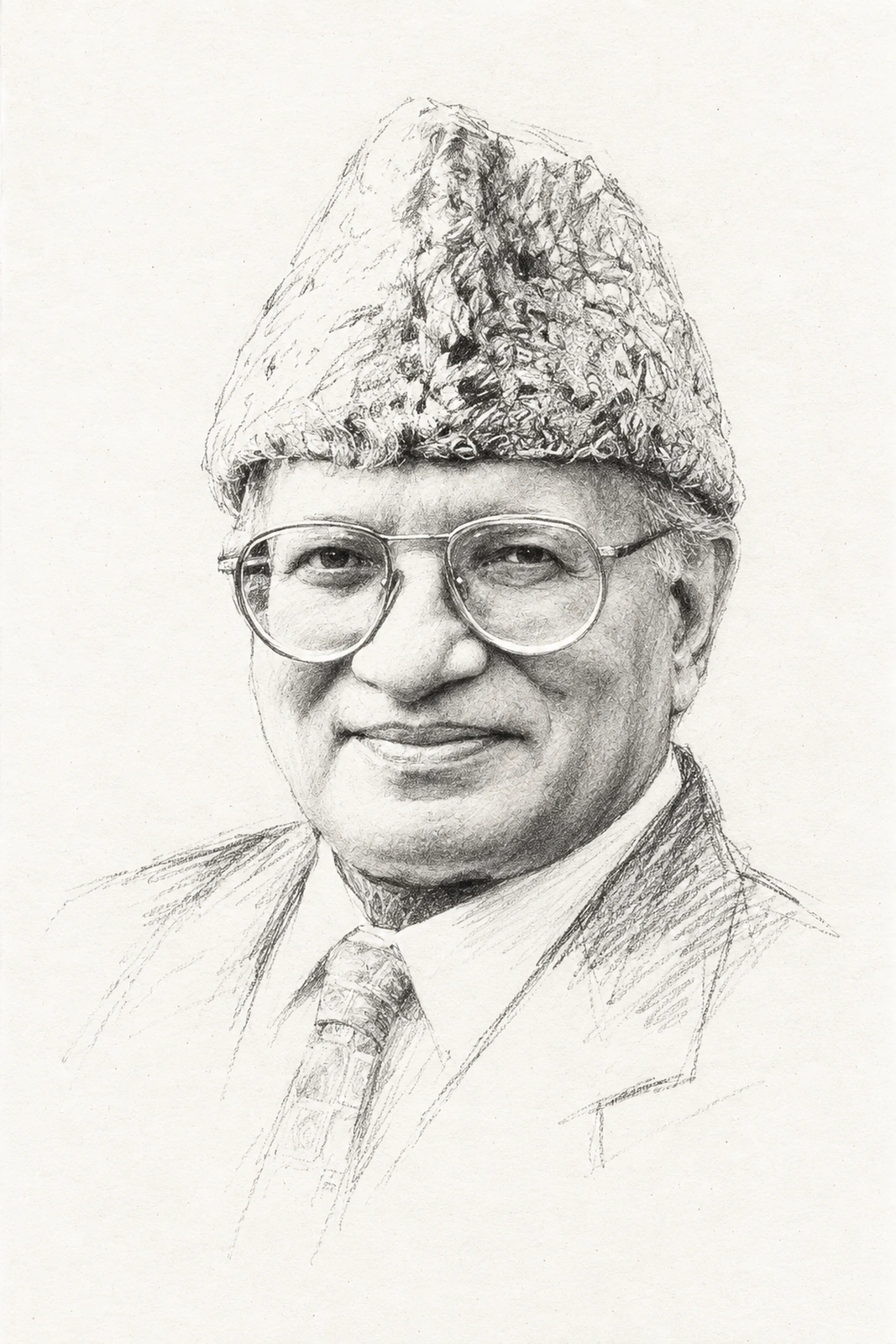
THE WRITTEN WORD
Personalities
Paragraph references are specific to this digital edition.
Personalities
Personalities, Buddha, Dadyan, Nachiketas, Vyasa, Vashitha
Immanuel Kant (1724-1804)
I
Immanuel Kant (1724-1804) has been looked upon as one of the greatest of modern philosophers. Throughout his life, he lived in or near Konigsberg, in East Prussia. His outer life was academic, and it seemed even uneventful. It was during the course of his life that Russia occupied East Prussia; but this great event had no impact on his life. He also witnessed French Revolution and the earlier part of Napoleon’s career, but even this great event did not seem to have played any great role in his life. Although he studied Leibnitz’s philosophy, he was led to Rousseau and Hume. As far as Hume is concerned, Kant himself had confessed that it was his criticism of the concept of causality that awakened him (Kant) from his dogmatic slumbers.
Kant was a man of regular habits; it is said that people used to set their watches by him as he passed their doors, except on one occasion when his time-table was disrupted for several days. It is interesting to note that this disruption was caused by his intense reading of Rousseau’s great book "Emile". Kant has commented that he was required to read Rousseau’s books several times because, at the first reading, the beauty of the style prevented him from noticing the matter.
Kant was brought up as a pietist, but he was a Liberal both in politics and theology. He sympathised with the French revolution until the Reign of Terror, and was a believer in democracy. In his philosophy, he gave great importance to the demands of morality rather than to the cold dictates of theoretical reason. According to Kant, every man should be regarded as an end in himself. This doctrine is very well embedded in the modern doctrine of the Rights of Man. He was such a great lover of freedom that he stated that “there can be nothing more dreadful than that the actions of a man should be subject to the will of another."
It is also interesting to note that Kant’s early works were more concerned with science than with philosophy. He wrote at one stage on the theory of earthquakes. He has also written a treatise on winds; and Physical geography was a subject in which he took great interest. In 1755, he wrote his most important scientific book "General Natural History and Theory of Heavens". He also wrote a treatise on the sublime and the beautiful. He declared that night is sublime, day is beautiful; the sea is sublime, the land is beautiful; man is sublime, woman is beautiful; and so on. It has been remarked that as he never married, he kept the habits of his studious youth to old age.
Kant’s vigour and freshness of mind in old age are shown by his treatise on Perpetual Peace (1795). In this work, he advocates a federation of free States, bound together by a covenant forbidding war.
II
Kant’s most important book in the field of philosophy is "The Critique of Pure Reason", the first edition of which came out in 1781. It is the theoretical function of the faculty of reason that constitutes the topic of "The Critique of Pure Reason", while the practical function, that of "The Critique of (Pure) Practical Reason". In the Critique of Pure Reason, Kant speaks of three cognitive faculties: sensibility, understanding and reason. According to Kant, sensibility is nothing but the capacity of the human mind to receive impressions in space and time. Understanding contributes, a priori, some pure concepts which determine the very forms of the different judgments that we make. These pure concepts enable us to synthesise the manifold of sense according to rules, so that we can have objective experience in the true sense. The application of the pure concepts to the manifold of sense requires some interpretation of these concepts in terms of the form of the sensibility, namely, space and time.
According to Kant, space and time are not concepts, but they are forms of intuition. As far as concepts are concerned, they are categories and there are illustrations to these categories. Space and time are not categories since there are no illustrations of time and space. According to Kant, there are twelve categories, and they are divided into four sets of three:
- Of Quantity: Unity, plurality, totality;
- Of Quality: Reality, negation, limitations;
- Of Relation: Substance-and-accidents, cause-and-effect, reciprocity;
- Of Modality: possibility, existence, necessity.
These concepts are the part of our mental constitution and they are applicable to whatever we experience.
An important part of Kant’s philosophy is that while, the concepts of categories and intuitions of space and time can be applied to things that are experienced, they cannot be applied to things-in-themselves. He pointed out that if you tried to apply categories or intuitions to things-in- themselves, we are led to self-contradictions or to antinomies (It may be recalled that an antinomy is a proposition from which two mutually contradictory propositions can be derived, and yet both of them are necessary derivations).
Apart from sensibility and understanding, Kant maintains that reason performs the function of developing regulative principles, in terms of which we systematise. Ideas of reason, according to Kant, are regulative; they are regulative of the operations of understanding. There are three ideas of reason: Soul, World and God. These ideas of reason set a goal for understanding, and the categories of understanding function within the regulative ideas of the soul, world and God.
Is there any way by which we can come to know things-in-themselves?
Here we come to Kant’s conception of pure practical reason. Kant’s conception of rationality in its practical aspects is that rationality consists in adopting the right means to the end we have, and in having the right ends. It is in exercising practical reason that we are able to lift ourselves from the realm of the world that we experience by the help of categories of understanding, and begin to experience things-in-themselves and "the moral will". According to Kant, moral will is free from the conditions of the world of experience, and therefore, it is not subject of conditional imperatives. According to Kant, moral will is the Categorical Imperative. It is in the exercise of the categorical imperative that we are able to understand and experience what lies beyond our ordinary category of experience. It is in the exercise of the categorical imperative that we come to experience the immortality of the individual soul. It is, again, in the exercise of the categorical imperative that we come to experience freedom. Still again, it is in the exercise of the categorical imperative that we find God as the foundation of the totality of our existence.
The categorical imperative has also been illustrated as "Duty for duty’s sake". According to Kant, the individual normally acts under conditions in order to gain certain results. But so long as he seeks results, he is bound to conditions and results. When he exercises moral will, he goes beyond conditions and seeking for results. He becomes aware of Goodwill, which is unconditional and which acts simply because it is good and not because it seeks any specific results. It is in the exercise of the moral will or goodwill that the individual is liberated from the chain of causes and effects, and performs an action simply because that action is good in itself, simply because it is right in itself, simply because it is an intrinsic end itself. According to Kant, duty is to be performed because it is a duty, because it is good in itself, because it is an end in itself. It is only when an action is done for its own sake, when an action is good in itself that in performing that action one experiences true freedom, and in the exercise of freedom, one also experiences the immortality of the soul.
Kant has provided three alternative formulas of judging whether a categorical imperative is really categorical. According to the first formula, a categorical imperative can be expressed as follows: Act according to a maxim by which you can at the same time will that it shall become a general law. According to the second formula, the categorical imperative can be expressed as under: Act in such a way that others are regarded not merely as means but as ends in themselves. According to the third formula, the categorical imperative can be expressed as follows: Act as the member of the realm of ends.
Kant has remained important in the history of Western Philosophy both for his theory of categories of reason and for his theory of categorical imperative. Both these subjects are still being discussed by philosophers, Western and Eastern.
Exposition on Kant
Our interest in Kant is based upon the human ascent to a certain level of consciousness where he becomes aware of the Categorical Imperative. It is a part of the ascent of human life. Where one begins to perceive a state of profundity, in which he discovers a state in which he has to be and he has to act simply because he has to, he has to act, he has to be, and he has no other reason except to be, no other reason except to act.
It’s a state of unconditionally. A state in which one finds a sort of helplessness. Even a state in which like a child in its utter infancy can do nothing but be in the arms of his mother. But this is analogically so. What happens in our infancy happens also in that state of ascension where we reach a point where we are helpless, where we have to be, where we have to act unconditionally.
Now this state is discovered under many circumstances, while walking on various different paths. It is there that one discovers that there is something like an imperative. Something like a command. A command which is received clearly, received instantaneously, and obeyed instantaneously. Unconditionally. We may formulate this in many different ways and I think Kant’s formulation is one of the possible formulations. The greatness of Kant is to recognise that state and to give it a very powerful formulation.
As you rise in the scale of conduct, in the scale of action, in the scale of works, our normal motivation of work is fixed upon the result of the work and enjoyment of the result of the work. This is a long road by itself where actions are motivated by results and by enjoyment of results of work. But a time comes when you find that this connecting oneself with the results of work is a bondage, is a great limitation. And it keeps you narrowed to a certain series of causal events; a series of action-fruit-action-fruit sequence and one is not allowed to rise higher than this. One becomes engaged in this.
Now, it is in that stage that you perceive your whole world as it were a state of bondage. This stage is also a stage of helplessness, in the sense that you can do nothing but be chained to this action-fruit sequence. This is where we normally are, but we don’t perceive that we are in that condition. It is only after a certain experience of this stage that you begin to withdraw from it and begin to perceive that you are constantly in the chain of action-fruit-action-fruit consciousness. And at the same time, you find that the whole world, not only the world of conduct and the world of action, but the whole world that is around you is a World which keeps you tied to what you see and what you think, keeping you away from what is really real, what is really there objectively
Now, if you look at the world from this point of view, you may begin to Perceive that you are like an individual (this is the analogy given by C.E.M. Joad), you are like a person born with blue spectacles on, right from the beginning. So that you can see nothing but blue and your experience of the word is bluish. You are tied, you are helpless, you cannot see anything else but blue. Now, Kant gives what you may call an epistemological picture of the world and he points out that the human apparatus of knowledge is an apparatus of sensation, of perception and of thought and experience. It is an apparatus which is similar to blue spectacles which are fixed as it were on us irremediably. You cannot remove them. So it is an apparatus given to us and therefore all we receive is through that apparatus, and you can’t see the reality as it is. The epistemological apparatus is the apparatus of sensation, perception, thought and experience.
Now Kant points out that we can perceive in this world nothing but space and time. It is our apparatus. Our psychological bondage. We are born with some kind of an inborn capacity — or incapacity you might say — so that we can only see things in space and time. We can’t even imagine something else that space and time. Now in this space and time you can see nothing but quantities, qualities, relations, and modalities. This is also a result of our apparatus. Things always appear to you in terms of quantities, or qualities, or relations or modalities. You cannot go out of the arithmetic or mathematics of quantity and quality. You always happen to see things in terms of relationships, you cannot see anything except in terms of is, may be or must be.
There are no other alternatives, either things are or they may be or they must be. You cannot but see things in terms of reciprocity,- I relate to you, you relate to me — or as cause and effect antecedent and consequent. I cannot but see things in terms of red and white and all different colours, all different qualities of smell, or in terms of quantity, one or many or unity. This is our limited scope as it were, and you can’t go beyond it, you do not know what is behind it. What is a thing without colour, for example? What is a thing which is beyond unity or many-ness?
So Kant came to this conclusion that we are so obliged, helplessly obliged, that we cannot but see the world through the glasses which one has been wearing right since birth irremediably. And yet there must be that reality, which is not conditioned by all this, something that is beyond my spectacles. Because I can see very clearly that something which is presented, but because of the my blueness of the glasses, I perceive it blue, but the object as it is devoid of blueness, must be. It is that which is presented.
Therefore in every experience there are two things, the thing which we call "thing in itself", or the object in itself, and the object as it appears to us, because of the glasses. The glasses consist of space-time and quantity, quality, relation and modality. These are the contours of our glasses and anything that we perceive is immediately clothed in this, two intuitions and four categories, as he called them. Two intuitions, space and time, and four categories, quantity, quality, relation and modality. And then, The Object in Itself.
And then he asked the question, is it possible to comprehend or apprehend the object in itself? How do we grasp it, how to do we go beyond these spectacles? So he discovered that there is a mode of action in us which is the mode of what he calls Hypothetical Imperative (not categorical imperative, but hypothetical imperative) in which we are chained always to action-fruit sequence. Just as we are confined to the experience of appearances in our pure epistemology, similarly in our conduct, in our ethics and in our action. In our conduct we are constantly bound by another spectacle, action-fruit sequence. All our actions are motivated under a kind of command which can be expressed, "If I want to please you, I must pay a visit to you". This is a kind of hypothetical imperative. "If I want that I should succeed, I must put in such and such a Labour". An action-fruit sequence. Now so long as we remain in action-fruit sequence we remain both epistemologically and ethically in a bound world and we never approach the object in itself, the reality itself.
But, if we now strive (and this is now where categorical imperative comes), if we break this action-fruit sequence, we arrive at a state of consciousness where we enter into that dimension in which there is no action-fruit sequence, and as a result we can also enter into the world of object in itself. It is an entry into the object as it is. It is only through this gate, through the gate of action which is knotted up with action-fruit sequence. When we rise to a state where action proceeds from us automatically, not bound by any sequence or consequence, not for the sake of enjoyment of the fruit. Then we enter into the gates of the world as it is, or the reality as it is, the object in itself. Now that state in which we act is the state of the categorical imperative. And action proceeds. And if anybody asks the question, "Why are you doing this action?" your answer is, "It is a categorical imperative." There is no hypothetical — not because you want this therefore you do this. No, you do this action because "It is to be done". Unconditionally. It is helplessness of the other kind. It is a helplessness in which you really experience the freedom. It is an action in which you are free from the clutch of action-fruit sequence. You are not any more bound by that sequence. You are now free, and if anybody says, "Why do you act", because you are not bound for that result or that result, but it has to be done. If you reach that state of consciousness, and this is the discovery of Kant that there is a dimension of our consciousness where you can spontaneously, it is not a labour, spontaneously you do because it is to be done.
Question: In reading about Kant, I don’t find anything referring to these over arching states of changing consciousness, or that he is inviting people to move into higher states of consciousness.
Actually you might say that I have expounded Kant
Question: In the light of Sri Aurobindo.
No, in the light in which he should be. Because if you study Kant deeply, you find that whatever Kant says can be understood properly if you put it in this cadre or framework. Kant is found by many people to be incomprehensible. They expound Kant is such a way that people get frightened and feel this is not understandable. But if you go deep into Kant and ask: "Of what is that philosophy without distorting Kant in any way, on a formulation?" Then you find − contrary I feel that I am precisely stating what Kant really has to say. This is my personal honest view. Honestly, I may be misled or misguided, it’s quite possible but it is a fact that if you want to understand Kant, you must look for what it is he has to say.
He has discovered the categorical imperative, this is the whole point. He Speaks of the Categorical Imperative in the sense that there is in us, he discovers in us, a consciousness in which action proceeds categorically. The word imperative is only a form of any ethical action. Ethical action is what Do it Every ethical action is in the form of; Do it;; I am doing; is a positive action, not an ethical action, ought to do is the ethical action. So ought to do is translated as the Word imperative. And since he speaks of action in which fruit is not the motive, it is categorical. I mean the words are used by him. Those words categorical and imperative are used by him and if you try to understand what it means, it means a state of consciousness in which there is an impulse, or an imposition on you as it were, in which you act, in which you must act, in which there is the emergence of your imperative command of acting, for what, for its own sake. This is what is called duty for duty’s sake, and that is the formulation of Kant. So he said there is a state of consciousness in which duty comes to you as something to be performed not for any result, not for any purpose or enjoyment, but for its own sake. Duty for duty’s sake. This is the discovery that Kant has made.
Question: But his personality doesn’t seem to exemplify this Heroism, Illumination, ... or a liberated personality.
Your remark brings out the second aspect of Kant. The first aspect is his discovery, first, and his formulation in the form in which he presents us. And it is exemplified in his life, which is from the external point of view quite uneventful. So you must look into his uneventful life, so to say. But this uneventful life is full of acts which are noble. When he was about to die, it is said, his physician came to see him, and although it was impossible for him to rise, he rose from his bed, saluted him, and the physician said this is not what you should be doing, but "this is an action for its own sake". And soon thereafter he died, but this is the last anecdote from his life. You ask Dr. Chattopahaya to give you this anecdote, and many others. So in his lifetime, it is said that people set their watches by his movement at a given time, he was so regular and so conscious, they could set their watches by his arrival and departure.
Question: This is triumph of mind over the vital.
Yes. So this is one aspect. Now the question is, when he came to define this categorical imperative in great detail he said that an action for its own sake is to be judged intrinsically. How do you know that this is an action for its own sake? Because human beings are doing all sorts of activities, how do we detect that Bhavana is actually not in this syndrome of action-fruit sequence, but she is in the higher level where she is dictated only by action for its own sake. How do we find it out? How do you detect it? Basically his answer is that it cannot be tested externally. It is to be tested intrinsically, internally only. Your experience in which you are really free from clutching the fruit, how can somebody else fund out whether you are clutching the fruit or not. Intrinsically you find out whether you are clutching at the fruit or not. Secondly you will find experience of freedom. You are liberated from clutching consciousness, grasping consciousness, you automatically act and that is the end of it. You act, there is nothing to be gained out of it, you simply act. And every action of yours in that state will be of that kind. There is no grasping of fruits of action.
And he goes further, actually, and says that although from your side there is no clutching of action, but it would be in the eyes of justice not proper that action is not properly rewarded. Not from your side, but in the scheme of things, it is not appropriate that an action done by you does not get the reward which is appropriate to it. Now from this ground he derives two important conclusions. Namely that your soul must be immortal because that reward may come, now of later, even if you do your last action in this life there must be a reward, even after your death. So unless the soul is immortal this would not happen. And then he goes deeper and says, but how does this get guaranteed? How are you sure that this will happen? And he said therefore God must exist. He derives the proof of existence of God from this important experience.
I am sorry, I have to go.
Don’t worry — action for its own sake. And therefore he concluded, God Freedom Immortality are the perennial ideas, irrefutable ideas, irresistible ideas and therefore true. God Freedom Immortality, the last phrase of Sri Aurobindo’s first chapter, first paragraph of The Life Divine.
Question: How does it fit into book on Life Force?
It is a study of the upliftment of Life Force.
Buddha
Among several Paths of Wisdom that came to grow and develop in India, the one chalked out by Lord Buddha stands out prominently. This path was in many ways a continuation of the wisdom of the Vedas and the Upanishads, even when it rejected their authority. This Path, which is referred to as the Middle Path, had a special appeal both to intellectual idealism and to spiritual pragmatism. None has spoken so clearly and trenchantly of the need to test the truth of a teaching on the anvil of the reason as the Buddha. And, again, none has spoken so clearly and trenchantly of the need to eschew the futile intellectual debate and of getting straight to the task of spiritual operation which can deliver one from the pain of the thorn of desire and its ever-multiplying consequences. These two attitudes are not contradictory of each other, but they stand harmoniously together, when they are understood properly in the context of the original intentions of the teaching of the Buddha. But issuing from these two tendencies, the teaching of the Buddha, came to have profound consequences both to philosophical and spiritual currents of the cultures of the countries wherever this teaching spread.
The name Buddha means literally the "Enlightened one." This name represents and recalls the highest state of consciousness, the state into which the personality of Sakyamuni, of Gautama, was uplifted, at his 35th year, and which is recognised as a state of liberation and perfection. This state is also called the state of Silence beyond the Silence. And yet it is the state which gives a dual capacity, that of an absolute peace and freedom within, Nirvana, and a desireless but effective action without. This possibility of an entire motionless impersonality and void Calm within doing outwardly the works of the eternal verities, Love, Truth and Righteousness was perhaps the real gist of the Buddha’s teaching. Thus was it possible for the Buddha to attain the state of Nirvana and yet act puissantly in the world, impersonal in his inner consciousness, in his action the most powerful personality that we know of as having lived and produced results upon earth. And it is this dual aspect of the state of the Buddhahood that seems to provide to us the key to the silent but potent cultural efflorescence in the countries where the teaching of the Buddha came to be accepted and practised.
Buddhism first spread in India, and it produced a profound change both in the way of the life of the people and in various cultural expressions. But its migration to other countries is an amazing story, and by the 10th century A.D., Buddhism had spread to a large number of countries of Asia. It is said, but I think quite wrongly, that Buddhism was ultimately rejected by India. As a matter of fact, Buddhism was absorbed by India, and the Buddha came to be accepted as one of the incarnations of the Supreme. In any case, the culture that Buddhism produced in India has continued to have its influence right up to the present day. The message of non-violence which became so prominent during our freedom struggle bears the impress of Buddhism, and the concept of Panchsheel which came to be formulated in the early years of the post- Independence period derives its fundamental inspiration from Buddhism. The recent recovery of the Buddhist thought all over the world has brought back to India once again the impact of Buddhism, and we of the present day feel the presence of the Buddha very much in our midst, in our thought and in our cultural ethos. At the time of the 2500th Buddha Jayanti, Jawaharlal Nehru described the celebration of this great event as the ’home-coming of Buddhism.’ Dr. Radhakrishnan, while paying tribute to Buddha said: ’Buddha aimed at the development of a new type of free man, free from prejudices, intent on working out his own future, with one’s self as one’s light, attadipa. His humanism crossed racial and national barriers.’
A special feature of the Buddhist Influence on culture is expressed by the concept of Samavayo or "concord". This concept came to assume importance both in religious and social life. Buddha insisted on the unity among the Buddhist monks and nuns. In the Digha-Nikaya we find the following remark of Buddha concerning the monks and nuns:
"United they meet, united they rise up, united they do their duties". The concept of Samavayo also signifies "religious toleration" among different religious sects. In one of the edicts, Asoka proclaims that there should be the growth of the essential elements of all religious sects. He directed that the sects of others should be honoured. He also pointed out that doing otherwise, one hurts his own sect and injures the sects of others. He went further and said that all should listen and be willing to listen to the doctrines professed by others, that there should be the growth of the essential elements, and breadth of all sects. The spirit of Samavayo also gave a guideline in regard to the conduct of discussions. Buddha himself did not appreciate that Sramanas and Brahmanas edified and glorified their own respective doctrines, but deprecated the doctrines of others. Commenting on how discussions should be conducted Asoka maintained that criticism should be "as light as possible and always to the point, but there must also be appreciation of other sects in regard to this or that point." Decision-making procedure also in politics and in business came to be greatly influenced by the attitude of Samavayo. The Japanese corporations arrive at decisions by consensus in their board meetings rather than by voting. In order to facilitate consensus, the final decision is often taken only after many rounds, but in the final round the consensus is expressed by almost every one. In recent times, this tradition still prevails, with minor changes. It has even been claimed that much of the success of the export policy of Japan owes a great deal to the culture of concord that has developed under the Buddhistic influence.
It is well known that Buddhism constitutes a powerful basis for egalitarianism. While we may not read modern concepts in the ancient teaching of Buddha, it would not be an exaggeration to say that the Buddhist idea of change and the Buddhist idea of inter-dependence of the individual and the society have always promoted in every Buddhist land a powerful trend of equality. The equality of men and women in their right to search for the highest possible state of consciousness was explicitly recognised right from the earliest stages of Buddhism. Similarly, Buddhism did not discriminate among the young and the old, and permitted even the young to undertake the same discipline of liberation as the old.
The sociological implications of Buddhism underlined the need for a gradual educative transformation of individuals first into social beings and finally into entirely deindividualised or impersonalised beings, so conceived in terms of ineffable Nirvana. The Sangha of the Buddhists was supposed to interact with the ever-increasing circle of common people. The education and transformation of the people was supposed to emanate from the example and influence of the members of the Sangha.
A special element that Buddhism seems to introduce in culture is its subtle and rich symbolism. One great symbol that stands out distinctly in all the Buddhist lands, is the Stupa. The other important symbols are the Buddha’s footprint and the Wheel of the Doctrine. In Nepal the Stupa has retained the place of honour as the central Buddhist symbol, despite the fantastic iconographic changes that have affected the whole pantheon of Buddhas, Bodhisattvas, gods and goddesses. In India, the Stupa underwent a long period of architectural and symbolic development. In the beginning, the Stupa was the symbol of the Buddha’s Nirvana, but it tended to become gradually the symbol of Buddhahood as a kind of ineffable peace, manifest through five Buddhas. The footprint, Buddha Pāda, was evidently a symbol of Buddha’s personal presence. An early example of very simple design is found at Gandhāra, and it seems to have become increasingly popular. Often these footprints are found in natural surroundings, impressed on rocks like the famous example on Samantakuta (Adam’s Peak) in Sri Lanka, where it is associated with the legendary account of Sakyamuni’s supposed visit to the island. Yet another rock imprint in Pātaliputra is supposedly related to his last presence in Magadha. Rubbings of original footprints were taken to China and there transferred to new stone slabs, which in turn were copied still further in Japan. At the Temple of Yakushi-ji, near Nara a footprint stele of the 8th century is still to be seen. There are many examples from south-East Asia, particularly in Burma and Thailand, and we have also the fine example from Angkor Wat.
The Wheel of Doctrine is the most ubiquitous of Buddha’s symbols, occurring in so many varied contexts, iconographic as well as ornamental. In Tibet it would probably be impossible to find any temple or gateway to a religious enclave where the Wheel of the Doctrine is absent. As symbols of the actual event of the Enlightenment, mention must be made of the tree, still growing at Bodh Gaya, as well as its famous off shoot at Anuradhapura in Sri Lanka. In a later period, the main temple at Bodh Gaya was copied elsewhere as a symbol of the Enlightenment. Famous replica temples of this kind, simply known as Maha Bodhi, are found in places as far apart as Pagan in Burma, Chieng Mai in Thailand, Pātan in Nepal and Beijing in China. Again, the symbolism of Stupa and temple coalesce in the special symbol, the Mandala or the mystic circle. The mystic circles symbolised both the world and release from it, and thus they serve the purpose of meditation and ritual. The other interesting symbol is the Vajra, symbolising the axis of the universe, identical with the Perfection of Wisdom.
An interesting development of symbolism was the rejection of symbolic objects or signs by Ch’an Buddhists. The Ch’an masters liked to paint, with powerful, utterly concentrated brush-strokes, simple objects taken from everyday life and experience — flowers, fruits, vegetables, stones — or highly abbreviated landscapes, because they all can, if seen with right understanding, convey the real essence in its concreteness and immediate evidence. Japanese Zen masters sometimes went so far as to hang up a white sheet of paper mounted as a scroll: an empty image as an image of emptiness. One of the Ch’an sayings very clearly expresses the fundamental tendency, inherent in Buddhist thought from the very beginning to transcend the image: "The universal body has no reflection (or shadow-image)." At a deeper level of thought, the image is not conceived as the opposite of the universal body. And there is no fundamental contradiction between the impossibility of conceiving and depicting the Buddha in his true nature and of making images as the only means of rendering manifest the reality of Buddhahood. The relationship is a dialectical one, and between of this paradoxical dialectic of image and non-image, Buddhist art appears to have always been suspended.
Thus we see that it is the ineffable state of Buddhahood which lies at the root of symbolism and art wherever they have been inspired by Buddhism. Buddhist sculpture also has the same basis. The image of the Buddha himself, in its various forms in various countries has this mysterious element, where the outer form leads us to something that is formless and something that transcends articulation. In every image of Buddha, we see the manifestation of Silence and Peace which seems somehow to be far above and behind the outer form.
History of Buddhist art and literature and philosophy and religion is not only rich, in content but it manifests a remarkable tendency of a mystery of the meeting of the affirmation and negation, which ultimately seem to be only apparently but not really contradictory of each other. How the spirit of Buddhism has grown and developed in each country is a fascinating story, and both for the scholars and for the laymen, it has a never-ending message. In recent times, there is a renewed interest in Buddhist thought and culture, and we seem to be standing today where a new synthesis of the old and the new seems to be an urgent need. It is in this context that an international meeting of scholars such as the one that has been organised here in India for the first time assumes special significance. I am sure that the exchange of ideas that this Conference would provide will be both interesting and instructive. I welcome distinguished scholars who have come from different parts of the world, and I should like to underline the importance that we give to this Conference.
With these words, I have pleasure in inaugurating this Conference.
On Buddhism — Japan
I am grateful for the opportunity that has been given to me to visit Japan and to visit this sacred place which represents an exalted seat of learning, scholarship and practice of the great teachings of Lord Buddha. Japan is pre-eminently the land of the East, -- the East which is the cradle of all the great religions of the world and the sanctuary of the most difficult knowledge of the Spirit. Japan is also pre-eminently the land of Beauty and it can be described as the world’s greatest workshop of art, architecture and aesthetic culture that lavishes profoundest and minutest tribute to Nature, vegetation and gardens and flowers. To visit Japan is to greet the rising Sun of splendour and the fragrant breeze of freshness and delicate tenderness of intimate harmony that is spread out on the entire landscape of this country. It is appropriate that the great message of harmony and peace that the Lord Buddha gave to humanity has been received in this country and has been nourished over a long period of history.
On this occasion, we are reminded of a number of Chapters of Dhammapada such as those on vigilance of the mind and the flowers and the thousands and the elephant. Considering that this visit of mine has significantly been connected with the gifts of the elephants which were made by India during the years when I had the privilege of being a Minister of the Government of India, in charge of Human Resource Development and Science and Technology and Ocean Development, let me cite that beautiful aphorism of the Dhammapada relating to the elephant through which the Lord Buddha teaches us how one should be like an elephant which can patiently bear insult and how that capacity makes one the best among men:
As the elephant on the battlefield endures the arrow shot from the bow, so also shall I patiently bear insult, for truly there are many of evil mind in the world. It is a tamed elephant that is led to the battlefield: one whom the King rides. The best among men is he who patiently bears insult.
On the occasion such as this which signifies a visit to the divine presence of the Lord Buddha one cannot but reflect on Buddhism and the role of religions in the contemporary world. There are innumerable Buddhist schools in Japan, and each one follows its own methods; but the most widespread among them are those whose sole practice is to make the mind quiet. For, as it is said in the Dhammapada, if the mind is unbalanced, all that jostles about in the head, makes holes in the roof, as it were. So through these holes all undesirable movements enter into the consciousness as water enters into the house with a leaky roof. As the Dhammapada states:
Just as the rain penetrates through the thatch of a leaking roof, so the passion penetrates an unbalanced mind.
And it is added:
Just as the rain cannot penetrate a house well covered with a thatch so also the passion cannot penetrate a balanced mind.
There is no religion in the world which has analysed the mind and shown the ways of controlling the mind as we find in Buddhism. There is, first, the golden counsel to observe the mind, and then to watch over the mind and then to control the mind and finally to master the mind. And what a great teaching is given by the Buddha that all of us in the world need today in the following two lines:
In truth, in this world hatred is not appeased by hatred; hatred is appeased by love alone. This is the eternal law.
Unfortunately, even though the world needs this counsel the most, how few follow this counsel! The great teaching of Christ which repeats this very counsel is also repeated by men but not practised so widely. Jesus had said:
If anyone strikes on the right cheek turn to him the other also; and if anyone would sue you and take your coat, let him have your cloak as well; and if anyone forces you to go one mile, go with him two miles.
I think both Buddhism and Christianity have given to the world the message of love and tenderness and forgiveness and of humility. And we may even ask as to which religion does not endorse this great teaching that can bring human souls and creatures of the world into one great divine family? All religions have in them the message for universal brotherhood, -- the message that we need today more urgently and imperatively as at no other time. But this simple gift that all religions can give to the entire humanity suffers in its strength on account of one simple fact, -- an unfortunate fact, that religions collide with each other and they are in conflict with each other. In fact, this conflict may be regarded as the central conflict which needs to be repaired by a concerted effort of all religions. Can all religions unite?
Let me dwell on this subject.
The intellectual climate of the world today is being increasingly governed by a philosophy which is called post-modernism. Post-modernism is a signal of the end of the confidence in objective or scientific truth as also in visions of perfection. It signals the denial of any fixed reality and truth or facts to be object of enquiry. In a sense, it is an end of the curve of Reason which began its ascent five hundred years ago all over the world of multisided question and enquiry and ushered in the hope of establishing by means of rational and scientific methods a new world of liberty, equality and fraternity. Great achievements have been registered during these five hundred years, but it has become clear that rationality can never deliver infallibility and possession of knowledge on grounds of which the fond hopes of Reason can be realised. Post-modernism can be looked upon as a seal of certainty on the uncertainties of the adventures of Reason.
Confronted with this post-modernistic thought, a serious question needs to be raised: Where does humanity proceed from here?
Is post-modernism a stage of equilibrium? Or is it not a call to rest in disequilibrium? At the best, it is an invitation to a quest and to a state of humility to seek, to build temporary edifices of structures of knowledge and society, knowing well that they can be no more than makeshifts through which we may hopelessly hope to manage to live and survive but never to arrive. But will this arrest the movement of invasions of certainties of instincts and impulses of the infra-rational, on the one hand, and the movements and invasions of certainties of religious beliefs that claim to be derived from the supra-rational, on the other? Post-modernistic rationality will be found, it appears, too week to prevent these invasions, and considering that globalisation is spreading rapidly, it is not difficult to envisage that the global age will witness a critical struggle between infra-rational forces and the forces that will claim the right to prevail on real or supposed guarantees of the supra-rational.
It may be argued that post-modernism will weaken the power of religions; in any case, during the sharp struggle that is likely to be waged between science and religion, the influence of religion over humanity will decline. It is true that the relevance of religion has been greatly changing during the last five hundred years, since humanity has been passing through various phases of scepticism, and even today religion or religions have no clinching answer to the scientific demand for public demonstrability of the validity of the claims of the truths that they have proclaimed. That this demand of science has come to occupy a nerve-centre of the latest trend in epistemology implies the challenge that can be met only by a very great effort, which is likely to occupy all defenders of religions.
And, precisely at this moment, particularly when the plurality of religions tends to impel sharp conflicts among religions themselves. The shield of dogmatism which has long remained a powerful armour against rationalistic questioning will be found invulnerable where one dogma will be required to defend against another dogma.
There is, indeed, a powerful guideline in the teachings of the Buddha which can help. The Buddha has spoken of the Adept in which it is said: “The greatest among men is he who is not credulous.” Buddha has spoken of the Sage who should go from door to door in his village, as the bee gathers honey from the flowers without bringing harm to their colours or their fragrance.
Cutting the roots of dogmatism, the Buddha says:
As the wise test gold by burning, cutting and rubbing on a piece of touchstone, so are you to accept my words only after examining them and not merely out of regard for me.
Fortunately, it may not be impossible for religions to agree to this great teaching of the Buddha. In recent times, there is increasing acknowledgement of yoga, which lays down methods of cultivating powers of revelation, inspiration, and intuition, and the resulting knowledge can be tested on the anvil of repetition and confirmation and even modification by the employment of the same methods and arriving at the same predicted results. The promise of yoga as scientific method of the knowledge opens out the possibilities of a new turning-point. Already, in the statements of the advanced yogins of the world, there is an affirmation of harmony among the revelations of Christ, Krishna and Buddha. They find no difficulty in embracing them and others who have left in the human heritage the message of their revelations.
Fortunately, precisely at this moment, there is a great change in the climate of modern science. This is because of the recent developments in Physics of Quantum Theory and in Biology of the Theory of Evolution. David Bohm in his book, Wholeness and the Implicate Orderargues that the Quantum Theory presents a challenge to the theory of the mechanistic order, and he has advocated the relationship of matter and consciousness on the basis of some common ground and propounds an idea of a new world view based on the concept of unbroken wholeness. Roger Penrose has, in his celebrated book, Shadows of the Mind: A Search for the Missing Science of Consciousness, attempted to address the question of consciousness, again from a scientific standpoint. According to him, scientists have so far failed to recognise the fact that non-computational phenomenon like consciousness should be inherent at least potentially in all material things. Similarly, biological scientists like Francis Collins hold the view that material science not only points to Immanent God but also to Transcendent God, who exists outside of space and time. Roger Sperry, an eminent scientist of the brain and behavioural live sciences, points out:
As a brain scientist I have come to believe in the reality and power of conscious mental/cognitive entities of the mind or spirit and the indispensability of their causal control for both brain function and its evolution — and that science has been wrong all along with categorical denial of this.
Sherwin Nuland, a clinical Professor of surgery at Yale University, has recently published a book entitled: The Wisdom of the Body. In a recent interview, he stated: “The way the human cortex relates to the lower centres of the brain… the way it recognises dangers and its continued integrity… is precisely what the human spirit is doing. The human spirit is maintaining equilibrium, and it largely is related to its normal physical and chemical functioning.”
It is also important to underline that a number of philosophers who have studied evolution have come to the conclusion that evolution is tending towards the manifestation of the Spirit. In India, Sri Aurobindo, the foremost philosopher, mystic and pioneer of the new world, has brought science and yoga close together and shown by scientific and yogic experiments that evolution itself is evolving to lead man from mental consciousness to supramental consciousness.
The time is, therefore, growing ripe when the conflict between religion and science can be overcome by admitting and developing yoga, which is the core of all religions, and which is also scientific in its methodology and which can be admitted by science. Otherwise, if each religion insists on its dogmatic assertions, how can the conflict among religions be resolved? Even the great thinkers, Cottingham, in his recent work, The Spiritual Dimension, has admitted the inadequacy of the proposition that salvation of the human soul needs to be tied up with a banner of a religion on which it is supposed to fly out in its return to its ultimate destined place. He acknowledges that religions do claim superiority of the truth that they claim; at the same time, their claims cannot be examined if they are all based on dogmatism of revelations. The solution of the problem can be arrived at, he feels, only if the criterion of judgement shifts from dogmatism and accepts the criterion of “integration of consciousness” that can have practical effects. It can be seen that, in effect, the solution seems to lie in methods and criteria that are well developed in the science of yoga.
The problem of the contemporary world which has become acute on account of increasing materialism and unsustainable consumerism compels us to revisit the great realms of science, religion and yoga. Instead of unbridled consumption, we have to think of paradigm shift and find means and ways that can create in the world the advocacy and practice of sustainable consumption. Instead of quarrels between religion and science, we are required to eliminate dogmatism and adopt scientific methods for developing and judging spirituality; instead of conflict of religions, we have to have a concert of religions that advocates exclusion of exclusivism. And we need still a farther step, a step of developing a new world culture that follows the lofty example of the Sage as enunciated by Lord Buddha in the Dhammapada in the following words:
One who has put aside liking and disliking, who is indifferent, who is freed from all attachment and all fetters, and who has conquered all the worlds, this hero I consider to be a Sage. … The Noble, an Excellent, the Heroic, the great Sage, the Victor, the Impassive, the Pure, the Enlightened, him I consider to be the true Leader.
And let us remember the culture that has been advocated of the Aryan in the Rig Veda in these words:
dadhann ṛtaṃ dhanayann asya dhītim ād id aryo didhiṣvo vibhṛtrāḥ( I.71.3)
They held the truth, they enriched its thought; then indeed, aspiring Aryans, they, holding in thought, bore it diffused in all their being.
Before I close, let me once again express my gratitude for this wonderful occasion to be amongst all of you and to pray with all of you to the Lord Buddha who was, in the words of Sri Aurobindo:
Impassive in his inner consciousness, in his action the most powerful personality that we know of has having lived and produced results upon the earth.
(The Life Divine, Vol.18 SABCL, p.29)
Rishi Agastya
Agastya is also one of the important Vedic seers. He is accredited to have seen about 225 mantras. Mantras seen by him are placed in the first Mandala of the Rigveda immediately after those seen by Dighatams. They are addressed to Indra, Maruts, Ashwins, Dyava-pritvi, Vishwa Deva, Agni and Brihaspati.
Agastya is famous not so much for his metaphysical vision as for his philosophy of life as also his dynamism. In this respect, his wife Lopamudra has played an important role in bringing his spiritual visions down to the earth for application in life. As is evident from the mantras seen by him, originally he was given to pure asceticism. Somehow or the other, however, he got married to Lopamudra, the daughter of the king of Vidharbha. Even after years of married life, he remained wholly absorbed in tapas and did not pay any attention to his wife, though she remained all the time serving him meticulously. Lopamudra eventually became aggrieved and reminded him of his responsibility towards her as his wife. At last she drew his attention towards the fact that purely spiritual pursuit is only an impossibility but needs also be supplemented by attention to worldly responsibilities.
This plea of Lopamudra to Agastya had a telling effect on his mind. This is evident from his several hymns addressed to Indra and Marut recounting a conflict between the two, Indra represents pure consciousness while the Maruts stand for the vital. Thus Indra stands for the spiritual pursuit of the seer in contrast to the Maruts representing the interest of Lopamudra. Being moved by the plea of Lopamudra when Agastya begins to take interest in her, Indra becomes aggrieved so to say. Conversely, when Agastya returns to his tapas, the Maruts become aggrieved. As a matter of fact, the grief of the two sides is a reflection of the conflict of interests going on in the mind of the seer. Ultimately a reconciliation is reached at in his mind which is reflected in the following statement from the side of Indra:
अरं॑ कृण्वन्तु॒ वेदिं॒ सम॒ग्निमि॑न्धतां पु॒रः। तत्रा॒मृत॑स्य॒ चेत॑नं य॒ज्ञं ते॑ तनवावहै ॥ RV.1,170,4
“Let the sacrificial pit be prepared . Let then the fire be kindled meticulously. Let both the sides perform the sacrifice wherein lies the consciousness of immortality.”
The reconciliation proves satisfying to Agastya. He, therefore, approves of it and observes:
त्वमी॑शिषे वसुपते॒ वसू॑नां॒ त्वं मि॒त्राणां॑ मित्रपते॒ धेष्ठ॑:। इन्द्र॒ त्वं म॒रुद्भि॒: सं व॑द॒स्वाध॒ प्राशा॑न ऋतु॒था ह॒वींषि॑ ॥ RV.1, I70,5
“You rule over all wealth O Lord of wealth you, the Lord of Friendship, are the richest resource of all friendships. As such, O Indra, have a dialogue with the Maruts so as to taste the offerings as per the schedule.”
As a result of the reconciliation between the two interest in the seer he, rising out of his Samadhi takes to spade, so to say, with the view to setting a lineage of his pupils and his progeny and thus empowers himself both with seerhood and success in worldly pursuits. Thus, he fulfilled both sorts of responsibilities put on him. As a result of this his all round fulfillment, he came to be blessed by the gods;
अ॒गस्त्य॒: खन॑मानः ख॒नित्रै॑: प्र॒जामप॑त्यं॒ बल॑मि॒च्छमा॑नः। उ॒भौ वर्णा॒वृषि॑रु॒ग्रः पु॑पोष स॒त्या दे॒वेष्वा॒शिषो॑ जगाम ॥ RV.1,179,6
“With the view to having progeny and power as well as lineage of pupils, Agastya took up spades and digging with them he, the mighty seer, nourished both the varnas and came to be truly blessed amongst the gods.”
The two varnas refer to stand for two sorts of interest in life which further get expanded into the four purusharthas. In the life of Agastya, dharma and moksha are represented by tapas, while artha and kama have got introduced from the side of his wife Lopamudra. This is how he becomes a fulfilled man by virtue of his rigorous tapas on the one hand and his dynamic worldly interest on the other. As regards the rigour of his tapas, it is very well evident from the statements of Lopamudra herself. So far as his dynamism in worldly affairs is concerned, it is borne out by so many legends telling us how he crossed the Vindhya mountains having subdued them, reached down to Tamilnadu of today, wrote the first grammar of the language, established an ashram there, went even up to Cambodia, Borneo and Java via the sea route. In the Indo-Javanese hierarchy of gods, the prime place is accorded to Agastya. The seeds of his divinization, indeed, are present in the Rigvedic mantra quoted above last in which it has been observed that an account of his achievements on the both the sides of life, he became truly blessed among the gods.
Rishi Dadhyaṅ Ātharvaṇa
As is evident from his surname, Dadhyaṅ came in the lineage of Ātharvaṇa, one of the two most primeval seers of the Vedic age. The other is Angirasas. Thanks to the Ramayana we know a lot about Vishwamitra and Vasistha. That is not the case with the life of other Vedic seers. We can know about them authentically only through references to them in the Samhitas, Dadhyaṅ is a seer to whom is attributed the seerhood of one hundred and four mantras in all. Out of these, hundred and three mantras form the last five chapters of the Yajurveda while the remaining one is compiled in the Samaveda, the Yajurvedic mantras ascribed to Dadhyaṅ are inclusive of those seventeen mantras which subsequently go by the name Isopanished. Except for its sixteenth mantra, all the the mantras of the Isopanishad are taken from the Yajurveda as seen by Dadhyaṅ. In a way, the Isopanishad forms the quintessence of the Bhagvadgita. Here from can be gauged the significance of the contribution of Dadhyaṅ to the Vedic ethos. According to him, the whole world needs to be treated as the abode of God. Action done from this viewpoint, he points out, becomes taintless and thus is capable of leading one to redemption. The famous idea about God that He is mobile and immobile or indeed dynamic and static both, has been envisioned by him as is evident from his mantra:
तदेजति तन्नैजति तद्दूरे तद्वन्तिके । तदन्तरस्य सर्वस्य तदु सर्वस्यास्य बाह्यतः ॥ (Yajurveda 40.5)
“The Supreme Being moves as well as moves not. He is away as well as close by. He lies within all and at the same time outside all.”
Dadhyaṅ is also the seer of the famous mystic mantra सो ऽहम्, “That I am”. The well known Shanti-path: ॐ द्यौ: शान्तिरन्तरिक्षँ शान्ति:, पृथ्वी शान्तिराप: शान्तिरोषधय: शान्ति: also has been envisaged by him, like of which has as yet to dawn upon the human mind elsewhere.
In view of all these details about Dadhyaṅ, it is but natural we inquire about his life history as also about the mode of his sādhanā.In this regard, what the Veda has to offer us, is as the following:
Dadhyaṅ went through a course of rigorous tapas which amounted essentially to deep meditation within. As a result of his getting established in meditation, Indra, the custodian of higher consciousness became pleased with him and imparted to him the sacred knowledge of making life blessed in the highest sense of the term which is scarcely known even to some of the other gods. With departure of Indra, so to say, a group of two gods, known as Aśvin, came to Dadhyaṅ and requested him to share that knowledge with them. Dadhyaṅ wanted to share that knowledge with the entire world no doubt and not to talk of the Ashwins but he told them that he would be beheaded if he leaked out the secret to anybody else, be they be Ashwins themselves. The Ashwins, however, assured him that they had a way out and therefore he did not need to bother about the same.
Having assured Dadhyaṅ thus, they went out and returned with a horse’s head, forthwith they cut the head of Dadhyaṅ and hid it somewhere. Then they placed the horses’s head on the headless body of Dadhyaṅ and got the secret disclosed to them through it. As soon as the disclosure came to the accomplished, Indra appeared on the spot and cut away Dadhyaṅ head as per the pre-conditioin having been laid by him. This was, however, followed by the Aśvin restoring Dadhyaṅ’s own head to his body.
As is quite obvious, the story even at its face itself is remarkable from the viewpoint of the history of surgery in India. It bears out the possibility of such a surgery having been accomplished in those ancient days at some level or the other. If the account has any truth in the literal sense, it is something marvellous, since surgery of this level could not be even contemplated about until now, not to talk of coming anyway close to it’s possibility.
This surgical miracle apart, however what is the crux of the story is the secret knowledge for the acquisition of which Dadhyaṅ went through the untold rigour of tapas and even permitted himself to get beheaded for the sake of its dissemination. That secret knowledge has been indicated to in the Rigveda as madhu, honey and possibly it would have remained almost as such if perchance it would not have been expounded in the Madhu-Brahmana of BrihadaranyakaUpanishad. The Upanishad makes the disclosure by quoting a set of four mantras two seen by Kakṣīvaṭ, the fourth by Gaṅgā Bhāradvāja, and the third by a unknown seer. While Kakṣīvaṭ mantras refer to the story and the fourth one gives some idea of pervasion of every living being by an identical Being after having created them as its next as it were. The Bhāradvāja’s mantra explains the secret in terms of the Supreme Beings’s creating everything and every being in the universe out of Himself so as to see Himself reflected in them in His dynamics. This mantra reads as follows:
रू॒पंरू॑पं॒ प्रति॑रूपो बभूव॒ तद॑स्य रू॒पं प्र॑ति॒चक्ष॑णाय। इन्द्रो॑ मा॒याभिः॑ पुरु॒रूप॑ ईयते यु॒क्ता ह्य॑स्य॒ हर॑यः श॒ता दश॑ ॥ (RV. 6,47,18)
“He, the Supreme Being, has assumed so many forms in the universe so as to see Himself reflected in them. He, as Indra, by means of His creative powers, moves in the universe in diverse forms simultaneously, since as many as ten hundred horses, are yoked to His chariot. “
Via this mantra, the knowledge as acquired by Dadhyaṅ is explained as that mighty secret according to which each and everything in the universe is interrelated with one another, so ultimately as if the whole of it were and organic whole and not merely an adventitious congregation.
The imperative part of the vision as also the secret of the madhu vidya is that unless and until the entire universe is taken as such an organic whole, one cannot taste bliss.
Rishi Dīrghatamas
Dīrghatamas is one of the greatest seers of the Vedic age. He belongs to the lineage of Angiras. He was the son of Ucathya and Mamta. As per the Mahabharata he was born somewhere in the Vaishali region of Bihar. He is supposed to have been born blind. Herein it is said to lie the relevance of his name Dīrghatamas, one lying in long darkness. There is, however, no certainty about it, though the seer himself states in one of his mantra that it is only the sighted who can see, see things as they are and not the blind.
पश्य॑दक्ष॒ण्वान्न वि चे॑तद॒न्धः। RV 1,164,16
As a matter of fact, the term Dighahtamisrah occurs elsewhere in the Rigveda in the sense of ignorance rather than darkness. As regards his statement concerning his blindness, that too most probably is due to his feigning ignorance out of humility about the knowledge of the Reality.
There are thee contiguous mantras in one of Dīrghatamas’s hymns which contain certain autobiographical notes about the seer. In the first one of these mantras, the seer observes that he is surrounded by burning fuel and placed in all the ten directions around him and that being kept in the midst of it he has nothing but the dust to eat.
उप॑स्तुतिरौच॒थ्यमु॑रुष्ये॒न्मा मामि॒मे प॑त॒त्रिणी॒ वि दु॑ग्धाम्। मा मामेधो॒ दश॑तयश्चि॒तो धा॒क्प्र यद्वां॑ ब॒द्धस्त्मनि॒ खाद॑ति॒ क्षाम् ॥ RV1,158,4
The ten-fold burning fuel around the seer is indeed symbolic of the objects of the five organs of sense and the five organs of action while the bondage he is put in the confinement of the space-time continuum. Being confined thus, one has nothing to sustain oneself on except the physical which the dust is used here to symbolize. Feeling himself put under such a precarious circumstance, the seer prays for an escape out of it. It is this feeling on his part which seems to have led him to seerhood.
It is this disaffection with the physical which made him to look beyond it and find out if there was anything beside it. How to find out that which lies beyond the physical? The seer’s attempt in this regard is reflected in one of his mantras which reads as follows:
को द॑दर्श प्रथ॒मं जाय॑मानमस्थ॒न्वन्तं॒ यद॑न॒स्था बिभ॑र्ति । भूम्या॒ असु॒रसृ॑गा॒त्मा क्व॑ स्वि॒त्को वि॒द्वांस॒मुप॑ गा॒त्प्रष्टु॑मे॒तत् ॥ RV.1,164,4
“Who could see how this bony universe was born as the boneless? It is evident that breath, flesh etc are the products of the physical. But, what is the source of the Ātman, Self? Who can take the trouble of approaching the wise and putting to him this query?”
While the first half of the mantra indicates the fruitlessness as the attempt to find out the solution of the problem through any objective method, the second half shows the proper way to it through it towards the inward quest. By way of self-analysis we can understand how all the ingredients of our personality are made of the physical except for the consciousness which in its concentric root is called ātman. His quest for the atman led Dīrghatamas to the development to his entire philosophical system. In course of the development, he sought the help of various supramental agencies which serve as our spiritual guides as well as the controller of the forces of Nature. The agencies Dīrghatamas took resort to are Agni, Mitra, Varuna, Vishnu, Indra, Aświns, Dyava-prithvi, Ribhus, Soma, Surya and Sarasvati. This is evident from his prayers to these deities through meditation on his Self, atman, with the help and guidance of these deities he eventually reaches the Ultimate Reality which he characterizes as Sat, Existent and it takes everything else, including the gods, to be just different formations out of it, no matter substantially or nominally. The mantra embodying this truth as realized by him reads as follows:
इन्द्रं॑ मि॒त्रं वरु॑णम॒ग्निमा॑हु॒रथो॑ दि॒व्यः स सु॑प॒र्णो ग॒रुत्मा॑न् ।
एकं॒ सद्विप्रा॑ बहु॒धा व॑दन्त्य॒ग्निं य॒मं मा॑त॒रिश्वा॑नमाहुः॥ RV 1,164,46
“What seers have named variously as Indra, Mitra, Varuna, Agni, the divine and beautifully winged Suparṇā, Yama and Matriśvan is but one Existent.”
This One Existent came to be known as Brahman subsequently in the Upanishad and is sought to be understood why are the quest of the Atman. This quest led to the formulation of the magnificent sentences known as the mahavakyas in Vedanta. Some of those sentences are: Aham brahma asmi, tat tvam asi, prajñā brahma, sarvam khalvidam brahmam. Though these sentences came to be formulated in the Upanishads in course of deliberations on atman and Brahman, the root of them goes back to the search of the Vedic seers including Dīrghatamas in particular, as is evident from the two mantras quoted last.
In fact Dīrghatamas is a prodigious seer. He has not only given us the philosophy of ekam sat reached at via his quest for atman, but also seminal ideas in the fields of astronomy, psychology, linguistics and grammar. For instance, it is he who for the first time gives us an idea of the Indian calendar conceiving of the year of 360 days, divided into seasons and made up to date with the addition of the intercalary month every third year. His contribution to the psychological side of the linguisties, on the other hand, lies in tracing the root of the linguistic sense in the human mind back from the articulate to three successive inarticulate stages amounting to the figurative, ideational, and purely spiritual known as madhayamā, paśyantīand parā respectively.
Rishi Vasiṣṭha
Vasiṣṭha is one of the most prominent seers of the Veda he along with his progeny is the seer of the seventh mandala of the Rig Veda Samhita comprising104 hymns amounting to more than one thousand mantras. His mantras include the Maha Mrityunjaya Mantrawhich is one of the two most celebrated mantras in the entire Vedic literature. Needless to point out that the other one is the famous Gayatri one as seen by Viśvāmitra, the seer of the third mandala of the Rigveda. How powerful the mantras seen by Vasiṣṭha and his descendents were considered even in the Veda itself is evident from the following:
सूर्य॑स्येव व॒क्षथो॒ ज्योति॑रेषां समु॒द्रस्ये॑व महि॒मा ग॑भी॒रः। वात॑स्येव प्रज॒वो नान्येन॒ स्तोमो॑ वसिष्ठा॒ अन्वे॑तवे वः ॥ (Rigveda.7, 33, 8.)
“Like the sun’s expanding light is the luminosity borne by them. They are as deep (in sense) as the ocean itself. They are as speedy as the wind. Nobody else is capable of bringing to bear these qualities in his prayers O Vasiṣṭhas.”
It is obvious from the mantra itself how highly placed Vasiṣṭha was amidst his contemporaries. His excellence as a seer is implicit in his name itself meaning the most luminous or enlightened. It is significant to note that many of the Vedic seers happen to have been given some secondary names as per their accomplishment in vision and expression.
How did Vasiṣṭha attain this excellence in seerhood? An indication to this is available in the next two mantras in a relatively explicit way. The first one of these mantras reads as follows;
त इन्नि॒ण्यं हृद॑यस्य प्रके॒तैः स॒हस्र॑वल्शम॒भि सं च॑रन्ति। य॒मेन॑ त॒तं प॑रि॒धिं वय॑न्तोऽप्स॒रस॒ उप॑ सेदु॒र्वसि॑ष्ठाः ॥ (Rigveda. 7,33,9.)
“They move around what is available to us in thousand branches and reach the secret destination by following the indications of the heart. Thus, passed through the process of weaving the cloth assigned to them by the Controller of the creation, they came to sit beside the Apsaras.”
There may be the difference of opinion about the identity of the Apasras in this context, but it is quite clear from the rest of the mantra that it talks of the Vasiṣṭha having gone into the secret of the creation in all its infinite diversity and to have reached eventually the point of unity of all these manifestations which is the matter of constant quest of Vedic seers and is very often described as the lap of Aditi, the goddess of Infinity. Infinity has infinite potentiality of diversification. Vedic seer’s awareness of this fact is evident from the well known Upanishadic equation that the Infinite is a whole as also is a whole each one of the Finite and even after the deduction of the Finite from the Infinite the latter remains all the same intact in Its wholeness:
ॐ पूर्णमदः पूर्णमिदं पूर्णात्पूर्णमुदच्यते । पूर्णस्य पूर्णमादाय पूर्णमेवावशिष्यते ॥ ॐ शान्तिः शान्तिः शान्तिः ॥
The word sahastra in the Veda also means the same besides its literal meaning ‘a thousand’.
How Vasiṣṭha could have reached the idea of the Infinite number of identities emerging out of the Infinite and thus by getting woven with one another would have resulted in the universe where everything is so closely related with one another, is indicated in the mantra by the term hridayasya praketaih. The wordhridasya literally means ‘heart’ which in such context in the Veda is not the physical heart serving as the pumping station of blood in an organic body. It really means the depth of the human consciousness lying beyond the reach of our common place awareness. It is by the virtue of his access to that depth that any Vedic seer has come to be regarded as a seer.
By way of elucidating this point, one would like to refer to an anecdote as recounted in the Chāndogya Upanishad. According to the Upanishadic account, an enlightened teacher asks one of his students to go to a solitary place and try to discover what lies inside the tiny space in the centre of the heart having conceived it as a lotus flower. The student tries his best to get the sense of the suggestions but having failed in his effort asks the teacher:
तं चेद्ब्रूयुर्यदिदमस्मिन्ब्रह्मपुरे दहरं पुण्डरीकं वेश्म दहरोऽस्मिन्नन्तराकाशः किं तदत्र विद्यते यदन्वेष्टव्यं यद्वाव विजिज्ञासितव्यमिति स ब्रूयात् ॥ (Chāndogya Up.7,1,2)
“What can possibly be there inside the tiny space at the centre of the heart conceived as a lotus flower so significant as to be discovered and understood?”
What the teacher observed in response to the query of the student is really the key to the understanding of the secret of the Veda and the accomplishment of any Vedic seer whosoever. The teacher observes:
सोऽहं भगवो मन्त्रविदेवास्मि नात्मविच्छ्रुतं ह्येव मे भगवद्दृशेभ्यस्तरति शोकमात्मविदिति सोऽहं भगवः शोचामि तं मा भगवाञ्छोकस्य पारं तारयत्विति तं होवाच यद्वै किंचैतदध्यगीष्ठा नामैवैतत् ॥ (Chāndogya Up. 7, 1, 3)
“The space inside the heart is as large as the space outside. Both heaven and earth lie inside it, as also lie inside it both fire and air, the sun and the moon, lightening and stars. In fact, whatever lies in the space outside as also whatever does not lie there, all that is accommodated inside that seemingly tiny space.”
Thus it is evident that the space inside the heart is indeed the latent potentiality of the human consciousness through the use of which one is capable of knowing anything in the universe and even beyond. Obliviously it would have been by virtue of his access to that potential consciousness that Vasiṣṭha would have got unveiled to him the secret of emergence of the Finite from the Infinite in all its diversity. Herein lies the clue to the theory of all theories scientists today are trying hard to formulate but until now have failed even to unite the four physical forces together and not to talk of consciousness which is a category quite distinct from any physical force whatsoever.
Another significant autobiographical note Vasiṣṭha has left for the posterity to ponder over concerns his voyage in the deep sea along with Varuna, his favorite deity. The account starts with the following mantra:
आ यद्रु॒हाव॒ वरु॑णश्च॒ नावं॒ प्र यत्स॑मु॒द्रमी॒रया॑व॒ मध्य॑म् । अधि॒ यद॒पां स्नुभि॒श्चरा॑व॒ प्र प्रे॒ङ्ख ई॑ङ्खयावहै शु॒भे कम् ॥ (Rigveda.7,88,3.)
“When I and Varuna take to the boat and sail in the midst of the sea, and take ride over the tides, let that experience turn splendid as if we are swinging on a swing.”
This account has been taken by historians of culture to bear out the fact that the Vedic people were good mariners, so much so, of course as to undertake voyages up to the deep sea, although it goes counter to the Aryan Invasion theory according to which the Vedic Aryans remained so much confined to their access to India and they were not aware of the sea at all. This evidence is sufficient to explain how the people of the Indus Civilization could have trade relationship with the Mesopotamians even in the beginning of the third millennium B.C. as is evident from the findings of the sealing’s of Indus seals in that land.
This interpretation no doubt, is good so far as it helps in understanding the then achievements of the people of India but this is just the periphery of the matter. It explains only how the humans of the age took too long voyages through the sea routes. But it does not tell us anything about a human, as Vasiṣṭha was, could travel with a god. If Varuna was the sheer fancy of the seer, the voyage would also turn out to be a fancy, but of a different variety. If the fancy of an ordinary man is based on these experiences and that of a poet on his imagination, that of a seer is sure to be based on his deeper psychic experiences. In support of this contention, we have a mantra seen by him in which he observes that three heavens and three earths are lying within Varuna and besides them he has created a golden swing at the top of all these (RV. 7,87,5). That the former swinging is not very much different from this golden swing is evident from another mantra seen in the continuation of one referred to the last but one. In this mantra he expresses his satisfaction on having reached the house of Varuna of one-thousand doors by virtue of his friendship with him:
क्व त्यानि नौ सख्या बभूवुः सचावहे यदवृकं पुरा चित् । बृहन्तं मानं वरुण स्वधावः सहस्रद्वारं जगमा गृहं ते ॥ (Rigveda.7,88,5.)
“What has happened to our friendships which were there beforehand? We want to get it restored. (It was by virtue of this friendship) that I could have entry into your house which is as large in its make as to have thousand doors in it.”
A house of thousand doors cannot but be the state of emancipation. This interpretation gets confirmed by another mantra placed in the close proximity of it in which the seer’s praise to Varuna to please not to send him to any house made of clay:
मो षु व॑रुण मृ॒न्मयं॑ गृ॒हं रा॑जन्न॒हं ग॑मम् । मृ॒ळा सु॑क्षत्र मृ॒ळय॑ ॥ (RV.7, 89, 2.)
“So that I may not be obliged to go to the house made of clay, O Lord Varuna, you please be merciful on me.”
This house obviously is the physical body as a matter of fact, at the time of making this prayer, Vasiṣṭha must have been embodied in the physical itself. Even then, his prayer that he may not be sent to the clay-house, shows that he at the moment was in a spiritual state closer to that of emancipation than to the earthly life.
Herein lies the relevance of the famous Mahmritunjya Mantra as seen by him. The mantra reads as follows:
ॐ त्र्य॑म्बकं यजामहे सु॒गन्धिं॑ पुष्टि॒वर्ध॑नम् । उ॒र्वा॒रु॒कमि॑व॒ बन्ध॑नान् मृ॒त्योर्मु॑क्षीय॒ माऽमृता॑॑त् ।। (Rigveda.7,59,12.)
“Let us devote ourselves to Rudra, the traymbaka, who is nourishing and decent smelling like the melon fruit, so that he may release us from the bondage of death and not from immortality.”
Rudra is tryambka because He manifests Himself through the three entities, that is the heaven, the intermediate space and the earth. His good smell is symbolic of the excellence which is being manifest via the vital here in life. Devotion to Him, as such, is expected to release one from the circle of birth and death and thus make one restored to ones original status of immortality. In this way, while escape from the circle of birth and death is equivalent to getting rid of the clay-house, getting restored to immortality amounts to reaching Varuna’s house of a thousand doors.
The seer of magnificent vision like this is said subsequently to have entered into quarrel, with another seer of the same stature as Viśvāmitra. The reason for the quarrel, as stated in the Ramayana, relates to the ownership of a cow. The story is well known. According to it, Viśvāmitra, originally as a king, reaches the hermitage of Vasiṣṭha once upon a time along with his army just incidentally without any prior information. Vasiṣṭha provided for the entire army all sorts of amenities including particularly food of various varieties. Viśvāmitra was amazed at these provisions particularly in the wilderness of the hermitage. He asked Vasiṣṭha about the secret of it. Vasiṣṭha told him that all these provisions were due to his cow, Kamdhenu. The king became greedy of the cow and offered a large number of them in exchange for Vasiṣṭha’s. Vasiṣṭha declined to part with her since she served as his mainstay. Viśvāmitra so greedy of her that he asked his army to grab her by force. A fighting ensued since the cow herself produced a large army to fight against Viśvāmitra’s. Inspite of all its effort, the latter got defeated. It is on this shocking defeat that Viśvāmitra denounced and renounced his royalty and took to the path of tapasas is stated in the Ramayana:
dhik balam kṣhatriya balam brahma tejo balam balam
ekena brahma daṇḍena sarva astrāṇi hatāni me 1-56-23
tat etat samavekṣhya aham prasanna indriya mānasaḥ
tapo mahat samāsthāsye yat vai brahmatva kāraṇam 1-56-24
Ramayana 1,56,23-24.
“Fie with the force of royalty. Force of Brahma — is supreme. This is evident how my entire force has been nullified by the force of spirituality. I will, therefore take up to tapas which is the way to spirituality.”
It is evident from this statement of Viśvāmitra’s that the point of difference between Viśvāmitra and Vasiṣṭha was not one of difference between two seers but that between a seer and a king. The fault too was not committed from the side of the seer but from that of the king. The fault lay in the king’s misunderstanding of the secret of the seer’s cow. He took her simply as a cow. That is why politely enough he offered one thousand cows in exchange for the seer’s cow which was not a cow at all in essence. She really was the cow of wisdom the Veda embodies. She was the cow of the praketa of the hridaya, that is the wisdom lying in our inmost being and accessible only through contemplation, meditation and tapas. She was the knowledge of the creative will of the Creator. It is for the sake of this knowledge that the king renounced his kingship, like Siddhartha Gautama doing the same subsequently, took to the path of tapas and was successful eventually in realizing it, as is evident particularly from his formulation of the sacred Gāyatrī Mantra.
The Savitṛ of this mantra is symbolic of the Supreme Being particularly as inclined to act as the Creator. The luster, bhagas, of that Being is His consciousness to which the Gāyatrī stimulates us to devote our own consciousness for its transformation. Vasiṣṭha’s cow is the Vāk, word, embodying that wisdom which Viśvāmitra tried initially to acquire in exchange for his material wealth which his cows represented. Having failed in this bargain, he made use of his royal force. Having failed here also, he took to tapas and succeeded in its acquisition eventually. It is out of that sense of fulfillment that stimulates people in general to meditate on the luster of savitr so as to get stimulated in his inner being, dhi.
That Vashishtah’s cow which proved so alluring to the king was really an embodiment of the higher wisdom can be understood from a mantra seen by him in which he conceives of Indra, the embodiment of the supramental consciousness, as a cow for milking which he is offering his prayer to:
धे॒नुं न त्वा॑ सू॒यव॑से॒ दुदु॑क्ष॒न्नुप॒ ब्रह्मा॑णि ससृजे॒ वसि॑ष्ठः। (RV.7,18,4.)
“Intending to milk you like a well-fed cow, O Indra, Vasiṣṭha is offering prayers to you.”
This viewpoint gets further confirmed by another mantra seen by Brahamn or Atman compiled in the Atharva Veda. The mantra reads as follows:
कः पृश्निं धेनुं वरुणेन दत्तामथर्वेणे सुदुघां नित्यवत्साम्। बृहस्पतिना सख्यं जुषाणो यथावशं तन्वः कल्पयाति।। (Atharveda. 7,104,1.)
“Who will conceive at will out of himself the form of the cow which is multi-coloured abundantly milking, associated with her calf constantly and has been given by Varuna owing to his friendship with Brihapati?”
Brihaspati being the divine source of the Vedic knowledge, one living in his friendship is supposed to conceive so deliberately only of that knowledge as a cow of the above specifications.
Rishi Vyasa
Vyasa is rightly recognised as a rare synthesis of a teacher and a philosopher, a seer and a poet. Along with Valmiki who is regarded as the first poet of classical Sanskrit literature, Vyasa stands out as a national poet of unique importance.
But Vyasa is not only regarded as the supreme artist commanding a vast vision of the supra-cosmic and the cosmic but also a rare teacher who expounds in poetical form a teaching which is synthetic and a teaching that embraces numerous branches of knowledge and which is inspired by a subliminal call to humanity to surmount the passions of war and to abide in a permanent status of peace. That is why, his greatest work, Mahabharata, the story of the great war, ends in Santiparva.
Vyasa is also Vedavyasa. The four great Samhitas, the anthological form that is provided to the contents of the Veda, Rig, Sama, Yajur and Atharva, is attributed to Vyasa, the compiler and the anthologist. What mastery he must have possessed of the Vedic lore, so profuse, so enigmatic, so lofty and so esoteric that he selected and arranged in a form, the secret of which is still a matter of research till today! If Veda is a book of secret knowledge as the Indian tradition considers it to be, Vyasa must be regarded as the possessor and the master of that secret knowledge. And in accordance with the Indian tradition, the epithet of the teacher is reserved only to one who knows and one who is inspired to pour out the knowledge to all like the brilliant sun radiating all its rays on all that come under the field of their radiation. Such indeed was Vyasa, the poet and the teacher.
And the author of Mahabharata, Vyasa is also recognised as the author of the Bhagavadgita, the song of the episode in which the depression of Arjuna is dissipated and dissolved by the alchemy of knowledge, bestowed by Krishna, the Divine Teacher. And as we all know, the Bhagavadgita has exercised unparalleled impact on the mind of India, and the greatest leaders of freedom struggle, such as Tilak, Mahatma Gandhi and Sri Aurobindo, have acknowledged that debt to the Bhagavadgita.
As we all know, Bhagavadgita is the quintessence of all the Upanishads which are themselves teachers’ manuals for imparting the students the secret knowledge of the Veda. Vyasa’s work is, therefore, a golden link in the long chain of Rishis and seers and poets of ancient India.
Vyasa is a composer of Bhagavadpurana, which carries the teaching of the Bhagavadgita into a form of literature that aimed at opening the human mind to the subliminal recesses of consciousness, that is peopled with images, myths and archetypal figures and profusion of symbolism. And among the Puranas, Bhagavata shines out not only for its profundity and its poetic beauty but also with the rasa of devotion that has irrigated for centuries the hearts of the large number of people of India with the purity and intensity of selflessness and universality.
Vyasa is a vast synthesis of integral spiritual knowledge and robust intellectuality. He is the type of the philosopher most valued and revered in Indian tradition, — the philosopher who has not only enquired vastly but also one who has realized the lofty heights of the spirit.
It is to that Vyasa that we offer today’s celebration, — Vyasa the teacher, philosopher, poet and seer
Nachiketa’s Story
This is a great story, which tells us of a young student, who was very keen to know the truth. You might have heard this story earlier, but it is always good to hear this story again and again. This will always strengthen us in our aspiration to know the truth.
This story is to be found in one of the Upanishads called ‘Katha Upanishad’.
The story begins with an event in the house of one whose name was Vajashravasa.
In those ancient days, there used to be important events when sacrifices were performed.
A sacrifice was an occasion when gifts were distributed to a number of learned people.
Part I
Vajashravasa had a son named Nachiketas. He saw that his father was distributing gifts consisting of cattle. But he noticed that the cattle were old and their organs were worn out.
Nachiketas knew that one should not give gifts, which do not have much value. He knew that the gifts should have consisted of cattle which were young, able and energetic,- the cattle that could give a good deal of milk. What is the point of giving gifts, which would be a burden to those to whom gifts were being given? This question began to arise in his mind again and again.
As he was a boy with noble thoughts who was always ready for self-giving, he began to wonder as to why he should not be given away as a gift. He knew that he was young, very energetic and that he would be truly useful, if his father chose to give him away as a gift.
Nachiketas, therefore, said to his father:
“Me, O my father, to whom wilt thou give?”
The father did not appreciate this question. In fact, he was disturbed. He did not reply. But Nachiketas was very sincere and ready to be sacrificed. He really wanted his father’s sacrifice to be truly useful and fruitful. He, therefore, asked the same question again. But the father felt annoyed and still did not answer the question. Nachiketas asked the same question a third time.
The father was now angry, and in a fit of anger he said:
“To Death I give thee.”
As a result, Nachiketas was carried away by the messengers of Death; they were the attendants of Yama, who is known as the Lord of the realm of Death.
When Nachiketas reached the realm of Death, Yama was away, and could not be received. Hence, three nights passed and only then did Yama arrive. His attendants reported to Yama who, thus, spoke to Nachiketas:
“Because for three nights thou hast dwelt in my house, O Brahmin, a guest worthy of reverence, salutations to thee, O Brahmin.”
He continued:
“May happiness be showered on me. Therefore you can choose three boons,- one for each night of waiting. Since you have waited for three nights, I give you three boons.”
Nachiketas was concerned about his father. He knew that his father was angry with him, and he wanted that he should no more remain angry with him. So he said:
“Tranquilised in his thoughts and serene of mind be the Gautama, my father. Let his passion over me pass away from him; assured in heart let him greet me when I am freed by Thee and when I return to my father; this boon I choose, the first of three boons.”
Yama replied, while granting him the boon:
“Even as before, assured in heart and by me released shall he be, Auddalaki Aruni, thy father; sweetly shall he sleep through the nights and his passion shall pass away from him, having seen thee from Death’s jaws delivered.”
Having received the first boon, Nachiketas asked for the second boon. He said:
“There is a higher world in which there is no fear, in which death cannot enter, and where one does not become old and one has no terrors of old age. It is said that such a heaven exists, and one can cross over to that heaven by crossing hunger and thirst, and one can overcome all sorrows. By entering into the heaven, one gains joy forever. But one cannot enter into that heaven if one has not conquered his earthly nature, and one can conquer his earthly nature only if one can kindle the heavenly Fire. It is said that this Fire is concealed in the unconscious part of our being. One has to learn, it is said, how to awaken this heavenly Fire, because only by that awakening of the Fire (Agni) and only by right practice of utilizing that fire in the nature of the body, life and mind that one can master one’s earthly nature. Hence, please explain to me what this Fire is and how one should awaken that Fire and how one should practise the austerities with regard to that Fire.
This, O Yama, is the second boon that I have chosen.”
Part II
Yama answered:
“This fire is not the fire that we normally see in this physical world; this is not the fire that burns you when you touch it, although it is one of the forms of that heavenly Flame. That Flame is in possession of infinite existence and in possession of the foundation. That heavenly Flame can be experienced by you if and when you enter into your heart. Your inner heart is like a deep cave, and if you travel into that cave and continue to go deeper and deeper, you will find that it is hidden in the secret cave of our being.”
Yama then explained further and pointed out that that heavenly Flame has been placed in the great darkness that was wrapped in darkness when the world had just begun to be formed.
In the beginning of the world, when darkness was wrapped in darkness, it was found that only if the heavenly Flame, which had it’s home far away in the uppermost space of infinite energy and infinite being was brought down into the darkness, could dispel that darkness. That is why that heavenly Flame was planted in the darkness. It is by the working of the Flame that the physical world was built and then other worlds also came to be built. There is nothing in the world, which has not been produced by that Flame. That Flame, Agni, is thus called Jatavedas, - the one who knows all that is formed or born.
Yama explained to Nachiketas the secret of the method by which that heavenly Flame could rise from the darkness to Matter, from Matter to Life and from Life to Mind, and how it entered into the cave of the heart of everyone of us.
Nachiketas grasped this secret knowledge and repeated it correctly. On hearing this, Yama was pleased and said to him:
“On account of your having known this secret knowledge of this Flame, I give you one additional boon. Hence forward, this Fire will now be called by your name that is Nachiketas’ Fire. And then Yama gave him a necklace with many figures. The gift of the necklace is given only to the one who becomes the controller of the energies of Nature. Nature is called Prakriti, and the one who controls Prakriti is the Soul. Nachiketas had, thus, attained that high state of knowledge by which Prakriti can be controlled.”
Yama made a further comment to Nachiketas:
“The heavenly Flame which rises from matter to life and from life to mind and thus covers matter, life and mind is to be lighted in our own limited the body, life and mind. Whosoever lights this Fire on all the three planes of their own limited body, life and mind, comes to know the Divine Force, which is utilised to raise the triple being of man to divinity. Thereafter one makes an offering of the physical consciousness, vital consciousness and mental consciousness to the divine consciousness. Then one finds the Lord of our being whom we adore, and we are led to know the Brahman, which is even beyond the Lord whom we adore. Then one goes beyond birth and death, and on beholding the Brahman one attains to Supreme Peace.”
Let us repeat the exact words that Yama spoke to Nachiketas:
“Whoso lights the three fires of Nachiketas and comes to union with the three and does the triple works, beyond birth and death he crosses; for he finds the God of our adoration, the knower who is born from the Brahman, whom having beheld he attains to Surpassing Peace.”
Yama had promised three boons. He had now fulfilled two boons. So he said:
“The third boon choose, O Nachiketas.”
Now was the occasion for Nachiketas to ask a question which was perhaps most difficult. He said:
“This debate that there is over the man who has passed and some say ‘This he is not’ and some that he is, that, taught by thee, I would know; this is the third boon of the boons of my choosing.”
Let us try to understand what was really the question of Nachiketas.
First of all, he is asking about the man who has passed away or the man who has died.
Secondly, he has heard different views about the man who passes away. In fact, he knows that there is a debate. In the debate there are two views. According to some ‘man is not’ and according to others ‘man is’.
Thirdly, therefore, Nachiketas wanted to know as to which of these two views was correct.
Part III
We have already learnt that Nachiketas had received three boons. The first boon was granted readily. The second boon required Yama to explain to Nachiketas the nature of the Mystic Fire. We know the question that Nachiketas asks Yama with regard to the third boon. This question was extremely difficult and Yama tried to dissuade Nachiketas from asking it. But Nachiketas persisted, until Yama felt happy to answer it.
We shall first repeat that question and listen to the dialogue between Nachiketas and Yama until the point where Yama agrees to answer.
As the answer is as difficult as the question or even more difficult, we shall move rather slowly so that we may be able to understand that answer. It will be like climbing a hill, and as we rise higher and higher, we have to make greater and greater effort to climb. But we have decided to discover the truth, and therefore, we should be ready to climb and make our best effort to climb properly and to reach the summit.
The question that Nachiketas asked in regard to the third boon referred to a debate over a very important question, which concerned the man who has passed, and the two sides of the debate were:
Some say ‘This he is not.’
Some others say that ‘He is.’
Nachiketas wanted to know which of these two sides of the debate corresponded to the truth.
In answer, Yama said:
“This matter was debated even by the gods in olden times. It is not easy of knowledge, since very subtle is the law of it. O Nachiketas, choose another boon; do not ask me, do not urge me; give up this question.”
But Nachiketas answered:
“Sure, this was debated even by the gods, and thou thyself hast said that it is not easy of knowledge. For getting this knowledge never shall I find another like thee. There is no other boon equal to this.”
Yama, who was not prepared to answer this question offered to grant some other boon, which most other people would have ordinarily been happy to ask for. Therefore, Yama said:
Choose sons and grandsons who shall each live a hundred years, choose much cattle and elephants and gold and horses; choose a mighty reach of earth and thyself live for as many years as thou wouldst choose. If thee deemst this boon equal to that of thy asking, choose wealth and long living; possess thou, O Nachiketas, a mighty country; I give thee thy desire of all desirable things for thy portion. Indeed, all desires that are hard to win in this world of mortals, all demand at thy pleasure; these delightful women with their chariots and their bugles, whose likes are not to be won by men, these I will give thee, live with them for thy handmaidens. But do not ask the question about Death, O Nachiketas.”
But Nachiketas was not tempted. He remained firm and said:
“Mortal man has these things only for a short time; until the next day, O Yama, and the sharpness and glory of the senses by which he enjoys fades away; all life is temporary. Let these chariots and the dancing of these women and their singing remain with thee. Man is not to be satisfied by riches; moreover, since I have seen thee, I shall in any case have riches, and I shall be able to live as long as thou shalt be our lord. This boon alone and no other; I shall choose nothing else. Who can take pleasure in over long living, when a mortal man who grows old and lives upon this unhappy earth, and when he has come into the presence of the ageless Immortals and when he has experienced closely a beauty and enjoyment and pleasure? O Yama, this question which is debated, this question which is concerning the Great Path,- of this question I need thy answer. This boon takes us into the secret that is hidden from us,- no boon other than that boon is chosen by Nachiketas.”
Yama had felt happy with the persistence of Nachiketas; he had seen that when all pleasant things were offered to him, he had rejected them and he had remained firm in choosing that which was really good as distinguished from that which was pleasant. He, therefore, said:
“One thing is the good and quite another thing is the pleasant. Both the good and the pleasant come to a man, and both are understood with different meanings. Of these two, whoever chooses the good, he is truly benefited; but he who chooses the pleasant, he falls from the aim of life. The good and the pleasant come to a man and the thoughtful man deliberates upon them and distinguishes between the good and the pleasant. The wise chooses the good instead of the pleasant, but the dull soul chooses the pleasant rather than choosing the good, which is truly beneficial. And thou, O Nachiketas, hast looked close at the objects of desire, at those things that are pleasant and beautiful, and thou hast thrown them away from thee; thou hast not entered into the net of riches, in which many men sink into destruction.”
Yama continued and made a distinction between Ignorance and Knowledge, and he pointed out that Nachiketas had proved that he was truly desirous of the Knowledge, since he could not be tempted by so many desirable things. He said:
“For far apart are these, opposite, divergent, that which is known as the Ignorance and that another which is known as the Knowledge. But I have seen that Nachiketas is truly desirous of the Knowledge, since so many desirable things could not tempt him.”
Yama continued further and explained how people living in Ignorance think, behave and act. He said:
“They who dwell in Ignorance believe themselves to be very learned and they feel that they are very wise when they look at their own wit. But these men are bewildered; they wander about; they stumble round and round helplessly like blind men led by the blind.”
Yama further describes this man who dwells in the Ignorance:
Their wit is childish, they are bewildered and they are drunken with the illusion of riches; they cannot open their eyes to see the passage to the higher world. They think that the world in which they live is the only world and that there is no other world. They come again and again into the net of Death.”
Yama now comes to describe how rare it is to find someone who is keen to hear of that Truth, that Reality, that Supreme God who is immortal. He said:
“Not many find it easy to hear of Him; even among those who have heard of Him, there are not many who have come to know Him. The man who can speak of Him wisely or the man who is skillful to win Him is a miracle. But even if one such is found, it will be a miracle to find the listener who can know Him even when the teacher or knower teaches him.”
Yama then explains to Nachiketas why we need the very best to teach us of Him. The reason is that He is subtler than the most subtle, and He has many aspects, and therefore, an inferior man cannot truly expound the knowledge of Him. If he expounds, one will not be able to know Him. This is how Yama explains:
An inferior man cannot tell you of this; for thus told thou canst not truly know this since He is thought of in many aspects. Yet unless you are told of Him by another, you cannot find your way to Him; for He is subtler than subtlety and logic cannot reach him.”
Yama, therefore, describes the knowledge concerning this wisdom and points out that that wisdom cannot be obtained by mere thinking and that it has got to be learnt from another who has true knowledge, and who makes the listener as steadfast in truth as Nachiketas. He says:
“This wisdom is not to be obtained by reasoning, O beloved Nachiketas; only when told thee by another it brings real knowledge, - the wisdom that thou hast got. Truly thou art steadfast in the Truth! Even such a questioner as thou art, may I meet with always. For when thou hast been given the possibility of the possessions which men desire and when thou hadst the possibility of having firm foundation of this world and infinity of power and even the basis of security and great praise and fame, - even then thou didst cast these things from thee, as thou art wise and strong in steadfastness.”
Yama then began to speak of God who cannot be known by reasoning but by spiritual yoga and Yama tells Nachiketas that that God is one from whom all things have come out, and therefore, the oldest of all is to found in our own heart, in the deepest cave of our heart. He further explains that when somebody hears of Him, and when he has practiced yoga to separate Him from one’s body, then one finds that he is immortal and from Him we derive the delight of immortality. Yama finds that Nachiketas was truly worthy of attaining that knowledge of immortality, and thus he agrees to grant him the third boon. He said:
“When one realizes God through spiritual yoga, and when that Ancient of Days is realized as one who has entered deep into that which is hidden and is hard to see because he is established in our secret being and lodged in the deep heart of things, - then the wise and steadfast man casts away from him all that man calls joy and sorrow. When a mortal man has heard, when he has grasped, when he has with great effort separated That One who is Righteous from his body and when he wins that subtle Being, then he has the delight of one who is himself delightful, and then he has attained. O Nachiketas, truly, I found thee as a wide open house in which that delight can live.”
In the next part, we shall study the answer that Yama gives to Nachiketas to fulfill the third boon that he has now granted. What happens to man after he has passed away? Does he continue to exist? Does he cease to exist? Or, is there anything in him that continues to exist or is there nothing in him that continues to exist? Is there anything in him, which is so immortal that it can never cease to exist?
These are the questions that we shall try to explore and listen to the answers that Yama gives.
Part IV
We have arrived at the most important part of the story, which aims at the discovery of the highest truth.
What happens to the one who passes away?
The answer to this question, which Yama gives, is not easy to understand. Hence, we shall first present this answer briefly and in our words.
Every human being has in him a soul. This soul can be discovered in the deepest cave of the heart. If one concentrates on the heart and tries to go deeper and deeper, one will find the soul like a flame burning in the depth of the heart. But, in the beginning, this flame will be seen as no larger than the thumb of a man. One can even describe that flame as a Dwarf that sits in the center. It will also be found that this Dwarf is adored even by great gods like Agni, Vayu, Indra and others. This flame is immortal and it always is. This flame grows bigger and bigger, but its growth takes a very long time. As it grows bigger and bigger it leaves one body when that body becomes dead and cannot breathe anymore. But that flame, after coming out of the dead body travels. Where does it travel to? The answer is that this travel follows a path, which is different for each individual. The path maybe smooth or difficult, it maybe slow-moving or it can be rapid. It all depends upon one important law. What were the thoughts of the man when he was in the body? What were his questions? What were his goals? What kind of efforts had he made? What was the nature of his actions?
Some one like Nachiketas, who had made a sacrifice for a noble goal may even have a possibility of having a dialogue with many gods, with many others or even with Yama. And that is what had happened to Nachiketas. He had sacrificed himself for the good of his father; he was sincere, he was steadfast; his goal was to make a search for the highest truth. He was able to travel to Yama from whom he could gain true knowledge of the truth. The travel after death would depend upon his aspirations, his deeds and his goals, which he was pursuing in the body when it was alive. But this travel is for a short or long time, and the time comes when he will need to have another body in order to reach the goal that he was trying to achieve in his previous body. He, therefore, enters a womb where a new body is formed, and he takes a new birth in the new body. Some others, like Nachiketas, can even enter into the previous body, if that body is not burnt away after it ceases to breathe. There are some others who do not need to enter into the same body or a new body, if they have pursued the path of yoga, and if the flame has grown to its fullness and realized that that flame can never be extinguished and that in that flame there is that Purusha who is as large as the universe and even beyond and who is immovable, eternal and immortal. Even then, one can enter into a new body, but one is not obliged to; one is free to take up a new body, if he so chooses. But that choice becomes imperative if he freely chooses to help others so that others also can rise up, and this can continue until a great harmony is established on the earth.
The knowledge of the Purusha we find in the flame is very difficult to attain. The question is as to how one can attain to that knowledge.
Part V
In the previous part, we read about the Purusha whom we find in the flame, who is eternal, immovable and immortal. How can we attain to the knowledge of that Purusha?
First of all one has to turn inwards.
Normally, we are all turned outwards. The reason is that all the doors of the body open outwards. These doors are our sense organs like the eyes, the ears, the tongue, the skin and the nose. This is the reason why we need to learn how to close our eyes and why we should go in a place where there is no noise or sound. This helps us to go within ourselves.
But that is not enough.
One has to watch what one experiences when the eyes are closed and the ears do not hear any sound. Then we find that there is a movement of a number of thoughts. These thoughts are of many kinds. Many of these thoughts are memories of what we have seen, what we have heard, and what we have experienced in the past. Some of our thoughts are concerning what we have to do during the day, including what we want to eat and when we want to go to sleep. Some other thoughts are concerning the people whom we have to meet and what we have to do to keep our promises. We are also filled with the thoughts of those whom we like and those whom we do not like, and we begin to think of what we want to do regarding them. It will be helpful if we can just watch our mind, our thoughts and our feelings. We shall find that our mind is like a market and there is not much order in it. We cannot stop our mind even for a minute. We feel that we are in a chariot, which is run by horses that we cannot control.
We shall find that when our mind is not fixed on one particular point, our senses run like wild horses that do not obey the driver. But we shall discover that apart from the senses and the mind, we have a faculty that we call Reason. This Reason thinks quietly, and it is able to connect ideas in a logical order; Reason can also classify the ideas and can even decide which ideas are correct and which ideas are incorrect. When we are able to allow the Reason to do its work, we shall find that our Reason is like a charioteer, who can control the wild horses of our senses and of the thoughts, which are running about without order.
When we have reached this stage, we shall find that our ideas, which were like wild horses, are like obedient horses. We shall then be able to think when we want to think, and we should be able to remain quiet when we want to remain quiet and do not want to think.
We have to remember that if we cannot control the wild horses, we can never reach our goal. But if we can control those wild horses, one is bound to reach the goal. It is true that the journey is long and our exercise of controlling the wild horses gives us fatigue. But if we do not tire ourselves and do our exercise only when we are fresh, then sooner or later, we are bound to reach the goal.
Now let us assume that we have begun to do the exercise and we are able to spend 20-30 minutes daily on it, we shall find some very interesting results. We shall be able to understand our friends better; we shall be able to understand our lessons better; we shall be able to solve math problems more easily, and we shall be able to write better and even explain better.
At a higher stage, we shall come to appreciate good lectures; good dramas and we shall be able to love even good essays and good poems.
At a still higher stage, we shall discover a greater kingdom of ideas, a greater kingdom of knowledge.
We shall begin to love all that is true and we shall not waste time in thinking that which is not true.
We shall be kind to others and we shall help others and try to become better human beings and help others to become better human beings. We shall ask ‘What is good?’ and ‘What is not good?’ We shall choose good and reject that which is not good. We shall become neat and clean in every way and we shall create beauty all around.
We shall become more and more serious and more and more sincere.
We shall then begin to experience in the depth of our heart, from time to time, deep joy, deep calm and deep warmth.
This will be the beginning of the discovery of the inner flame in our heart, which will be like a fire, which is not bigger than a thumb.
Part VI
As we move forward, we shall become more and more calm and we shall find that there is something in ourselves which is unfolding. We begin to shape our personality. We begin to look into the future. Our inner flame remembers our past, it understands the present and it has the sense of destiny, there is something that is awaiting to happen to us. The inner flame is the leader, and it opens to our central being, which is called the Jiva. This Jiva is in its nature, extremely sweet; Jiva is also called “Eater of sweetness”; The Jiva is the lord of what was and what shall be. The inner flame represents the Jiva, and therefore it is also the lord of what was and what shall be.
At a much later stage, we shall begin to learn that the Jiva is the portion of the Supreme Lord, and the Jiva is the child of Aditi, who is his mother as she is also the mother of all that exists in the world. Aditi is also the mother of the gods.
When one comes in contact with the inner flame, he comes to know also that that flame is immortal, and even when man dies that inner flame remains unextinguished. When one comes to know the Jiva, one also comes to know that gods also are immortal.
Finally we find that everything in the world, all things, our inner flame and inner flames of all, the Jivas and gods and Aditi have all come from one highest being. That being is immortal. That being is called Brahman because he is the essence of everything; that Brahman is called Purusha because he originates every thing. And he is also called the Supreme Lord because he is not only the essence, not only the originator, but he is also the Controller and Ruler and Master of all that is in the universe.
Yama explained to Nachiketas all this, and told him that when one practices yoga and thus controls his mind, and one is able to give up all desires, and when one becomes noble and truthful and good to everyone, one will come to know the Supreme Lord who is immortal.
At the end of the story, it is said that Nachiketas looked upon Yama as his teacher and won from him the God-knowledge. Nachiketas also learnt the entire process of yoga. He practiced yoga and reached the stage of complete purity. He then came to know the immortality of the inner flame, of the Jiva, of the Gods, and of Aditi. And thereafter he obtained God and realized immortality.
This true story promises that anyone who finds a teacher as good as Yama and anyone who learns yoga and practices yoga will also have the same knowledge and status of immortality as Nachiketas had attained.
Paramacharya - The Multifaceted Personality
THE CENTENARIAN TRUST
SYMPOSIUM
on
PARAMACHARYA,
THE MULTIFACETED PERSONALITY
20.5.1997
INAUGURAL ADDRESS
by
KIREET JOSHI
at
RANI SEETHAI HALL
CHENNAI
Paramacharya - The Multifaceted Personality
Inaugural Speech
It is a great privilege to be associated with this symposium which has been organised to pay tributes to Puyash Chandrasekharandra Sarasvati Swami ji who has been hailed as the Master of masters. During his illness of 100 years. He brought to our country the message of the Veda and the Upanishads and showed their relevance and practicability ever in the critical times through which we are passing today are indeed thanks to Dr. Venkatasubramanwan and his colleagues for having organised this symposium and brought together all these scholars who are dedicated to the noblest teachings of our country and who would like the rebirth we this country on the foundations at the knowledge of oneness that is contained in the Veda
The Vedas and the Upanishad’s declare that the highest realisation has to be achieved here itself in this very body. The Kenopanishad declares:
इह चेदवेदीदथ सत्यमस्ति न चेदिहावेदीन्महती विनष्टिः । ( Kenopanishad. 2,5)
"If here one comes to that knowledge then one truly is it here one comes not to the knowledge then great is the perdition."
True to this great teaching all those who have come into contact with Paranacharyaji testify that it was here that he had come to that knowledge and therefore, he truly was and is. He has been described as Jivamukta liberated in this very life. To remember and to dedicate ourselves to the ideal of jivanmukti is so precious that we feel beholden to all those who have given us this opportunity to understand and reflect upon this great ideal of Jivanmukti.
Among countless discourses that Paramacharya has given and which are published in a number of books — the latest being "Hindu Dharma" published by Bharatiya Vidya Bhavan in 1996 — the most important themes that predominate are those of the Vedas and Dharma. On both these subjects, Pamacharya has thrown authoritative light and inspired people belonging to different religions and no religion to pursue the life of Dharma.
In an important discourse on the "Western Vedic Research" Paramacharya paid tributes to those Western scholars who took great pains to discover ancient Indian texts and publish volume after volume incorporating their findings. He, however, pointed out that while some good was done, "this good was not unmixed and had undesirable elements". He explained that "the intention of many of those who call themselves orientalists or Indologists was not above reproach. They wanted to resurrect the history of India on the basis of study of the Veda, and in course of this, they concocted the Aryan-Dravidian theory of races and sowed the seeds of hatred among the people. Purporting to be rationalists, they wrongly interpreted, in an allegorical manner, what cannot be comprehended by our senses. In commenting on the Vedas, they took the view that the sages were primitive men." Those views were expressed by Paramacharya, not in the spirit of polemics but in the spirit of his impartial search for the Truth. And, indeed, they invite us to undertake fresh efforts to revisit the Veda. Are the Vedas, we may ask, compositions of primitive people? It is argued that these compositions are obscure and barbarous. How is it, we may ask, that they have had the most splendid good fortune to be the reputed source not only of some of the world’s richest and profoundest religions, but also some of subtlest metaphysical philosophies? Can obscurity and primitiveness ever come to be revered not only as the origin but even the standard of all that has been universally acknowledged to contain profound and illumined thoughts, and of systems of subtle and elaborate psychology? We must consider and evaluate properly how and why Vedas have been revered as the source and criterion of Truth for all that can be held as authoritative and true in Brahamanas and Upanishads, in Tantras and Puranas, in the doctrines of great philosophical schools and in the teaching of famous saints and sages. The only name that was borne by these compositions was Veda, the knowledge, — the received name for the highest spiritual truth of which the human mind is capable. Surely, this great tradition starting from the Rishis of the Vedas and the Upanishads like Vasishtha and Yajnavalkya, and continuing even till today through modern Rishis like Sri Aurobindo could not have been sustained, if the Vedas were merely what the Western scholarship wants us to believe it to be, namely, collections of sacrificial compositions of primitive and still barbarous race written around a system of ceremonial and propitiatory rites addressed to powers of Nature and replete with a confused mass of half-power myth and crude astronomical allegories yet in the making.
Paramacharya has rightly pointed out that the great Vedic declaration ekam sat vipra bahuda vadanti, (That reality is one but it is formulated variously by wise men) can only be a summit of luminous human thought and spiritual experience. For our immediate purpose, we may, refer to a brief but powerfully pregnant Rik of the famous Sukta (170 of the first Mandala) where Indra makes a statement of the nature on the Ultimate Reality:
न नूनमस्ति नो शवः कस्तद वेद यदद्भुतम अन्यस्यचित्तमभि संचरेण्यमुताधीतं वि नश्यति
"It is not now, nor is it tomorrow; who knoweth that which is Supreme and Wonderful? It has motion and action in the consciousness of another but when It is approached by the thought, It vanishes."
Commenting on this Rik, Sri Aurobindo points out that Indra here speaks of the unknowable source of things, which can come to be thought of or striven after only when the highest summits of thought are reached and transcended. It is then that the wonder and strangeness of oneness of Reality comes to be glimpsed, and one begins to perceive something which is beyond Space and Time. In effect, Indra says, "That is not to be found in Time. It does not exist in the actualities of the present, nor in the eventualities of the future. It neither is now nor becomes hereafter. Its being is beyond Space and Time and therefore in Itself cannot be known by that which is in Space and Time. It manifests Itself by Its form and activities in the consciousness of that which not Itself and through those activities it is meant that it should be realised. But if one tries to approach It and study It in itself, It disappears from the thought that would seize It and is as if It were not."
We are at once reminded of the famous verse of the Kenopanishad:
न तत्र चक्षुर्गच्छति न वाग्गच्छति नो मनो न विद्मो न विजानीमो यथैतदनुशिष्यादन्यदेव तद्विदितादथो अविदितादधि । इति शुश्रुम पूर्वेषां ये नस्तद्व्याचचक्षिरे ॥ ३ ॥ (केनोपनिषद्, १.३)
"There sight travels not, nor speech, nor the mind. We know it, we know It not, nor can we distinguish how one should teach of It. For It is other than the known; It is therefore, above the unknown. It is so we have heard from men of old who declared that to our understanding."
Again, Paramacharya ji has rightly declared that the entire theory which aims at promoting the division between Aryans and Dravidians is a concoction. The latest research has now provided ample evidence to show that the whole story of Aryan invasion through Punjab is a myth of philologists. In this connection, let me present the following quotation from Sri Aurobindo describing his experience when he came from Bengal to stay in Southern India and who had held at that time the second-hand belief in the racial division between Northern Aryans and Southern Dravidians. He writes in "The Secret of the Veda":
"I could not, however, be long in Southern India without being impressed by the general recurrence of northern or "Aryan" types in the Tamil race. Wherever I turned, I seemed to recognise with a startling distinctness, not only among the Brahmins but in all castes and classes, the old familiar faces, features, figures of my friends of Maharashtra, Gujerat, Hindustan, even, though this similarity was less widely spread, of my own province Bengal. The impression I received was as if an army of all the tribes of the North had descended on the South and submerged any previous populations that may have occupied it. A general impression of a Southern type survived, but it was impossible to fix it rigidly while studying the physiognomy of individuals. And in the end I could not but perceive that whatever admixtures might have taken place, whatever regional differences might have been evolved, there remains, behind all variations, a unity of physical as well as of cultural type throughout India."
He was, however, still aware of the differences of language to support the theory of the division between Aryan and Dravidian races. But even here, he found that Sanskrit and Tamil appeared to have been both derived from the one lost primitive tongue. He has stated:
"For on examining the vocables of the Tamil language, in appearance so foreign to the Sanskritic form and character, 1 yet found myself continually guided by words or by families of words supposed to be pure Tamil in establishing new relations between Sanskrit and its distant sister, Latin, and occasionally, between the Greek and the Sanskrit. Sometimes the Tamil vocable not only suggested the connection, but proved the missing link in a family of connected words. And it was through this Dravidian language that I came first to perceive what seems to me now the true law, origins and, as it were, the embryology of the Aryan tongues. I was unable to pursue my examination far enough to establish any definite conclusion, but it certainly seems to me that the original connection between the Dravidians and Aryan tongues was far closer and more extensive than is usually supposed and the possibility suggests itself that they may even have been two divergent families derived from one lost primitive tongue."
We must be grateful to Paramacharya for having taught us that there is no ground to divide India on any racial or linguistic basis and that India is one united nation with varieties of differences that do not amount to division.
Commenting on the subject of Dharma, he refers to the great sayings:
वेदोऽखिलो धर्ममूलं।
and
धर्मो रक्षति रक्षितः ।
Paramacharya traces the root of Dharma in the Veda. In doing so, he points out that the most difficult thing in life is the knowledge of life and application of that knowledge to day-to-day management and conduct of life. In regard to both these things, he explains how the Veda is the science of life and art of life. It may be mentioned that no science is as difficult to establish and systematise as the science of life. For that would require the knowledge of both the beginning of life and the end of life, which are to our ordinary consciousness, perpetual mysteries. Again, these two mysteries become intricately complex when we realise that life is endlessly multiple and that it exhibits characteristics of what may be called apparent chance, a play of multiple probabilities and possibilities and also of the iron grip of blind or intelligent inevitabilities. And yet, Veda happens to manifest such a mastery of knowledge of life, death and immortality and such definitive assurance of what life can deliver to man at the highest levels of explorations that one cannot but acknowledge the depth of and heights of the Vedic science. It is no ordinary thing when Prashara describes the realisation of Angirasas in the following words:
वी॒ळु चि॑द्दृ॒ळ्हा पि॒तरो॑ न उ॒क्थैरद्रिं॑ रुज॒न्नङ्गि॑रसो॒ रवे॑ण। च॒क्रुर्दि॒वो बृ॑ह॒तो गा॒तुम॒स्मे अहः॒ स्व॑र्विविदुः के॒तुमु॒स्राः ॥ (Rigveda 1,71,2)
"Our fathers broke open the firm and strong places by their words, Yea, Angirasas broke open the hill by their cry; they made in us the path to the great heaven; they found the day and swar and vision and the luminous cows."
Or let us refer to Vamadeva who declared:
नेश॒त्तमो॒ दुधि॑तं॒ रोच॑त॒ द्यौरुद्दे॒व्या उ॒षसो॑ भा॒नुर॑र्त। आ सूर्यो॑ बृह॒तस्ति॑ष्ठ॒दज्राँ॑ ऋ॒जु मर्ते॑षु वृजि॒ना च॒ पश्य॑न् ॥ (Rigveda. 4,1,17)
"Vanished the darkness, shaken in its foundation; Heaven shone out; upward rose the light of the divine dawn; the sun entered the vast fields upholding the straight and crooked in mortals... let there be the truth for our thought, O master of harmony, O master of vastness."
The entire Veda, vedo’ khila is the statement of exploration of the vastness in which life is spread out, and it gives us definitive guidelines that will help every explorer in regard to the geography of the domains of life and insights into the interaction of forces which create history of life. The Veda also gives us the secret of how one can overcome what seems Inevitable so as to actualise even the most difficult but most desirable probabilities. How to conquer the inevitability of death and attain the most difficult nectars of Immortality, ‒ this is the climax of the Vedic science and Vedic art of life.
It is clear that the Vedic Rishis had discovered what can be called the eternal rhythms which govern the creation and maintenance of universo and human life. As the Rigveda declares:
अ॒ग्निर्हि दे॒वाँ अ॒मृतो॑ दुव॒स्यत्यथा॒ धर्मा॑णि स॒नता॒ न दू॑दुषत्॥ (Rigveda. 3,3,1.)
"Immortal mystic fire of aspiration adores cosmic powers and beings so that the eternal principles of Dharma may not be violated."
These great words of Vishwamitra give us a glimpse of the concept of Sanatana Dharma of which Paramacharya has given extensive exposition in his discourses and writings.
Sanatana Dharma is to be distinguished from what is called religion or rather sectarian religion or religionism. The word Dharma has nothing to do with dogma and outer aspects of sectarianism. Dharma is the scientific law that sustains the rhythms of life and rhythms of the growth of life. Again, Sanatana Dharma is so called because the Vedic Rishis discovered that the fundamental rhythms of life are constant, and that if they are violated, they cannot but inflict a blow to sustenance and growth of life. These eternal principles of dharma are again to be worked out in detail in respect of the age, country, group and individual and that in each case, there are discernible principles of variations. We have, therefore, the concept of Yuga Dharma, Rashtra Dharma, Varna Dharma and Swadharma. All the flexibility that the human society requires in maintaining and developing interrelationship between individual and collectivity is provided for in the concept of Sanatana Dharma.
Paramacharya insisted that it is by observing dharma, it is by protecting dharma that we can expect dharma to protect us. In the numerous discourses, Paramacharya has expounded how Dharma can be practised and how human beings are distinguishable from animals only when they conduct their life in accordance with Dharma. The famous statement of Adi Shankaracharya tells us:
आहारनिद्राभयमैथुनं च सामान्यमेतत् पशुभिर्नराणाम् । धर्मो हि तेषामधिको विशेषः धर्मेण हीनाः पशुभिस्समानाः ।।
“The human beings and animals have the same urges. They eat and sleep and copulate and, besides, the feelings of fear are common to both. What, then, is the difference between the two? It is adherence to Dharma that distinguishes human beings from animals. Without dharma to guide him, man would be no better than an animal."
Expounding the idea of Dharma, Paramacharya states: "There is a law governing the behaviour of everything in this universe. All must submit to it for the world to function properly. Otherwise, things will go awry and end up in chaos... if there is a law that applies to trees, there must be one that applies to us also... what is called Dharma is this law, the law of governing the conduct of man." (Hindu Dharma, Part I, page 2).
Within this broad context of the concept of Dharma, Paramacharya has expounded, with his mastery over shastras, various institutions of varnasharama. In regard to various details, one could raise points for discussion, provided we have the time for the same. But one feels confident that Paramacharya had wide catholicity and the very fact that he exhorted adherents of different religions to pursue their own religions with steadfast devotion, and considering that different religions differ widely in regard to many matters of importance, he would only prescribe persuasion rather than arbitrary imposition.
To study Paramacharya is to study a vast ocean. He has not only dealt with Vedas, Brahamanas, Arayankas, and Upanishads, he has given insights also into Vedangas. He has thrown light on different systems of philosophy. He has explained the Puranas, Tantras, history of Indian religion and spirituality. He has dwelt upon the contributions made by Buddhism and Jainism. He was widely awake in respect of varieties of doctrines and their conflicts, and he had shown the way of reconciliation and harmony. He had profound knowledge of literature, art and architecture. Above all, he had the supreme mastery over advaita vedanta and the great yoga of inward meditation by which oneness of beings can be realised. This is not the occasion to expound even a fraction of what Paramacharya had given to India as his precious heritage. We can only sit before him in humility and admire his greatness