THE WRITTEN WORD
Gujarat
Paragraph references are specific to this digital edition.
Gujarat
May I begin by congratulating all the students and scholars who have received their awards, their certificates and the prizes. It is customary to mark this occasion with a ceremony as also a few words of greetings and reflections that may serve as counsel for the future. In this way, Convocation makes an imprint of a landmark in the lives of all the participants. May I wish that this landmark continues to serve as a reservoir from which you will constantly derive inspiration for a noble and fruitful life.
SOUTH GUJARAT UNIVERSITY
29TH CONVOCATION CONVOCATION ADDRESS
By
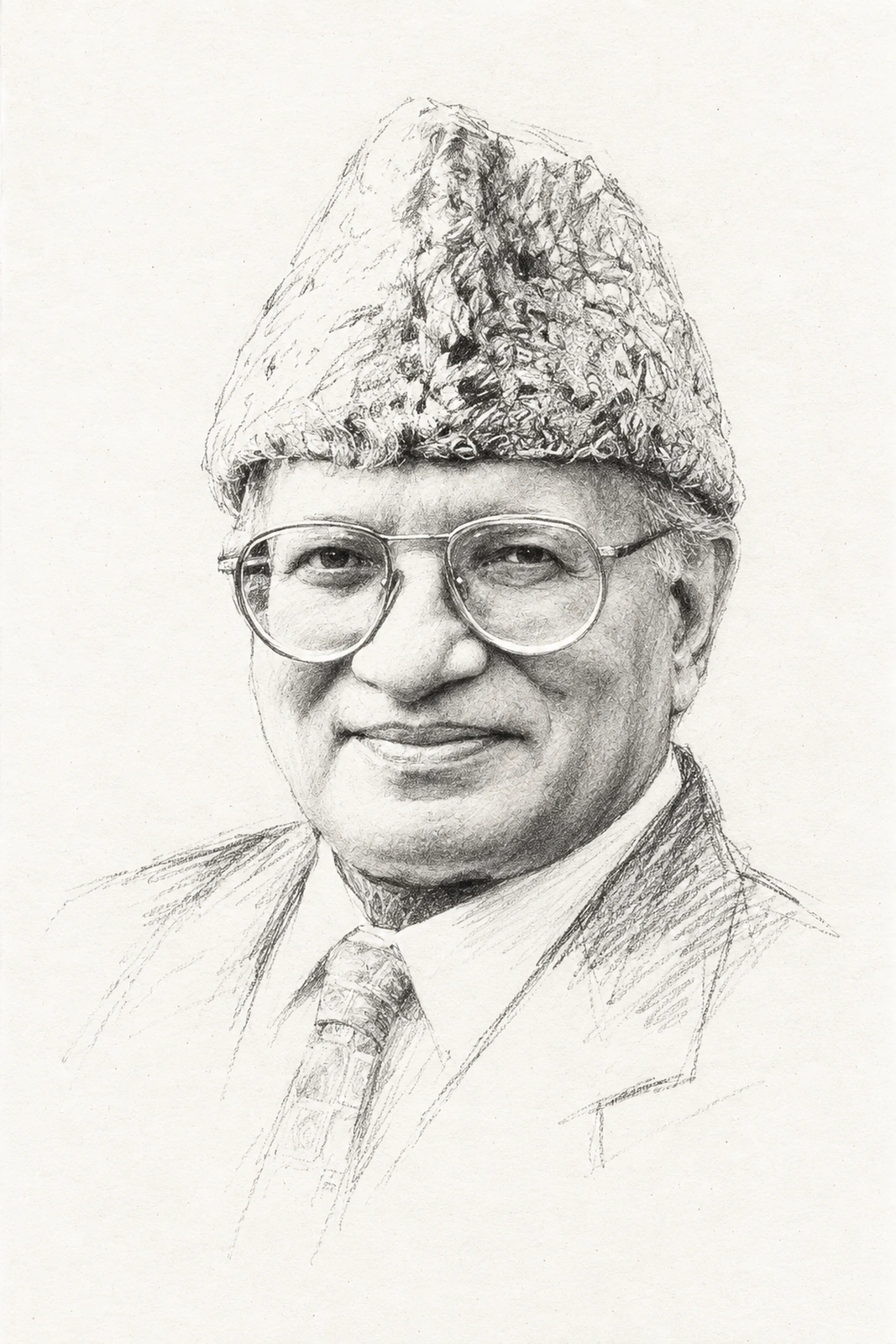
KIREET JOSHI
On
19TH JANUARY, 1998
AT
GOVERNMENT MEDICAL COLLEGE AUDITORIUM, MAJURA GATE, SURAT.
May I begin by congratulating all the students and scholars who have received their awards, their certificates and the prizes. It is customary to mark this occasion with a ceremony as also a few words of greetings and reflections that may serve as counsel for the future. In this way, Convocation makes an imprint of a landmark in the lives of all the participants. May I wish that this landmark continues to serve as a reservoir from which you will constantly derive inspiration for a noble and fruitful life.
In our tradition, the great words of the Taittiriya Upanishad uttered by the teacher to the pupil are remembered and repeated on this occasion. These words are simple but packed with power and unfailing force of guidance. The very first two short sentences of the relevant Chapter summarise everything that we ought to follow in our life. Satyam vada, dharmam chara ‒ speak truth, walk in the way of the law of thy path of ascent. A little later, it is said: "Thou shalt not be negligent of truth; thou shalt not be negligent of thy duty, thou shalt not be negligent of welfare;
thou shalt not be negligent towards thy increase and thy thriving; thou shalt not be negligent of study and teaching of the books of wisdom." In a further elucidation, it says: "The works that are without blame before the people, thou shalt do these with diligence and no others. The deeds that we have done that are good and righteous, thou shalt practise with commitment and devotion and no others." Finally, it addresses itself to a situation where one is beseiged by doubt, perplexity, anxiety, or indecision. It counsels as follows:
Moreover, if thou doubt of thy course or of thy action, then to whatsoever leaders of wisdom be there who are careful thinkers, devout, not moved by others, lovers of virtue, not severe or cruel, even as they do in that thing, so do thou. It concludes:
एष आदेशः। एष उपदेशः। एषा वेदोपनिषत्। एतदनुशासनम्। एवमुपासितव्यम्। एवमु चैतदुपास्यम्।
This is the law and the teaching. These are Commandments. In such wise shalt thou practise the law of thy life, verily in such wise do ever with commitment and devotion.
These words of counsel come to all of us at this Convocation as a boon of our great heritage, and let us receive them with determination to put them into practice. Basically, it is a call for each one of us to make experiments with truth — a task which need not be left only to the great souls but which has to be undertaken by each one of us in a true spirit of equality; for this is the path where everyone has an equal right of entry and fulfilment.
But what is truth? And what is truth-speaking? In answer, we may say that truth and truth-consciousness are closely inter-related. Truth is an expression of the reality and unless one gets into contact with reality, one cannot be qualified to express it. As one begins to experiment with the truth, one begins to make a distinction between facts as we see them and the larger reality as it is in itself. We are, therefore, obliged to correct our perception of facts, unify them in larger and larger context until the finite unites itself with the infinite. The infinite consciousness alone is at its highest the truth-consciousness. Truth speaking is the indispensable condition of the development of truth-consciousness; and none can speak the truth without developing ever-increasing truth-consciousness. That is why, the earliest formula of wisdom that we find recorded in the Veda is that of satyam, ritam, brihat, — the truth, the right and the vast. Without vastness, there is no expression of truth and without expression of truth, there is no right action.
Right action,ritam, is the origin of the Indian concept of dharma. This concept underlines the principle of the right action as the unifying thread which sustains the world and which uplifts the world constantly to higher and higher modes of thought and will-force. Dharma is both positive and normative; it sustains every object by virtue of its inherent qualities and interrelationships, but it also stimulates a path of norms, of ascent, a path of interchange between the individual and the cosmic, and traces an upward movement towards higher and higher goals. The highest prayer of dharma is contained in the Brihadaranyaka Upanishad: asato mā sad gamaya, tamaso mā jyotir gamaya, mrityor mā amritam gamaya, — lead me from the unreal to the real, lead me from the darkness to light, lead me from death to immortality.
This ancient message of the Veda and the Upanishad has to be linked with the problems of today which are centred on what Sri Aurobindo has called "the evolutionary crisis". We are all involved in evolution, and we cannot escape it. In this evolutionary movement, we have reached a critical point: for we have developed greatly our mind but are lagging behind in morality and spirituality; we have developed huge structures of organisation, but we have lagged behind in developing vision and wisdom which alone can control that hugeness; we have developed machines and instruments that facilitate productivity, entertainment and enjoyment, but we have not learned how to establish the sovereignty of our spirit over the machine; we have utilised our knowledge to build the paths of pollution — both environmental and internal, — and even of death, but we have not taken care to tap those resources by which the child and the youth can be enabled to ascend on the higher path of life and perpetual youth. The crisis becomes more and more acute with every passing day; for evolution does not tolerate our inability or our excuses for delay or inertia. The message of this crisis is that onemust build the passage from the mind to the supermind and build on the earth that ideal world which our children and youth should cherish, — where the world will give them the necessary work and leisure by which they can grow from within the secret potentialities of fulfilment,— a world which will not deny them the real and effective equality; and a world that will tie us all in the bonds that do not bind but liberate and uplift, — the bonds of true fraternity.
But why do we speak of the crisis here and at this moment? The reason is that just as you will cross the threshold of the present moment, you will find yourself in the midst of a battle, and you will need to know at what point this battle has reached and what formation of armies stand against each other, so that you will look for the right point of entry. It will be useful if you are aware that the battle is in a state of crisis and that there are three opposing forces, each one of which is trying to lead towards its own way. There is, first, the force that invites you to the path of a downward gravitation. It is armed with promises of life-security and exciting mixture of pleasure and pain as also temptations that have the power and facilities to keep you confined to physical and vital levels of existence. This path will ultimately gravitate towards infra-human levels of increasing appetite, forgetfulness and meaningless round of petty successes and failures. There is, on the other hand, a force, which promises to keep you on the lines of progress, — but horizontal progress.
It promises the moonshine and romance of adventure of new scientific discoveries and inventions, new slogans of economic and political ideologies, and a new effort that will give a feeling of continuous advancement, which, however, will lead to no decisive delivery or liberation. It is the force that is preparing a path riddled with big or small battles, a series of stations at the platforms of which you will listen to the cries of new promises, new threats, even hopes that are soon to turn into despairs. Finally, you will find also a force of upward ascent, which will promise you an ultimate victory but also a most difficult effort.
You will find here a call for heroism, which can sustain itself only with the power of king-ideas or master acts or intense aspirations. It also promises you the resolution of crisis, — somewhat like the resolution that was offered to Arjuna at his critical hour in the battlefield of Kurukshetra. As we come to grips of life more and more, we shall find ourselves involved in this triangular chord and we shall earnestly seek the right knowledge by which this chord and its knots can be disentangled. Whether we are conscious or not, this is the task that confronts all and as you stand today on the threshold of active life, you will be required to participate in this task.
It is the greatest fortune of India that at this critical hour, Sri Aurobindo has built for us the upward path of ascent from the mind to the supermind, — a path on which he has invited the whole world to walk and to build the unending bridges of the future. Unfortunately, our system of education is so ill-conceived that our young people are not able to learn those lessons which would be centrally relevant to the task to which they are being called upon to perform. We do not know our culture and its ancient heritage; we do not know how this great country has declined, and how this country can be regenerated by the new light, — the supramental light, — of which Sri Aurobindo has spoken and which he has brought down here on the earth.
On the contrary, there is such a disregard of children and the youth that powerful forces are being allowed to pour upon us and to drench us so that we may shiver and get paralysed. These powerful forces are those of economic barbarism, cheap sensuality, and competitiveness in self-assertion. We are not properly educated so as to realise that the world is vast and that everyone has in it an indispensable place, which one can occupy, if one simply develops his or her own personality. We are not told that the secret of our vocation and profession lies in our personality, and therefore, we are thrown to the wild winds of competition where we try to elbow out others in order to find a place for ourselves under stifling conditions of insecurity. May I suggest that our system of education is tyrannous and it is high time that we revolutionise it. May I suggest that in this task of revolution those who stand with the awards and certificates today have to resolve to take an active and great part.
Educational revolution that is bound to unfold itself before our eyes is that of a total revolution in the objectives, contents, and methods of education. We shall be required to reiterate the perennial objectives education, which have been badly forgotten or neglected. There are at least three perennial objectives of education. The first is the aim to encourage every individual to know oneself and to relate oneself with the world as effectively and as harmoniously as possible. The second is to transmit the cumulative results of the valuable cultural heritage to the growing generations so as to inspire them to carry it forward and to build the paths of the greater future. And the third is to develop and determine judicious processes of acceleration of human progress.
In addition, we shall have to put forward those objectives which arise from the immediate needs of the country and the world such as those related to integral development of personality, environmental care, science and technology, science and values, international understanding and peace.
We shall need to define the new roles of teachers, students, parents, and of educational administrators. These roles will be directly relevant to the new objectives and to the necessity of introducing new dimensions of art in education, of physical education, and of national spirit of discipline. A massive effort will need to be initiated to develop new contents of education, with a new holistic framework that will underline what Swami Vivekananda calls, "man-making education". New curricula will need to be developed that will focus on character development, vocational education and value-oriented education as also the important lessons of Indian culture, and those courses which will aim at linguistic competence and powers of expression. The new methodologies of education will place the child in the centre of the educational process and will develop special methods of learning to learn, learning by doing, and learning by practising as also of self-study, project work, group discussions, community work, library-oriented education, and activities of community welfare and works of manual labour. And corresponding to the new contents and methods of education, we shall have to initiate the preparation of new learning materials. The consequences of this educational revolution need to be worked in great detail and it is to be hoped that all of you will volunteer to involve yourselves in these great tasks that lie ahead of us.
Just as we need to change our educational system, we have to change also our economic, social and political system. When we attained freedom 50 years ago, our country had resolved to pursue a path which would avoid the vices of capitalism and socialism and also achieve the combination of the virtues of both. The country had dreamt of a synthesis and of the creation of a system which a system which would provide employment to all and yet not rob the freedom of any; the country had rejected the idea of perpetual gulf between the rich and the poor and build instead a society where everyone is so lifted up that everyone can share the growing prosperity of the country, — limited only by one’s incapacity or unwillingness. Our country had dreamt of a casteless society; and yet nothing significant has been done to realise these dreams. But, instead, castes and classes have multiplied and forces of regionalism and linguistic barriers and fissiparous tendencies have made even social mobility difficult. We had taken the path of democracy and we were supposed to prevent plutocracy from thwarting the great ideals of individual liberty which are inherent in democracy. Instead, plutocracy has won, and we are unable to prevent the power of money and muscle, which have become irresistible. The task of the immediate future in which all of us will have to participate is to develop a new strategy to dethrone plutocratic democracy and to establish true truth that lies behind democracy, which is to ensure free self-determination of each individual for the attainment of his or her highest welfare consistent with the highest welfare of all.
In the matters of economic affairs, the central question is related to the role of money and the right attitude that each individual has to cultivate in regard to it as also the healthy social responses to it. The wisest counsel in regard to money is that it is a power which should not be neglected but should be mastered, so that we can look upon money that comes under our possession or ownership as its trustees and utilise it for the highest conceivable purpose. Anyone’s money, we are told by the Upanishad, is not to be coveted, — मा गृधः कस्य स्विद्धनम्. The social attitude towards money should be to ensure that the movement of money does not stagnate but that money continues to circulate and that the circulation of money should be so designed that none comes to possess it by virtue of privileges of birth or artificial structural edifices.
Management of money has become today the most important preoccupation of humanity, and the value that we have come to attach to the pursuit of money leads us to an adverse equation where the most important things like art or search for truth tend to get only a decorative value. This results in the prominence of physical well-being not only as the primary aim of life but even as the sole aim of life. Man, we are told by wise counsellors, does not live by bread alone; we live not to earn but we earn in order to live, and we live not merely to breathe but to achieve some deepest and profoundest goals which are to be discovered by continuous processes of education. The art of management, whether it pertains to money or to the modes of living, consists of recognising the right interrelationship of four fundamental powers which govern the entire world. These are: wisdom, will-power, harmony, and skills in works. It is only when we can harmonise these powers that we would be able to create the right system of management of the individual and collective life as also the management of money and other physical and vital forces as means of a higher and nobler life, and not as ends in themselves. These things may seem utopian, but let us realise the concrete reality of our present situation. We are already in the grip of economic barbarism, which can thrive only on exploitation and injustices of various kinds, of which all of us will become victims, if not today, ‒ then tomorrow.
If we are truly practical, we should really get engaged in the task which would combat this barbarism and promote the establishment of a new economic, social, political, ethical and spiritual order. Whether we call it utopian or not, this seems to be the most pressing need of our times, and all of us are called upon to make our own choice for or against economic barbarism. In fact, our test of education will lie in the way in which we shall make our choice.
In regard to the social situation, we are confronted with a still more difficult task. We are called upon to fight ignorance and superstition, to fight casteism and factionalism, to fight exclusivism of religions and to fight disabling practices which oblige us to remain backward both socially and economically as also build up and sustain insincere and unfaithful personal and social relationships. This is not the occasion to analyse our social scenario, but the wisest counsel that has come to us at this hour is threefold: Firstly, the more developed you are, the greater is your responsibility to transmit your knowledge and experience to all others who are prepared to receive it and to inspire others to aspire ever higher. Secondly, you should not try to dominate, you should not try to divide, you should not nurture egoistic aggrandisement; you should, on the contrary, be prepared to serve and to unify and to become wider and wider until you embrace the entire world. And thirdly, you should be engaged constantly in the task of chiselling your faculties, your powers of understanding and your powers of expression, to eliminate your weaknesses and to increase the wealth of your integral personality. If these three measures are employed, social evils with which we are besieged, will begin to diminish and even disappear, making a way for a new social existence filled up with goodwill and harmony.
Let me come to the final point. Both biologically and psychologically, we are so constituted that our natural occupation has to be that of students and teachers. And highest considerations impose upon us the need to become good students and good teachers. The labour that your teachers have put in for your development and for your education will be truly rewarded if you do not ever cease to be good students and if you transmit as good teachers your education to others whose responsibilities you will be required to shoulder. Every good teacher continues to learn more and more and every good student continues to create greater and greater opportunities for their teachers to teach them more and more integrally. It is my earnest wish that you will strive to become and remain forever good students and good teachers — not necessarily in what are now called schools and colleges, but more importantly in the School of Life.
May I suggest that you will continue to study the lives and works of some of the greatest teachers and students of the past. The Vedas and the Upanishads contain instructive examples of Rishis and Brahmacharins, who by their aspirations and tapasya had attained great victories which built the foundations of our culture. Sri Krishna as the teacher and Arjuna as the pupil provide to us perennial inspiration and when we approach Buddha, both as a seeker and teacher, we find in him how instruction, example and influence — all the three instruments joined in him to make him a good teacher, and how sustained and untiring search made him a good seeker. The great figure of Socrates asking questions even in the market place is an unforgettable example of a teacher who is keen to share his search not only with his pupils but even with others who needed still more to be stimulated in the art of seeking for knowledge. It is to Socrates that Plato as his good pupil owed the inspiration to create that huge edifice of philosophy, of which entire history of Western philosophy is a mere footnote. From Zen masters we can learn how to instruct without instructing and how satori, a new awareness, can be kindled by asking simple questions such as whether you can clap with one hand! A Zen pupil was also expected to open himself to deeper levels of learning so as to transcend the process of intellectual “understanding” and enter into processes of experiential "over-standing". The great Sufi masters had developed methods of inciting fresh visions in order to bring about a new birth among their pupils. And Sufi pupils had learnt the art of infinite patience even for getting entrance into the portals of their master’s school. Wordsworth provides us a great example of how to commune with Nature and to learn to find oneness of spirit inherent in ourselves and all around the universe. Roussaeu spoke of the holding the hand of the pupil, — lessons of which he had learnt during his long period of studentship. Pestalozzi had discovered that a spontaneous love for children has a power of communion that can transform the pupils so that both learning and teaching become a process of transmutation. The relationship between Sri Ramakrishna and Swami Vivekananda, — the one as the illumined teacher and the other as a brilliant pupil, — proves how the teacher can communicate his own vision of God, even when a pupil is a rebellious questioner, and how the pupil, when convinced, can shake the world by the message that issues from the depths of his soul that has seen the invisible and heard the inaudible. Consider, again, Gurudev Tagore’s great parable "The Parrot’s Training", which gives us a message that training does not mean stuffing the mind of the pupil, but providing fresh air and atmosphere of freedom that would enable the pupil to fly into the open sky.
The example of Helen Keller as the pupil and Anne Sullivan as the teacher provides the inspiration to all teachers to interweave their lives with the lives of their pupils, and inspires all students to work against every handicap and attain inner light in spite of the outer veil of darkness. When Maria Montessori turned to discover the secrets of education, she worked on a special method of observation, particularly, in the education of feeble-minded children. As she remarked later, those two years of practice were indeed important first and only true degree in pedagogy. This example shows that the first task of teachers is not to teach but to observe the pupil.
Examples can be multiplied, and even in our own times, you will discover inspiring examples of good teachers and good pupils. I have myself learnt and am still learning from Sri Aurobindo and the Mother, whom I know as the Supreme Teachers of our times, what it means to teach and learn. Your own experiments in teaching and learning will bring fresh insights and it is through growing treasures of insights in education that the school of life can bring about much that is needed to transform our world. It is only when the young people of today treat life as a process of continuous education that we can feel assured of the bright future of education.
Let me conclude by presenting to you a powerful message that Sri Aurobindo has given to the young people of India:
"Our call is to young India. It is the young who must be the builders of the new world, not those who accept the competitive individualism, the capitalism or the materialistic communism of the West as India’s future ideal, nor those who are enslaved to old religious formulas and cannot believe in the acceptance and transformation of life by the spirit, but all who are free in mind and heart to accept a completer truth and labour for a greater ideal. They must be men who will dedicate themselves not to the past or the present but to the future. They will need to consecrate their lives to an exceeding of their lower self, to the realisation of God in themselves and in all human beings and to a whole-minded and indefatigable labour for the nation and for humanity. This ideal can be as yet only a little seed and the life that embodies it a small nucleus, but it is our fixed hope that the seed will grow into a great tree and the nucleus be the heart of an ever-extending formation. It is with a confident trust in the spirit that inspires us that we take our place among the standard-bearers of the new humanity that is struggling to be born amidst the chaos of a world in dissolution, and of the future India, the greater India of the rebirth that is to rejuvenate the mighty outworn body of the ancient Mother."
JAI HIND
Soul of Gujarat - 27 July 2002
Recent communal riots in Gujarat have stirred the minds of people and forced them to undertake an exercise in introspection. In this context, a serious question has been raised as to what is the true nature of Gujarat. It has impelled a task of discovery through which we can touch and experience what may be called the Soul of Gujarat, that glorious lotus of divine love that we call Garavi Gujarat.
According to one view of history, events of the world occur accidentally; contingency of events is sometimes seen as incidence of chance. There is a view that the world is a world of freedom, and that this freedom renders the course of events as a string of strokes that have no meaning and that even to look for meaning is meaningless. But at a deeper and deliberate level, it may be contended that freedom is not a mere freak or caprice but it is a power of choice informed by intelligence, purpose, wisdom and meaning.
In this light, no event in the world is atomic, since every event that occurs must be harmonious with all the rest.
Against this background, one thing that strikes us is that Gujarat is particularly a land of harmony. Harmony in the world works best when it is inspired by wisdom and when it is capable of fighting against all that is disharmonious, rebellious against what is disharmonious and which wants to serve and labour for the deepest and highest purposes of human life. In other words, harmony attains its fulfilment when it is supported by wisdom, heroism and dedicated labour. The prominent feature of the essential nature of Gujarat, its swabhava and swadharma, is that of harmony. The theme of Gujarat is the theme of harmony.
The law of harmony and law of love is particularly the law of mutuality, — mutuality where one and the other depend upon each other. Mutuality is a concept that must be distinguished from the concept of tolerance, the concept of life which is guided by the philosophy of "live and let live".
Even the law of coexistence is not the law of harmony. We often speak of coexistence; but this does not describe the very soul of Gujarat. The law of Gujarat is the law of mutuality. The entire striving of Gujarat is to express mutuality and to realise mutuality in every aspect of life. This is the basic thrust of Gujarat. Gujarat may not be a store of wisdom, wisdom that has been developed so powerfully and immortally by the northern peaks of whiteness; but Gujarat has a natural inclination and humility to receive and to be guided by wisdom; it fosters wisdom and blends it with its own special characteristic of harmonising forces of nature, physical, human and divine. Gujarat may not be rebellious or revolutionary; it may not have the impetuous fire that we find in the Eastern horizon of India. It may indeed be rebellious, but only under pressing circumstances; only to prove that its search for harmony is not a sign of weakness or something devoid of heroism and courage. Gujarat has its own share of the stories of battle, adventure, sacrifice and valour; but the soul of Gujarat shines out much more and much more centrally in its thought, art, creativity and activities that are centred in the maturity of relationships, in its temperament of tenderness and affection, in its spontaneous sense of fraternity and hospitality, in its activities of give and take, in the nurturing and manifestation of the sense of mutuality and harmony. Whenever these tendencies have predominated, Gujarat has manifested its glory; whenever contrary tendencies tend to predominate, Gujarat has tended to deviate from its own swabhava and swadharma. The great poet of Gujarat, the adikavi of Gujarat, Narsi Mehta, gave to it and to the whole of India the potent message of mutuality, love, harmony and intense humanism that breathes with intense divinity when he sang:
वैष्णव जन तो तेने कहिये जे पीड़ परायी जाणे रे I पर दुख्खे उपकार करे तोये मन अभिमान ना आणे रे II
"Let us call him a real Vaishnava who understands the pain of others; he may go to the rescue of others but does not allow vanity to ride over him."
Let us just take a few examples at random of the sense of mutuality that is so manifestly prominent in the Gujarati literature. Let us just consider the prominence of lyricism. Lyricism is the eternal song of mutuality. Lyrics become perfectly beautiful and sweet when they sing of relations that are interdependent, the roots of which transcend selfishness and egocentricity. In the literature of Gujarat, what is immortal is its lyrics, not epics. Lyricism is the heart of Gujarat, the Gujarati temperament is like two birds singing to each other. The immortal Ila Kavyo are unforgettable. How simply and deeply the relationship of the mutuality of the brother and the sister throbs unfailingly in these poems!
ईला! स्मरे छे नहीं एक वेळा
आ चोतरे आपण बे रमेला,
दादाजी वातो करता निरांते
वहेला जमीने अहीं रोज राते।
"Ila! You remember, indeed, how we used to play here at this rendezvous; grandpa used to tell us stories every evening here after our early dinner!”
Or let us take just this one line from Kavi Kant’s Purvālāpa:
आज महाराज! चंद्र नो उदय जोईने हृदयमां हर्ष जामे।
"Today, O Lord, the sight of the rising moon fills our heart with ecstasy!"
In this one immortal line, Kavi Kant brings out the entire joy of the mutual relationship between Man and Nature. Again, this heart-rending line of Kalapi:
ते पंखीनी उपर पथरो फेंकतां फेंकी दीधो!
"Alas! A stone was inflicted on that bird despite unwillingness."
Or this line from Kalapi again:
रे पंखीडां सुखथी चणजो गीत वा कांई गाजो।
"O birds! Peck at the grains with ease and celebrate life with musical songs."
Once again, we have this experience of mutuality and intense tenderness of the heart that feels identity with others.
Again, it is significant that Garba and Rāsa express the intensity of mutuality that is expressive of the soul of Gujarat.
We always feel inspired by Saraswatichandra. It is an immortal story of Gujarat; one can never forget it because it is primarily a story of tenderness of mutuality. "O Kumud, my Kumud!" — these words of Saraswatichandra express the sense of possession and of being possessed, and Kumud’s life in which the sole theme is the unforgettable memory of Saraswatichandra. Without him, she cannot live. Entire self-giving of Kumud to Saraswatichandra and of Saraswatichandra to Kumud, even in a state of semi-permanent separation,— this is the theme of the story, and although essentially a tragic story, it is a story of essence of mutuality of love, greatly sublimated under the impress of a profound depth of philosophical and spiritual thought. And, this tragedy is so sweet and so heart-rending, so uplifting and so ennobling because it whispers into our soul of the sweet pain of love that is mutual. The entire story is a story of mutuality, where threads of intense relationship are spread out like harmonic chords that throb with the music of joy and sorrow, of suffering and sacrifice, and of intense understanding that yields to all that is noble and true in the soul of humanity. Thus this story is the story of the soul of Gujarat, story of harmony.
Harmony is essentially interplay of forces and can be productively manifested in the field of vital existence through trade and commerce. Trade and commerce are fundamentally movements of harmony. Mutuality is the essence of commerce, — equation of supply and demand, equation of give and take is the heart of trade and commerce. It is in this context that the Gujarati temperament is commercial, not profit-seeking commercial, but commercial temperament that seeks profit of all, benefit of all. That is why it is Gujarat that gave and responded warmly to the ideal of "Sarvodaya"(upliftment of all). It is sometimes thought that commerce is something very low; and it would be low, if the spirit of commerce is exploitative. But basically, commerce is an expression of productivity and exchange, a rhythm and an expression of mutuality. Where the true spirit of commerce preponderates, there indeed prosperity too flourishes, and boons of Mahalakshmi abound.
Love, harmony, mutuality, commerce, prosperity, — these are the special, marks of Gujarat and whenever they predominate, Gujarat flourishes; whenever they are ignored or marginalized, Gujarat loses its way, as is evident at the present moment.
We are now at a very crucial stage. As this is a very brief analysis, we can go straight to the present moment. The present moment is a moment of great anguish — violent disharmony. This is not Gujarat. How and why have we reached this stage?
At an important point of development, after reaching a peak point of Sakshara Yuga, there was a curve, a very important curve marked by Gandhi Yuga. Concentration of Gujarat shifted from the themes of scholarship to those of practical affairs of the society and of the country. Problems of village reforms, problems of economic development and problems of governance, — all under the large canvas of the National Struggle for Freedom, — these problems occupied the mind and the heart of Gujarat during the Gandhi Yuga. Gujarat played a leading role, and its main contribution was the message of non-violent battle for arriving at freedom that can nourish mutuality and harmony. But while freedom was attained, harmony and unity were not. And since independence, Gujarat has not been able to find its real centre of gravity, its centre of the truth of its soul.
We have in one of the great characters created by K.M. Munshi, the character of Munjal. And the one unforgettable dialogue that Munshi so dramatically penned is the dialogue between Munjal and Kirtideva. The theme of the dialogue is also the theme that is so relevant to contemporary Gujarat. Kirtideva represents the soul of Gujarat and Munjal represents a great and powerful character of one who has yet deviated from the soul of Gujarat. Even though great and powerful, capable and successful, Munjal is interested only in his small kingdom; he is engaged in small plots of diplomacy and maneuvering; Kirtideva is a large spirit with a vision of unity and harmony. Munjal and Kirtideva tied to each other with a relationship, — the relationship of the father and the son, — portray a picture of a great conflict between a vision and practical maneuverings in a narrow field of small battles and small victories. The present condition of Gujarat can also be described as a kind of a dialogue between a vision and the contemporary practical problems which oblige us to fix ourselves within narrow and stifling boundaries of small battles and small victories.
The great vision for which Gujarat must equip itself is the vision of the continuous quest which started with the Veda in India and which has now come to a critical point of development when the contemporary crisis of humanity is centred upon the evolution of a new type of humanity, — humanity which is free from religious rivalries, economic exploitative competitions and narrow specialisations that prevent vistas of wisdom, the recovery and progressive development of which appear to have become indispensable.
We had in Gandhi and thereafter in Mashroowala a preface to what may be called total revolution. One of the books of Mashroowala is entitled, "Samooli Kranti", where he speaks of the need to transcend the boundaries of religions and of contemporary philosophies as also narrow concepts of social and economic reconstruction. He also spoke of fundamental change in educational system. This is the point at which the thought of Gujarat needs to assimilate its glorious heritage and move forward that can initiate and develop a total revolution, — not a violent revolution but a spiritual and integral revolution that issues from the depths and heights of the Spirit.
There are three important influences which Gujarat has received during the last hundred years. These influences are from the literature of Swami Vivekananda, Rabindranath Tagore and Sri Aurobindo. Fortunately, many of the works of this literature are available in Gujarati language.
All these three influences are at work in Gujarat in a living manner.
These influences, if fully assimilated, will uplift Gujarat and open before it a vast programme of action in which Gujarat can play a leading role.
The immediate future holds out a promise of a great change and a great salutary change. Sakshara Yuga followed by Gandhi Yuga was only a prelude. A new kind of Sakshara Yuga has to come. We have to train the brain of Gujarat so that we are able to delve into deepest levels of thought. We have to recover Narsi Mehta, Narmad and Goverdhan Tripathi and go beyond. A greater period of devotion and rebellious spirit and profound scholarship must prevail in Gujarat; a greater self-awareness must possess the people of Gujarat; a greater sense of mission must guide and inspire the programmes and activities of Gujarat. New lines of resolution of religious conflicts have to be conceived. A new kind of economic development, which is neither capitalistic nor socialistic, but which combines the truths of both and yet which transcends both, has to be formulated. A radical model of governance has to emerge. And in all these fields, what is most important is the birth of a new sense of fraternity, a new sense of togetherness, a new sense of mutuality. And it is here that Gujarat can play the most important role. For, the message and practice of harmony is the soul of Gujarat.
A Critic of Mr Archer on Indian Culture
Even though Mr. Archer has unequalled capacity for affirming absurdities, he is not able to deny that the Indian mind has been highly philosophical and has even had unparalleled activity and fruitfulness in this domain. For the facts are so glaring that he cannot simply deny them; such a denial would go beyond his capacity for affirming absurdities. Similarly, he cannot deny that India has succeeded in distributing the capacity for philosophical thinking on a much larger scale than what has been possible for any other country. As a result, even ordinary Indian intellect can understand and deal with philosophical questions, whereas an equivalent kind of intellect in the West will find itself out of its depth while dealing with such questions, — in the same way in which Mr. Archer finds in himself out of its depth while dealing with the domain of philosophy in his book. But having granted the fact that Indian mind is philosophical, he argues that philosophical capacity is not any proof of great mental capacity. Of course, he is obliged to qualify this statement by adding the word "necessarily". For if he were not to add this qualification, it would have meant that Plato and all others did not show any great mental capacity, a statement which he would not like to make.
Let us, however, go along with Mr. Archer and say that philosophical thinking is not necessarily a great mental capacity just as the European journalist capacity for discussing questions of Economy and Politics, Art and Drama is not "necessarily" a of a great mental capacity. But in both the cases, one has to admit that it is a remarkable and unique general development of one of the difficult powers and interests of the mind.
Mr. Archer cannot avoid this conclusion and therefore he is obliged to bring up a fresh argument. And he does this by arguing that even if Indian philosophical thinking is wide-spread and its development has been unparalleled, philosophy has no value. His conclusion, therefore, is that Indian mind has developed a capacity in a useless domain, a domain which adds nothing to human life. And if it is asked as to why this is so, his answer is that Indian mind has shown unequalled diligence in knowing the unknowable and thinking about the unthinkable. And if one still persists and asks him as to what is wrong in it, his answer is that philosophy is a region where there is no possible test of values, and consequently, it is merely a subject of speculation in which one can find nothing, and there can be no value where there is no true knowledge and no certainty of conclusion.
This argument brings out quite sharply not merely Mr. Archer’s but the entire Western Europeans’ distinctive view of philosophy, which stands out quite clearly in opposition to the Indian view of philosophy. The west has not allowed its life to be influenced and shaped by philosophy, except during the Greek period of Stoicism and Epicureanism, which had some effect on the cultural classes. In recent times, philosophers like Nietzsche, James and Bergson have produced some kind of public interest, but it is a mere nothing compared with the effective power of Asiatic philosophy. In India and in China, philosophy had seized hold on life and had enormous influence on the civilization arid currents of action. The Western mind does not seek guidance from philosophy. It respects only the positive and practical reason. It regards philosophy as something nebulous, remote and ineffective.