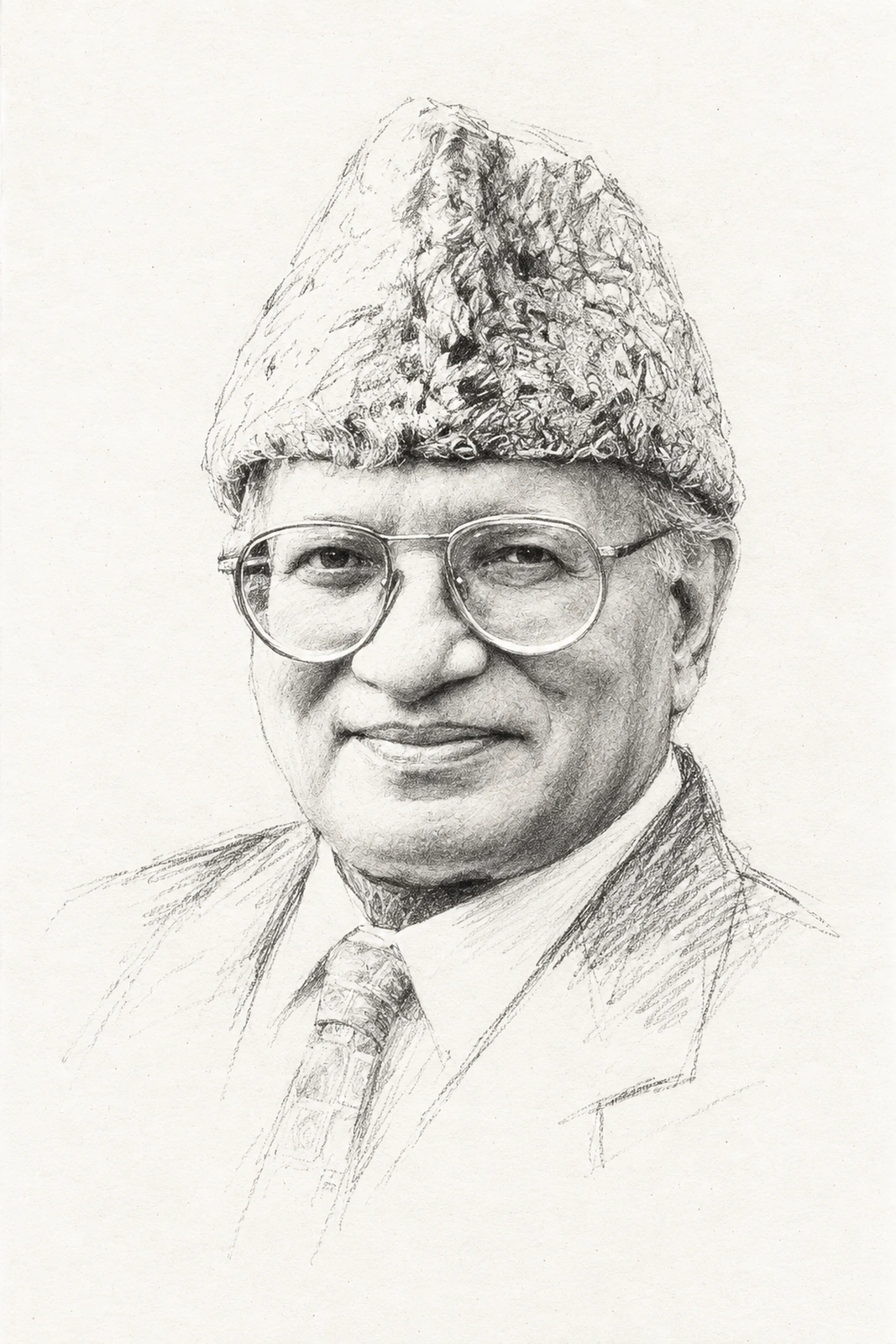
THE WRITTEN WORD
Glimpses of Vedic Literature
Paragraph references are specific to this digital edition.
Introduction
Introduction
THERE are a number of people in our country who have heard of the Veda but have practically no idea of the Vedic literature and its contents. There is, therefore, a need to present to them a few introductory notes, which might provide some basic information about the Vedas, Brahmanas, Aranyakas and Upanishads, which constitute the core of the Vedic literature. It is to meet this need to some extent that these notes have been attempted.
These notes avoid scholarly discussions. They do not even touch the fringe of the Vedic literature and, therefore, the series of these notes has been entitled "Glimpses of Vedic Literature". It is hoped that these notes will provide to readers some such basic information, which would stimulate them to turn to larger books on the subject.
The significance of the Veda lies in the following facts:
I) The Veda is acknowledged as the earliest available literary composition of humanity;
II) The text of the Veda has substantially remained uncorrupted for over two thousand years, and the sanctity of the text has prevented interpolations, alterations and modernising versions;
III) The Veda has been regarded as authoritative in the entire tradition of the Vedic literature, which covers not only the Brahmanas, the Aranyakas and the Upanishads, but also the Puranas, and doctrines of orthodox philosophical schools, which continue to develop up to the present day, besides the teachings of most of the saints and sages of India;
IV) The Veda contains secret knowledge,—knowledge of the highest spiritual truth of which the human mind is capable and its relationship with the world and the individual and collective life in the world and on the earth.
The difficulty in uncovering the secret of the Veda is very great because the language of it is symbolic and it has a double aspect. The Rishis who composed the hymns of the Veda, arranged the substance of their thought in a system of parallelism in which the key words signify cosmic forces and beings and at the same time indicate to their internal and external powers. Those, therefore, who do not grasp the internal powers of these forces and beings, are likely to miss the secret and the meaning really intended to be communicated.
This secret was known to the Upanishads. Indeed, the entire Indian tradition acknowledges that behind the external meaning, the Veda contains a secret internal meaning. But the secret meaning came to be ignored in course of time, and the general impression became widespread that the Veda is a book of rituals and myths very much incomprehensible. Fortunately, during the second decade of the last century, Sri Aurobindo studied the Veda not only in the light of various interpreters but also in that of his own yogic experiences, and discovered the internal secret of the Veda, which he expounded in two of his great works, "The Secret of the Veda" and the "Hymns to the Mystic Fire."
Part One
The Four Vedas
There are a number of people in our country who have heard of the Veda but have practically no idea of the Vedic literature and its contents. There is, therefore, a need to present to them a few introductory notes, which might provide some basic information about the Vedas, Brahmanas, Aranyakas and Upanishads, which constitute the core of the Vedic literature. It is to meet this need to some extent that these notes have been attempted.
These notes avoid scholarly discussions. They do not even touch the fringe of the Vedic literature and, therefore, the series of these notes has been entitled "Glimpses of Vedic Literature". It is hoped that these notes will provide to readers some such basic information, which would stimulate them to turn to larger books on the subject.
The significance of the Veda lies in the following facts:
I) The Veda is acknowledged as the earliest available literary composition of humanity;
II) The text of the Veda has substantially remained uncorrupted for over two thousand years, and the sanctity of the text has prevented interpolations, alterations and modernising versions;
III) The Veda has been regarded as authoritative in the entire tradition of the Vedic literature, which covers not only the Brahmanas, the Aranyakas and the Upanishads, but also the Puranas, and doctrines of orthodox philosophical schools, which continue to develop up to the present day, besides the teachings of most of the saints and sages of India;
IV) The Veda contains secret knowledge,—knowledge of the highest spiritual truth of which the human mind is capable and its relationship with the world and the individual and collective life in the world and on the earth.
The difficulty in uncovering the secret of the Veda is very great because the language of it is symbolic and it has a double aspect. The Rishis who composed the hymns of the Veda, arranged the substance of their thought in a system of parallelism in which the key words signify cosmic forces and beings and at the same time indicate to their internal and external powers. Those, therefore, who do not grasp the internal powers of these forces and beings, are likely to miss the secret and the meaning really intended to be communicated.
This secret was known to the Upanishads. Indeed, the entire Indian tradition acknowledges that behind the external meaning, the Veda contains a secret internal meaning. But the secret meaning came to be ignored in course of time, and the general impression became widespread that the Veda is a book of rituals and myths very much incomprehensible. Fortunately, during the second decade of the last century, Sri Aurobindo studied the Veda not only in the light of various interpreters but also in that of his own yogic experiences, and discovered the internal secret of the Veda, which he expounded in two of his great works, "The Secret of the Veda" and the "Hymns to the Mystic Fire."
Sri Aurobindo found that Yaska and Sayana need to be studied for the outward meaning of the symbols used in the Veda as also for the commonplace, traditional significances and explanations. He also found that European scholarship has obliged us to adopt the critical method of comparative research, which still needs to be perfected. From Maharshi Dayananda, he received the clue to the linguistic secret of the Rishis as also the idea of the one Supreme Reality, which is described variously in the form of numerous gods and goddesses. But it was in the Upanishads that he found the real key to the understanding of the psychological and philosophical ideas of the Vedic Rishis. Above all, Sri Aurobindo discovered in the Veda those secrets, which he had happened to arrive at through his own yogic realisations.
As we read Sri Aurobindo's work on the Veda, we feel convinced that the latter is a book of knowledge and that it is not, contrary to the view of many modern interpreters, confused in thought or primitive in its substance, a medley of heterogenous or barbarous elements, but is a composition having overarching unity, in spite of being the compilation of contributions of hundreds of Rishis, old and new. We find that the Veda is self conscious in its purpose and purport, even though that is veiled, sometimes thickly and sometimes transparently. The Veda, we find finally, never loses sight, even for a single moment, of its aim to arrive at the loftiest realisations of consciousness as also their applications to human problems and perfectibility.
The most important discovery of the Veda was that of a plane of consciousness where activities and manifestations are only of the Truth and the Right (satyam, ritam). Rishis called that consciousness "Rita Chit", "Truth consciousness". The Vedic Rishis had found out methods by which the human mind can find an entry into that consciousness and can then be liberated from the human limitations.
It is here that we find direct relevance of the Veda to our own times. If we study the root cause of the crisis through which humanity is passing today we shall find that it has arisen from the inability or refusal of human consciousness to transcend its limitations, even when the surpassing of these limitations is very much imperative and urgent. The problems of war and peace, environmental degradation, misuse of scientific and technological advancement, mechanical and dehumanising hugeness of structures of organisation and governance, breakdown of the value systems, downward pull of the unbridled search for wealth and pleasure and of exploitation and domination demand effective solution. Moreover, these solutions are required to serve as the alchemy by which human limitations can be broken and surpassed. It is for this reason that Sri Aurobindo has stated that the secret concealed in the Vedas, when entirely discovered, will be found to formulate perfectly that knowledge and practice of a divine life to which the march of humanity after long wanderings in the satisfactions of the intellect and the senses must inevitably return.
As is well known, Sri Aurobindo discovered that very plane of consciousness of Truth and Right, which the Vedic Rishis had discovered and he called it the plane of the Supermind. Not that he arrived at this discovery after studying the Veda. His was not derived knowledge but what he discovered of the Supermind on his own got confirmed by what he later learned from the Veda and the Upanishads.
In keeping with the tradition of the Vedic knowledge, which welcomes new discoveries and new developments, Sri Aurobindo not only developed what has now come to be called Integral Yoga, which absorbs in its synthesis all essential elements of the Vedas and the Upanishads as also of the other yogic traditions but also envisaged a new aim. That new aim is not only attainment of the Supermind by ascending its greater and greater heights but also making the Supermind descend on the earth so that humanity can take the next evolutionary step by a process of mutation of the human species.
This is not the place to enter into the subject of the supra mental manifestation on the earth. However, it would be sufficient to state that Sri Aurobindo has shown how that manifestation is directly relevant to the needs of the contemporary crisis.
But how can that manifestation be accomplished without the recovery of the knowledge of the Supermind that is already formulated in the Veda? Many, who are not acquainted with the inner meaning of the Veda, have an impression that the Veda contains simply prayers and prescriptions for sacrifices, religious rites and ceremonies. This is a misconception and, therefore, needs to be removed, particularly when the modern mind is apt to dismiss anything that is related to rituals and mechanical ceremonies connected with religious creeds and beliefs.
Let us make it clear that the realisations which the inner meaning of the Veda brings out can be attained and practised independently of religious rituals and ceremonies. It may also be mentioned that the religious tradition, which looks upon the Veda as its origin, acknowledges that there is beyond religion the practice of Yoga, which aims at bringing transformation to consciousness by methods which are psychological and not ritualistic. It is this Yogic practice which is described in its depth, loftiness and integrality in the Veda. The Vedic prayer, in its internal aspect, is fundamentally an aspiration, which is not mechanical, but spontaneous and an irresistible process of quest. The Vedic sacrifice is, in its internal character, an act of self offering so that the egoistic consciousness is abolished from all the psychological processes. The Vedic gods are in their internal character cosmic powers and beings representing different aspects of the one Ultimate Reality.
Sri Aurobindo has discovered, through the internal evidence of the Veda itself, what each cosmic power and being (Godhead) stands for. The names of the Godheads are keywords, and if the inner meanings of these keywords are known, it becomes easier to understand the secret of the Veda. For example, according to Sri Aurobindo, Agni stands for the Illumined Will, Indra for Illumined Intelligence that can bestow Divine Light, Savitri is the Creator and Increaser, Usha the Spiritual Dawn, Bhaga the Supreme Enjoyer, Vayu the Master of the Life Energies, Brihaspati the Power of the Soul, Ashwins the Lords of Bliss, Vishnu the All Pervading Godhead and Soma the Lord of Delight and Immortality. These and other keywords and their inner meanings become very useful to all those who want to practise Yoga and get verified the truths of the Vedic knowledge.
It may be added that Yoga is scientific in character, since it is non dogmatic and emphasises the processes of observation, experimentation, comparison, experience and verification of experience by means of abiding realisation. The contents of Yogic realisation are not creeds or beliefs but are articles of knowledge, which can be repeated through fresh experimentation, and also can be expanded, sublimated and surpassed or integrated into the higher states of knowledge.
When we enter into the Veda we should underline its Yogic character, and should feel free to inquire, question and ask for verification. Students of the Veda must be pure seekers, free from prejudices and pre possessions, always ready to undergo askesis and selfless and unegoistic search. The Vedic Rishis were great seekers and what they have described in the Veda are the records of their search, their methods of search as well as the results of their search. Their call is to make of us such seekers as they were.
The purpose of these notes is not to enter into the vast and profound contents of Vedic knowledge; the purpose is much more limited. It is only to help a beginner to get acquainted with an outline of the development of the Vedic literature starting from the Vedic Samhitas up to the Upanishads. It is just to introduce to the beginner the ABC of the Vedic literature; for the rest, there are a number of important and valuable books and it is hoped that these notes will make it easier for the beginner to enter into the deeper and vaster ocean of the Vedic literature and knowledge.
Rigveda
IN this brief introduction to the Veda, we may present a few verses from the Rigveda, which is the principal Veda.
First, let us take the most famous verse known as the Gayatri mantra. Actually, all the mantras in the Veda, which are in the poetic meter Gayatri, are Gayatri mantras. There are many meters and the system of these meters constitutes an elaborate science, which is known as Chhanda Shastra. Among these meters, one is called Gayatri. Gayatri has three parts, each of eight syllables, or alternatively it has four parts, each of six syllables. The total number of syllables is 24.
Among numerous Gayatri mantras in the Veda, the following has traditionally become most famous; and, generally, when one is asked to recite the Gayatri mantra, u is this one that is recited. Every youth who is given yajnopavita (sacred thread) is taught, first and foremost, this mantra. It was composed by one of the great Vedic Rishis, namely, Vishvamitra. This mantra is addressed to Savitri, who symbolises the highest creative light and power, which is at once all-comprehensive and perfect in each and every particular movement of manifestation. The mantra is as follows:
ॐ भूर्भुवः श्वः।तत्सवितुर्वरेण्यं भर्गो देवस्य धीमहि ।धियो यो नः प्रचोदयात् ।।
"Let us meditate on that blissful light of the all-comprehensive creative Savitri, so that he may direct our intellect (in all directions: the earth, the space, the heaven.)"1
Actually, the first four words, ॐ,भूर्भुवः। are added to the main mantra that begins with तत्सवितुः and ends with प्रचोदयात्। ॐ is called pranava which is conceived as the Divine seed of the cosmos, भः,र्भुवः,श्वः are called vyahritis (divine prefixes). They refer to the earth (भः), the space (र्भुवः) and heaven (श्वः). A short commentary may be in order.
In the Vedic literature, the word ॐ is given supreme importance. The Vedic Rishis were great discoverers of the secrets of the universe. In their search for the original force of the manifestation of the universe, they discovered that that force is an original Sound and that sound, when heard, makes itself audible as consisting of three syllables अ, उ, म् (a, u, m).
This sound, they discovered, is imperishable and is as continuous as the universe. They also discovered that if this sound is repeated millions of times by any seeker, he will reach the state of the origin of that sound, which is the Supreme Reality itself. Not only that, the seeker will be able to vibrate with the power of manifestation and he will be capable in due course to manifest the divine consciousness and will in all his activities.
Because of this discovery, the Rishis affirmed that the highest achievements of life can be realised with only one word, ॐ, provided one becomes concentrated on that word and attains a state where this word begins to repeat itself spontaneously in one's entire being, including mind, life and body.
All mantras are really manifestations of AUM, and one who masters AUM, begins to have revelations and realisations of other mantras also; he becomes himself the composer and the seer of mantras. This is one great truth discovered by the Veda, and in India, many have applied it in their lives and have attained great heights.2
We may now come to the next three divine prefixes, bhur, bhuvah, swah, भः, र्भुवः, श्वः. These three words, when rightly and repeatedly pronounced, create a state of consciousness of immense wideness that covers in one instant the entire physical universe, symbolised by the word, bhur, (भः), the intermediate world of Life and Mind, symbolised by the word, bhuvah, (र्भुवः) and the higher world of Mind and Light and Home of creative forces, symbolised by the word swah, (श्वः). In other words, the repetition of these three divine prefixes is designed to indicate to the seeker that he has to be as comprehensive as the totality of the physical, vital, mental and higher worlds.
There is also another important point. Normally, we only see the physical universe. But that is because we are confined to physical senses. The Vedic Rishis had, however, developed higher instruments of knowledge by means of which they were able to experience vital and mental worlds also. And, most importantly, they made a discovery of the faculties of revelation, inspiration and divine discrimination leading up to the truth-consciousness (which they called Rita-chit) by means of which they discovered the universe called (श्वः): where only Truth can exist and vibrate, where error and evil or crooked consciousness get automatically dissolved. This was one of their supreme discoveries. With the help of this discovery, they could perceive our physical universe in an entirely new way and could deal with it also in a new way. They, therefore, laid down that those who want to enter into the practice of mantra must endeavour to perceive the physical universe with complex eyes, complex consciousness, with profounder depths and wider vistas, so that Rita-chit, truth-consciousness, would ultimately dominate the perception of the mental, vital and physical worlds. It is only there that the physical world will be perceived in its true truth, in the total perspective.
Let us now come to the main text of the Gayatri mantra.
It has three elements:
(i) It is addressed to the original light of creation, symbolised by Savitri;
(ii) It aims at inviting the power of that creative Light to enter into the seeker's being; and
(iii) It specifically selects one faculty, that of intellect, and expresses the aspiration that that faculty of intellect be impelled or directed by the original power of creativity, that is Savitri, which is the home of Truth-consciousness.
This means that the Rishi Vishvamitra (who has seen this mantra) was aware of the Original Creative light of Truthconsciousness. He knew that this light could be effectively invited to enter into relationship with us, and that this mantra itself was the means of that invitation; and, finally, he had discovered that among all the faculties of human beings, the most important faculty was that of the intellect, without whose aid, and without whose coming into contact with the creative Light, the human being could not be liberated from his present limitations so as to become a new being of Truth-consciousness.
We can see how many discoveries the Rishi had made before he could arrive at the formulation of this mantra. We can also see how much experimentation must have been made to apply the knowledge of his discoveries to arrive at this mantra, which is in itself the instrument of application of knowledge and means of practical achievement.
Rigveda (contd.)
WE are giving below four important verses from the Rigveda, Mandala-I . Sukta 89. These have been chosen with a special purpose. They bring out the emphasis that is laid in the Veda on: (a) universality, (b) goodwill, (c) well-being, (d) selflessness and (e) all-round good health.
ॐ आ नो भद्राः क्रतवो यन्तु विश्वतो।ऽ दब्धासो अपरीतास उद्भिदः।देवा नो यथा सदमिद् वृधे असन्नप्रायुवो रक्षितारो दिवेदिवे ।।1।।
"May thoughts of goodwill come to us from all directions, without any obstruction or restraint, leading us to higher ideals, so that we may be recipients of divine protection without any hindrance from day to day for our well deserved growth."
स्वस्ति न इन्द्रो वृद्वश्रवाः स्वस्ति नः पूषा विश्ववेदाः।स्वस्ति नस्ताक्ष्यों अरिष्टनेमिः स्वस्ति नो बृहस्पतिर्दधातु ।।6।।
"May Indra, with the opulent power of the divine hearing, be propitious to us. May the Omniscient Pushan be propitious to us. May Garuda, with His irresistible weapons, be propitious to us. May Brihaspati be auspicious to us."
भद्रं कर्णभिः शृणुयाम देवा भद्रं पश्येमाक्ष।स्थिरैरंगैस्तुष्टुवांसस्तनुभिव्र्यशेम देवहितं यद
"0 Gods, may we hear with ears what is auspicious; may we see with eyes what is auspicious, 0 gods worthy of worship. May we sing songs of gratitude with all our bodies endowed with firm faculties and live the full span of our life devoted to divine welfare."
शतमिन्नु शरदो अन्ति देवा यत्रा नश्चक्रा जरसं तनूनाम्।पुत्रासो यत्र पितरो भवन्ति मा नो मध्या रीरिषतायुर्गन्तोः।।9।।
"Hundred autumns are assigned to us by the Divine in this fleeting existence of bodies, subject to old age and decay. Those who are sons today shall be fathers tomorrow; may we have (therefore) no afflictions or infirmities in the midst of our life-span."
A few words of commentary:
ॐ आ नो भद्राः क्रतवो यन्तु विश्वतो। (May good thoughts come to us from the entire universe)—These words of the Veda are often quoted to indicate that the Vedic teaching is wide open to the whole universe and is ready to receive thoughts of goodwill from all, irrespective of country, race and religion.
These words also emphasise the earnestness of the Veda for goodwill, for all that is auspicious, pleasant and sweet.
The verse in question is aware of the fact that, realistically, the good is usually met with obstruction, opposition or restriction. Gravitation towards the lower levels of existence is easy and smooth, but climbing upwards, which is effected by thoughts of goodwill, is always difficult. The Rishi, therefore, prays for daily protection from the Divine so that upward growth is fostered.
The force of this prayer is deeply realised by those who are in the midst of difficulties or are surrounded by enemies and are desperately in need of conquering them in order to experience higher or upward movement of growth.
The next verse is straightforward and expresses the prayer for Grace.
At a deeper level, however, a fundamental law of the universe lies behind this prayer. This law can be explained in the following words of Sri Aurobindo:
"There are two powers that alone can effect in their conjunction the great and difficult thing which is the aim of our endeavour, a fixed and unfailing aspiration that calls from below and a Supreme Grace from the above that answers."
It is also noteworthy that, in the Veda, aspiration or the call from below is represented by Agni, and Grace or the power that descends from above is represented by the Sun who stands for omniscience or all-knowing light. Again, in the framework of Vedic knowledge. Sun or Supreme creative Light acts through three agencies, the agency of light that inspires, the agency of light that reveals and the agency of light that tears the veil of darkness by means of irresistible weapons.
In other words, the power of the Grace is the power of the Sun, which in this verse, is addressed as Pushan (which means the increasing or rising light of the Sun), and the adjective attached to it is Vishwavedah (which means Omniscient). But the first delegate of the Sun is Indra, who stands between our Mind and Solar Supermind and comes to us in the form of increasing inspirations and words that are heard increasingly. That is why we find Indra with the epithet Vriddhashravah (opulent power of divine hearing).
Indra is always supported by the action of force or weapons which are irresistible (अरिष्टनेमिः) and can tear open the veils of ignorance and darkness. When this is effected, the light of the Sun manifests as truth that can be seen, the word that can be revealed, which is indicated in the verse by reference to Brihaspati who symbolises the Lord of the Word, Revelation or Creation.
In the light of the above, we can see that this verse gives the secret of the law of aspiration and Grace as also the secret of the elements that are involved in the Action of Grace that descends from above.
The third and the fourth verses are also simple, as simple as all truths are. But the profundity of this simplicity will become manifest when we relate the prayers of these two verses with the principal aim that the Veda sets before us for achieving in human life.
As is well known, the principal aim of the Vedic knowledge is the discovery of the Supreme Truth (satyam, ritam) and application of it in every part of our being so as to attain to the state of immortality.
Vedic immortality lies in the realisation of the eternal Reality, not only in its essence, but also in its manifest powers of Light and Force. This realisation has been described variously in the Veda. The following mantra of Parashara, for example, gives us quite a vivid image of the state of immortality:
आ ये विश्वा स्वपत्यानि तस्थुः कृण्वानासोऽमृरतत्वाय गातुम्।मह्ना महद्भिः पृथिवी वि तस्ये माता पुत्रैरदितिर्धायसे वेः।। (1.72.9)
They who entered into all things that bear right fruit formed a path towards the immortality; earth stood wide for them by the greatness and by the Great Ones, the mother Aditi with her sons came (or, manifested herself) for the upholding.
Commenting on this, Sri Aurobindo points out:
"That is to say, the physical being visited by the greatness of the infinite planes above and by the power of great godheads who reign on those planes breaks its limits, opens out to the Light and is upheld in its new wideness by the infinite consciousness, mother Aditi, and her sons, the divine Powers of the supreme Deva. This is the Vedic immortality."3
Considering that the physical condition should.be able to sustain the power of realisation in the divine state of immortality, the Veda insists that the body should be kept in good condition, with firm organs and faculties capable of singing songs of gratitude.
And the Veda further lays down the condition that this can happen when we hear with our ears and see with our eyes always what is auspicious.
(भद्रं कण्रेभिः शृणुयाम... भद्रं पश्येमाक्षभिः)
It is in the context of the larger aim of immortality and of the conditions that have to be fulfilled to achieve that aim that we can appreciate why the Veda advocates longest possible longevity (hundred years and even more). It is not the attachment to the physical frame or physical life that is the underlying motive; it is the basic motive of divine manifestation.
Vedic Concept Of The Ultimate Reality
IN these introductory notes, we have seen briefly the universality of the Veda and its emphasis on Goodwill. We shall now consider here the real basis of this universality and the importance it attaches to Goodwill. The real basis is the Vedic vision of Oneness and unity of existence. This vision is the opposite of our normal perception of division and surpassing unconnectedness despite discontinuous connections and relations. The vision of oneness and unity is termed by the Veda as Knowledge, vidya; our normal experience of division is termed Ignorance, avidya. The aim of the Veda is to lead us to Knowledge as also to lifting of the mystery of Ignorance by a wonderful consciousness of One Reality which reconciles the One and the Many.
There is one very famous statement of the Rigveda, which affirms the Oneness of Reality in the following words:
एकं सद्विप्रा बहुधा वदन्ति। I.164.46
"There is One, which the wise call by many names."
These words appear in the very first Mandala of the Rigveda. In the last Mandala (Tenth Mandala) also, the Veda repeats the same idea in somewhat different words:
सुपर्णे विप्राः कपयोः वचोभिरेकं सन्तु बहुधा कल्पयन्ति। (10.114.5)
"The sages imagine and describe the One Being variously."
In the first Mandala (1.170), there is a very illuminating dialogue between Indra and Agastya. In the dialogue, Indra reveals to Agastya the nature of the One Reality. Indra declares:
न नूनमस्ति नो श्वः कस्तद् वेद यददभुदम्।अन्यस्य चित्तमभि संचरेण्यमुताधीतं वि नश्यति। 1.70.1
"It is not now, nor is It tomorrow; who knoweth that which is Supreme and wonderful? It has motion and action in the consciousness of another, but when It is approached by the thought, It vanishes."
This verse brings out the following important characteristics of the One Reality:
I) It is not now, nor is It tomorrow. It is, in other words, beyond Time and Space. It is eternal;
II) It cannot be known by that which is in Space and Time. Our thinking which is moving within the bounds of Space and Time cannot have access to It'
III) If we try to reach It by thought, we shall fail to seize It. We have, therefore, to go beyond thought; we should take the help of Indra, who symbolises a consciousness above our thought; with that help we can approach It.
In the Katha Upanishad, Yama reveals to Nachiketas the nature of the One Reality and the means of knowing It in the following words:
"The objects of senses are higher than senses (ears, eyes, etc.); and Mind is higher than the objects of senses; and the faculty of knowledge is higher than the Mind; and the great Self is higher than the faculty of knowledge."
"And higher than the great Self is the Unmanifest and higher than the Unmanifest is the Purusha; none is higher than the Purusha:
He is the culmination. He is the highest goal of the journey." (III. 10-11)
This Upanishad throws light on how that Purusha can be known:
"Not with the mind has man the power to get Him, no, nor through speech, nor by the eyes . . ." (12)
"The Self is not to be won by eloquent teaching, nor by brain power, nor by much learning; but only he whom this Being chooses can win Him; for to him this self bares his body." (11.23)
"When every desire that finds lodging in the heart of man, has been loosened from its moorings, then this mortal puts on immortality; even he tastes that Reality, in this human body." (VI. 14)
That there is One Reality behind this universe and that It can be known by transcending our ignorant Mind are described in still profounder manner in the Isha Upanishad, which is the last chapter of the Yajurveda. We shall take only a few verses:
All this is for habitation by the Lord, whatsoever there is movement in the universal motion. By that renounced thou shouldst enjoy; lust not after any man's possession."
(I)
"Into a blind darkness they enter who follow after the Ignorance, they as if into a greater darkness who devote themselves to the Knowledge alone." (9)
"He who knows That as both in one, the Knowledge and the Ignorance, by the Ignorance crosses beyond death and by the Knowledge enjoys Immortality." (11)
It is the Knowledge of the One, and therefore the Knowledge of oneself in all and of all in oneself that provides the Vedic foundation for universality and goodwill for every one and everything. As the Isha Upanishad declares:
"But he who sees everywhere the Self in all existences and all existences in the Self, shrinks not thereafter from aught. He in whom it is the Self-Being that has become all existences that are Becomings, for he has the perfect knowledge, how shall he be deluded; whence shall he have grief who sees everywhere oneness? " (6, 7)
These immortal words require no comments. They only spur us to the needed effort for realisation.
Vedic World Knowledge
THE Supreme Reality is, according to the Veda, "That One" spoken of variously by the wise. This Reality came to be described in the Upanishads as Sat-Chit-Ananda (Sachchidananda), the pure conscious and blissful Existent. In the Veda we find that it is described often as Sat. It is also described as blissful. It is again described as conscious, and as Force of concentrated consciousness, Tapas. The Veda also speaks of It as tridhatu, the threefold Substance.
In an intriguing description of the totality of Reality and its manifestation, the Veda speaks of it as one having four horns and three feet (catvari sringa trayo asya padah). Evidently, the four horns symbolise the upper domain of Reality; and three feet symbolise the lower domain of Reality. It is also clear that the three feet would mean the three lower principles of manifestation with which we, living in the lower world, are quite familiar, namely. Matter, Life and Mind. We can also see that of the four horns, three horns are those of Sat, Chit and Ananda. But what is the fourth horn, which is in the upper domain?
We seem to be getting a reply to this question m the following hymn of the Rigveda, composed by Rishi Aghamarshana. The first line of the first verse of this hymn runs thus:
"From the Tapas (Force of concentrated consciousness) arose the Truth and the Right."
As we saw earlier, the Veda often describes the Supreme Reality as Sat, but also sometimes as Tapas. This Sat or Tapas is the threefold substance, Sat-Chit-Ananda, the three horns of the Upper domain of the Reality. We are now told that out of this Tapas arose the Truth and the Right, which are also described elsewhere as the Great or Mahas. This is the fourth horn of the upper domain of the Reality.
The totality of the Reality is thus sevenfold. The four upper domains are:
Sat Existence
Chit Consciousness Force
Ananda Bliss
Mahas The Truth and the Right
(Satyam, Ritam)
And the three feet, that is, the three lower principles arc:
Dyaus Mind
Antariksha Life
Prithvi Matter
These are the seven principles that we find present everywhere. That is why, the Veda also describes the Reality elsewhere as saptahastaso asya, seven-handed. But the Veda tells us something more about the order in which the Reality has manifested the universe; and this is quite important for AC Vedic science. Let us turn to this account, which is given in the second and subsequent lines of the hymn of the seer Aahamarshana . The second line runs as follows:
ते रात्र्यजायत ततः समुद्रो अर्णवः (RV.X)
"Then arose the night, and from it arose the watery ocean."
We may halt a little at this point to ask a question with some bewilderment. The question arises because of the following position: We may recall that in the first line, we were told that from the Reality, which is Tapas, the Truth and the Right arose. Here the emergence of Truth from Tapas or Sat seems quite natural and logical. But in the second line we are told that from the Truth, satyam, what arose was the darkness of the night. And this seems quite surprising or even shocking and illogical. How can darkness arise from the Truth?
We find a hint or even an explicit indication of the answer to this question in the last chapter of the Yajurveda. (This chapter is also well known as the Isha Upanishad).
The relevant mantra is the 15th verse of the Isha Upanishad. The verse reads as follows:
हिरण्मयेन पात्रेण सत्यस्यपिहितं मुखम्।तत्त्वं पूषन्नपावृणु सत्यधर्माय दृष्टये।।
"The face of the Truth is covered with a brilliant golden lid; that do thou remove, 0 Fosterer, for the law of the Truth, for sight."
This means that the Truth as the first emergent of Tapas can get covered by a brilliant golden lid. This lid is so effective that if the face of the Truth is sought to be seen, that lid needs to be lifted.
But what is that lid? By what means does it get formed?
Surely, the means can be Tapas itself, since there is nothing else than. That, Sat, which is in the process of Tapas. Tapas, by its very nature, is concentration of the Consciousness-Force; and this concentration can be of various kinds; it can be integral; it can be exclusive. In its action of exclusive concentration, it can create the lid by its intensity and persistence.
This is what we can see in our own ordinary psychological functioning, where by means of concentration on one point, we can relegate our awareness of all the rest in the background. But once this operation becomes effective, that concentration can serve as a barrier, as a lid. In the beginning, that lid may be transparent, even brilliant. But there arises also a further possibility of turning that lid thicker, even opaque. And once this opaqueness is achieved, the radiation of light becomes more and more difficult. (Analogically, this is what happens when the radiating light is drawn back from the internal pull of gravitation to such a great extent that the object radiates no light at all, and we get the phenomenon of the black hole.) The last stage of the operation of the exclusive concentration of consciousness Would be that of an abysmal sleep. It is this which is described by the Veda as the night of darkness.
In other words, the Veda states that after the emergence of the Truth and the Right from the Tapas, there emerged the night; and this is further described as watery ocean, samudro arnavah, which is a symbol of darkness.
The next steps of emergence are rapidly described. In the hush of the night, there begins the process of ascent from below and descent from above in accordance with a specific preconceived purpose. As a result, there come about alterations of light and darkness; ascent from darkness towards light of the Truth, and the descent of light of the Truth towards the darkness to transform it. Days of light are followed by the nights of darkness, which are again followed by days of light, and so on, ahoratrani. As a result of this movement a stair is built up between the luminous Truth, the Sun of knowledge, and the dense unconscious Matter. The Sun is always associated with delight, symbolised by Soma or Moon, Chandramas. Below the realm of Knowledge and Delight is formed the realm of the Heaven of the Mind, divam; and below it lies the realm of Matter, prithvi,—with the realm of Life, antariksha, as a link between Mind and Matter. And, finally, there is the luminous World of svar, a passage for ascent from Matter, Life and Mind and for descent from the world of Truth and Delight. Let us go back to the text of the hymn and hear directly from the seer Aghamarshana:
समुद्रादर्णवादधि संवत्सरो अजायत।अहोरात्रणि विदधद् विश्वस्य मिषतो वशी।। X.190.2
सूर्याचन्द्रमसौ धाता यथा पूर्वमकल्पयत्।दिवं च पृथिवीं चान्तरिक्षमथो स्वः।। X.190.3
"From the Watery Ocean 'there emerged the movement of descent and ascent (Samvatsara); consequently, the alteration of light and darkness (ahoratrani) ordained by the ruler of Time (or moment-to-moment movement)." X. 190.2
"As pre-planned by the Creator, there arose the sun and the moon; the heaven and the earth with the intermediate world, and then the world of svar, the heaven of descending light." X. 190.3
Yajur Veda
MANTRAS of the Rigveda are all in poetic form. But Yajurveda is principally in prose form. The word "Yajus" is derived from the root "Yaj," which means to consecrate, to offer, to sacrifice. The mantras of Yajurveda are, therefore, devoted to acts of sacrifice.
Sacrifice is understood primarily in its ritualistic sense, and Yajurveda itself speaks of various kinds of ritualistic sacrifices. Rituals of various sacrifices were laid down in detail and they are expected to be performed with meticulous care. There is a belief among ritualists that the rites, if properly performed, are effective and produce desired results. The important rites are related to sacrifices called "Chaturmasya", "Vajapeya", "Ashwamedha" and "Rajasuya".
But apart from the ritualistic meaning, sacrifice has also an inner meaning. It is this inner meaning which is extremely important. Every action is inwardly a sacrifice, if it is done as an offering to the Divine. All inner offering is received by the Divine, and the Divine receives by Himself offering something of His divine nature to the doer of action. When this process of offering of the doer and the offering of the Divine in the act of receiving is repeated again and again, in every act, in every manner of being, the Divine begins to take charge of the doer and, eventually, the doer is transformed into the Divine Worker; he becomes the channel of the Divine Will. The ultimate result that ensues is the occurrence of the Divine Event, with all its splendour, glory, miraculousness and incalculable consequence for the world.
The Yajurveda is fundamentally the secret science of the Divine Events, which can alter what is preplanned or predestined by the power of human will, human action. Karma. The basic teaching of the Yajurveda is that Karma can be altered, that humanly destined events can be prevented, modified, transformed by means of intense processes of inner sacrifice.
There are two main versions of the Yajurveda: Shukla Yajurveda and Krishna Yajurveda. At one time, there were 101 Shakhas or branches of it. But over centuries, most of them have become extinct, and we have only the following Shakhas as shown in the table given as under:
The Vajasaneyi Yajurveda has 40 chapters; it has 29,625 words, and 88,875 letters. More than one third of the mantras of the Yajurveda have been taken from Rigveda. The last chapter of the Shukla Yajurveda is the famous Ishavasya Upanishad, to which we have made reference earlier. But as this Upanishad is very important, we may give briefly an idea of its main contents.
Isha Upanishad has eighteen mantras. Its main message is contained in the following:
तेन त्यक्तेन भुञ्ञीथाः
"By that renounced, thou shouldst enjoy."
This Upanishad has four movements:
In the first, it is declared that the entire universe is inhabited by the Spirit. On that basis, the rule of a divine life for man is founded,—enjoyment of all by renunciation of all through the exclusion of desire. There is then declared the justification of works and the physical life.
In the second movement, the basis of fulfilment of the rule of life are found in the experience of unity by which man identifies himself with the cosmic and transcendental self and with all its becomings, but with an entire freedom from grief and illusion.
In the third movement, vidya and avidya, Knowledge and Ignorance are reconciled by their mutual utility to the progressive self-realisation which proceeds from the state of mortality to the state of immortality.
In the fourth movement, the relation of Supreme Truth and Immortality and the activities of the life are symbolically indicated.
The prayer to Agni, which is given in the last mantra of this chapter is very famous. It runs as follows:
अग्ने नय सुपथा राये अस्मान् विश्वनि देव वयुनानि विद्वान्।युयोध्यस्मज्जुहुरामेनो भूयिष्ठां त ेनम उक्तिं विधेम।।
"0 Agni, Being of Illumined Will, knowing all things that are manifested, lead us by the good path to the felicity; remove from us the devious attraction of sin. To thee completes! speech of submission we dispose.
Yajurveda (contd.)
WE shall now refer to a few verses of the Yajurveda. These verses are devoted to the fostering of Good Will in our consciousness. These are six verses, which all end with the phrase: "tanme manah shiva samkalpamastu" (may that mind of mine be filled with Good Will). These verses are as follows:
यज्जाग्रतो दूरमुदैति दैवं।तदु सुप्तस्य तथैवैति ।दूरंगमं ज्योतिषां ज्योतिरेकंतन्मे मनः शिवसंकल्पमस्तु ॥
"The mind, irrespective of whether one is awake or asleep, travels to far distant corners; this far distant-moving mind is the light of lights.
May that mind of mine be filled with Good Will."
येन कर्माण्यपसो मनीषिणो यज्ञे कृण्वन्ति विदथेषु धीराः।यदपूर्वं यक्षमन्तः प्रजानां तन्मे मनः शिवसंकल्पमस्तु।।२॥
"It is by virtue of this mind that the enlightened ones, endowed with deep insight and operative skill, perform actions as a sacrifice; the mind is extraordinary, highly dynamic and effective, hidden with creative powers.
May that mind of mine be filled with Good Will."
यत् प्रज्ञानमुत चेतो धृतिश्च यज्ज्योतिरन्तरमृतं प्रजासु।यस्मान्न ऋते किञ्चन कर्म क्रियते तन्मे मनः शिवसङ्कल्पमस्तु॥३॥
"The mind represents insight and awareness, patience, light and nectar (or immortal light) within the human beings; without mind no action can be performed.
May that mind of mine be filled with Good Will."
येनेदं भूतं भुवनं भविष्यत्परिगृहीतममृतेन सर्वम्।येन यज्ञस्तायते सप्तहोता तन्मे मनः शिवसङ्कल्पमस्तु॥४॥
"That immortal mind penetrates all the past, the present and the future; the mind itself extends into all actions of sacrifice endowed with seven sacrifices.
May that mind of mine be filled with Good Will."
यस्मिन्नृचः साम यजूं गुँ षि यस्मिन् प्रतिष्ठिता रथनाभाविवाराः।यस्मिंश्चित्तं सर्वमोतं प्रजानां तन्मे मनः शिवसङ्कल्पमस्तु ॥५॥
"The mind is the receptacle of the Rigveda, Samaveda and Yajurveda; they are located in it just as spokes are contained in the centre of the wheel of a chariot; all the stuff of consciousness of all the beings is interlocked in it.
May that mind of mine be filled with Good Will."
सुषारथिरश्वानिव यन्मनुष्यान् नेनीयतेऽभीशुभिर्वाजिन इव।हृत्प्रतिष्ठं यदजिरं जविष्ठं तन्मे मनः शिवसङ्कल्पमस्तु॥६॥
"As an expert charioteer mobilises the horses with the reins, so does the mind mobilise human beings. It is the most dynamic and fast moving (director) located in the heart.
May that mind of mine be filled with Good Will."
The above verses indicate the great significance that has been attached to Good Will in the Veda. We speak today of the imperative need of harmony, but it is not sufficiently realised that the only stable foundation of harmony is good will from oneself and good will from others. Considering that all problems of human existence are essentially problems of harmony, it is obvious that generation of Good Will is the most important task in the world.
We may also note that these verses are universal in character; they do not postulate any religious belief; they do not favour any particular group or community; they do not limit goodwill to any country or race; they express an unconditional aspiration for good will for all and for all time.
The prayer contained in these verses, thus, transcends all narrow interests and can be offered by any human being who sincerely wishes to express his or her humane, ethical and spiritual aspiration to grow in purity, harmony and universality.
Another important element to be noted in these verses is the profundity of knowledge that they contain about the nature of human consciousness. They describe briefly but quite comprehensively the nature and powers of the human mind. This description is an important part of the Vedic science of psychology. Let us dwell a little more on this point.
The Veda uses the word "ananas" with a special meaning in these verses. In the Gayatri mantra that we had studied earlier, the important word that was used was dhi. In other verses, the Veda speaks of medha; in some others, it speaks of chitta; in still some others, it speaks of buddhi or prajna. The distinction between medha and buddhi is that while medha is dependent on sensations in its function of understanding, buddhi operates from above the sensation and can arrive at a judgment which may even contradict the evidence of sensation. Buddhi is the same as dhi, or prajna. But, is buddhi different or distinguishable from manas? If so, what is that difference?
Manas, as used in these Vedic verses, is a larger term. It has, first, the basic function of co-ordinating the activities of all our senses, viz., hearing, touch, seeing, tasting and smelling. In fact, manas is regarded as the real sense, and other senses give us sense-experiences only when they are connected with manas. That is why when we sleep, and when our manas is withdrawn from sensory functions like hearing, we do not sense anything even when objects impinge on our senses. If our sleep is deep, we do not hear even a loud noise. That is because the sense of hearing has for the time being got dissociated from manas.
Manas as a co-ordinator of senses or as itself a sense forms the lowest layer of our inner being; there are higher layers also. Manas can, in its higher functioning, develop senses other than the normal five senses of which we are normally aware. For example, we do not normally, have the sense of weighing the volume of an object. But manas can develop this sense. Manas can also see even when eyes are blindfolded. It can touch even without contact with the skin. It can even hear without the use of ordinary sense of hearing. How, for example, do we see objects in our dreams when our outer eyes are closed? We all hear, touch and smell in our dreams. How does it happen? The Vedic Science of Psychology tells us that this happens because of the activities of manas. As it declares:
"The mind or manas, irrespective of whether one is awake or asleep, travels to far distant corners; this far-distant moving mind is the light of lights."
At a still deeper level, we find that the psychological powers of manas can be expanded. These expansions can be effected by concentration of consciousness, by dhyana and samadhi. In these expansions, we reach a level, which is that of subliminal mental consciousness. The Vedic psychology tells us that the powers of the subliminal mental consciousness include the following:
(a) deep insight (independence of reasoning);
(b) operative skill (independence of learning or practice);
(c) light of clarity (experienced often as sudden flashes);
(d) knowledge of the past, present and future (often experienced as premonitions, warnings, visions of the future in dreams or in waking state or in trance); and
(e) impulsion to action (based upon inner feeling, irresistible force of action, independence of one's prudent calculations or reasoning.)
In modern developments of psychology, all these powers are now being gradually recognised. But we see that these powers were already described in the Veda, and they were attributed to the mind, manas, as we see in the verses given above.
But at this stage, a question arises. Does the manas, with all these extraordinary powers, still need to be oriented towards Good Will? Why so? Is Good Will not automatic to manas? The answer is, no. For subliminal consciousness, although wide and complex, and endowed with light and extraordinary powers, is not the highest consciousness; it is not truth-consciousness either. According to the Veda, there are levels and states, higher and better than those of manas. Veda recognises four faculties of consciousness higher than the mental ones. They have been named. Revelation (Ila); Inspiration (Saraswati); Intuition (Sarama) and Discrimination (Daksha). And, above these four is the faculty of Rita-chit. It is only in Rita-chit that Goodwill is automatic. At all levels lower than the Rita-chit, there is the need to orient towards Good-Will by exercise of effort, by tapasya, or by prayer or aspiration.
This is the real rationale behind the prayer that is contained in the abovecited verses. These verses provide a good example of how the Veda contains psychological knowledge as also the method of its application. They describe mental states; they show their wide powers; they also describe their limitations; they also prescribe how these powers, wide but limited, can be oriented towards dimension of Good Will; they even have the mantras, by repetition of which, one can enter into that dimension and be filled with the powers of it.
In conclusion, we might make the following observations:
I) In Vedic Psychology, there is the cognisance of a state of consciousness where knowledge and will are unified. In that state, there is no conflict between what is known and what is done. If there is the knowledge of the Right, there will also be the Will for the Right and Right Action will follow. That state of consciousness is known in the Veda as Rita-chit. It is also connected with another Vedic phrase: kavikratu. Kavi means the one who knows, one who is wise. Kratu means the Will to action. Kavikratu thus means the Will to action in accordance with the knowledge or wisdom.
II) At lower levels of consciousness, there is bifurcation between Knowledge and Will; there is also decreasing luminosity of knowledge and increasing infirmity of Will, as one goes down to lower and lower levels of consciousness.
III) At the lowest level, there is inconscience; there knowledge is thickly veiled. There is only unintelligent Will or action.
IV) In the ascending scale, there is material consciousness, vital consciousness, mental consciousness, and still higher levels of consciousness until one reaches the highest levels of consciousness where Knowledge and Action are united as in Rita-chit.
V) Mental consciousness is the middle point in this series. The verses, given here, place before us a vivid picture of this mental consciousness, manas.
At this level, there are degrees of wider consciousness and wider powers. But they fall short of the highest levels of consciousness. This is why there is still bifurcation between Knowledge and Will. The dimensions of Knowledge and Will are in a state of disequilibrium.
VI) In order to establish the right equilibrium, therefore, it is necessary to orient the mental consciousness and mental knowledge towards the dimension of Good Will.
VII) The verses given in this Section provide for this extremely important direction.
Sama Veda
AFTER the Rigveda and the Yajurveda, we turn now to the Samaveda. This Veda is shortest of all the four Vedas, and most of its hymns have been taken from the Rigveda. The total number of verses in the Samaveda is 1875. Samaveda has this speciality that its hymns are chanted by the priest called Udgatri (singer). In the ritualistic tradition, these hymns are sung at those important sacrifices in which the juice of the Soma plant, clarified and mixed with milk and other ingredients, was offered in libation to various deities.
In the process of chanting or singing, the hymns are prolonged and repeated; some syllables are inserted, and there are prescriptions about various modulations. If one looks at the text of the Samaveda, one will find figures such as 1, 2, 3, 2, 3, 1, 2, indicated on the letters of the verses. These figures are symbols to guide the length of the pronunciation and modulation of the tune of the melody. This is the beginning of the science of music that developed in India. Different ragas of Indian music have emerged from the melodies of the Samaveda.
According to Yaska, Sama has three meanings:
Sa + Ama, where Sa stands for heaven and Ama stands for life-breath and song;
Sa + Ama, where Sa stands for knowledge and Ama stands for works.
Sa + Ama, where Sa stands for Divine Power and Ama stands for the Individual Soul.
According to the ancienPtradition, the Samaveda had 1,000 recensions, Shakhas. But at present, there are only three recensions. These are: Kauthuma; Jaiminiya and Ranayaniya. Kauthuma shakha is more prominently known. It has two parts. The first part is called "' Poorvarchika"; the second part is called "Uttararchika"'. In the Poorvarchika, there are two kinds of songs, gramageya and aranyageya. In the former, the songs are related to the sound "Uha". In the latter, they are related to the sound "Uhya". In the Uttararchika, mantras are related to seven performances, viz., (i) Dasharatra; (ii) Samvatsara; (iii) Ekaha; (iv) Ahina; (v) Satra; (vi) Prayashchitta and (vii) Kshudra.
An important part of the Samaveda is called Mahanamni Archika. This Archika occurs between the first part of the Samaveda and the second part. It consists of only ten verses. They form some of the sublimest prayers of the Veda. These verses are as follows:
I) 0 God, Thou art All-knowing; Guide us on the right path. Teach us how to reach our goal. 0 Lord of all powers, Most Opulent, teach us Thy laws!
II) 0 most conscious and Glorious Lord, All-pervading like the Sun, make us full of knowledge, with these spiritual meditations, for acquiring life and light of learning!
III) 0 Lord! Thou art the greatest Giver, Remover of sins;
Thou art verily the Mighty. 0 All-pervading Powerful Lord, equip us with wealth, knowledge and spiritual force. 0 Mighty Master, make us strong. Manifest Thyself in our heart. Accept our adoration. May thou ever remain blissful with the drink of our purity offered to Thee.
IV) 0 God, grant us the force to acquire knowledge. Thou art most heroic amongst the heroes. 0 Mightiest, 0 sin-destroyer, Thou art the Lord of all sciences and forces. Thou controllest thy subjects for their betterment.
V) He is the most charitable amongst all the wealthy people. He is pure like the Sun. 0 Omniscient and Glorious God, lead us on for acquiring knowledge and strength. Praise Him alone, 0 man.
VI) Verily, the Almighty Original Being rules over all. For our protection, we invoke that Unconquerable Conqueror. He totally destroys our feelings of enmity. He is full of knowledge and action. He is our protector from sins, the Supramental, Vast and Truth.
VII) For acquiring prosperity, we invoke the Lord, the Unconquerable Conqueror. He entirely destroys our feelings of enmity. He entirely destroys our feelings of enmity.
VIII) 0 Indivisible God, 0 Settler of all, grant us for our felicity, the Immemorial, All-pervading, Gladdening nature. 0 Mighty Lord, the accomplishment of an action alone is praiseworthy. 0 Omnipotent Lord, Thou rulest over all. I adore Thee worthy of adoration!
IX) 0 All-powerful, Vice-Destroying God, we sing Thy praise in man's pilgrimages for progress. Thou art Wise, who lives in rays of Light, the Friend, worthy of service and Peerless.
X) 0 Lord, Thou art the same as above.
0 Lord, Thou art Resplendent Agni as described.
0 Refulgent Lord, Thou art that same Indra.
0 Lord, Thou art the Increasing Sun!
0 God! Thou art those very Gods! (Samaveda 641-650)
Atharva Veda
THE Atharvaveda has been looked upon as the Veda of secret and occult knowledge. It contains numerous mantras, which are common to the Rigveda, Yajurveda and Samaveda. The Atharvaveda has 20 Kandas, which have 34 prapathakas, 111 anuvakas, 739 suktas and 54,849 mantras. About 1200 mantras are common with those of the Rigveda. The one-sixth of the Atharvaveda is in prose, while the rest is poetic.
There is a legend in Gopatha Brahmana about Atharvan and Angiras , after whom the fourth Veda has been named. According to this legend. Brahman undertook intense tapas for the creation of the universe. Consequently, two streams of sweat began to flow on his body. From one of the streams emerged Bhrigu Rishi, who came to be known as Atharvan; from the other emerged Angiras Rishi. The collection of mantras in the Atharvaveda is also known as Atharvangirasa.
The Atharvaveda has two kinds of mantras:
(i) those relating to the cure of diseases and destruction of wild animals, pishachas and adverse forces; and
(ii) those relating to establishment of peace in the family and village as also those relating to health, wealth, protection and friendship with enemies.
Apart from these two categories of mantras, the most important ones relate to the nature of the Ultimate Reality, Time, human personality, death and immortality.
According to Patanjali, Atharvaveda had nine shakhas, but today only two shakhas are available/ namely, Paippalada and Shaunaka.
The Atharvaveda is believed to be the origin of Ayurveda, the Indian science of medicine. It recognises a number of diseases, and it attributes them not only to physical causes but also, and more importantly, to psychological causes, including Karma and influence of adversary forces. A series of mantras are related to practices designed to cure fever, nightmare, haemorrhage, toothache, serpent bite and madness. There are also prayers addressed to medicinal plants. There are mantras concerning birth and death also.
The Veda looks upon human life as a journey beset with difficulties and adverse forces; human life is, therefore, a battle in which human soul is connected with the physical and supra-physical worlds. In the battle, the Veda requires human beings to know how these worlds are interrelated, and how the forces of these worlds, gods and demons influence them as helpers or adversaries. The Veda does not teach escape from life and its problems, but analyses issues of life meticulously and reveals knowledge needed to deal with them so that the goal of fulfilment and immortality is attained. It is against this background that the Atharvaveda's references to the issues of human life can be rightly understood.
According to one view, the Atharvaveda is a later composition, later than the Rigveda, the Yajurveda and the Samaveda. In support of this view, it has been pointed out that the Vedic knowledge has been referred to as triple knowledge, trayi vidya, consisting of Rigveda, the Yajurveda, and the Samaveda. According to another view, the phrase triple knowledge refers to Rik, Yajus and Saman mantras, and since they are to be found not only in the Rigveda, the Yajurveda and the Samaveda but also in the Atharvaveda, "triple knowledge" includes the Atharvaveda also. At the same time, it has been noted that the Atharvaveda presents a geographical and cultural picture of life, which is somewhat different from the one found in the Rigveda. But merely on this ground or similar other grounds, it is difficult to declare that the Atharvaveda is later than the Rigveda.
A very important hymn of the Atharvaveda is related to the earth. It is called "prithivi sukta", and is directly relevant to the contemporary concern for environmental harmony. Apart from physical aspects of the earth, this sukta also declares that the stability of the earth and of physical consciousness is rooted in the superconscient, which is characterised by satyam, ritam and brihad, the true, the right and the vast. The prithivi sukta underlines the supra-physical basis of the physical. Let us study a few selected verses of this sukta:
सत्यं बृहदृतमुग्रं दीक्षा तपो ब्रह्म यज्ञ पृथिवीं धारयन्ति।सा नो भूतस्य भवयस्य पत्न्युरु लोकं पृथिवी नः कृणोतु॥ 12.1.1
Great truth, formidable right, consecration, penance, Brahman and sacrifice sustain the earth; let that Earth, the mistress of what is and what is to be, and make for us wide room (loka).
यार्णवेऽधि सलिलमग्र आसीत् यां मायाभिरन्वचरन् मनीषिणःयस्या हृदयं परमे व्योमन्त्सत्येनावृतममृतं पृथिव्याः।।सा नो भूमिस्त्विषिं बलं राष्ट्रे दधातृत्तमे।।
She who in the beginning was water (salila) in the ocean (arnava); whom the skilful (manisin) moved after with their devices (maya); the earth whose immortal heart covered with truth is in the highest firmament (vyoman)— let that earth (bhumi) assign to us brilliancy and strength, in the highest royalty.
यत् ते मध्यं पृथिवि यच्च नभयं यास्त ऊर्जस्तन्वः संबभूवुः।तासु नो धेह्यभि नः पसस्व माता भूमिः पुत्रो अहं पृथिव्याः।पर्जन्यः पिता स उ नः पिपर्तु।।
What is thy middle, O earth, and what thy navel, what refreshments (urj) arose (sam-bhu) out of thy body–in them do thou set us; be purifying (pu) towards us, earth (bhumi) is mother, I am earth's son; Parjanya is father-let him fulfil(pr) us.
यत् ते भूमे विखनामि क्षिप्रं तदपि रोहनु।मा ते विमृग्वरि या ते हृदयमर्पिपम्।।
What of thee, O earth (bhumi), I dig out, let that quickly grow over; let me not hit thy vitals nor thy heart, O cleansing one.
यस्यां पूर्वे भूमकृत ऋषयो गा उदानृचुः।सप्त सत्रेण वेधसो यज्ञेन तपसा सह।।
(Thou art the one) for whom the seven illuminedRishis formed the words of light by means of orderly methods combined with sacrifice and concentrated force of consciousness.
निधिं विभ्रती बहुधा गुहा बसु मणिं हिरण्यं पृथिवी ददातु मे।वसूनि नो वसुदा रासमाना देवी दधातु सुमनस्यमाना।।
Bearing treasures in various secret ways, let the earth give me the stuff of being, jewel, gold; giver of good, bestowing good things on us, let the divine mother earth shower all this with her mind filled with grace.
जनं बिभ्रती बहुधा विवाचसं नानाधर्माणं पृथिवी यथौकसम्।सहस्रं धारा द्रविणस्य मे दुहां ध्रुवेव धेनुरनपस्फुरन्ती।।
Let the earth, bearing variously people of different speech, of diverse laws of development, (dharman), appropriate to their homes, yield (duh) to me a thousand streams of prosperity, like a steady (dhruva) unresisting milch-cow.
These verses bring out the Vedic adoration of the earth and the immense value that the Veda attaches to the intimate relationship between the earth and the human fulfilment.
The hymns of the Atharvaveda can be classified into the following ten groups:
I) Remedial hymns for curing diseases, physical and mental. These are called bhaishajyani mantras.
II) Prayers for health and long life. These are called ayushyani mantras.
III) Spells to secure harmony in a family, assembly, village/ etc. These are called sammanasyani mantras.
IV) Hymns to secure happiness and prosperity. These are called paushtikani mantras.
V) Hymns pertaining to women, love and marriage. These are called strikarmani mantras.
VI) Hymns to be used for royal ceremonies and for the welfare of the king. These are called rajakarmani mantras.
VII) Hymns to deal with enemies. These are called abliicharikani mantras.
VIII) Word-formulations or mantras, repetition of which can counter the occult formations employed by the enemy. These are called krityapariharanani mantras.
IX) Mantras for expiating sin and defilement. These are called prayaschittani mantras.
X) Cosmogonic and theosophic hymns. These are called adhyatmikani mantras.
It may also be added that the Atharvaveda is called kshatri, because it contains the largest number of hymns to be employed at royal ceremonies like the rajasuya, vajapeya and indramahotsava. We also find hymns addressed to horses and elephants.
Finally, it would be important to note that of all the Vedas, the Atharvaveda contains the largest number of mantras connected with the themes of creation of the universe and of the nature of the Brahman, the Ultimate Reality, and Its relation with the universe, creatures and human beings. The Atharvaveda is, therefore, also called Brahmaveda.
Brahmanas
THE four Vedas constitute the basic texts of the Vedic knowledge. But in ancient times, several works were composed to elucidate or explain this difficult and secret knowledge. Of these, Brahmanas are most important. It has been said that Vedas consist of the mantras of the Vedas and the texts of the Brahmanas. The word Brahmana is to be distinguished from the word Brahmin. Whereas Brahmanas are literary compositions. Brahmins are members of the varna called Brahmana. The literary works known as Brahmanas are so called because they are commentaries on the mantras of the Veda.
The total corpus of the basic Vedic literature is divided into four parts:
I) Samhitas—Rigveda, Yajurveda, Samaveda, Atharvaveda;
II) Brahmanas;
III) Aranyakas;
IV) Upanishads.
For each Samhita, there are corresponding Brahmanas, Aranyakas and Upanishads. Brahmanas, Aranyakas and Upanishads are closely related with one another.
The Rigveda is connected with Aitareya Brahmana, Aitareya Aranyaka and Aitareya Upanishad. Similarly, the Shankhayana branch of the Rigveda is closely connected with the Kaushitaki Brahmana, Kaushitaki Aranyaka and Kaushitaki Upanishad as well as the Shankhayana Brahmana.
The Krishna Yajurveda is closely connected with the Taittiriya Brahmana/ Taittiriya Aranyaka and Taittiriya Upanishad, while Taittiriya Aranyaka is also closely connected with the Mahanarayana Upanishad.
The Shukia Yajurveda is closely connected with the Shatapatha Brahmana. A part of this Brahmana is called Aranyaka and Upanishad both together, Brihadaranyaka Upanishad.
The Samaveda is closely connected with the Tandyabrahmana, which is also connected with the Chhandogyopanishad. It is also closely connected with the Jaiminiya Brahmanopanishad Brahmana. It is also known as Talavakara Aranyaka.
The Atharvaveda is closely connected with the Gopatha Brahmana, Prashna Upanishad and Mundaka Upanishad.
The Brahmana literature has many philosophical passages, but the bulk of the textual material is related to the explication of rituals. In explaining rituals, Brahmanas reveal a great deal of inner meaning of the relationship between supreme divine Reality, gods and goddesses, Asuras and Rakshasas and human beings who are agents of various kinds of sacrifice. Explanations are given in the form of formulas, explanatory statements, parables and legends.
As an example, we may give below one of the longest legends that we find in the Aitareya Brahmana, which attempts to explain the nature of sacrifice, significance of sacrifice and also how father and son are interrelated with matters connected with merits and demerits of various actions.
This legend is related to King Harischandra of Ikshvaku dynasty. As he was issueless, two sages, Parvata and Narada visited his house. During the conversation, Narada advised the King to propitiate Varuna in order to get a boon from him for a son. Acting upon the advice, the King obtained the boon from Varuna, but the latter made a condition that the King would sacrifice his son soon after his birth. The King agreed to the condition.
In due course, the King was blessed with a son who was named Rohita. Very soon thereafter, Varuna demanded the sacrifice of Rohita. But the King had become deeply attached to Rohita and prayed to Varuna to allow him to postpone for some time the fulfilment of the promise. Under one pretext or the other, the King obtained postponement from time to time until Rohita was already in age. At this stage, when the King had no other alternative, Rohita was asked by him to be ready for the sacrifice. But now the son refused to oblige the father and absconded from home seeking resort in a forest. A serious disease was contracted by the King/ who felt that this was the result of the curse of Varuna. Harischandra then became desperate to find out his son so as to perform the required sacrifice.
At this stage, Rohita was advised by Indra to go on moving. He was told that movement, if it is performed steadfastly as the Sun, brings about a bright fortune. For six years, Rohita continued to move on, on and on. In the sixth year, he met a poor Brahmin called Ajigarta and requested him to offer his own son to Varuna for sacrifice in his place in exchange of 100 golden mudras. Ajigarta offered his middle son, Shunahshepa. Rohita took Shunahshepa to his royal palace and offered him to his father for sacrifice in lieu of himself.
Arrangements were made for the sacrifice, and Vishwamitra was appointed to act as the priest of the sacrifice. The question was as to who would tie Shunahshepa to the sacrificial post and who would perform the actual act of sacrifice. For both these crucial events, Ajigarta agreed in exchange of 100 golden mudras for each occasion. But when the moment of sacrifice arrived, Shunahshepa cried out to the gods. He prayed to Prajapati, then to Agni, then to Savitri and then to Varuna and all the other gods. Consequently/ Shunahshepa obtained boons from all these gods, and Varuna released him from the triple cord in which he was tied on the successful completion of the Soma sacrifice with the Divine blessings and permission of the priest.
Ultimately, Vishwamitra accepted Shunahshepa as his eldest son and named him Devarata (one who was given by gods).
The above legend has been a subject-matter of deep reflection, deliberations and interpretation. The most important message of this legend is that Shunahshepa represents the human being who is tied in the triple cord of body, vital desires and mind. Every human being has to learn the secret of attaining freedom from the bondage of this triple cord. The secret of freedom is to aspire for freedom and to gain the aid of Divine agencies such as Prajapati, Agni, Indra, Savitri, Varuna and other gods. The most important point is reached when one is able to perform such a severe tapas of purification that the highest delight of the Divine consciousness, which is symbolised by Soma, can be sustained in the human frame. When tapas is unripe, the body is not able to sustain the in-pouring delight of the Divine being, and leaks down as from the unbaked jar. Therefore, the most important test that one has to pass through is that of Soma sacrifice which can be performed only by attaining complete purity—purity from egoism, purity from desires and purity from ignorance. When these conditions are fulfilled and the grace of the priest or the Guru also is secured, one gets released from the triple cord of body, life and mind. The soul of the human being is then liberated and soars heavenward, even while continuing to ensoul the human body, like a swan in the open sky. This is perhaps the secret meaning of this legend, and much of the Vedic knowledge is contained in a symbolic way in it.
Brahmanas (contd.)
THE literature of the Brahmanas is vast and deals with a number of subjects, which are ritualistic, philosophical, symbolic and spiritual in character. In it, there is a good deal of account relating to the human conduct, goal of life and practices by which the individual can rise to higher levels of consciousness and immortality. Nonetheless, ritualism plays a major role in the Brahmana literature. Most of the Brahmanas are in prose and provide a kind of commentary on the text of the Vedic Samhitas. The way in which this commentary is given can be illustrated by taking at random two or three examples from the Aitareya Brahmana.
The Aitareya Brahmana is so called because it is attributed to Rishi Aitareya. The story of the Rishi goes like this:
There was a Brahmin who had two wives. One of them was his favourite, while the other one was ignored by him. The ignored one was called Itara (which literally means "someone else"). Itara had just one son. Once, during his childhood, when he was weeping and crying, he was scolded by his mother and was asked to keep quiet. Since then, never did he speak. As a consequence, he was considered to be dumb. The sons from the favourite wife of the Brahmin, on the other hand, became learned scholars and good orators in course of time. Once they were invited to perform a sacrifice arranged for by another Brahmin. They impressed everybody present there with their learning and oration. When the matter was reported to Itara, she felt sad. She began to admonish her son for his muteness and backwardness as compared to the sons of the favourite wife. She even expressed her great dismay and in the state of depression, she said that she would prefer to put an end to her life. She said that life in hell would be better than the life she was living with a dumb son. Having heard this, the son at once broke his silence. He said that he had been keeping silent since the day he was admonished by his mother in his childhood to keep quiet. This he was doing in deference to the wishes of his mother. He also disclosed that he was all along mentally reciting all the mantras and practising all the disciplines for attainment of liberation. He then suggested that since he was once again admonished for his backwardness and muteness by his mother and asked by her to break the silence, he was prepared to do so. He also agreed to visit the site of the sacrifice where his brothers were already present and displaying their eloquence.
When this young boy appeared at the site of the sacrifice, the sons of the favourite wife jeered at him and asked him as to how he could dare to appear at the site of the sacrifice. They laughed at the physical appearance of the young boy and hurled insults at him pointing out that his body was smeared with ashes and was unclean. Without caring for these insults, the boy proceeded to sit in the lap of his father. But his father, too, turned him aside, uttering to him unkind words and thus humiliating him in the presence of all.
The shock of the humiliation and insult was so severe that even the insentient Nature could not tolerate it. The Mother earth shook violently and, all of a sudden, tearing her own bosom, she pushed forth a beautiful and ornamental throne and placed it before the boy. The Mother earth then told him, "Oh young boy! Of what use is this lap of your father which has been polluted by the sons of your step mother?" Mother earth further told him: "Occupy this throne which I have now placed before you, and God will bestow all His Grace on you as soon as you sit on this throne."
The boy then sat down on the throne and his recitations were so wonderful that even gods showered their blessings as well as beautiful flowers on him from the heaven. All the Vedas, Brahmanas, Aranyakas and Upanishads physically appeared before the assembly. Such was the glorious sight witnessed by every one.
His father realised his folly and came forward to worship his own young son. Sages and other Brahmins also worshipped him and gods blessed him. Even gods performed worship of him.
The boy then recited OM magnificently, and when he descended from the throne, all things seemed glorious. The trembling of the earth ceased, the throne disappeared once again into the bosom of the earth, and the boy was received with ovation.
It was this young boy who was then named Aitareya, i.e., the son of Itara, and was given the title Mahidasa, the servant of the Mother Earth.
It may be noted that Aitareya has remained a famous name in Vedic literature and apart from Aitareya Brahmana, there is also a famous Upanishad named after him, which is called Aitareya Upanishad, both of them belonging to the Rigveda.
It may also be noted that the story of Aitareya is quite similar to the Puranic story of Dhruva, where Dhruva while trying to sit in the lap of his father was insulted by him. Dhruva had then retired to the forest and performed tapas until Narayana himself appeared before him, blessed him and placed him on the throne of the kingdom.
There seems to be a close connection between the experience of insult and humiliation and the attainment of glory. In this light, we can understand better what Manu has said in his Manusmriti.4
Indeed, in the tradition of Wisdom, the path to glory lies through the gates of humiliation.
We may now relate a story, which explains the greatness of Gayatri, the metre in which the famous Savitri Mantra of Vishwamitra has been composed. This mantra is addressed to Savitri, who as the creator of the universe, has been invoked to direct and drive the human intelligence with its divine light.
[Sanskrit p.74]
"We meditate upon the most luminous glory of god Savitri, so that He may drive and direct our intelligence."
According to this story, the question is about the significance of the symbolism of the three steps (padas) of the Gayatri mantra. The three steps of Gayatri are compared in this story with the three steps of Vishnu. It is very well known that Vishnu is supposed to pervade the entire universe and that this pervasion is accomplished by Vishnu in his three strides. In the famous mantra of Dirghatamas (Rigveda, 1.154.), three steps of Vishnu are described as full of honey, and imperishable and as having ecstasy by the self-harmony of their nature. Vishnu, declares Dirghatamas, is the One who holds the triple principle and earth and heaven also, even all the worlds. Indeed, these three steps have nothing to do with the ideas proper to the later mythology of the dwarf Vishnu, the Titanic Bali and the three divine strides by means of which he took possession of the earth, the Heaven, and the sunless sub-terrestrial worlds of Patala. The Vedic Vishnu has three strides, the stride of the earth, heaven, and the triple principle, Tridhatu,—Tridhatu is the triple principle beyond earth,—(matter) and heaven, (mind), and it is what came later on to be known in the Upanishads as sat-chit-ananda. The three movements of Gayatri correspond to the three movements of Vishnu. As one recites the, Gayatri, one becomes as all-pervasive as Vishnu himself. This is the significance that seems to be insisted upon by Aitareya Brahmana.
The question at issue in this symbolic story is to identify the significance of the sacrificial cake, Purodasha, (which literally means "that which is given away in the divine presence"). Purodasha according to the tradition, is cooked in eight pans, and these eight pans symbolise eight syllables of Gayati. Hence, Gayatri is also visualised as a sacrificial cake. This cake is offered in three steps, which are the three steps of Gayatri, and these steps correspond to the three strides of Vishnu. In other words, the symbolism of Purodasha signifies an offering, which leads to a movement of the all-pervasive Vishnu.
As an important part of this symbolism, it is underlined that the sacrificial cake needs to be cooked and that this cooking is effected by fire symbolised as Agni. Agni, according to the Vedas, is the messenger of gods and therefore represents all the gods. Vishnu also is supposed to represent all the gods. The symbolism, therefore, as a whole, describes the movement of aspiration mounting towards the Supreme, where aspiration is Agni, representing all the gods working through Agni from below, and where the sacrificial cake is the raw material of human elements cooked by aspiration of Agni, and where the sacrificial cake is offered to Vishnu who represents all the gods in the higher planes. In this movement of aspiration, there is a rhythm and that rhythm is symbolised by the three steps of Gayatri. Finally, since Gayatri has eight syllables, it is prescribed that the sacrificial cake should be cooked in eight pans so as to correspond to complete movement of Gayatri.5
We may refer to one more story. This is taken from the Shatapatha Brahmana. This Brahmana is related to the Shukla Yajurveda. As is well known, Yajnavalkya is the main proponent of the Shukla Yajurveda and Shatapatha is the only Brahmana available, belonging to the Shukla Yajurveda. This Brahmana has, towards its close, the famous Brihadaranyaka Upanishad, which is one of the most authoritative expositions of the knowledge contained in the Upanishads, and in which, again, Yajnavalkya figures very prominently.
The story that is being narrated here explains the significance of sacrifice by tracing its origin to the first sacrifice that was performed by Manu. According to the story, Manu was once washing his hands and found that a small fish came to his hands. The fish spoke to Manu: "Protect me, I shall cause your deliverance." Manu then put the fish in a jar of water, where it began to grow in size. When it could not be contained in the jar, Manu took it out and placed it in a pond of water. There, too, the fish began to grow, and when it could not be contained in the pond, Manu took it to the ocean and put it there. Under the directions of the fish, a boat was tied by Manu to the horns of the fish, which in turn, was tied to a tree. When the tides in the ocean began to rise, and did not abate, all creatures began to be submerged. But Manu was saved because of the boat, as promised by the fish earlier. When everything was wiped out, Manu alone survived and found himself on the top of a northern mountain (Uttaragiri). The tides of the ocean receded and everything became calm. Then Manu performed a sacrifice. From the sacrifice, there arose a damsel. The damsel was questioned by Varuna and Mitra:
"Who are you?" She replied: "I am the daughter of Manu." Manu also questioned the damsel, "Who are you?" She replied, "I am your daughter." Manu asked as to how she could be his daughter. The damsel then replied that since she came out of the sacrifice, which was performed by Manu, she naturally became Manu's daughter. The daughter came to be called Ila, which also symbolises all the creatures. Ila was then given in marriage to Varuna and Mitra and hence she is called Maitra-Varuni.
Ila also came to be known as Taturi, which means that which enables the individual to cross all the evils and sins of life.
This story, according to Shatapatha Brahmana, indicates why sacrifice should be performed, and how when performed, it produces the creative energy, which symbolises all the creatures.
In the Vedic symbolism, Ila is the source of power of revelation and, therefore, also that of the four Vedas. The Vedas are, therefore, considered in the Vedic tradition as the first emanation in the creation. The two great powers, which are subserved by the power of revelation, are the powers of universality and harmony which are symbolised respectively by Varuna and Mitra who occupy so prominent a place in the Vedic tradition. They represent the totality of the universe and the law of mutual relations, which brings harmony of all objects of the universe. But the important point is that neither Ila nor Varuna and Mitra could come into operation without the act of sacrifice on the part of Manu. In other words, the origin of the universe is traced in terms of the symbolism of the story of the original sacrifice performed by the mental being, Manu.
This story of the Shatapatha Brahmana (1.8.1) underlines the fact that all creatures of the universe are born of sacrifice, where sacrifice means the self-giving of the Lord. As a result of it, all the creatures are born of the substance of the Lord himself. And these creatures are, in effect, reflections of the original revelation, which is wedded to the original universality and harmony.
According to the ritualistic tradition of the Veda, all rituals are imitations of the original processes of creation. Rituals are, therefore, expected to repeat the rhythms of the original creation and it is believed that the repetition of these rhythms reinforces all the works of universe and it is by these works that the past is led towards the future and the creation is constantly getting transformed into the new one. Whoever, therefore, sacrifices, contributes to the renewal of the universe, to the creation of the universe, to the transformation of the universe, even to the annulment of the bondage to the past and birth into the future.
This seems to be the meaning of this symbolic story of Manu and sacrifice. It may also be noted that this story is retold in one form or the other in the Puranas and some elements of it are also to be found in the Old Testament, which is the source book of Judaism, Christianity and Islam.
Amnyaka Literature
ARANYAKA literature is rather small as compared to the Brahmana and Upanishadic literature. It is quite possible that originally the Aranyaka literature was larger, but much of it was lost in course of time. Today only six Aranyakas are available:
I) Aitareya Aranyaka which belongs to the Rigveda
II) Shankhayana Aranyaka which belongs to the Rigveda
III) Talavakara Aranyaka which belongs to the Samaveda
IV) Taittiriya Aranyaka which belongs to Krishna Yajurveda
V) Brihadaranyaka which belongs to the Shukla Yajurveda
VI) Maitrayaniya Aranyaka which belongs to the Charaka recension of the Shukla Yajurveda. Aranyakas are so called because they were supposed to be taught in the forests (aranya). They do not deal with performance of sacrifice but with the inner symbolism and mysticism of sacrifices. The Mahabharata underlines the importance of the Aranyaka literature in the following verse:
नवनीतं यथा दध्नो मलयाच्चन्दनं यथा।आरण्यकं च वेदेभ्य ओषधीभ्येऽमृतं यथा।। (Shantipara 301-3)
"As butter is extracted from curd, sandalwood from the Malaya Mountain, and nectar from medicinal herbs, even so the Aranyakas are extracted from the Vedas."
Aranyakas form a natural transition to the Upanishads; on the other hand, they are also component parts or concluding paras of the Brahmanas.
The Aitareya Aranyaka is appended to the Aitareya Brahmana. It consists of five books, and each book is called Aranyaka. The first one deals with the Soma sacrifice. The last four chapters constitute the Aitareya Upanishad. The third book contains allegorical and mystical interpretation of the Samhita, Pada and Krama texts. The last two books contain subjects like Mahanamni verses and details about the Nishkevalya Shastra to be recited in the Mahavrata.
The Shankhayana Aranyaka (which is also called Kaushitaki Aranyaka) is the concluding portion of the Kaushitaki Brahmana. Its contents agree very closely with those of the Aitareya Aranyaka. It consists of fifteen chapters of which three to six constitute the Kaushitaki Upanishad.
The Taittiriya Aranyaka is only a continuation of the Taittiriya Brahmana, while its seventh, eighth and ninth chapters constitute the Taittiriya Upanishad. Brihadaranyaka is the fourteenth book of the Shatapatha Brahmana and its last six chapters constitute the Brihadaranyaka Upanishad.
Meditation, rather than ritual performance, is the spirit of the teaching of the Aranyakas. They substitute a simpler ceremonial for the complicated ritualism of the Brahmanas. Important service was rendered by the Aranyakas when they stressed the efficacy of the inner or psychological sacrifice as distinguished from the outer or formal sacrifice. They thus helped to bridge the gulf between the Karmakanda of the Brahmanas and the Jnanakanda of the Upanishads. The Aranyakas further lay down Upasanas or courses of meditation upon certain symbols and austerities for the realisation of the Absolute.
Upanishads
THERE is a view that while the Vedas represented primitive mentality, the Upanishads indicate a state of mature thought and subtle philosophy. This view is in contradiction to what the Upanishads themselves declare about the Vedas. The Upanishads look upon the Vedas as their authority, and their own realisations are referred to the Vedic pronouncements for determining their veracity and authenticity. In the Indian tradition, Vedas are looked upon as the ultimate source of both Karmakanda and Jnanakanda. It is true, however, that in course of time, when the Vedic texts came to be utilised predominantly for ritualistic purposes (Karmakanda ), the word Jnanakanda came to be restricted to the Upanishads. It is also true that the Upanishads are written in a language less antique than the Vedic language, and the symbolism of the Upanishads is easier to understand than that of the Vedas; hence the knowledge contained in the Upanishads is more intelligible and recoverable. It is again true that the Upanishads represent an age of renewal of Vedic knowledge by fresh realisations and contain certain lines of enrichment, subtilisation and even culmination of the Vedic tradition of seeking and methodology. This aspect of the culminating summits of the Upanishads has provided justification for the word "Vedanta" which is used to designate the Upanishads. "Vedanta" means both the end of the Veda as also the culmination of the Veda, and both these senses have their rationale. Nonetheless, when we study the Veda and the Vedanta with inner insights of the Indie tradition, two things stand out. Firstly, the heights of the Vedic realisations, as distinguished from subtleties and specialisations, were not surpassed in the Upanishads. And, secondly, the Vedas contained many elements of richness, which are not present in the Upanishads.
The word "Upanishad" means the secret teaching that leads to the ultimate truth. This word has also reference to the mode of instruction that was used by the Rishis in communicating the secret knowledge of the Upanishads. For, the tradition required that the pupil had to sit close to the teacher so that the latter could communicate to the pupil by a close and intimate psychological contact in fewest possible words or even in silence.
Even today, when the Upanishads are available in print and in the form of collections, it can be seen that the texts reveal their deeper layers of meaning only when they are studied in appropriate manner so that what is read is repeatedly contemplated and dwelt upon. We find that some of the most important statements of the Upanishads consist of a few words and they are stated with such force of compactness that they strike our consciousness with the power of deep penetration.
Four great pronouncements, viz., "That art thou" (tattvamasi), "I am He" (so'ham), "It is not this, it not that" (neti neti) and "All this is Brahman" (sarvam khalvidam brahma) once heard continue to knock our consciousness and compel us to reflect again and again until their truth is caught in our experience and realisation.
According to the Muktopanishad, the total number of Uoanishads is 108, and they are derived from the four Vedas as follows:
I) 10 Upanishads from the Rigveda;
II) 19 Upanishads from the Shukia Yajurveda;
III) 32 Upanishads from the Krishna Yajurveda;
IV) 16 Upanishads from the Samaveda; and
V) 31 Upanishads from the Atharvaveda.
Among these Upanishads, the following ten are considered to be the most important:
I) Isha
II) Kena .
III) Katha
IV) Prashna
V) Mundaka
VI) Mandukya
VII) Taittiriya
VIII) Chhandogya
IX) Aitareya
X) Brihadaranyaka
Shankaracharya has also referred to five other Upanishads in his commentaries, and they are:
(a) Shwetashwatara; (b) Mahanarayana; (c) Maitrayani;(d) Kaushitaki and (e) Nrisimhatapani.
A number of Upanishads are in poetic form, and the literary quality of the Upanishads, whether in poetry or prose, is of the highest order. Some of the Upanishads contain allegories, which provide insights into the inner and outer life of people of the Upanishadic age.
One of the instructive stories is that of Satyakama fabala which we find in the Chhandogya Upanishad and which underlines the importance of truthfulness. According to this story, Satyakama fabala, who was very much desirous tostudy under a preceptor, once approached his mother and said:
"Venerable mother, I wish to join school as a brahmacharin. Please tell me from what family I hail."
She said to him in reply:
"My child, I don't know from what family you are. In my youth, I went about in many places as a maid servant; during that period I begot you; I myself do not know from what family you hail; I am called fabala and you are called Satyakama; so call yourself Satyakama Jabala, the son of Jabala."
Then he went to Haridrumata Gautama and said:
"I wish to join your school, venerable Sir, as a brahmacharin, if you, venerable Sir, would like to accept me."
The teacher said to him:
"My dear child, from what family do you hail?"
In reply, Satyakama repeated truthfully what his mother had told him. On hearing this, the teacher said:
"Only a Brahmin can speak so truthfully. My dear child, bring here the fuel sticks. I will accept you, because you have not swerved from truthfulness."
After he had accepted him, he separated from the herd four hundred lean and weak cows and said: "My dear, go after them and tend them." Satyakama then drove forth the cows and promised to his teacher:
"Not before they have become one thousand, will I return."
So he lived far away for a number of years, and when he returned, the teacher found that the pupil had that glow on his face, which comes only when the Ultimate Reality is known.
(Chhandogya Upanishad, IV.4)
The following interesting story is taken again from the Chhandogya Upanishad. This story brings out the distinction between learning and self-knowledge. According to this story, the great Narada once approached the Rishi Sanatkumara and said:
"Teach me, venerable Sir." Sanatkumara replied:
'Tell me first what you already know; then I will impart to you what lies behind it."
Then Narada said:
"I have, 0 venerable Sir, learnt the following:
I) Rigveda, Yajurveda, Samaveda and Atharvaveda;
II) Epic and mythological poems as the fifth Veda;
III) Grammar;
IV) Rituals
V) Arithmetic;
VI) Reckoning of time;
VII) Economics;
VIII) Dialectic;
IX) Politics;
X) Divine Lore;
XI) Lore of Prayers;
XII) Lore of Ghosts;
XIII) Science of Warfare;
XIV) Astronomy;
XV) Spell against serpents; and
XVI) Art of the muse.
"This it is, 0 venerable Sir, what I have learnt.
"0 Venerable Sir, I am learned in scripture, but not in the lore of the Atman. I have heard from such as are like you that he who knows the Atman, overcomes sorrow; but venerable Sir, I am afflicted with sorrow; that is why you will carry me, 0 Sir, to that yonder beach beyond sorrow."
Then Sanatkumara told him:
"All that you have studied is mere name." Namda then asked his teacher:
"Is there, 0 venerable Sir, anything greater than name?"
The teacher replied:
"Well, there is one thing greater than name."
The dialogue then continued, and Sanatkumara revealed to Narada the knowledge of the Self (Atman).
(Chhandogya Upanishad/ VII. 1)
Upanishads (contd.)
ANOTHER interesting story of the Chhandogya Upanishad tells us of the dialogue between Svetaketu and his father Arum. According to this story. Arum had sent his son Svetaketu to a teacher where he studied from his twelfth year to the twenty-fourth a number of books of knowledge. When he came back home, he had grown haughty in mind, and conceited and thought of himself to be very wise. His father understood his son's state of mind. So he said to him:
"0 dear one, have you inquired into that instruction where by what is even unheard of, becomes heard, what is not comprehended becomes comprehended and what is not known becomes known? "
Svetaketu was stunned by this question; he did not know the answer. So he asked his father:
"Venerable Sir, how is that instruction? "
The father replied:
"Just as, 0 dear one, through one lump of clay everything that consists of clay is known, modification being a phenomenon of words, only a name, it is only clay which is real."
He continued:
"Just as, 0 dear one, through a nail-parer, everything that consists of iron is known, modification being merely a phenomenon of words, only a name, it is only iron which is real— thus, my dear, is this instruction."
Svetaketu, on hearing this, became modest and said:
"Certainly my venerable teachers must not have known this teaching; because if they had known it, why should they not have communicated it to me? But venerable Sir, you will now please explain it to me! "
The father was kind, and said:
"So be it, my dear! "
(Chhandogya Upanishad, VI. 1)
The dialogue that followed is rather long; but its main burden is to point out the meaning of "essence" and to show the identity of the universe with the essence. And its striking declaration is: That art thou (tattvamasi), which gives the introspective key to the knowledge of the essence through the realisation that our individual self is identical with the essence, which is the ultimate Reality.
The knowledge of the immortal self is the subject matter of another important Upanishad, namely Katha.
According to the story of this Upanishad, Nachiketas was the son of Vajashravasa. In a sacrifice, the father gave away all he had. As the gifts were led past, faith took possession of Nachiketas and he pondered:
"Cattle that have drunk their water, eaten their grass, yielded their milk, worn out their organs, of undelight are the worlds which he reaches who gives such as these."
So he thought he should offer himself as a sacrificial gift. He then said to his father:
"Me, 0 my father, to whom wilt thou give? "
He asked this question again and again for three times. This irritated his father, and the father replied:
"To Death I give thee."
Nachiketas, therefore, reached the abode of Death, and waited for three nights for Yama, the Lord of Death. When Nachiketas was brought to Yama by his attendants, Yama said to him:
"Because for three nights thou hast dwelt in my house, 0 Brahmin, a guest worthy of reverence,—salutation to thee, 0 Brahmin, on me let there be the weal,—therefore three boons do thou choose, for each night a boon."
Nachiketas said:
"Tranquillised in his thought and serene of mind be Gautama, my father; let his passion over me pass away from him; assured in heart let him greet me from thy grasp delivered; this boon I choose, the first of the three."
Yama replied:
"Even as before assured in heart and by me released shall he be, Auddalaki Arum, thy father, sweetly shall he sleep through the nights and his passion shall pass away from him, having seen thee when thou wilt return home after being delivered from the jaws of death."
Nachiketas spoke again:
"In heaven fear is not at all, in heaven, 0 Death, thou art not, nor old age and its terrors; crossing over hunger and thirst as over two rivers, leaving sorrow behind the soul in heaven rejoices.
"Therefore that heavenly Flame which thou, 0 Death, studiest, expound unto me, for I believe. They, who win their world of heaven, have immortality for their porti him what are the bricks to him and how many and the way of their setting; and Nachiketas too repeated it even as it was told; ton. This is for the second boon I have chosen."
Then Yama replied:
"Hearken to me and understand, 0 Nachiketas; I declare to thee that heavenly Flame, for I know it. Know this to be the possession of infinite existence and the foundation and the thing hidden in the secret cave of our being."
Yama told him of the Flame that is the world's beginning. He also told him what are the bricks to him and how many and the way of their setting; and Nachketas too repeated it even as it was told; then Death was pleased and said to him yet farther:
"Yet a farther boon today I give thee; for even by thy name shall this Fire be called; this necklace also take unto thee, a necklace of many figures. Whoso lights the three fires of Nachiketas and comes to union with the Three and does the triple works, beyond birth and death he crosses; for he finds the God of our adoration, the Knower who is born from the Brahman, whom having beheld he attains to surpassing peace. When a man has the three flames of Nachiketas and knows that this is Triple, when so knowing he beholds the Flame of Nachiketas, then he thrusts from in front of him the meshes of the snare of Death; leaving sorrow behind him he in heaven rejoices. This is the heavenly Flame, 0 Nachiketas, which thou hast chosen for the second boon; of this Flame the peoples shall speak that it is thine indeed. A third boon choose, 0 Nachiketas."
Nachiketas spoke:
"This debate that there is over the man who has passed and some say 'This he is not', and some that 'he is', that I would like to know from thee. This is the third boon of the boons of my choosing."
Yama replied:
"Even by the gods was this debated of old; for it is not easy of knowledge, since very subtle is the law of it. Another boon choose, 0 Nachiketas; importune me not, nor urge me; this, this abandon."
But Nachiketas insisted on that very boon. So Yama replied: "Choose sons and grandsons who shall live each a hundred years, choose much cattle and elephants and gold and horses; choose a mighty reach of earth and thyself live as many years as thou likest. This boon if thou deemest equal to that of thy asking, choose wealth and long living; possess thou, 0 Nachiketas, a mighty country; I give thee thy desire of all desirable things for thy portion. All desires that are hard to win in the world of mortals, all demands at thy pleasure; lo, these delectable women with their chariots and their bugles, whose like are not to be won by men, these I will give thee, live with them for thy handmaidens. But of death question not, 0 Nachiketas."
But Nachiketas insisted in the following words:
"Until the morrow the mortal man has these things, 0 Ender, and they wear away all this keenness and glory of the senses; nay, all life is even for a little. Thine remain these chariots and thine the dancing of these women and their singing. Man is not satisfied by riches, and riches we shall have if we have beheld thee and shall live as long as thou shalt be lord of us.
This boon and no other is for my choosing. Who that is a mortal man and grows old and dwells down upon the unhappy earth, when he has come into the presence of the ageless Immortals and knows, yea, who when he looks very close at beauty and enjoyment and pleasure, can take delight in over-long living? This of which they thus debate, 0 Death, declare to me even that which is in the great passage; than this boon which enters into the secret that is hidden from us, no other chooses Nachiketas."
When Nachiketas thus insisted on knowing the secret of death and of the passage from death to the next life, Yama felt greatly pleased and said:
"Thou, 0 Nachiketas, hast looked close at the objects of desire, at pleasant things and beautiful, and thou has cast them from thee; thou hast not entered into the net of riches in which many men sink to perdition. But I deem Nachiketas truly desirous of the knowledge whom so many desirable things could not make to lust after them."
Yama then explained the subtlety of the knowledge of the Self and added:
"Truly thou art steadfast in the Truth! Even such a questioner as thou art may I meet with always."
Thus praising Nachiketas, Yama proceeded to reveal the secret of the Self.
But to know this secret, we need to go to the original text of the Kathopanishad.
Upanishads (contd.)
WE may still relate two or three instructive stories from the Upanishads. The following is taken from the Brihadaranyaka Upanishad.
Once Yajnavalkya came to King Janaka, who asked him a question:
"Yajnavalkya! What is that which serves the man as light? "
"The sun serves as the light for him," he replied, "because by the light of the sun a man carries on and goes about, carries out his work and returns home."
Janaka, however, continued to ask: "When the sun sets, 0 Yajnavalkya, what is it which serves the man as light?"
"Then the moon serves him as light," answered Yajnavalkya. To a similar question, he said, "When the moon has set, it is fire that serves as the light."
But Janaka continued:
"But when the sun has set, and the moon has set, and the fire is extinguished, what serves the man as the light? "
Yajnavalkya replied:
"Then speech serves him as the light because by the light of speech, he carries on, goes about, carries out his work and returns home. Therefore, 0 great King, when a man cannot see distinctly his own hand, if (in that condition) a voice rises forth from somewhere, the man goes thither."
But Janaka continued:
"But when the sun has set, and the moon has set, the fire is extinguished and the voice has become silent, what is it then which serves the man as light? "
Yajnavalkya replied:
"Then he himself (his inner self) serves as light;, because by the light of the self, he carries on and goes about, carries out his work and returns home."
Janaka asked:
"What is that self? "
Yajnavalkya replied:
"It is, among the vital organs, that one consisting of knowledge, the illuminating spirit inside the heart. Remaining the same, this (spirit) roams through both the worlds; it is, as if, it meditates, it is, as if, it roams about; then when it is asleep, it transcends this world, the forms of death."
Yajnavalkya continued:
"Particularly, when this spirit is born, when it enters into the body, it is blended with the evils; when it departs, it leaves the evils behind."
Yajnavalkya continued:
"There are two states of this spirit: The present one and that in the other world; a middle state, as the third, is that of sleep. When he stays in this middle state, he views both the states the present one and that in the other world."
The conversation continued for long, until Yajnavalkya brought to Janaka the secret knowledge of the soul and of the Brahman, of the bondage of the soul and of the liberation of the soul.
The King then said:
"0 holy one, I make over to you my whole country of Videhas at your service and lay even my own self at your service."
(Brihadaranyaka Upanishad, IV.3-4)
In the same Upanishad, there is a very famous and instructive dialogue between Yajnavalkya and his wife, Maitreyi. Let us refer to it briefly:
Yajnavalkya had two wives, Maitreyi and Katyayani; of them, Maitreyi was learned in the knowledge concerning Brahman; Katyayani, on the other hand, was adept in the knowledge appropriate to women.
Now Yajnavalkya wished to go over to the other stage of life (from that of the householder to that of a hermit or recluse).
"Maitreyi", said Yajnavalkya, "I will now go out of this stage of life; well! I will make a division or partition of my property between you and Katyayani."
Then Maitreyi said: "If, 0 my lord, this whole world with all its riches belonged to me, would I be immortal on that account or not?"
Yajnavalkya replied: "Not at all; but therewith your life would be like the life of the well-to-do, but there is no hope of immortality through riches."
Then Maitreyi said:
"What will I do with that by which I shall not become immortal? Explain to me, 0 Lord, rather that knowledge which you possess! "
Yajnavalkya replied: "Beloved to me you already have been, my lady! And now you have increased my love towards you. Well, then, my lady, I will explain it to you; but then you should attend to what I tell you."
And he said: "Indeed not for the sake of the husband himself is the husband dear, but for the sake of self is the husband dear; indeed, not for the sake of the wife herself is the wife dear, but for the sake of the self is the wife dear; indeed not for the sake of the sons themselves are the sons dear, but for the sake of the self are the sons dear; indeed, not for the sake of wealth itself is the wealth dear, but for the sake of the self is the wealth dear; indeed, not for the sake of the animals themselves are the animals dear, but for the sake of the self are the animals dear; .... not for the sake of the universe itself is the universe dear, but for the sake of the self is the universe dear.
"The self itself, indeed, should be seen, should be heard about, and should be thought upon, should be reflected upon; 0 Matireyi; he by whom this self is seen, heard, thought about, and known,—by him is this whole world known."
Yajnavalkya elucidated this teaching, and at the end he declared:
"... It, the self, is not this, not this; it is ungraspable, because it is not grasped, indestructible because it is not destroyed; it cannot be affected because nothing clings to or affects it; it is not bound or fettered; it does not totter; it suffers no harm. ,—How should one then know the knower? "Now you know the doctrine, 0 Maitreyi, this indeed suffices for immortality."
Thus spoke Yajnavalkya and went away from that place.
(Brihadaranyaka Upanishad, IV. 5)
We may now give one more story from the Kenopanishad. This story, briefly, is as follows:
The Eternal conquered for the gods and in the victory of the Eternal the gods grew to greatness. This was what they saw:
"Ours the victory, ours the greatness."
The Eternal knew their thought and appeared before them; and they knew not what was this mighty Daemon.
They said to Agni: "0 thou that knowest all things born, learn of this thing, what may be this mighty Daemon." And he said, "So be it."
He rushed towards the Eternal. It said to him, "Who art thou?"
"I am Agni," he said, "I am he that knows all things born."
"Since such thou art, what is the force in thee?"
"Even all this I could burn, all that is upon earth."
The Eternal set before him a blade of grass: "This born"; and he made towards it with all his speed, but he could not born it.
There he ceased, and turned back; "I could not know of It, what might be this mighty Daemon."
Then they said to Vayu, "0 Vayu, this discern, what is this mighty Daemon?"
He said, "So be it." He rushed upon That; It said to him: "Who art thou?"
"I am Vayu," he said, and I am he that expands in the Mother of things."
"Since such thou art, what is the force in thee?"
"Even all this I can take for myself, all this that is upon the earth."
That set before him a blade of grass, "This take."
He went towards it with all his speed, and he could not take it.
Even there he ceased, even thence he returned: "I could not discern of That, what is this mighty Daemon."
Then they said to Indra:
"Master of plenitudes, get then the knowledge, what is this mighty Daemon."
He said, "So be it." He rushed upon That. That vanished from before him.
He in the same ether came upon the Woman, even upon Her who shines out in many forms, Uma, daughter of the snowy summits. To her he said, "What was this mighty Daemon?"
She said to him:
"It is the Eternal. Of the Eternal is this victory in which you shall grow to greatness." Then alone he came to know that this was the Brahman. Therefore are these gods as it were beyond all the other god, even Agni and Vayu and Indra, because they came nearest to the touch of That. Therefore is Indra as it were beyond all the other gods because he came nearest to the touch of That, because he first knew that it was the Brahman.
Now this indication of That,—as is this flash of the lightning upon us or as is this falling of the eyelid, so in that which is of the gods.
Then in that which is of the Self,—as the notion of this mind seems to attain to That and by it afterwards the Will in the thought continually remembers It.
The name of That is "That Delight"; as That Delight one should follow after It. He who so knows That, towards him verily all existences yearn.
(Kenopanishad, III-IV)
Upanishads (contd.)
THE substance of the Upanishads consists of the deliverances of those faculties which lie beyond intellect and intelligent Will, buddhi. These faculties were developed by the Rishis of the Veda, the faculties of truth-sight and truth-hearing, drishti and shruti. To develop these faculties was one of the aims of the Vedic discipline, and although this practice became overlaid by ritualism, the Rishis of the Upanishads regained that discipline and reaffirmed by fresh practice and verifiable experience the truths contained in the Veda. In this way, the accumulated knowledge of the Vedic science of Yoga came once again to be further enriched and, in some respects, it reached even new summits. Hence, Upanishads are known as "Vedanta," which etymologically means culmination of Vedic knowledge.
We need to underline this point because it is by an error that scholars speak of great debates and discussions of philosophy in the Upanishads. In fact, Upanishads are an account, not of philosophical reasoning, but of intuition andspiritual experience. The question asked in the Upanishads is not "What dost thou think?" but "What dost thou know or see?"
The most important discovery of the Upanishads was that of Sachchidananda, the pure conscious and blissful Existent, one without the second, (ekam eva advitiyam), which in His utter reality cannot be described by any affirmative statement, such as this is such and such, iti iti, or by any negative statement such as this is not such and such, neti neti. And yet, though in this way unknowable to us, He is not altogether and in every way unknowable; He is selfevident to Himself and, although inexpressible, yet selfevident to a knowledge by identity of which our spiritual being is capable. The highest formulation of the knowledge of that inexpressible Reality is absolute self-existence, selfawareness, self-delight of being, Sachchidananda.
The message of intuition seized by the Upanishads has been formulated in there great declarations:
"I am He."
"Thou art That."
"All this is Brahman; this self is Brahman."
Considering the overarching importance of the Upanishads for understanding the fundamentals of Indian culture, we may dwell upon three or four statements or texts.
Brahmavidya, the knowledge of the Brahman, the Supreme Reality, is the great kingdom of the twelve great Upanishads, but each of them enters into that kingdom by its own gates, follows its own path or detour, aims at its own point of arrival. Both Isha Upanishad and Kena Upanishad are concerned with the problem of winning of state of immortality, the relations of the divine, all-ruling, all possessing Brahman to the world a nd to the human consciousness, the means of passing out of our present state of divided self, ignorance and suffering into the unity, the truth, the divine beatitude. But the precise subject of the two Upanishads is not identical.
The Isha is concerned with the whole problem of the world and J.ife and works of the human destiny in their relation to the supreme truth of the Brahman. The Kena Upanishad has a more precise and narrow inquiry. I t concerns itself only with the relation of mind-consciousness to Brahman-consciousness. The questions that this Upanishad asks are: What is the nature of the mental instruments? Are they supreme and final powers? Is mind all or is it only a veil of something greater and mightier than itself?
Let us concentrate first on the Isha Upanishad. This Upanishad consists of eighteen verses, packed with a volume of ideas based upon intuitive experiences, most of which are suggested rather than explicitly stated. Its central idea is a reconciliation and harmony of fundamental opposites; and this idea is worked out in four successive movements.
In the first movement, we have the statement that there is one stable spirit which inhabits and governs the universe of movement and forms of movement. Based upon this statement, the rule of a divine life for man is founded. This is expressed in a paradoxical statement: "By that renounced, thou shouldst enjoy; but do not lust after any man 's possession." In this statement is contained the key to the discipline which is present in all systems of Indian culture which attempt to transcend the world and yet enable us to act in the world . It prescribes exclusion of desire and through it the enjoyment of all as the manifestation of the Spirit.
The Isha Upanishad does not prescribe escape from the world and its activities. It declares the justification of works and of physical life on the basis of an inalienable freedom of the soul, one with the Lord, amidst all the activity of the multiple movement.
Finally, it declares that if one interferes with the right manifestation of the One in the multiplicity on account of ignorance, one gets after death involved in states of blind obscurity.
In the second movement, we have description of the Brahman who reconciles the opposites of stability and movement. There is, additionally, the description of the experience of unity by which the individual identifies himself/herself with the cosmic and transcendental Self and is identified in the Self with all its becomings, but with absolute freedom from grief and illusion.
This experience is described in the following words:
"But he who sees everywhere the Self in all existences and all existences in the Self, shrinks not thereafter from anything. He in whom it is the Self-Being that has become all existences that are Becomings, for he has the perfect knowledge, how shall he be deluded, whence shall he have grief who sees everywhere oneness? "
[Sanskrit p.108]
In the third movement, the Upanishad declares that the objects of the world have been ordered perfectly according to their nature by the Supreme Reality, who is bright, bodiless, without scar of imperfection, without sinews, pure and unpierced by evil.
This is followed by enigmatic statements regarding Knowledge and Ignorance, Becoming and Non-Becoming, The Upanishad declares their reconciliation by their mutual utility to the progressive self-realisation, which proceeds from the state of mortality to the state of immortality.
In the fourth movement, the Upanishad explains the relations of the Supreme Truth and Immortality, the activities of this life and the state after death. The enigmatic prayer of the Upanishad occurs here:
"The face of Truth is covered with a brilliant golden lid; thatdo thou remove, 0 Fosterer, for the law of the Truth, for sight."
(Isha Upanishad, 15)
We shall next turn to the main idea of the Kena Upanishad.
Upanishads (contd.)
WE turn here to the Kena Upanishad.
This Upanishad begins with a query: "What is the final source or control of the activities of the Mind, Life-Force, speech, senses?" "By whom or what," asks the teacher, "is the mind missioned and sent on its errand so that it falls on its object like an arrow shot by a skilful archer at the predetermined mark, like a messenger, an envoy sent by his master to a fixed place for a fixed object? What is it within us or without us that sends forth mind on its errand? What does guide it to its object?"
Similarly, in regard to life-breath, the question is: "By whom yoked moves the first life-breath forward on its paths?"
And then, in regard to the speech and seeing and hearing, the questions are: "By whom is impelled this word that men speak? What has got set eye and ear to their workings?"
These questions are addressed to the soul still attracted by the external life not yet wholly awakened, nor wholly a seeker. The Upanishad answers by stating that there is the existence of a profounder, vaster, more puissant consciousness behind our mental being. That, it affirms, is Brahman. Mind, Life, Sense, Speech are not Brahman; they are only inferior modes and external instruments. Brahmanconsciousness is our real self and our true existence. That Brahman-consciousness is described as follows:
"That which is hearing of our hearing, mind of our mind, speech of our speech, that too is life of our life-breath and sight of our sight. The wise are released beyond and they pass from this world and become immortal. There sight travels not, nor speech, nor the m ind. We know it not nor can distinguish how one should teach of It; for It is other than the known; It is there above the unknown. It is so we have heard from men of old who declared That to our understanding."
But is the Brahman entirely unknown? In one statement, the Upanishad answers:
"That of It which is thou, that of It which is in the gods, thisthou has to think out. I think It known."
There are two gates to the knowledge of the Brahman. There is in us a deeper self which we can call our true soul, and that is an expression of the Brahman. This is one gate. There are, again, gods who also are expressions of the Brahman. These gods are essentials behind all the cosmic workings. They stand behind the Mind, Life-Force, Speech, Senses, hearing and sight. If we can approach the gods, we can enter into the Brahman. The gods are t}l.e second gate. The teacher who has entered into the Brahman through these gates declares:
"I think not that I know It well and yet I know that It is not unknown to me. He of us who knows It, knows That; he knows that It is not unknown to him."
Commenting on these enigmatic statements, Sri Aurobindo writes:
"The Self and the Lord are one Brahman, whom we can realise through our self and realise through that which is essential in the cosmic movement . . . As we have gone behind the forms of the cosmos to that which is essential in their being and movement and found our self and the gods, so we have to go behind our self and the gods and find the one supreme self and the one supreme Godhead. Then we can say, I think that I know.
But at once we have to qualify our assertion . I think not that I know perfectly, for that is impossible in the terms of our instruments of knowledge. I do not think for a moment that I can know the Unknowable, that That can be put into the forms through which I must arrive at the self and the Lord; but at the same time I am no longer in ignorance; I know the Brahman in the only way in which I can know Him in His self-revelation to me in terms not beyond the grasp of my psychology, manifest as the self and the Lord. The mystery of existence is revealed in a way that utterly satisfies my being because it enables me first to comprehend it through these figures as far as it can be comprehended by me, and secondly, to enter into to live in, to be one in law and being with and even to merge myself in the Brahman."6
There is a belief prevalent among many that the knowledge of the Brahman can come only after one comes out of one's body and the world after death. In contradiction to this belief, the Upanishad declares that the realisation of the Brahman must be accomplished here in this mortal world, in this our limited body. Not only that, but it goes farther and says that if this realisation is not achieved here in this bodily life, then there will be a great loss. Here are the unmistakable words of the Upanishad:
[Sanskrit p.114]
"If here one comes to that knowledge, then one truly is; if here one comes not to the knowledge, then great is the perdition . The wise distinguish That in all kinds of becomings and they pass fonuard from this world and become immortal."
As Sri Aurobindo comments on this:
"This victory, this supreme immortality it must achieve here as an embodied soul in the mortal framework of things. Afterwards, like the Brahman, it transcends and embraces the cosmic existence without being subject to it."7
In the remaining portion of the Upanishad, we have the famous allegory of the gods and the Supreme, and a statement of the goal of the realisation. We have already referred in some detail to the allegory. As for the goal of the realisation, the Upanishad tells us that it comes by flashes, revelations, sudden touches and glimpses. By repetitions of these, a stage will be realised when the mind will know nothing but the Brahman, think of nothing but the Brahman. And the Upanishad adds:
"The name of That (Brahman) is 'That Delight;' as that 'Delight' one should follow after It. He who knows That, towards him verily all existences yearn."
The knower of the Brahman does not run away from the world; nor does he remain inactive in the world. He becomes a centre of a divine Delight shedding it on all the world and attracting all to it as to a fountain of joy and love and self-fulfilment in the universe.
The goal that the Upanishad places before the high reaching soul is twofold: to attain the Supreme and to be forever for the good of all the world,-even as the Brahman Himself. And the nature of the highest good that can be done is to be a human centre of the Light, the Glory, the Bliss, the strength, the Knowledge of the Divine Existence through whom it shall communicate itself lavishly to other men and attract by its magnet of delight their souls to that which is the Highest.
Kathopanishad
WE may now turn to the Kathopanishad which contains secret knowledge of the soul and the self and which has been described in terms that evoke sense of authenticity and assured experience.
The Upanishad contains two cycles, each having three chapters. The first chapter of the first cycle narrates the story of the offering of Nachiketas by his father in a fit of anger to Yama, Lord of Death, and the bestowing of three boons to Nachiketas by Yama. It also covers the account of the boons asked by Nachiketas, and we are told that while the first two boons are granted readily, the third boon asked by Nachiketas is so very special that Yama tries his best to dissuade him from pressing for it. Nachiketas, however, remains firm and shows the courage of refusing to yield to the highest temptations of worldly pleasure. He repeats his boon in unequivocal terms.
In the second chapter, we find Yama granting him the third boon and expounding the secret of the Supreme Reality behind the universe, and of the realisation of that Reality by sacrificing all worldly things, which are momentary. Yama also explains the symbolism of OM. This chapter ends with the description of the immortality of the Unborn Supreme Reality.
The third chapter deals with the secret knowledge of the celestial Fire (Agni), and its relationship with the evolution of man, his inner soul, and the relationship between soul, intellect, mind and senses.
The first chapter of the Second Cycle describes the complex relationship between the Supreme Reality, the divine creative Mother (Aditi), the individual soul, Jiva and the inner soul, which is described poetically as "no bigger than the thumb."
The second chapter of the Second Cycle describes what happens to man after the death of his body, and explains the immortality of the soul, which has continuity of the past, present and the future. This chapter ends with the description of the nature of the Eternal and its surpassing luminosity.
The last chapter describes the totality of Reality as an eternal Ashwattha-tree whose root is above, but branches are downward. It also describes the interrelationship of the senses, mind, the inner soul (antaratma), and Supreme Reality. It declares:
"The mind is higher than the senses, and higher than the mind is genius, above the genius is the Mighty Spirit, and higher than the Mighty One is the Unmanifested. But highest above the Unmanifested is the Purusha who pervades all and alone has no sign or feature. Mortal man knowing Him is released into immortality."
The last few verses give the secret of the Yoga by means of which one can arrive at the God-Knowledge, soul-knowledge and world-knowledge. These verses are so memorable that they can be stated in full:
"One must apprehend God in the concept 'He Is' and also in His essential: but when he has grasped Him as the 'Is', then the essential of God dawns upon a man.
"When every desire that finds lodging in the heart of man, has been loosened from its moorings, then this mortal puts on immortality: even here he tastes God, in this human body.
"Yea, when all the strings of the heart are rent asunder, even here, in this human birth, then the mortal becomes immortal. This is the whole teaching of the scriptures.
"A hundred and one are the nerves of the heart, and of all these only one issues out through the head of a man: by this his soul mounts up to its immortal home, but the rest lead him to all sorts and conditions of births in his passing.
"The Purusha, the Spirit within, who is no larger than the finger of a man is seated for ever in the heart of creatures:
one must separate Him with patience from one's own body as one separates from a blade of grass its main fibre. Thou shall know Him for the Bright Immortal, yea, for the Bright
Immortal."
The story of the dialogue between Yama and Nachiketas ends here, and we are told:
"Thus did Nachiketas with Death for his teacher win the God-Knowledge: he learned likewise the whole ordinance of Yoga: thereafter he obtained God and became devoid of stain and void of death. So shall another be who comes likewise to the Science of the Spirit."
THERE is something so important in this Upanishad that, even in these short notes, it is necessary to dilate upon it to some extent.
It is concerning the secret that Yama was so reluctant to reveal to Nachiketas when he asked him the following question:
"This debate that there is over the man who has passed and some say 'This he is not' and some say that 'he is', that, taught by thee, I would know; this is the third boon of the boons of my choosing."
Why, we may ask, was Yama so reluctant to answer this question? The reply is that the secret related not to the objects of senses or of the speech or of the mind. It related to the complexity of the Self, the soul and the Supreme Being. And, as Yama explains at a certain stage of exposition:
"The Self is not to be won by eloquent teaching, nor by brain-power, nor by much learning: but only he whom this Being chooses can win Him; for to him this Self bares His body."
And again, Yama declares towards the end of the exposition:
"Not with the mind has man the power to get God, no, not through speech, nor by the eye. Unless one says 'He is', how can one become sensible of Him? "
The first condition of entering into this knowledge is to get over the temptation of the pleasures of the world. That was the reason why Yama tested Nachiketas by offering all kinds of pleasures, the greatest pleasures that the worldly life can offer. Nachiketas, however, rejected this temptation and said:
"Until the morrow mortal man has these things, 0 Death, and they wear away all this keenness and glory of his senses; nay, all life is even for a little. Thine are these chariots and thine the dancing of these women and their singing. Man is not to be satisfied by riches ..."
Nachiketas repeated his demand:
"This boon and no other is for my choosing... This of which they thus debate, 0 Death, declare to me, even that which is in the great passage; than this boon which enters into the secret that is hidden from us, no other chooses Nachiketas."
It was when Yama was pleased with this answer that he declared that there are two paths in this world: the path of pleasure and the path of the good. And he reveals:
"Whoso takes the good, it is well with him; he falls from the aim of life who chooses the pleasant."
The great teaching of the Kathopanishad is then expounded, and even after the exposition, even after Nachiketas won from his teacher the God-knowledge, he learned the whole ordinance of Yoga. It was then that "he obtained God and became void of stain and void of death.
But what is the substance of that secret teaching that Yama expounded?
Let us state it very briefly:
Death of man is not the end of man. He does not cease to be. He remains. But what remains is different from the body, from the senses, from the mind.
Yama explains:
"Know the body for a chariot and the soul for the master of the chariot: know Reason for the charioteer and the mind for the reins only."
And he adds:
"Yea, he that is without knowledge and is unmindful and is even unclean, reaches not that goal, but wanders in the cycle of phenomena. But he that has knowledge and is mindful, pure always, reaches that good whence he is not born again."
Yama describes the ignorant as follows:
"They who dwell in the ignorance, within it, wise in their wit and deeming themselves very learned, men bewildered are they who wander about stumbling round and round helplessly like blind men led by the blind. The childish wit bewildered and drunken with the illusion of riches cannot open its eyes to see the passage to heaven: for he that thinks this world is and there is no other, comes again and again into Death's thraldom."
Truly, this world in which we live is not the only world; there are other worlds also which lead up to the Supreme immovable from whom all things proceed. After death, the soul has a movement. Yama explains:
"Some enter a womb to the embodying of the Spirit and others follow after the Immovable: according to their deeds is their goal and after the measure of their revealed knowledge."
The soul is really the Jiva, whom Yama describes as the "Eater of Sweetness;" he is the master or lord of what was in the past and what shall be in the future. He who knows the Jiva does not shrink thereafter from anything nor does he abhor any.
This Jiva cannot be known if we do not know Him, the Supreme and Aditi. The Mind is higher than senses and their objects; higher than the Mind is the faculty of knowledge; higher than that faculty is the Great Self; higher than the Great Self is the Unmanifest. Higher than the Unmanifest is He. He is the culmination. He is the goal of knowledge.
That Supreme is also creative Power, Aditi, "the mother of the Gods," manifesting the consciousness-force. He, the supreme, and She, the creative Power, Aditi,— are seated deep in the heart of things having entered into them and mingled with all the elements of things.
But even among things, where the body and mind meet, the Master of Knowledge is lodged. This Master of Knowledge is Agni, born from the Supreme and Aditi, the delegate of Jiva, of whom Aditi is the Mother as she is the Mother also of the Gods.
This Agni is lodged in the tinders symbolising body and mind. Just as the tinders by friction give rise to spark and . fire, even so by constant action of the body and the mind on each other, our inner Agni our inner fire is kindled; the more it is kindled, the larger it grows. At a stage when we become aware of it, it is experienced as a Dwarf (vamana) or "not bigger than the thumb," angushtha matra ... It is this fire that is inextinguishable, and it burns and connects our past, present and future. It is, therefore, like the Jiva of whom it is a delegate, the lord of what was and what will be. This fire, this Agni, is three-fold: it is in the body, it is in our vital being and it is in our mind. These are called the three fires of Nachiketas. But when it is discovered seated within the cavern of our inner heart, then we have reached the decisive Moment. Yama declares:
"Day by day should men worship him, who live the waking life and stand before him with sacrifices; for he is that Agni."
That which is no bigger than the thumb, seated in the midst of our heart, which is therefore called the inner soul, antaratma, gives immediate access to Aditi and the Supreme who are also seated in the midst of the heart mingled in the elements of all things.
It is that Agni, that Purusha, the knowledge of whom is so secret, who is to be known.
"The Purusha who is seated in the midst of our self is no larger than the thumb of a man; He is the Lord of what was and what shall be. Him having seen one shrinks not from aught, nor abhors any. The Purusha that is within us is no larger than the finger of a man: He is like a blazing fire that is without smoke, He is the lord of His past and His future. He alone is today and He alone shall be tomorrow."
The knowledge of this Fire increases the blaze of this Fire and it rises upwards to become five-fold fire,8 the fire of the faculty of knowledge which is higher than mind (vijnanamaya) and of bliss (anandamaya). That is the stage of the great deliverance.
The Jiva, who is unborn, takes up his abode in the body of eleven gates. He is the eater of sweetness and grieves not. But when in that body, his delegate, the inner fire, grows and rises up to the vital, the mental, and thence to the supramental and the blissful, he is set free from the bodily existence even while still in the body.
Then, indeed, the universe is truly known, for the universality of the Jiva is realised, and transcendence is also known, as the Jiva lives by the Mother, Aditi, who is one with the Supreme, the Transcendent. And how shall we describe that Transcendental Supreme?
Yama declares:
" 'This is He' is all they can realize of Him, a highest felicity which none can point to nor can any define it. How shall I know of Him whether He shines or reflects one light and another?
"There the sun cannot shine and the moon has no lustre; all the stars are blind: there our lightnings flash not, neither any earthly fire. For all that is bright is but the shadow of His brightness and by His shining all this shines."
The important elements of this secret knowledge are the concepts of the Supreme, Aditi, Jiva, Antaratma (the inner fire seated in the midst of our inner heart) and their connections with the concepts of senses, objects of senses, mind and intellect.
The clarity of these concepts and the realization of their interconnections by the processes of Yoga so as to possess and become one with the Transcendental Supreme is the true knowledge, true liberation.
This is what we can learn from the secret teaching of the Kathopanishad.
Kathopanishad (contd)
THERE is something so important in this Upanishad that, even in these short notes, it is necessary to dilate upon it to some extent.
It is concerning the secret that Yama was so reluctant to reveal to Nachiketas when he asked him the following question:
"This debate that there is over the man who has passed and some say 'This he is not' and some say that 'he is', that, taught by thee, I would know; this is the third boon of the boons of my choosing."
Why, we may ask, was Yama so reluctant to answer this question? The reply is that the secret related not to the objects of senses or of the speech or of the mind. It related to the complexity of the Self, the soul and the Supreme Being. And, as Yama explains at a certain stage of exposition:
"The Self is not to be won by eloquent teaching, nor by brain-power, nor by much learning: but only he whom this Being chooses can win Him; for to him this Self bares His body."
And again, Yama declares towards the end of the exposition:
"Not with the mind has man the power to get God, no, not through speech, nor by the eye. Unless one says 'He is', how can one become sensible of Him? "
The first condition of entering into this knowledge is to get over the temptation of the pleasures of the world. That was the reason why Yama tested Nachiketas by offering all kinds of pleasures, the greatest pleasures that the worldly life can offer. Nachiketas, however, rejected this temptation and said:
"Until the morrow mortal man has these things, 0 Death, and they wear away all this keenness and glory of his senses; nay, all life is even for a little. Thine are these chariots and thine the dancing of these women and their singing. Man is not to be satisfied by riches ..."
Nachiketas repeated his demand:
"This boon and no other is for my choosing... This of which they thus debate, 0 Death, declare to me, even that which is in the great passage; than this boon which enters into the secret that is hidden from us, no other chooses Nachiketas."
It was when Yama was pleased with this answer that he declared that there are two paths in this world: the path of pleasure and the path of the good. And he reveals:
"Whoso takes the good, it is well with him; he falls from the aim of life who chooses the pleasant."
The great teaching of the Kathopanishad is then expounded, and even after the exposition, even after Nachiketas won from his teacher the God-knowledge, he learned the whole ordinance of Yoga. It was then that "he obtained God and became void of stain and void of death.
But what is the substance of that secret teaching that Yama expounded?
Let us state it very briefly:
Death of man is not the end of man. He does not cease to be. He remains. But what remains is different from the body, from the senses, from the mind.
Yama explains:
"Know the body for a chariot and the soul for the master of the chariot: know Reason for the charioteer and the mind for the reins only."
And he adds:
"Yea, he that is without knowledge and is unmindful and is even unclean, reaches not that goal, but wanders in the cycle of phenomena. But he that has knowledge and is mindful, pure always, reaches that good whence he is not born again."
Yama describes the ignorant as follows:
"They who dwell in the ignorance, within it, wise in their wit and deeming themselves very learned, men bewildered are they who wander about stumbling round and round helplessly like blind men led by the blind. The childish wit bewildered and drunken with the illusion of riches cannot open its eyes to see the passage to heaven: for he that thinks this world is and there is no other, comes again and again into Death's thraldom."
Truly, this world in which we live is not the only world; there are other worlds also which lead up to the Supreme immovable from whom all things proceed. After death, the soul has a movement. Yama explains:
"Some enter a womb to the embodying of the Spirit and others follow after the Immovable: according to their deeds is their goal and after the measure of their revealed knowledge."
The soul is really the Jiva, whom Yama describes as the "Eater of Sweetness;" he is the master or lord of what was in the past and what shall be in the future. He who knows the Jiva does not shrink thereafter from anything nor does he abhor any.
This Jiva cannot be known if we do not know Him, the Supreme and Aditi. The Mind is higher than senses and their objects; higher than the Mind is the faculty of knowledge; higher than that faculty is the Great Self; higher than the Great Self is the Unmanifest. Higher than the Unmanifest is He. He is the culmination. He is the goal of knowledge.
That Supreme is also creative Power, Aditi, "the mother of the Gods," manifesting the consciousness-force. He, the supreme, and She, the creative Power, Aditi,— are seated deep in the heart of things having entered into them and mingled with all the elements of things.
But even among things, where the body and mind meet, the Master of Knowledge is lodged. This Master of Knowledge is Agni, born from the Supreme and Aditi, the delegate of Jiva, of whom Aditi is the Mother as she is the Mother also of the Gods.
This Agni is lodged in the tinders symbolising body and mind. Just as the tinders by friction give rise to spark and . fire, even so by constant action of the body and the mind on each other, our inner Agni our inner fire is kindled; the more it is kindled, the larger it grows. At a stage when we become aware of it, it is experienced as a Dwarf (vamana) or "not bigger than the thumb," angushtha matra ... It is this fire that is inextinguishable, and it burns and connects our past, present and future. It is, therefore, like the Jiva of whom it is a delegate, the lord of what was and what will be. This fire, this Agni, is three-fold: it is in the body, it is in our vital being and it is in our mind. These are called the three fires of Nachiketas. But when it is discovered seated within the cavern of our inner heart, then we have reached the decisive Moment. Yama declares:
"Day by day should men worship him, who live the waking life and stand before him with sacrifices; for he is that Agni."
That which is no bigger than the thumb, seated in the midst of our heart, which is therefore called the inner soul, antaratma, gives immediate access to Aditi and the Supreme who are also seated in the midst of the heart mingled in the elements of all things.
It is that Agni, that Purusha, the knowledge of whom is so secret, who is to be known.
"The Purusha who is seated in the midst of our self is no larger than the thumb of a man; He is the Lord of what was and what shall be. Him having seen one shrinks not from aught, nor abhors any. The Purusha that is within us is no larger than the finger of a man: He is like a blazing fire that is without smoke, He is the lord of His past and His future. He alone is today and He alone shall be tomorrow."
The knowledge of this Fire increases the blaze of this Fire and it rises upwards to become five-fold fire,9 the fire of the faculty of knowledge which is higher than mind (vijnanamaya) and of bliss (anandamaya). That is the stage of the great deliverance.
The Jiva, who is unborn, takes up his abode in the body of eleven gates. He is the eater of sweetness and grieves not. But when in that body, his delegate, the inner fire, grows and rises up to the vital, the mental, and thence to the supramental and the blissful, he is set free from the bodily existence even while still in the body.
Then, indeed, the universe is truly known, for the universality of the Jiva is realised, and transcendence is also known, as the Jiva lives by the Mother, Aditi, who is one with the Supreme, the Transcendent. And how shall we describe that Transcendental Supreme?
Yama declares:
"'This is He' is all they can realize of Him, a highest felicity which none can point to nor can any define it. How shall I know of Him whether He shines or reflects one light and another?
"There the sun cannot shine and the moon has no lustre; all the stars are blind: there our lightnings flash not, neither any earthly fire. For all that is bright is but the shadow of His brightness and by His shining all this shines."
The important elements of this secret knowledge are the concepts of the Supreme, Aditi, Jiva, Antaratma (the inner fire seated in the midst of our inner heart) and their connections with the concepts of senses, objects of senses, mind and intellect.
The clarity of these concepts and the realization of their interconnections by the processes of Yoga so as to possess and become one with the Transcendental Supreme is the true knowledge, true liberation.
This is what we can learn from the secret teaching of the Kathopanishad.
Taittiriya Upanishad
JUST as the Kathopanishad belongs to the Krishna (Black) Yajurveda, even so the Taittiriya Upanishad also belongs to the same Veda. Both these Upanishads have internal connection. In particular, the knowledge of the soul, which we find in the Kathopanishad, is confirmed and elucidated in the Taittiriya Upanishad. And it is to this aspect that we may turn at once.
The Kathopanishad speaks of three fires and five fires, indicating that the soul that is fire is to be found at three levels, the level of the body, the level of the vital being and the level of the mental being. The Kathopanishad also tells us that the mental being is not the highest, since the faculty of knowledge is even higher than the mind. It further tells us that there is even a greater self higher than the faculty of knowledge. Both these higher levels are accessible to the ascending fire of the soul, and when the soul ascends to these two, the fire of the soul does no more remain three-fold but becomes five-old.
In the Taittiriya Upanishad we have a more explicit statement of the ascension of the soul on all the five planes. There are, according to this Upanishad, five sheaths, koshas, and our soul is encaged in these koshas. The first is called the annamaya, the physical sheath; the second is called the pranamaya, the vital sheath; the third is called the manomaya, the mental sheath. These three are familiar to all of us who have risen above the animal level of existence and have even gone above the level of passions and desires so as to lead the life of reflections, reasoning and understanding. But these three levels belong to the plane of Ignorance, because while living on these levels we grope blindly in search of knowledge. Knowledge, even when achieved, is only mental in character; it is besieged by error and is uncertain. We are always in need to verify our conclusions in various ways; and even verified knowledge does not give us the total sense of certainty.
But when the soul ascends to a higher sheath, knowledge is found to be its very natural characteristic. Here knowledge is not only jnana, realization of the essence, but also vijnana, realization of the entire manifestation. This level is, therefore, called by the Upanishad the level of vijnanamaya, the sheath of holistic knowledge. But higher than this is the anandamaya kosha, the sheath of bliss, which is described at length as that of inexpressible delight from which all creations burst out.
Let us go to the original text of this Upanishad and listen to the relevant words of it on this important subject.
"Food (anna) is the oldest of created things and therefore they name it the Green Stuff of the Universe. From food all creatures are born and being born they grow by food. Lo, it is eaten and it eats; yea, it devours the creatures that feed upon it, therefore it is called food from the eating.
"Now there is a second and inner Self which is other than this that is of the substance of food; and it is made of the vital stuff called Prana. And the self of Prana fills the self of food. Now the self of Prana is made in the image of a man; according as is the human image of man. . . . Prana is the life of created things and therefore they name it the Life-Stuff of the All. And this self of Prana is the soul in the body of the former one which was of food."
"Now there is yet a second and inner Self which is other than this Prana, and it is made of Mind. And the self of Mind fills the self of Prana. Now the self of Mind is made in the image of man; according as is the human image of the other, so is it in the image of the man. . . . And this self of Mind is the soul in the body to the former one which was of Prana."
"Now there is yet a second and inner self which is other than this which is of Mind and it is made of Knowledge. And the self of Knowledge fills the self of Mind. Now the Knowledge self is made in the image of a man; according as is the human image of the other, so it is in the image of the man.. .. And this self of Knowledge is the soul in the body to the former one which was of Mind."
"Now there is yet a second and inner self which is other than this which is of Knowledge and it is fashioned out of Bliss. And the Self of Bliss fills the self of Knowledge. Now the Bliss self is made in the image of a man; according as is the human image of the other, so is it made in the image of the man... . And this self of Bliss is the soul in the body to the former one which was of Knowledge. . ."
The Upanishad then proceeds to describe the experience of bliss.
"When he has got him this delight, then it is that this creation becomes a thing of bliss; for who could labour to draw in the breath or who could, have strength to breathe it out, if there were not that Bliss in the heaven of his heart, the ether within his being? It is He that is the fountain of bliss; for when the Spirit that is within us finds the Invisible, Bodiless, Indefinable and Unhoused Eternal as his refuge and firm foundation, then he has passed beyond the reach of Fear. But when the spirit that is within us makes for himself even a little difference in the Eternal, then he has fear, yea, the Eternal himself becomes a terror to such a knower who thinks not..."
We now come to the full exposition of Bliss. Says the Upanishad:
"Behold this exposition of the Bliss to which ye shall hearken. Let there he a. young man, excellent and lovely in his youth, a great student, let him have fair manners, and a most firm heart and great strength of body, and let all this wide earth be full of wealth for his enjoying. That is the measure of bliss of one human being. Now a hundred and a hundredfold of the human measure of bliss, is the one bliss of men that have become angels in heaven. And this is the bliss of the Vedawise whose soul the blight of desire touches not. A hundred and a hundredfold of this measure of angelic bliss is one bliss of Gods that are angels in heaven. And this is the bliss of the Vedawise whose soul the blight of desire touches not. A hundred and hundredfold of this measure of divine angelic bliss is one bliss of the Fathers whose world of heaven is their world for ever. And this is the bliss of the Vedawise whose soul the blight of desire touches not. A hundred and a hundredfold of this measure of bliss of the Fathers whose worlds are for ever, is one bliss of the Gods who are born as Gods in heaven. And this is the bliss of the Vedawise whose soul the blight of desire touches not. A hundred and a hundredfold of this measure of bliss of the first bom in heaven, is one bliss of the Gods of work who are Gods, for, by the strength of their deeds they depart and are Gods in heaven. And this is the bliss of the Vedawise whose soul the blight of desire touches not. A hundred and a hundredfold of this measure of bliss of the Gods of work, is one bliss of the great Gods who are Gods for ever. And this is the bliss of the Vedawise whose soul the blight of desire touches not. A hundred and a hundredfold of this measure of divine bliss, is one bliss of Indra, the King in Heaven. And this is the bliss of the Vedawise whose soul the blight of desire touches not. A hundred and a hundredfold of this measure oflndra's bliss is one bliss of Brihaspati, who taught the Gods in heaven. And this is the bliss of the Vedawise whose soul the blight of desire touches not. A hundred and a hundredfold of this measure of Brihaspati's bliss, is one bliss of Prajapati, the Almighty Father. And this is the bliss of the Vedawise whose soul the blight of desire touches not. A hundred and a hundredfold of this measure of Prajapati's bliss, is one bliss of the Eternal Spirit. And this is the bliss of the Vedawise whose soul the blight of desire touches not."
"The Spirit who is here in a man and the Spirit who is there in the Sun, it is one Spirit and there is no other. He who knows this, when he has gone away from this world, passes to this Self, which is of food; he passes to this Self which is of Prana; he passes to this Self which is of Mind, he passes to this Self which is of Knowledge; he passes to this Self which is of Bliss. . ."
"The Bliss of the Eternal from which words turn back without attaining and mind also returns baffled: who knows the Bliss of the Eternal, he fears not for aught in this world or elsewhere. Verily, to him comes not remorse and her torment saying, "Why have I left undone the good and why have I done that which was evil?" For he who knows the Eternal, knows these and delivers from them his Spirit; yea, he knows both evil and good for what they are and delivers his Spirit who knows the Eternal. And this is Upanishad, the secret of the Veda."
Taittiriya Upanishad (contd.)
THERE are five sheaths of our being, beginning with the material and culminating in the blissful. This was the main substance of the Taittiriya Upanishad's section "Brahmavalli," which was summarised in the last note.
Corresponding to these five sheaths, there are five cosmic planes of the manifestation of the Eternal. This is the main substance of "Bhriguvalli," which is the last section of the Taittiriya Upanishad. It consists of a dialogue between Bhrigu, Varuna's son, with his father.
Let us see how the dialogue begins. It will also show how the Upanishadic teachers used to teach their pupils,— not by giving discourses, but by suggesting a few key words 3nd leaving the pupils to meditate thereon and to explore by thought and askesis.
"Bhrigu, Varuna's son, came unto his father, Varuna and said, 'Lord, teach me the Eternal.' And his father declared it unto him thus, 'Food and Prana and Eye and Ear and Mind—even these.' Verily, he said unto him, 'Seek thou to know that from which these creatures are born, whereby being born they live and to which they go hence and enter again; for that is the Eternal.' And Bhrigu concentrated himself in thought and by the askesis of his brooding."
There is, we might say, a psychological law of development. According to this law, there are two approaches to the seeking of the Highest. The first is synthetic, which is spontaneous in the intuitive consciousness. In this consciousness, there is inherent harmony, stability and delight. But often this consciousness in our infancy is not self-conscious. It operates rhythmically in our mind and there is no questioning. The being is luminously self-absorbed in a state of harmony and the play of life is guided spontaneously by that harmony. But in the course of evolution of our mind, there is the inevitable urge for self-consciousness. And this urge tends in mental consciousness to manifest by breaking the original spontaneous harmony. Once this harmony is broken, there comes into operation the second law, the law of ascending from below upwards, which builds up in our psychology knowledge of all terms of existence, one by one, one adding upon another, from the lowest to the highest. This law operates not by intuitive consciousness of the totality, but by concentration and by askesis, a process of laborious ascent. There is in this process of development a questioning and strenuous gathering of knowledge step by step.
The teacher, aware of this process which was valid for the development of Bhrigu, places before the pupil the ascending terms of existence. Food, that is Matter, Prana, that is Life and Eye and Ear, which represent the senses, the first appearances of the operation of consciousness, and next the Mind. The teacher then asks the pupil to find out which of them, if any, is more fundamental and therefore the Eternal.
The pupil is thus given a programme of search. Evidently, the teacher does not want to give the answer, but wants the pupil to find out the answer through his own effort. The teacher has only given a riddle and a hint. The rest is for the pupil to work out.
The first answer that Bhrigu arrived at was that Food, that is Matter, is the Eternal. Indeed, matter is so pervasive and so directly seizeable by our senses that the easiest position to take for the sense-bound consciousness is that Matter is the only Reality. As Bhrigu declares to his teacher:
"From food alone, it appears, are these creatures born and being born they live by food, and into food they depart and enter again."
"annam brahma"—Matter is Brahman,—this is the first formulation of thought in its ascent. This is materialism.
But Bhrigu did not stop here. He came back to his father and said, "Lord, teach me the Eternal." But the teacher gave only an enigmatic answer: "By askesis do thou seek to know the Eternal, for askesis is the Eternal."
Bhrigu went back to concentrate in thought and by energy of his brooding he ascended to the next step in the hierarchy of planes of Existence. He discovered that Prana, Life, is the Eternal. This is the position of vitalism, which finds that the whole world is pulsation of Life-Force, as is declared, in our modern times, by the French philosopher, Bergson.
But Bhrigu did not stop here. He made a further ascent. And he declared that mind is the Eternal. In our times, philosophies which regard mind to be the original principle of existence are called variations of idealism, since they all regard Idea to be the formative and creative principle of universe.
In the history of thought, most of the philosophies have moved between materialism, vitalism and idealism.Certain religious or spiritual philosophies have gone one step farther and have conceived of the Spirit as the Eternal. But often Spirit is conceived as static and not dynamic. Spirit, therefore, is regarded not as a creative principle, but only as a state of ultimate peace and release from all dynamic creativity.
But the Veda and the Upanishads had discovered between the Spirit and the world of Matter, besides Life and Mind, an intermediate creative principle, which they called "vijmna"', comprehensive knowledge (as distinguished from Mind, which is the principle of piecemeal, analytical and partial knowledge.)
Therefore, we find Bhrigu making a further ascent from the Mind and discovering Vijnana. As the Upanishad states:"He knew vijnana (knowledge) for the Eternal." (vijnanam brahma iti vyajanat.)
But even beyond vijnana, there is a greater and higher principle of creativity to which Bhrigu ascended and came to know that Bliss is the Eternal. This is how the Taittiriya Upanishad describes the discovery of Bhrigu:
"He knew Bliss for the Eternal. For from Bliss alone, it appears, are these creatures born and being born they live by Bliss and to Bliss they go hence and return. This is the lore of Bhrigu, the lore of Varuna. He who hath his firm base in the highest heaven, he who knows and gets his firm base, he becomes the master of food and its eater, great in progeny, great in cattle, great in the splendour of holiness, great in glory."
Discovery of the ascending series of existence does not end in annulling the lower principles of existence. Discovery of Bliss is not the rejection of Matter, as the Upanishad declares:
"Thou shalt not reject food; for that too is the vow of thy labour."
It may, indeed, be said that the Taittiriya Upanishad is the foundation of the philosophy of total affirmation and synthesis,—synthesis of the Divine Bliss and Matter, what may properly be called Divine Materialism.
Taittiriya Upanishad (contd.)
WE have briefly touched upon two parts of this Upanishad. One more part remains yet to be studied. This part is called "shikshavalli". In fact, the Taittiriya Upanishad begins with this "shikshavalli" although we are approaching it now.
Shikshavalli means, literally, that portion which is connected with the process of teaching learning. It aims at summarising the essential points that are to be the content of that process of teachinglearning. There are twelve Anuvakas (lessons) in this part.
I) The first lesson contains the prayer and vow of the teacher, which may be for the whole course of instruction or for separate hours of instruction or lessons. This prayer is addressed to Mitra, Varuna, Indra, Brihaspati, Vishnu, Aryaman, Vayu and Brahman. Then the teacher takes a vow:
"Thou, thou art the visible Eternal and as the visible Eternal, I will declare thee. I will declare Righteousness! I will declare Truth!"
And then is the prayer again:
"May that protect me! May that protect the speaker! Yea, may it protect me! May it protect the speaker! OM! Peace! Peace! Peace!"
II) The second lesson is an extremely short statement of the elements of Shiksha: Syllable and Accent; Pitch and Effort; Even Tone and Continuity.
III) The third lesson begins with a prayer, where the teacher prays for both himself and the pupil taken together. The prayer is:
"Together may we attain glory, together to the radiance of holiness."
Next comes the exposition of the secret meaning of Samhita whereof there are five subjects:
(i) concerning the Worlds;
(ii) concerning the shining Fires;
(iii) concerning the Knowledge;
(iv) concerning Progeny;
(v) concerning Self.
The brief exposition is quite symbolic and would need a long effort of interpretation.
IV) The fourth lesson begins with the short description of the Supreme Reality that is referred to symbolically as the bull in the hymn of the Veda. A prayer is offered to Indra, which makes it clear that Indra is the lord of luminous intelligence and intellect, who can grant strength. Next is the aspiration to attain to immortality and energy in the body and sweetness in expression and speech, as also the power to receive inspirations of all kinds of knowledge. Then is the prayer to Indra who is described as the sheath of the Eternal and the Veil that covers the Eternal by means of the workings of the brain. The prayer calls upon him to preserve the whole of the knowledge studied by the teacher.
Next is the prayer of the teacher who aspires to teach. He says:
"May the Brahmacharins come unto me, Swaha! From here
and there may the Brahmacharins come unto me. Swaha!
May the Brahmacharins set forth unto me. Swaha! May the Brahmacharins attain self mastery. Swaha! May the Brahmacharins attain to peace of soul. Swaha!
May I be a name among the folk. Swaha! May I be the first of the wealth. Swaha!
0 Glorious Lord., into that which is thou may I enter. Swaha! Do thou also enter into me, 0 shining One. Swaha!
Thou art a river with a hundred branching streams, 0 Lord of Grace, in thee may I wash me clean. Swaha!
As the waters of a river pour down the steep, as the months of the year hasten to the old age of days, 0 Lord, so may the Brahmacharins come to me from all the regions. Swaha!
0 Lord, thou art my neighbour, thou dwellest very near me. Come to me, be my light and sun."
V) The fifth lesson gives an account of the three worlds of Matter, Life and Mind and declares that Rishi Mahachamasya made known the fourth world, which is Mahas, the Vast. This account is again highly symbolic and would need a great deal of interpretation.
VI) The sixth lesson reveals the presence of the golden Immortal, who is seated within the cave or inner heart. In a symbolic manner the location of Indra, Agni, Vayu and Surya is indicated.
VII) The seventh lesson describes the "Earth, Sky, Heaven, the quarters and the lesser quarters." This is a symbolic description of the macrocosm.
This is followed by the statement of senses and parts and elements of the physical body, the microcosm.
VIII) The eighth lesson expounds the meaning of OM.
IX) The ninth lesson gives a list of duties:
(i)Righteousness with the study and teaching of the Veda;
(ii) Truth with the study and teaching of the Veda;
(iii) Askesis with the study and teaching of the Veda;
(iv) Self-mastery with the study and teaching of the Veda;
(v) Peace of Soul with the study and teaching of the Veda;
(vi) The household fires with the study and teaching of the Veda;
(vii) The burnt offering with the study and teaching of the Veda;
(viii) Progeny with the study and teaching of the Veda;
(ix) Joy of child's mother with the study and teaching of the Veda;
(x) Children of the children with the study and teaching of the Veda.
X) In the tenth lesson there is the declaration of self-knowledge pronounced by Trishanku:
"I am He that moves the Tree of the Universe and my glory is like the shoulders of a higher-mountain. I am lofty and pure like sweet nectar in the strong. I am the shining riches of the World. I am the deep thinker, the deathless one who decays not from the beginning."
XI) The eleventh lesson contains the commandments of the teacher to his disciple after the Veda has been taught. These commandments are very famous and even today they are remembered often in the Convocation ceremonies of Universities. We may therefore state them in full:
"Speak truth, walk in the way of thy duty, neglect not the study of the Veda. When thou hast brought to thy Master the wealth that he desires, thou shall not cut short the long thread of thy race. Thou shalt not be negligent of truth; thou shalt not be negligent of thy duty; thou shalt not be negligent of welfare; thou shalt not be negligent towards thy increase and thy thriving; thou shalt not be negligent of the study and teaching of the Veda.
"Thou shalt not be negligent of thy works unto the Gods or thy works unto the Fathers. Let thy father be unto thee as thy God and thy mother as thy Goddess whom thou adorest. Serve the Master as a God and as a God the stranger within thy dwelling. The works that are without blame before the people, thou shalt do these with diligence and no others. The deeds we have done that are good and righteous, thou shalt practise these as a religion and no others.
"Whosoever are better and nobler than we among the Brahmins, thou shalt refresh with a seat to honour them. Thou shalt give with faith and reverence; without faith thou shalt not give. Thou shalt give with shame, thou shalt give with fear; thou shall give with fellow-feeling.
"Moreover, if thou doubt of thy course or of thy action, then whatsoever Brahmins be there who are careful thinkers, devout, not moved by others, lovers of virtue, not severe or cruel, even as they do in that thing, so do thou. Then as to men accused and arraigned by their fellows, whatsoever Brahmins be there who are careful thinkers, devout, not moved by others, lovers of virtue, not severe or cruel, even as they are towards these, so be thou.
"This is the law and the teaching. These are the commandments. In such wise shalt thou practise discipline yea, verily, in such wise do ever earnestly."
XII) The twelfth lesson is a prayer to Mitra and other gods.
We may end this note with the prayer that occurs in the Taittiriya Upanishad several times and has become very well-known all over the country:
"Hari OM. Together may He protect us, together may He possess us, together may we make unto us strength and virility. May our study be to us full of light and power. May we never hate. OM! Peace! Peace! Peace!"
Mandukya Upanishad
MANDUKYA Upanishad is attributed to the Atharvaveda. It is extremely short, composed in prose, stated in terms, the meanings of which are not easy to understand.
It begins by a positive statement regarding the Universe, which is described as the exposition of the mystic syllable, AUM. It says:
"AUM is this imperishable word, AUM is the Universe and this is the exposition of AUM."
It is then declared that AUM is the past, the present and the future. And, finally, it is declared that all else that may exist beyond the bounds of Time, that too is AUM.
A further positive statement regarding the Universe is made next:
"All this Universe is the Eternal Brahman, this Self is the Eternal, and the Self is four-fold."
The identity of the Universe with the Brahman is one of the important realisations affirmed in the Upanishads. This identity constitutes monism, according to which Reality is one, without the second. This identity is expressed in other Upanishads in formulas such as:
Ekam eva advitiyam.
"One without the second."
Tat tvam asi
"Thou art That."
Sarvam khalvidam Brahma.
"All this is verily the Brahman."
But the special light that the Mandukya Upanishad throws is as to how the Reality is experienced in four different statuses or states of the Self or the Brahman.
We may recall that we had in the Taittiriya Upanishad a description of five orders of existence, physical, vital, mental, supramental and blissful, and corresponding to these five orders there are, we were told, five states of the Purusha, the witnessing and controlling poise of the individual, the annamaya purusha, pranamaya purusha, manomaya purusha, vijnanamaya purusha, anandamaya purusha (the physical, vital, mental, supramental and blissful beings of the individual). All this explains the correspondence between the macrocosm and the microcosm.
But now we have in the Mandukya Upanishad the description of the states of the consciousness in which the Universe is variously experienced. These states are the states of the Reality, which is the Brahman or the Atman or the Self. There are, we are told, four states, therefore, the Self is pronounced to be fourfold.
The first is called the state of wakefulness, the second state is called the state of dream, the third that of sleep and the fourth transcends all these states and the Self in that state is the one in whom all phenomena dissolve.
Let us state this fourfold state of the Self in the original terms of the Upanishad. The first is described as follows:
"He whose place is the wakefulness, who is wise of the out-ward, . . . who feels and enjoys gross objects, Vaishwanara, He is the first."
The second is described as follows:
"He whose place is the dream, who is wise of the inward,... who feels and enjoys subtle objects, Taijasa, the Inhabitant in the Luminous Mind, He is the second."
The third is described as follows:
"When one sleeps and yearns not with any desire, nor sees any dream, that is the perfect slumber. He whose place is the perfect slumber, who has become Oneness, who is wisdom gathered into itself, who is made of mere delight, who enjoys delight unrelated, to whom conscious mind is the door, Prajna, the Lord of Wisdom, He is the third."
This sleep-self is further described as follows:
"This is the Almighty, this is the Omnipresent, this is the Inner Soul, this is the Womb of the Universe, this is the Birth and Destruction of creatures."
Finally, the Fourth is described as follows:
"He who is neither inward-wise, nor outward-wise, nor both inward and outward-wise, nor wisdom self-gathered, nor possessed of wisdom, nor unpossessed of wisdom. He who is unseen and incommunicable, unseizable, featureless, unthinkable and unnameable, whose essentiality is awareness of the Self in its single existence, in whom all phenomena dissolve, who is Calm, who is Good, who is the one than Whom there is no other, Him they deem the fourth: He is the Self, He is the object of Knowledge."
It will be clear that the words "Wakefulness", "Dream," and "Sleep" are used figuratively. The Sleep Self is described as Omniscient, the Dream-Self is described as the Inhabitant in the Luminous Mind and the Self that is wakeful is described as one who feels and enjoys gross objects. Indeed, the wakeful Self of this description is the one who is engaged in outward consciousness, while the one in the dream state is described as one who is engaged in inward consciousness; the wakeful enjoys gross objects, the dream Self enjoys subtle objects. The Sleep-Self enjoys delight neither by gross objects nor subtle objects, but His very stuff is made of delight. What stuff is made of delight? What do these descriptions really signify?
The clue is to be found in the process of Yogic Meditation or Concentration. The normal state of the human being is turned to external objects. We may recall the famous statement of the Kathopanishad where Yama says:
"The Self-born has set the doors of the body to face outwards; therefore, the Soul of man gazes outward and not at the Self within; hardly, a wise man here and there, desiring immortality, turns his eyes inward and sees the Self within him." (2.1.1)
In Indian psychology, we have a distinction between "Bahirmukha" and "Antarmukha", the one turned outward and the one turned inward. In our normal consciousness, we believe that we are awake, when we feel and enjoy gross objects. From the point of view of Yoga, this wakefulness is really a state of dullness, since that state has gross understanding as distinguished from subtle understanding. It is only when one turns inward that one begins to take cognisance of subtle objects. The inward state is, therefore, superior to the outward state. This inward state is obtained when we withdraw from our outer consciousness of ordinary wakefulness and begin to enter into some kind of inner concentration. In this inner state of meditation, we begin to have visions and voices and these visions and voices are supra-physical in character. This state can be better; understood when we compare it with our ordinary experience of the state of dream.
For in that state of ordinary dream, we perceive objects and hear voices, even when our physical eyes are closed and our outer ears are too dull to be awakened by outer voices. It is because the inward state of meditation is in this respect similar to our state of dream, that inward state of the Self has been described in this Upanishad as the state of the dream-self. It is also important to note that the dream-self is called "the Inhabitant in Luminous Mind". This state is, of course, an intermediate state; in that state we are not yet free from partialities and desires. We have not yet discovered the inner source of joy and we still depend upon objects for deriving enjoyment, even though these objects are subtle and not gross. This inner state of the dream-self has many powers and astonishing capacities. To use the terminology of modern psychology, this inner state of consciousness may be called that of subliminal consciousness. Here the word "Subliminal" is used to indicate that which is beyond the threshold of outer consciousness. The powers of subliminal consciousness were known in the Indian Science of Yoga, but in modern times they are now being recovered in some of the latest schools of psychology. Subliminal powers include powers of telepathy and telekinesis; these powers enable us to communicate our thoughts and feelings directly to the thoughts and feelings of others without the use of external agency of physical contact. In the subliminal consciousness, we have warnings of coming events or premonitions, or else, we have clear visions of events of the past, the present or of the future, even when they are not cognised physically. These and other powers of the subliminal consciousness begin to manifest when we begin to practise inner concentration by withdrawing from outer attachment to objects and begin to live more and more in our inner self. Often the seeker of Yoga gets entangled into the powers without realising that there are deeper depths to be conquered and that we should be free from the lures of the powers of the subliminal consciousness.
The Mandukya Upanishad, therefore, describes the third state of the Self. This third state is the state of sleep. Surely, this is not the state of ordinary sleep. It is only by analogy that this word "sleep" has been used. Just as in the ordinary sleep, there is a complete withdrawal from the outer or intermediate levels of consciousness, even so, in the state of Yogic sleep, one goes beyond the gross and the subtle objects. Just as in the ordinary sleep, there is dreamlessness and cessation of yearning and desire, even so in the state of Yogic sleep there is cessation of modification of consciousness and there is a deep concentration. But this concentration in the Yogic sleep is a luminous concentration which is quite distinguished from the concentration of ordinary sleep, where it is entirely unconscious. The Yogic sleep gives us the experience of oneness, where wisdom is gathered into itself and where delight does not depend upon outer objects but flows inherently from the intrinsic nature of oneness of the Self.
The Yogic sleep is also therefore called the state of Omniscience. The Upanishad even goes farther and tells us that this Omniscient Self is the real Womb of the Universe. This would mean that according to the Upanishad the world is not a product of Ignorance, but a product of Omniscience. This reminds us of the description that is given in the Gita of para prakriti, which is the Omniscient creative force of the Universe. In the Gita, we have also description of para prakriti in the eleventh chapter where Lord Krishna grants to Arjuna the vision of His vast and universal form, vishwarupa darshana. In that vision, Arjuna witnesses the birth and destruction of creatures. It is the vision of the Almighty and the Omniscient. It corresponds exactly to the description of the sleep-self given in this Upanishad.
In the Gita this Almighty and Omniscient Self is the Self of creativity and mobility, and, therefore, it is called kshara purusha. And we are told that there is also akshara purusha as also Supreme purusha.
There is, indeed, therefore, the Fourth Self, the Self, i.e. beyond the Self of the state of wakefulness, the Self of the dream and the Self of sleep. The Upanishad describes this fourth one in memorable terms, and they bear repetition. It declares that this fourth Self transcends the distinction between inward and outward, transcends even the distinction being possessed of wisdom or unpossessed of wisdom. This Self transcends the distinction of subject and object. Its essentiality is awareness of the Self in its single existence, in whom all phenomena dissolve. This Self is unseen and incommunicable; He is unseizable and featureless; He is unthinkable and unnameable. It is added that He is Calm and Good. He is that Self which is to be known. He is the transcendental and supracosmic reality. He is the fourth aspect of the Self. All the four aspects of the Self are the Eternal Brahman and all this Universe is one with the Eternal Brahman.
In the last few statements of the Upanishad, we are told that the three letters of the mystic syllable AUM correspond to the three states of the Self, the Wakefulness, the Dream and the Sleep and the fourth state of the Self is letterless. The Upanishad ends with the statement:
"He that knows is the Self and enters by his self into the Self, he that knows, he that knows."
Mundaka Upanishad
LIKE the Mandukya, Mundaka also belongs to the Atharvaveda. Mundaka is, however, in poetic form and is much longer, consisting of three chapters, each having two sub-sections. It is one of the most popular and favourite Upanishads. In almost every collection of Upanishads, it finds a place. Even Badarayana devotes to it three of the 28 parts in which he has dealt with the doctrine of Brahman. Shankara cites it 129 times in his commentary on the Brahmasutra. This Upanishad contains in its pure form the old Vedanta doctrine. The beauty of its poetry has also contributed a great deal to its pre-eminent position.
The first part of the Upanishad deals with the preparatory stages of the knowledge of the Brahman; the second part expounds its vision and realisation of the Brahman in its integrality and the third part expounds the method of the Yoga to realise the Brahman. But in each part, something of the other parts is also to be found.
The central question of the Upanishad is raised by Shaunaka. He approaches Angiras in the due way of the disciple and asks him:
"Lord, by knowing what does all this that is become known? "
Those who have read the Chhandogya Upanishad will recall the same question that occurs in the dialogue between Arum, the father, and Shvetaketu, his son. In fact, it was this question that the father had put to him to demonstrate the inadequacy of his son's learning, since the son had become conceited after he had learnt all that his teacher had taught him. When he could not reply, the son prayed to his father to expound to him that all-comprehensive knowledge knowing which everything could be known.
In the Mundaka Upanishad, this question has been dealt with differently and the emphasis in the answer is on the integral knowledge of the Brahman.
In the first place, Angiras makes a distinction between the lower knowledge and the higher knowledge. The lower knowledge consists of the Rigveda, Yajurveda and Samaveda, chanting, ritual, grammar, etymological interpretation, prosody and astronomy. The higher knowledge is that by which the Immutable is known.
This universe is, according to the Mundaka, mutable and is subject to change. But it is a manifestation of the Immutable Reality. Angiras explains:
"As the spider puts out and gathers in, as herbs spring up upon the earth, as hair of head and body grow from a living man, so here all is born from the Immutable."
The Immutable is described as follows:
"The Imperishable is invisible, unseizable, without connections, without hue, without eye or ear, that which is without hands or feet, eternal, pervading and which is in all things and impalpable. The Imperishable is the womb of creatures that sages behold everywhere."
In a short verse, the Upanishad proceeds to give an account of evolutionary process:
"Brahman grows by his energy at work, and then from Him is Matter born, and out of Matter life, and mind and truth and the worlds and in works Immortality."
Elucidating this process, it adds:
"He who is the Omniscient, the all-wise, He whose energy is all made of knowledge, from Him is born this that is Brahman here, this Name and Form and Matter."
We may note that in a later composition, that is the Bhagavadgita, a distinction has been made between the mutable and the Immutable, and these two are synthesised in the Supreme that is at once mutable and Immutable, and beyond. That Supreme is called in the Gita "Purushottama".
We find the same doctrine in the Mundaka. In the following two verses, this doctrine is expounded:
"This is That, the Truth of things: as from one high-kindled fire thousands of different sparks are bom and all have the same form of fire, so, 0 fair son, from the immutable manifold becomings are born and even into that they depart."
"He, the Divine, the formless Spirit, even He is the outward and the inward and he the Unborn; He is beyond life, beyond mind, luminous, Supreme, beyond the Immutable, askharat paratah parah."
Just as in the Gita, there is description of the manifestations of the Supreme in the world, even so, here in the Mundaka there is a similar description, although not as elaborate as in the Gita. Says the Upanishad:
"Fire is the head of Him and His eyes are the Sun and Moon, the quarters His organs of hearing and the revealed Vedas are his voice, air is His breath, the Universe is His heart, Earth lies at His feet. He is the inner Self in all beings."
After presenting a beautiful imagery of the Universe, in which gods, demigods, men, beasts, birds, oceans, mountains, rivers, plants and even works are shown to be issues of the Supreme, Angiras concluded by revealing the most valuable secret:
"The Spirit is all this universe; he is Works and askesis and the Brahman, Supreme, immortal. 0 fair son, he who knows this hidden in the secret heart, scutters even here in this world the knot of the Ignorance."
But how to know the Supreme?
Angiras expounds the methods of Yoga, the important elements of which are the following:
"Take up the bow of the Upanishad, that mighty weapon, set to it an arrow sharpened by adoration, draw the bow with a heart wholly devoted to the contemplation of That, and 0 fair son, penetrate into That as thy target even into the Immutable."
"Meditate on the Self as AU.M and happy be your passage to the other shore beyond the darkness."
"(Discover) a mental being (in you), which has taken his firm foundation in heart in matter, and which is the leader of the life and the body. By its knowing the wise see everywhere around them That which shines in its effulgence, a shape of Bliss and Immortality."
"The knot of the heart's strings is rent, cut away are all doubts, and man's works are spent and perish, when is seen That which is at once the being below and the Supreme."
"There is a supreme golden sheath (above the mental being); in that sheath the Brahman lies, stainless, without parts. A splendour is That. It is the Light of Lights, It is That which the self-knowers know."
"All this is Brahman alone, all.this magnificent universe."
In a beautiful simile that reminds us of the Rigvedic image, the Upanishad explains our present state and the process of liberation from it. It states:
"Two birds, beautiful of wing, close companions, cling to one common tree; of the two one eats the sweet fruit of the tree, the other eats not but watches his fellow.
"The soul is the bird that sits immersed on the one common tree; but because he is not lord he is bewildered and has sorrow. But when he sees that other who is the Lord and beloved, he knows that all is His greatness and his sorrow passes away from him."
It declares the methods of Yoga:
"The Self can always be won by truth, by self-discipline, by integral knowledge, by a life of purity...
"It is Truth that conquers10 and not falsehood; by Truth was stretched out the path of the journey of the gods, by which the sages winning their desire ascend there where Truth has its Supreme abode.
"Eye cannot seize, speech cannot grasp Him, nor these other godheads; not by austerity can he be held nor by works; only when the inner being is purified by a glad serenity of knowledge, then indeed, meditating, one beholds the spirit indivisible.
"He who cherishes desires and his mind dwells with his longings, is by his desires born again wherever they lead him, but the man who has won all his desires and has found his soul, for him even here, in this world vanish away all his desires.
"Doers of askesis who have made sure of the aim of the whole knowledge of Vedanta, the inner being purified by the Yoga of renunciation, all in the hour of their last end and passing beyond death are released into the worlds of the Brahman.
". . . all the gods pass into their proper godheads, deeds and the Self of Knowledge,—all become one in the Supreme and Imperishable.'
"He, verily, who knows that Supreme Brahman becomes himself Brahman... He crosses beyond sorrow, he crosses beyond sin, he is delivered from the knotted cord of the secret heart and becomes immortal."
Towards the end of the teaching, Angiras declares that the above knowledge can be learnt only by performing the Vow of the Head. It appears that this vow consisted of bringing the inner fire of aspiration to rise right up to the head so that it can cross the limits even of our highest mental consciousness and join itself with the Fire of the Divine that is at the origin of the universe.
It may also be interesting to note that the name of the Upanishad, "Mundaka" means, literally/ the Head or the shaven head, which symbolises the shinning of the head by virtue of the blazing fire that rises up from below in its movement to reach the highest light or fire of the Supreme that transcends both the mutable universe and the Immutable, the Supreme that is integral, knowing which all can become known.
It seems appropriate to conclude these brief notes by. presenting a few passages from Sri Aurobindo, which dwell on the character and significance of the Upanishads:
"The Upanishads are the supreme work of the Indian mind, and that it should be so, that the highest self-expression of its genius, its sublimest poetry, its greatest creation of the thought and word should be not a literary or poetical masterpiece of the ordinary kind, but a large flood of spiritual revelation of this direct and profound character, is a significant fact, evidence of a unique mentality and unusual turn of spirit. The Upanishads are at once profound religious scriptures, —for they are a record of the deepest spiritual experiences,—documents of revelatory and intuitive philosophy of an inexhaustible light, power and largeness and, whether written in verse or cadenced prose, spiritual poems of an absolute, an unfailing inspiration inevitable in phrase, wonderful in rhythm and expression. It is the expression of a mind in which philosophy and religion and poetry are made one, because this religion does not end with a cult nor is limited to a religioethical aspiration, but rises to an infinite discovery of God, of Self, of our highest and whole reality of spirit and being and speaks out of an ecstasy of luminous knowledge and an ecstasy of moved and fulfilled experience, this philosophy is not an abstract intellectual speculation about Truth or a structure of the logical intelligence, but Truth seen, felt, lived, held by the inmost mind and soul in the joy of utterance of an assured discovery and possession, and this poetry is the work of the aesthetic mind lifted up beyond its ordinary field to express the wonder and beauty of the rarest spiritual self-vision and the profoundest illumined truth of self and God and universe. Here the intuitive mind and intimate psychological experience of the Vedic seers passes into a supreme culmination in which the Spirit, as is said in a phrase of the Katha Upanishad, discloses its own very body, reveals the very word of its self-expression and discovers to the mind the vibration of rhythms which repeating themselves within in the spiritual hearing seem to build up the soul and set it satisfied and complete on the heights of self-knowledge.
"This character of the Upanishads needs to be insisted upon with a strong emphasis, because it is ignored by foreign translators who seek to bring out the intellectual sense without feeling the life of thought vision and the ecstasy of spiritual experience which made the ancient verses appear then and still make them to those who can enter into the element in which these utterances move, a revelation not to the intellect alone, but to the soul and the whole being, make of them in the old expressive word not intellectual thought and phrase, but sruti, spiritual audience, an inspired Scripture. The philosophical substance of the Upanishads demands at this day no farther stress of appreciation of its value; for even if the amplest acknowledgement by the greatest minds were wanting, the whole history of philosophy would be there to offer its evidence. The Upanishads have been the acknowledged source of numerous profound philosophies and religions that flowed from it in India like her great rivers from their Himalayan cradle fertilising the mind and life of the people and kept its soul alive through the long procession of the centuries, constantly returned to for light, never failing to give fresh illumination, a fountain of inexhaustible life-giving waters. Buddhism with all its developments was only a restatement, although from a new standpoint and with fresh terms of intellectual definition and reasoning, of one side of its experience and it carried it thus changed in form but hardly in substance over all Asia and westward towards Europe. The ideas of the Upanishads can be rediscovered in much of the thought of Pythagoras and Plato and form the profoundest part of Neo-Platonism and Gnosticism with all their considerable consequences to the philosophical thinking of the West and Sufism only repeats them in another religious language. The larger part of German metaphysics is little more in substance than an intellectual development of great realities more spiritually seen in this ancient teaching, and modern thought is rapidly absorbing them with a closer, more living and intense receptiveness which promises a revolution both in philosophical and in religious thinking; here they are filtering in through many indirect influences, there slowly pouring through direct and open channels. There is hardly a main philosophical idea which cannot find an authority or a seed or indication in these antique writings—the speculations, according to a certain view, of thinkers who had no better past or background to their thought than a crude, barbaric, naturalistic and animistic ignorance. And even the larger generalisations of Science are constantly found to apply to the truth of physical Nature formulas already discovered by the Indian sages in their original, their largest meaning in the deeper truth of the spirit.
"And yet these works are not philosophical speculations of the intellectual kind, a metaphysical analysis which labours to define notions, to select ideas and discriminate those that are true, to logicise truth or else to support the mind in its intellectual preferences by dialectical reasoning and is content to put forward an exclusive solution of existence in the light of this or that idea of the reason and see all things from that viewpoint, in that focus and determining perspective. The Upanishads could not have had so undying a vitality, exercised so unfailing an influence, produced such results or seen now their affirmations independently justified in other spheres of inquiry and by quite opposite methods, if they had been of that character. It is because these seers saw Truth rather than merely thought it, clothed it indeed with a strong body of intuitive idea and disclosing image, but a body of ideal transparency through which we look into the illimitable, because they fathomed things in the light of self-existence and saw them with the eye of the Infinite, that their words remain always alive and immortal, of an inexhaustible significance, an inevitable authenticity, a satisfying finality that is at the same time an infinite commencement of truth, to which all our lines of investigation when they go through to their end arrive again and to which humanity constantly returns in its minds and its ages of greatest vision. The Upanishads are Vedanta, a book of knowledge in a higher degree even than the Vedas, but knowledge in the profounder Indian sense of the word, jnana. Not a mere thinking and considering by the intelligence, the pursuit and grasping of a mental form of truth by the intellectual mind, but a seeing of it with the soul and a total living in it with the power of the inner being, a spiritual seizing by a kind of identification with the object of knowledge is jnana. And because it is only by an integral knowing of the self that this kind of direct knowledge can be made complete, it was the self that the Vedantic sages sought to know, to live in and to be one with it by identity. And through this endeavour they came easily to see that the self in us is one with the universal self of all things and that this self again is the same as God and Brahman, a transcendent Being or Existence, and they beheld, felt, lived in the inmost truth of all things in the universe and the inmost truth of man's inner and outer existence by the light of this one and unifying vision. The Upanishads are epic hymns of self-knowledge and world-knowledge and God-knowledge. The great formulations of philosophic truth with which they abound are not abstract intellectual generalisations, things that may shine and enlighten the mind but do not live and move the soul to ascension, but are ardours as well as lights of an intuitive and revelatory illumination, reachings as well as seeings of the one Existence, the transcendent Godhead, the divine and universal Self and discoveries of his relation with things and creatures in this great cosmic manifestation. Chants of inspired knowledge, they breathe like all hymns a tone of religious aspiration and ecstasy, not of the narrowly intense kind proper to a lesser religious feeling, but raised beyond cult and special forms of devotion to the universal Ananda of the Divine which comes to us by approach to and oneness with the self-existent and universal Spirit. And though mainly concerned with an inner vision and not directly with outward human action, all the highest ethics of Buddhism and later Hinduism are still emergences of the very life and significance of the truths to which they give expressive form and force,—and there is something greater than any ethical precept and mental rule of virtue, the supreme ideal of a spiritual action founded on oneness with God and all living beings. Therefore even when the life of the forms of the Vedic cult had passed away, the Upanishads still remained alive and creative and could generate the great devotional religions and motive the persistent Indian idea of the Dharma."
"The Upanishads abound with passages which are at once poetry and spiritual philosophy, of an absolute clarity and beauty, but no translation empty of the suggestions and the grave and subtle and luminous sense echoes of the original words and rhythms can give any idea of their power and perfection. There are others in which the subtlest psychological and philosophical truths are expressed with an entire sufficiency without falling short of a perfect beauty of poetical expression and always so as to live to the mind and soul and not merely be presented to the understanding intelligence. There is in some of the prose Upanishads another element of vivid narrative and tradition which restores for us though only in brief glimpses the picture of that extraordinary stir and movement of spiritual enquiry and passion for the highest knowledge which made the Upanishads possible. The scenes of the old world live before us in a few pages, the sages sitting in their groves ready to test and teach the comer, princes and learned Brahmins and great landed nobles going about in search of knowledge, the king's son in his chariot and the illegitimate son of the servant-girl, seeking any man who might carry in himself the thought of light and the word of revelation, the typical figures and personalities, Janaka and the subtle mind of Ajatashatru, Raikwa of the cart, Yajnavalkya militant for truth, calm and ironic, taking to himself with both hands without attachment worldly possessions and spiritual riches and casting at last all his wealth behind to wander forth as a houseless ascetic, Krishna son of Devaki who heard a single word of the Rishi Ghora and knew at once the Eternal, the Ashramas, the courts of kings who were also spiritual discoverers and thinkers, the great sacrificial assemblies where the sages met and compared their knowledge. And we see how the soul of India was born and how arose this great birth song in which it soared from its earth into the supreme empyrean of the spirit. The Vedas and the Upanishads are not only the sufficient fountainhead of Indian philosophy and religion, but of all Indian art, poetry and literature. It was the soul, the temperament, the ideal mind formed and expressed in them which later carved out the great philosophies, built the structure of the Dharma, recorded its heroic youth in the Mahabharata and Ramayana, intellectualised indefatigably in the classical times of the ripeness of its manhood, threw out so many original intuitions in science, created so rich a glow of aesthetic and vital and sensuous experience, renewed its spiritual and psychic experience in Tantra and Purana, flung itself into grandeur and beauty of line and colour, hewed and cast its thought and vision in stone and bronze, poured itself into new channels of self-expression in the later tongues and now after eclipse re-emerges always the same in difference and ready for a new life and a new creation."11
Part Two
The Veda In The Light Of Sri Aurobindo
The Veda In The Light Of Sri Aurobindo - I
THE Veda or at least the Samhita of the Rigveda appears to be the earliest literary composition of humanity. There might have been earlier or contemporaneous compositions but they seem to have been lost in the tides and ebbs of time and we do not know what thoughts and aspirations they might have expressed. Considering, however, that there was, in the earlier stages, a remarkable tradition of mysteries, Orphic and Eleusinian in Greece, of occult lore and magic in Egypt and Chaldea, of Magi in Persia, and of the Rishis in India, there might have been in them something common but what could have been their contents, can probably be imagined only with the aid of the Veda, which is the only remnant of its kind of those early times. .
How old is the Veda is not known and there are speculations and considerations, which supposed for it an almost enormous antiquity. However, the text of the Veda that we possess today seems to have remained uncorrupted for over two thousand years because an accurate text, accurate in every syllable, accurate in every accent, was a matter of supreme importance to Vedic ritualists. The sanctity of the text prevented such interpolations, alterations and modernising versions as have affected the text form of the Mahabharata.
There does not seem to be much doubt that the Samhita has substantially remained unaltered, after it was arranged by the great sage and compiler Vyasa. Thanks to the fidelity of the ancient memorisers and their successors, who continue their tradition to the present day, we have a text, which does not call for the licentious labour of emendation. In the fixed tradition of the Veda, which extends in India over at least four thousand years, it has been held as authoritative and true in the Brahmans and the Upanishads, Tantra and Puranas, in the doctrines of great orthodox philosophical schools and in the teachings of famous saints and sages.
The very term Veda means knowledge and by knowledge, the tradition means the knowledge of the highest spiritual truth of which the human mind is capable. In contrast, the current interpretations of the Veda and those of modern western scholars lead us to the conclusion that the sublime sacred tradition of the Veda as the book of knowledge is a colossal fiction. According to them, the Vedic text contains nothing more than the naive, superstitious fancies of the untaught and materialistic barbarians, concerned only with the most external gains and enjoyments and ignorant of all but the most elementary moral notions or religious aspirations. They acknowledge, of course, occasional passages of some profound meaning but they are viewed as quite out of harmony with the general drift of the entire corpus. They want us to believe that the true foundation or starting-point of the later religions and philosophies is the Upanishad; and the Upanishad, in turn, is required to be conceived by us as a revolt of philosophical and speculative minds against the ritualistic materialism of the Vedas.
How are we to understand this contradiction? How can we escape or resolve this contradiction? As we turn the pages of the Vedic literature, we fall into various kinds of confusions, and although we might gain some insights here and there, it is only in Sri Aurobindo that we find a clear statement of the problem and its solution. It is interesting to note that Sri Aurobindo himself had, to begin with, accepted without examination, before himself reading the Veda, the conclusions of European scholarship both as to religious and historical as well as ethical sense of the Vedic hymns.
It was only after his arrival in Pondicherry in 1910 that in the course of his yogic experiences, his thoughts seriously turned to the Veda. We must remember that by the time he had arrived in Pondicherry/ Sri Aurobindo had already been firmly established in two basic realisations of yoga, and had made a discovery as a basis of his third great realisation of the transition between the mind and the supermind and to the supermind itself.
The first realisation was that of the transcendental silent Brahman. He had attained to this realisation within three days of his concentration at Baroda, in 1907, when under the instruction of an adept, Lele, he could bring about utter silence of the mind.
His second major realisation had come to him when he was detained in Alipore jail in 1908 during the course of his trial under the charge of sedition. It was in the jail that the earlier realisation of the silent Brahman expanded into the realisation of the universal dynamic Divine and he realised the dynamic presence and action of Sri Krishna Vasudeva everywhere. It was again in the same jail that Sri Aurobindo heard the voice of Swami Vivekananda for a fortnight and received the knowledge of planes of consciousness between the mind and the supermind.
After his acquittal from the jail, Sri Aurobindo continued the inner yogic development, which led him to leave Calcutta under the direct command of the Divine, and arrive at Pondicherry, after a short sojourn at Chandernagore. At Chandernagore, Sri Aurobindo lived in deep meditation, where while in his descending process of Yoga, he had reached the last level of physical sub-conscient, in his ascending process, he had vision to the extreme Overmind border. At a certain stage of intensity, Sri Aurobindo found himself precipitated into the Supreme light. He had touched the Supermind.
After coming to Pondicherry, when he began to study the Veda, Sri Aurobindo discovered that the Supermind was a lost secret of the Veda. He found, in the Rigveda, many clues to his own experiences, and came to understand how the Vedic Rishis had opened the great passage, mahas panthah. He himself has given brief indications of his discovery of the secret of the Veda and they are so interesting that we may refer to some of them here:
"My first contact with Vedic thought came indirectly while pursuing certain lines of self-development in the way of Indian Yoga, which, without my knowing it, were spontaneously converging towards the ancient and now unfrequented paths followed by our forefathers. At this time there began to arise in my mind an arrangement of symbolic names attached to certain psychological experiences which had begun to regularise themselves; and among them there came the figures of three female energies, Ila, Saraswati, Sarama, representing severally three out of the four faculties of the intuitive reason,—revelation, inspiration and intuition...
.. . It did not take long to see that the Vedic indications of a racial division between Aryans and Dasyus and the identification of the latter with the indigenous Indians were of a far flimsier character than I had supposed. But far more interesting to me was the discovery of a considerable body of profound psychological thought and experience lying neglected in these ancient hymns. And the importance of this element increased in my eyes when I found, first, that the mantras of the Veda illuminated with a clear and exact light, psychological experiences of my own for which I had found no sufficient explanation either in European psychology or in the teachings of Yoga or of Vedanta, so far as I was acquainted with them, and, secondly that they shed light on obscure passages and ideas of the Upanishads to which, previously, I could attach no exact meaning and gave at the same time a new sense to much in the Puranas."1
There is a profound statement in one of the hymns of Vamadeva, where the poet speaks of secret words of knowledge that expressed their meaning only to the seer: "ninya vacamsi nivacana kavaye kavyani." This statement appears to be illustrated strikingly when we see that the secret words of the Veda that were ignored by the priest, the ritualist, grammarian, pundit, historian and mythologist, revealed their secret to the seer-poet, Sri Aurobindo. Sri Aurobindo's experiences confirm the belief of the Vedic Rishis that their mantras were inspired from a higher hidden plane of conscious ness and contained a secret knowledge and that the words of the Veda could only be known in their true meaning by one who is himself a seer or a mystic.
In one of the hymns of the Rigveda, the Vedic word is described (Rigveda X.71) as that which is supreme and the topmost height of speech, the best and the most faultless. It has been said that it is something that is hidden in secrecy and from there comes out and is manifested. It enters, we are told, into the truth-seers or rishis and it is found by following their track of the speech. We are told that all cannot enter into its secret meaning. It is declared that those who do not know the inner sense are as men who though seeing, see not, hearing, hear not; only to one here and there, the Word desiring him, like a beautifully robed wife to a husband lays open her body. We are further told that others unable to drink steadily of the milk of the Word, the Vedic cow, move with it as one that gives no milk, to him the Word is a tree without flowers or fruits. All this seems to be confirmed in Sri Aurobindo's experience of the Vedic hymns. It seems, as though, as soon as Sri Aurobindo touched the Vedic Word, the inner and secret vibrations of that Word began to reveal its resonances with his spiritual experiences and that Word began to reveal its secret.
The hymns of the Veda possess, according to Sri Aurobindo, a finished metrical form, a constant subtlety and skill in the technique, great variations of style and poetical personality. They are not, he asserts, the works of rude, barbarous, and primitive craftsmen, but are the living breath of a supreme and conscious art, forming its creations in the puissant but well governed movement of a self-observing inspiration.
Vedic poetry is mantric poetry, and as Sri Aurobindo points out in his "The Future Poetry", the mantra is only possible when three highest intensities of speech meet and become indissolubly one,—a highest intensity of rhythmic movement, a highest intensity of interwoven verbal form and thought-substance, of style, and a highest intensity of the soul's vision of truth. The Vedic poets are, in Sri Aurobindo's view, masters of a consummate technique and their rhythms are carved like chariots of the gods and borne on divine and ample wings of sound and are at once concentrated and wide-waved, great in movement and subtle in modulation, their speech lyric by intensity and epic by elevation, an utterance of great power, pure and bold and grand in outline, a speech direct and brief in impact, full to overflowing in sense and suggestion so that each verse exists at once as a strong and sufficient thing in itself and takes its place as a large step between what came before and what comes after.
Sri Aurobindo discovered in the utterances of the greatest seers Vishwamitra, Vamadeva, Dirghatamas and many others, the most extraordinary heights and amplitudes of a sublime and mystic poetry. Sri Aurobindo concluded that the mind of ancient India did not err when it traced back all its philosophy, religion and essential things of its culture to these seer poets; for he found that all the future spirituality of Indian people was contained there in seed or in first expression.
According to Sri Aurobindo, the Vedic Rishis had discovered secrets and powers of Nature, which were not those of the physical world but which could bring occult mastery over the physical world and physical things and to transmit and systematise that occult knowledge and power was also one of their serious occupations. Elaborating this point, he says:
"But all this could only be safely done by a difficult and careful training, discipline, purification of the nature; it could not be done by the ordinary man. If men entered into these things without a severe test and training it would be dangerous to themselves and others; this knowledge, these powers could be misused, misinterpreted, turned from truth to falsehood, from good to evil. A strict secrecy was therefore maintained, the knowledge handed down behind a veil from master to disciple. A veil of symbols was created behind which these mysteries could shelter, formulas of speech also which could be understood by the initiated but were either not known by others or were taken by them in an outward sense which carefully covered their true meaning and secret."2
Sri Aurobindo proceeded, in due course, to study Brahmanas and the Upanishads, and various other interpretations of the Veda. He examined Vedic scholars, beginning from Yaska ending with Sayana, studied the mythological, legendary and historical elements, tested the modern theories and other reliance on comparative philology, studied Tilak's contributions, Swami Dayananda's interpretation as also the thesis put forward by Mr. Ayer. He finally came to frame a hypothesis on which he conducted his own inquiry. According to this hypothesis:
"The Veda has a double aspect and that the two, though closely related, must be kept apart. The Rishis arranged the substance of their thought in a system of parallelism by which the same deities were at once internal and external Powers of universal Nature, and they managed its expression through a system of double values by which the same language served for their worship in both aspects. But the psychological sense predominates and is more pervading, close-knit and coherent than the physical. The Veda is primarily intended to serve for spiritual enlightenment and self-culture."3
The task that Sri Aurobindo undertook was to restore the primary intention of the Veda, and in this task he welcomed each of the ancient and modern systems of interpretation and found in each of them an indispensable assistance. He found that Yaska and Sayana supplied the ritualistic framework of outward symbols and the large store of traditional significances and explanations. In the Upanishads, he found various clues to the psychological and philosophical ideas of the Vedic Rishis, and he underlined their method of spiritual experience and intuition. In European scholarship, he appreciated the critical method of comparative research, which when perfected, would be found capable of increasing immensely the materials available and, therefore, eventually, of giving a scientific certainty and firm intellectual basis. From Swami Dayananda, he received the clue to the linguistic secrets of the Rishis and the idea of the One Being with the Devas, expressing in numerous names and forms the many-sidedness of His unity.
The Veda In The Light Of Sri Aurobindo - II
According to the psychological theory, which Sri Aurobindo has presented in his "The Secret of the Veda" and "Hymns to the Mystic Fire", Veda recognises an Unknowable, Timeless, Unnameable behind and above all things, and not seizable by the studious pursuits of the mind. A clear enunciation of this view is to be found in the Rigveda, in the first Mandala, in the 170th Sukta, where Indra declares:
"It is not now, nor is It tomorrow; who knoweth That which is Supreme and Wonderful? It has motion and action in the consciousness of another, but when It is approached by the thought, It vanishes."
Impersonally, it is That,—the one existence,—tad ekam, but to the pursuit of our personality it reveals itself out of the secrecy of things as God or deva, the nameless that has many names.
The Supreme Reality is divine existence, builder of the worlds, lord and begetter of all beings. Male and Female, Being and Consciousness, Father and Mother of the worlds and their inhabitants. He is also their son, and ours; for he is the Divine Child born into the worlds, who manifests himself in the growth of the creature.
The Supreme Reality is a triple divine principle and the source of the Beatitude. That Reality, the deva, is the Friend and Lover of man, the pastoral Master of the Herds, who gives us the sweet milk and the clarified butter from the udder of the shinning cow of the infinitude, Aditi. This deva is to be found by the soul of man who soars as the Bird, — the Hamsa, passes the shinning firmaments of physical and mental consciousness, climbs as a traveller and fighter beyond earth of body, and heaven of mind and ascends on the path of the Truth. When the soul discovers the Truth, it attains to the ambrosial wine of divine delight. By drinking that delight, Soma, which is drawn from the sevenfold waters of existence, or pressed out from the luminous plant of the hill of being and uplifted by its raptures, it attains to immortality.
The path to the truth and immortality has been built by the fathers, pitarah, and they, too, like the gods, help us in our journey. There are Ribhus, those ancient human beings, who had attained to the condition of godhead by power of knowledge and perfection in their works and they are invited to participate in our human journey to fashion for us the things of immortality even as they had fashioned for themselves.
Our life here is a battle in which armies clash to help or hinder a supreme conquest. This battle was fought by the human fathers, pitaro manushyah, the divine Angirasas, and they had attained a great victory, which can come to us also by following the path that they have hewn for us. The Angirasas are the hill-breakers, the givers of the oblation, dwellers in the heat and light, slayers of the Vritra, conquerors of the foes. Angirasas seek the conquest of the world of swar, — the fourth world of the Vedic knowledge.
The thought by which the swar is conquered is the seven-headed thought born form the Truth. It was discovered by Ayasya, the companion of the navagvas. The seven-headed thought of Ayasya enabled him to become universal, possessor of all the worlds of the soul, and by becoming universal, he manifested a certain fourth world, turiyam suidjanayad vishwa-janyah. The conquest of the fourth world was the aim of the great work accomplished by the Angirasa Rishis. We, too, are called upon to make that conquest and like the Angirasas, we, too, can attain to the secret well of honey and pour out the bellowing fountains of sweetness in manifold streams. These streams are, indeed, those seven rivers poured down the hill by Indra after slaying Vritra,—the streams of truth, the seven principles of consciousness in their divine fulfilment in the truth and bliss.
These seven principles explain the complex systems of the world, which we find both within and without, subjectively cognised and objectively sensed. It is a rising tier of earths and heavens. These seers often image them in a series of trios. There are three earths and three heavens. There is a triple world below consisting of heaven, earth, and intervening mid-region,—dyau, prthvi and antariksha. There is a triple world between, the shinning heavens of the sun; and there is a triple world above,—the supreme and rapturous abodes of the godheads.
In other words, there are seven worlds in principle, five in practice, three in their general groupings:
I) The Supreme
Sat-Chit-Ananda The Triple Divine worlds
II) The Link-world The Truth, Right, Vast, manifested in Swar, with its three luminous heavens
Supeprmind
III) The triple lower-
world Pure Mind Heaven (Dyaus, the three heavens)
Life-force The Mid-Region
(Antarisksha)
Matter Earth (The Three Earths)
We draw from the life-world our vital being. We draw from the mind-world our mentality; we are ever in secret communication with them. We can consciously dwell in them. We can also rise into solar worlds of the Truth and enter into the portals of the Superconscient, cross the threshold of the Supreme. The divine doors can swing open to our ascending soul.
The human ascension provides significance to the life of man. Man can rise beyond mind and live in the home of the gods. Cosmic Powers who unyoke their horses in the world of the Supermind, the world of the Truth-consciousness. Man, who ascends to that Truth-Consciousness, strives no longer as a thinker but is victoriously the seer. He is no more manishi; he is a rishi. His will, life, thought, emotions, sense, act are all transformed into values of peace and truth and remain no longer an embarrassed or a helpless vehicle of mixed truth and falsehood. He follows a swift and conquering straightness. He feeds no longer on broken fragments but is suckled by the teats of Infinity. He has to break through and pass out beyond our normal firmaments of earth and heaven and conquering firm possession of the solar worlds, entering on to his highest Heights, he has to learn how to dwell in the triple principle of Immortality.
The secret of ascension is sacrifice. The Vedic sacrifice is symbolic in character. Just as we find in the Gita the word yajna used in symbolic sense for all actions, whether internal or external, even so, the Vedic yajna is psychological in character to indicate that all action is consecrated to the gods or to the Supreme. If yajna is the action consecrated to the gods, then the yajamana, the sacrificer, is the doer of the action. The offerings of yajna are principally ghrita and soma. Ghrita, which means clarified butter, indicates in its esoteric sense rich or warm brightness representing clarity of thought. Soma is the delight that is born from the purification of all the members of the being, widely spread out of the sieve of purification.1
The fruits of the offering are also symbolical, namely, cows, horses, gold, offspring, men, physical strength, victory in battle. Physical light is psychologically a symbol of divine knowledge. Cow and horse symbolise two companion ideas of light and energy—consciousness and force,—chit shakti. Offsprings are symbolically flowers of new consciousness, while men and physical strength are symbolical of spiritual valour and courage.
The gods to whom sacrifice is to be offered have psychological functions. To the Vedic seers they are living realities. They are not simple poetic personifications of abstract ideas; they are beings of the Supreme Being.
The first god to be invited to our human journey in our sacrifice is Agni, which symbolises the seven-tongued power of the soul, a force of God instinct with knowledge. Agni opens the way for the action of Indra, who symbolises the power of pure existence, self-manifested as the divine mind. As Agni rises upward from earth to heaven, so Indra is the light instinct with force, which descends from heaven to earth. Indra comes down to our world as the hero with shinning horses and slays darkness and division with his lightning, poured down in the life-giving heavenly waters, finds in the trace of the hound, Sarama, symbolising intuition, the lost or hidden illuminations. He makes that Sun of Truth mount high in the heaven of our mentality.
Surya is the sun, the master of the Supreme Truth, truth of being, truth of knowledge, truth of possession and act and movement and functioning. Surya is also Savitri, the creator or manifester of all things, and illuminations we seek are the herds of this Sun, who come to us in the track of Usha, who symbolises the divine dawn. These illuminations lead us up to the highest beatitude, which is symbolised by Soma.
But if the truth of Surya is to be established firmly in our mortal nature, there are four conditions that are indispensable: First, we have to establish Varuna who symbolises vast purity and clear wideness destructive of all sins and crooked falsehood. Varuna is always accompanied by Mitra, who symbolises the luminous power of love and comprehension, leading and forming into harmony our thoughts, acts and impulses. But this is not enough; we have to establish in us an immortal puissance of clear, discerning aspiration symbolised by Aryaman. The last condition is that of happy spontaneity of the right enjoyment of all things dispelling the evil dream of sin and error and suffering. This condition is fulfilled by Bhaga.
There are many other gods as Vayu, the master of life-energy, Brihaspati, the power of the soul; Ashwins, the lords of bliss; Vishnu, the all-pervading godhead; and Shiva and Rudra, the mighty, who breaks down all defective formations and who is also the supreme healer.
There are also female energies, among whom Aditi, infinite mother of the gods, comes first, and there are five powers of truth-cosnciousness: mahi or bharati-vast word; Ila, the power of revelation; Saraswati, the power of inspiration; Sarama, the power of intuition, the hound of heaven, who descends into the cavern of the subcosncient and finds from there hidden illuminations; and dakshina, the power to discern rightly, to dispose the action and the offering and to distribute in the sacrifice to each godhead its portion. Each god, too, has his female energy.
In our ascension, we need to develop all the powers, symbolised by various godheads, so that we may attain to perfection. Perfection must be attained at all our levels, in the wideness of earth, our physical being and consciousness; in the full force of vital speed and action and enjoyment and nervous vibrations typified as the horse; in the perfect gladness of heart of emotion and a brilliant heat and clarity of mind throughout our intellectual and psychical being, in the coming of supramental light, which would transform all our existence; so comes the possession of truth, and by the truth admirable surge of the bliss and in the bliss infinite consciousness and absolute being.
Thus in the psychological theory, the Veda emerges as a great record of wisdom, already equipped with a profound psychological discipline. In Sri Aurobindo's words:
"(Veda is) a Scripture not confused in thought or primitive in its substance, not a medley of heterogeneous or barbarous elements, but one, complete and self-conscious in its purpose and in its purport, veiled indeed by the cover, sometimes thick, sometimes transparent, of another and material sense but never losing sight even for a single moment of its high spiritual aim and tendency."2
-
See the first Sukta of the ninth Mandala of the Rigveda, which speaks of the widespread sieve of purification. It states further: "He tastes not that delight who is unripe and whose body has not suffered in the heat of the fire; they alone are able to bear that and enjoy it who have been prepared by the flame." ↩
-
Sri Aurobindo: The Secret of the Veda, Centenary Edition, p. 44. ↩
The Veda In The Light Of Sri Aurobindo - III
The psychological theory was put forward by Sri Aurobindo as a hypothesis and the evidence that he adduced in his great book "The Secret of the Veda" establishes very clearly a prima facie case for the idea that the Vedic hymns are the symbolic gospel of the ancient Indian mystics and that their sense is spiritual and psychological. The soundness of the hypothesis comes out of the fact that the spiritual and psychological sense of the Veda clearly emerges from the language of the Veda itself. Sri Aurobindo showed that there are clear indications in the explicit language of the hymns which guide us to that sense. This was further supported by the interpretation of each important symbol and image and the right psychological functions of the gods. This was based on the internal evidence of the Vedic Suktas themselves. The sense discovered for each of the fixed terms of the Vedas is a firm and not a fluctuating sense founded on good philological foundation and fitting naturally into the context wherever it occurs. The reason for this firmness lies in the fact that the language of the hymns is fixed and invariable. The Vedic language is like an algebraic language, and it has been scrupulously preserved. The Vedic diction consistently expresses either a formal creed and ritual or a traditional doctrine and constant experience. Indeed, if the hypothesis had to be thoroughly established, it would have been necessary to translate all the hymns of the Vedas and to show that the interpretation of Sri Aurobindo fits in naturally and easily in every context.
Sri Aurobindo had a plan to undertake this huge task but it could not be undertaken for want of time. In "The Secret of the Veda", the object that Sri Aurobindo had put forward was only to indicate the clue that he himself had received, the path and its principal turnings, the results that he had arrived at and the main indications by which the Veda itself helps us to arrive at them. But after completing "The Secret of the Veda", he undertook translation of all the Agni Suktas of the Rigveda and these translations establish his hypothesis on a very secure foundation.
More than foundational work has been accomplished and any researcher, who wants to undertake any further task, will find ample aid in Sri Aurobindo's "The Secret of the Veda" and "Hymns to the Mystic Fire".
It may be further mentioned that Sri Aurobindo wrote long commentaries on Ishopanishad and Kenopanishad. He translated also several other important Upanishads. These commentaries and translations show us the continuity between the Veda as Sri Aurobindo interpreted it and the Upanishads and suggests that the body of ideas and doctrines, which are found in the Upanishads, bore a more antique form of subsequent Indian thought and spiritual experience. This suggestion is further strengthened by what Sri Aurobindo has written in his "Foundation of Indian Culture", on Indian religion and spirituality as also on the Veda, Upanishads and on the subsequent Indian literature.
Sri Aurobindo's "Essays on the Gita" helps us also in coming closer to the original sense of the Veda and, in that light, to a profounder sense of the Gita itself.
Sri Aurobindo looks upon the Veda as a record of Yogic experiences of our leading forefathers. He considers these experiences to serve as the seeds of the later developments of the Indian Yoga, including his own Integral Yoga. And when we study profundities of Integral Yoga and its relevance to our contemporary times, we cannot fail to appreciate the decisive presence and influence in it of the lofty and rich experiences of the Vedic Rishis. And we feel deeply grateful that by uncovering the inner sense of the Veda, Sri Aurobindo has made the Vedic fund of knowledge available to our present day humanity and has also shown how that fund of knowledge must be made alive if we are to solve the critical problems of our times.
In its scientific tradition. Yoga is an ever-progressive open book where ancient Rishis had handed over their riches of experience to the new Rishis for further enlargement and exploration. In the light of this, although Veda is regarded as authoritative, since spiritual experiences carry their own authority of veracity, the Veda is not the last word. The Vedic Rishis had themselves declared in the first Mandala itself: "The priest of the Word climbs Thee like a ladder, 0 hundred powered; as one ascends from peak to peak, there is made clear the much that has still to be done."1
In the Indian tradition, therefore, the experiences of past seers and sages have not only been verified and repeated but even intensified, enlarged, modified, even surpassed by the new seers and sages. It is recognised that the Divine is infinite and the unrolling of the Truth allows room for new discoveries, new statements and even new achievements. Sri Chaitanya and others, for example, developed an intensity of bhakti, which was absent in the Veda, and examples of this kind can be multiplied. Sri Aurobindo's own Integral Yoga marks a new development. Although in its integrality and synthesis, it absorbs all essential elements to be found in the Vedas and Upanishads and in the rest of Yogic traditions, which can contribute to the attainment of the new aim that has been envisaged, the central idea in Sri Aurobindo's Integral Yoga is to lead spiritual evolution to the next stage of the mutation of human species by bringing down the Supermind as the means of complete transformation of Nature. The idea of the Supermind, the Truth-consciousness, is there in the Rigveda, according to Sri Aurobindo's psychological theory of the Veda. For the Veda speaks of the discovery of the world of truth, right and the vast, satyam, ritam and brihat, which defines the nature of the Supermind. The idea of the Supermind is also present in the Upanishads when we see it in the conception of Being of Knowledge,—vijnanamaya Purusha, exceeding the mental, vital and physical being. But going beyond all this, Sri Aurobindo envisages the working of the supramental power not only as an influence on the physical being, giving it abnormal faculties, but as an entrance and permeation/ changing it wholly into a supramentalised physical.
Sri Aurobindo did not learn the idea of the Supermind from the Veda and the Upanishads. What he received about the Supermind was a direct, not a derived knowledge. It was only afterwards that he found certain confirmatory revelations in the Vedas and the Upanishads. Nonetheless, to learn that the Supramental was discovered by the Vedic Rishis and that they had developed profound psychological discipline of the ascent of human consciousness and of the descent of the divine consciousness so as to facilitate the discovery of the Supermind must be considered to be of inestimable value.
In the development of knowledge, past gains give surer basis for the future development. The Vedic knowledge of the Supermind must, therefore, be regarded by the progressive humanity of today as a great boon and heritage which we must recover as a living aid in our forward march of evolution. This is, in any case, what we learn from what Sri Aurobindo has done in regard to the Veda, its psychological discipline, its discovery of the Supermind and many other important details of the Vedic Yoga.
Let me conclude by quoting from Sri Aurobindo what he wrote in his earliest manuscripts on the Veda:
"I seek not science, not religion, not Theosophy, but Veda, the truth about Brahman, not only about His essentiality, but about His manifestation, not a lamp on the way to the forest, but a light and a guide to joy and action in the world. I. believe that the future of India and the world to depend on its discovery and on its application, not to the renunciation of life, but to life and the world and among men. .. The Veda was the beginning of our spiritual knowledge; the Veda will remain its end. These compositions of an unknown antiquity are as the many breasts of eternal Mother of knowledge from which our succeeding ages have all been fed. The recovery of the perfect truth of the Veda is therefore not merely a desideratum for our modern intellectual curiosity, but a practical necessity for the future of the human race. For I believe firmly that the secret concealed in the Veda, when entirely discovered, will be found to formulate perfectly that knowledge and practice of a divine life to which the march of humanity, after long wanderings in the satisfaction of the intellect and senses, must inevitably return."2
Yogic Science and Vedic Yoga
Yogic Science and Vedic Yoga - I
THERE is a larger perspective in the context of which the theme of Yoga stands out as a subject of great contemporary relevance. That larger perspective is that of the acute crisis through which humankind is passing today. This crisis has arisen, it seems, from the fact that/ while on the one hand, it does not seem unlikely that we may succeed in creating a system of life, practically covering the whole globe, which can provide to human beings means and materials to satisfy hedonistic, selfish and egoistic wants on such a scale that, for quite a long indefinite period, humankind might remain chained to circles of lower life marked by hunger and satisfaction, strife and success, and perils of small and great disasters, and yet, on the other hand, the upward human aspiration to build individual and collective life on the basis of mutuality and harmony, of peace and concord, and ever-increasing perfectibility of our highest potentialities must continue to struggle without any sound promise of its eventual fulfilment. In other words, while there is an upward endeavour to break the vicious circle of our present vitalism or economic barbarism, this very endeavour has come to be partly discouraged by the scientist by his demand to provide physical proof of the supra-physical and partly blocked by the religionist by his refusal to look beyond dogma and the revealed word of the past and has thus come to be rendered unequal to its tasks.
The vicious circle can be broken only if our upward endeavour can get unmixed positive support from science and only if the moral and spiritual foundations can be strengthened and made increasingly unshakable.
This is the real issue.
It has been contended that all true knowledge belongs to science and can be acquired only by scientific methods. Morality it is argued, is a matter of emotional responses which are themselves relative and carry no authenticity of knowledge in their contents or in their foundations. As far as spirituality is concerned, it is argued that its claims in regard to its insights, intuitions, revelations and other allied operations of knowledge are at the best occasional flashes, somewhat like conjectures which may sometime hit the truth but which escape from any systematic scrutiny by means of criteria that can confidently be applied in any impartial search of validity of knowledge. It is, therefore, concluded that spirituality is a field of light and shadow where it is difficult to distinguish what really is light and what really is shadow.
Now it is true that morality is a field of relativities and that if its claims of knowledge of the good and the right are to have some secure foundation, it can find these foundations only in a field which is higher than morality, namely, the field of spirituality. But if spirituality itself is a field of uncertainties besieged by doubtful lights and shadows, we are thrown back into the vicious circle of vitalism which cannot be broken.
But is it true that spirituality is a field of uncertainties, of occasional flashes of light and of doubtful intuitions and revelations? It is here that the claims of Yoga need to be taken into account. For Yoga claims to be, among many other things, a methodised quest of spiritual and eventually of integral knowledge which is found to have succeeded in arriving at certain stable states of consciousness and of plenary illumination and knowledge of truths which can be verified both objectively and in personal experience by means of criteria which can be considered to be as sound as in any inquiry relating to validity of knowledge. In other words. Yoga claims to be a scientific discipline through which authentic knowledge can be gained in regard to any object, particularly, universal or transcendental, on which its methods are applied systematically and repeatedly.
It can at once be seen that if these claims of Yoga are valid, then we shall be able to have through Yogic methods that knowledge which, can possibly break vicious circle of the crisis of the present day and deliver us into new possibilities of a better humanity and a better world.
"The next question, therefore, before us is whether the claims of Yoga are truly valid and whether they can be found to be sustainable. It has been contended that Yoga has discovered and perfected certain specific methods by application of which human consciousness can be so " revolutionised that the ordinary functioning of the human body, human heart, and human mind can be united with superior faculties of knowledge and action, and ultimately the human being can become permanently united with the universal and transcendental states of consciousness and knowledge. It has been further contended that the Yogic science possesses assured data of the knowledge of methods and their processes of application as also of their corresponding results. It has even further been contended that the efficacy of these methods and their results can be verified by everybody who is prepared to undergo the necessary preparation and training, and that the results obtained by others can be confirmed through one's own personal experience and can be utilised for producing relevant consequences and results. Finally, it is added that there is a long history of the development of this science of Yoga, and as in the case of the history of development of any science, one can trace a credible account of the old methods and old knowledge, of how they have gradually grown and developed by methods of confirmation, modifications and fresh developments resulting from new experiments and fresh acquisitions of knowledge. It is, therefore, concluded that Yoga provides a sound basis of a vast field of knowledge which can even now be studied and reacquired by the present humanity, and that without any need of falling into any trap of dogmatism, blind belief, superstition or even of half-knowledge and half-blindness, we can come to tap those resources of knowledge which can provide us the required guidance for the building up of a world illumined by ever-progressive knowledge and inspired by universal love.
These contentions and the conclusions to which they lead are so important that they deserve to be heard and noted with utmost seriousness, and they also deserve to be studied in full depth with all the required objectivity and even microscopic scruple so that whatever gates of knowledge that Yoga can open up before us are entered into, and we are enabled to ensure that no possibility or avenue of knowledge that we require to break the present crisis has been ignored or allowed to remain under clouds of our dogmatic refusal to inquire and to learn.
It is against this background that what is most relevant is to inquire whether there are authentic texts where we can find answers to the follows questions:
What is Yoga?
What are Yogic methods?
How can Yogic methods be applied?
What are the claims in respect of the results of the application of Yogic methods?
Can these claims be verified?
Have these claims been verified over a long period of history?
What are the criteria of verification?
Are these criteria sound and capable of ensuring validity of knowledge?
The best answers to these questions could, of course, be obtained by the study from the history of the development of Yogic science. And it is to this study that we may invite ourselves.
Yogic Science and Vedic Yoga - II
At the outset, it may be said that it is somewhat unfortunate that whenever we speak of Yoga today, we appear to be referring to that system of physical Yogic postures, which have been elaborately described in Hatha Yoga or else to that particular orthodox system of philosophy which has come to be known as the Yoga philosophy and which has been attributed to Patanjali, — a system of Yoga which is also known as Rajayoga. It is even believed in some quarters that while there must have been rudimentary beginnings of Yoga in early stages of the Veda and the Upanishads, the real Yoga is that which has been spoken of in the Yoga Sutras of Patanjali.
Actually, as it would be clear to every serious student of the history of Yoga, Patanjali's Yoga is only one of the specialised systems of yogic methods. As a matter of fact, every system of Indian philosophy was coupled with its corresponding system of yogic method. We have also to take into account the fact that the Bhagavadgita, which preceded the final crystallisation of Indian systems of philosophy, is itself looked upon as an authentic text of a synthesis of jnanayoga, karmayoga, and bhaktiyoga, and we have also to note the fact that the Bhagavadgita itself is proclaimed to be a digest of the Upanishads. We are thus led to a much earlier beginning of the science of Yoga and considering that the Upanishads themselves are a recovery, continuation, enrichment and even a sort of culmination of the knowledge contained in the Veda, we would be quite justified in looking upon Veda as the earliest text available to mankind from which we can hope to trace a secure basis of a sound history of Yoga.
Yogic Science and Vedic Yoga - III
It may, however, be argued that the Veda presents a picture of primitive worshippers praying to gods representing natural forces such as fire, rain, wind, dawn, night, earth and sky, for wealth, food, oxen, horses, gold and other kinds of richness and victories. And if so, it may be further argued, how can Veda be regarded as a book of science of Yoga? But this argument rests upon a certain line of Vedic interpretation which is neither conclusive nor in consonance with that Indian tradition which looks upon Veda literally as Veda, namely, as a book of knowledge. Not only do the Vedic Rishis themselves declare that their hymns contain secret knowledge, not only do the Upanishads refer to the Vedic declarations as an authority of their own discoveries of knowledge, but even in a later period, we have Sankaracharya's view that the Vedas are mines of knowledge, knowledge of all the planes of consciousness, and that they fix the condition sand relations of the Divine with the human and the animal element in the being. Moreover, we have in recent times, the two great interpretations of the Veda which bring us to the deeper profundities of the Vedic knowledge. These are the interpretations of Maharshi Dayananda Saraswati and Sri Aurobindo. In particular, Sri Aurobindo's method of interpretation which has been illustrated at length in his "The Secret of the Veda" and "The Hymns to the Mystic Fire" gives us conclusive assurance and opens up before us a large botiy of Yoga contained in the hymns of the Rigveda even though the language of these hymns baffles us from time to time by its antique obscurity. As Sri Aurobindo points out:
"In the deep and mystic style of Dirghatamas Auchathya as in the melodious lucidity of Medhatithi Kanwa, in the puissant and energetic hymns of Vishwamitra, as in Vasistha's even harmonies we have the same firm foundation of knowledge and the same scrupulous adherence to the sacred conventions of the Initiates."1
It may still be argued that the Veda is centred on the institution of "sacrifice", yajna, and that Veda is rather karmakanda and not jnanakanda. In continuation of this argument, it may be contended that the Veda is a book of ritualistic materialism and that we need not look for any profound knowledge or for science such as that of Yoga. Now we may admit that the Veda is centred on the institution of "sacrifice", but we may question whether "sacrifice" is merely a matter of outer ritualism. There is no doubt that there is an exterior aspect of the Vedic hymns and that the Vedic hymns were used for ritualistic purposes; but a deeper study of Vedic ritualism would suggest that this ritualism was symbolic in character. Moreover, karmakanda went beyond mere ritualism and Veda, in one of its aspects, may be regarded as a gospel of karmayoga which was continued in the karmayoga of the Bhagavadgita where, too, significantly, we find that the concept of yajna is not only accepted but also shown to have a profounder psychological meaning by the help of which it could be declared that every action is yajna, provided it is done in the spirit of inner sacrifice to the cosmic and transcendental Reality. As in the Gita, yajna is Yoga, even so, in the Veda yajna can be so understood as to be Yoga.
There are, again, in the Veda a number of other terms which are used symbolically, and if we try to understand them in the light of Sri Aurobindo's interpretation, we would be able to enter into the heart of the methods of Vedic Yoga as also into the richness of the great results which were achieved by the Vedic Rishis by the application of these Vedic methods.
What exactly were the methods of Yoga and what were the results achieved by the Vedic Rishis should be a very important subject matter of a long and detailed study. But there is no doubt that these methods were those of purification of our ordinary consciousness, methods of concentration of our consciousness on higher states of being and consciousness, methods of perfection by which the lower can be transcended into the corresponding higher realms of being,—and these are again the same methods which we find repeated in the same way or in a more modified manner in subsequent developments in the Upanishads, the Gita and the rest. And we find in the Veda the affirmation of a hierarchy of infinitudes to which the normal existence of man even in its higher and widest flights is still a stranger. And this hierarchy of infinitudes is achieved in the Vedic Yoga by the transcendence of the lower triple being and our lower triple world, a transcendence which has been described by the Vedic seers as an exceeding or breaking beyond the two firmaments of heaven and earth.
Commenting on the basic nature of the methods and results of the Vedic Yoga, Sri Aurobindo refers to the Vedic movement of the ascent and the descent. As he points out:
"The link between the spiritual and the lower planes of the mental being is that which is called in the old Vedantic phraseology the vijnana and which we may term the Truth-plane or the ideal mind or the supermind where the One and Many meet and our being is freely open to the revealing light of the Divine Truth and the inspiration of the Divine Will and Knowledge. If we can break down the veil of the intellectual, emotional, sensational mind which our ordinary existence has built between us and the Divine, we can then take up through the Truth-mind all our mental, vital and physical experience and offer it up to the Spiritual-this was the secret or mystic sense of the old Vedic 'Sacrifice'—to be converted into the terms of infinite truth of Sacchidananda, and we can receive the powers and illuminations of the infinite Existence in forms of a Divine knowledge, will and delight to be imposed on our mentality, vitality, physical existence till the lower is transformed into the perfect vessel of the higher. This was the double Vedic movement of the descent and birth of the gods in the human creature and the ascent of the human powers that struggle towards the Divine knowledge, power and delight and climb into the godheads, the result ofwhichwas the possession of the One, the Infinite, the beatific existence, the union with God, the immortality."2
If we wish to study the history of science of Yoga, we shall have to begin with the theme of the Vedic Yoga. The scope of the history of Yoga is very vast, and it should cover not only the Indian history of yogic science but also the study of yogic methods and their results as we find in the esoteric core of a number of religions such as Christianity, Islam, Zoroastrianism, Judaism and even in systems like the Chinese Taoism. Our intention should be to bring to ourselves the treasures that are available in the records of yogic knowledge, so that our efforts result in a systematic and fruitful presentation of the aims of Yoga, methods of Yoga and the criteria that emerge for testing the verities of yogic experiences and realisations.
Vedic Ideals Of Education And Their Contemporary Relevance
Our Contemporary Search
THE contemporary moment of human history is riddled with a number of dilemmas, and we find it extremely difficult to resolve them. We erect the ideal of truth, and our quest ends in probabilities filled with mixtures of truth and error; we erect the ideal of liberty; and our experiments oblige us to strangulate it in the interests of equality; we erect the ideal of equality and we find ourselves obliged to abandon it in the interests of liberty; we erect the ideals of peace and unity but we seem to be incapable of fraternity; we erect huge edifices of the victorious analysis of nature, but we find ourselves satiated but not satisfied; we construct marvellous machines and appliances in our rush to conquer space and time, but we find ourselves dwarfed and incapacitated to expand our inner boundaries; we are unable to discover equations of harmony between ourselves and the universe.
At this critical hour, we have started knocking at the doors of past experience and future possibilities. But we are still circumscribed in our search by our familiar categories of thought, and we may be surprised if we are suddenly asked to look for solutions or helpful clues in the Veda, which is the most ancient available record of human experience, composed in antique language, reflecting a mentality quite different from ours.
Vedic Knowledge
And yet, if we consider the Veda dispassionately, applying strict methods of research and interpretation, as has been done by Sri Aurobindo in his "The Secret of the Veda", we may find in that ancient record a profound book of wisdom, directly relevant to the central issues of our age, and we may hope to derive from it helpful light and guidance. For Veda is not a mere book of rituals and ceremonies, nor is it a record of primitive or barbaric expression of fear and propitiation of Nature-Forces. Veda is, in the first place, a book of consummate poetry, lyric in intensity and epic in elevation, surcharged with the force of rhythmic word, expressing high substance of thought and experience in inevitable style. It is, in other words, a mantric poetry. Secondly, Veda is an exploration of the human life at all the three levels of experience, — at the most material level, at the intermediate vital and mental level, and at the highest level of spiritual and supramental domains. And, thirdly, the Veda provides well-defined and articulated methods of exploration and discoveries, as also appropriate methods of confirmation and verification. The Veda contains thus a science, and, as in all true science, the object is an assured method of personal discovery or living repetition and possession of past discovery and a working out of all the things.
Perhaps the most important discovery described in the Veda is that of turiyam svid, a certain fourth world, a world higher than the three worlds, prithvi, antariksha and dyau, the worlds corresponding to our body, life and mind. In an important hymn, there is a reference to Ayasya, the companion of the Navagas, and we are told that Ayasya became by this discovery universal, embraced the births in all the worlds and manifested a fourth world or fourfold world, turiyam svid janayad vishzva janyah1 According to the Veda, the fourth world is the luminous world of swar, world of unmixed truth, and if one can dwell in it, one can attain three perfections, perfection of thought and its victorious illuminations, perfection of action and its supreme puissances and perfection of bliss and its highest spiritual ecstasies. It is by this triple perfection that the Vedic Rishis attained to the realisation of immortality.
The Vedic Rishis have described, in detail, the path by which that triple perfection and immortality can be achieved. In an impressive and clear statement, Parashara describes the path that Vedic Rishis followed:
दधन्नृतं धनयन्नस्य धीतिम।आद् इद् अर्यो दिधिज़्वो ३ विभृत्राः।।2
"They held the truth, they enriched its thought; then indeed, aspiring souls they, holding it in thought, bore it diffused in all their being."
This verse lays stress on the faculty of thought and suggests that thought should be upheld in the truth, and that this thought should vibrate in all the principles of our being.
In another illuminating passage, Parashara speaks of the path which leads to immortality:
[Sanskrit p.200]
"They who entered into all things that bear right fruits formed a path towards immortality; earth stood wide for them by the greatness and by the Great Ones, mother Aditi, with her sons manifested herself for the upholding."
This is an extremely important statement and it underlines the fact that the Vedic Rishis achieved their goal, not by escaping from life but by developing powers of our being, including the physical. It says, in effect, that in the highest stage of being, in the state of immortality, the physical being is visited by the greatness of the infinite planes and by the power of the great godheads who reign on those planes. At that stage, the physical being exceeds its limits, opens out to the Light, and is upheld in its new wideness by infinite consciousness (mother Aditi), and her sons, the divine Powers of the Supreme Deva.
There are further details of the path. There is, first, the emphasis on aspiration. This aspiration is the fire of our inmost being. It is the Vedic Agni. It is the Agni that enables us to struggle throughout the entire human journey. This Agni enables us to seek the help of illumined intelligence, represented by Indra. It is Indra, who can vanquish obstacles' on our path. It is Indra who can reveal to us the secret existence of the Supreme Being, as he revealed it to Agastya:
[Sanskrit p.200]
"It is not now, nor is It tomorrow, who knoweth that which is Supreme and Wonderful? It has motion and action in the consciousness of another, but when It is approached by the thought, It vanislies."
This supreme and wonderful Reality is referred to in the Veda as "That One", tad ekam, or as ekam sad. That Reality is, such as we find in the famous declaration of Dirghatamas, ekam sad vipra bahudha vadanti,3 that Real which is described variously'by the wise. But this Supreme Reality and its supreme Light, which is symbolised by Savitri is guarded by four guardians, Varuna, Mitra, Aryaman and Bhaga. These four guardians have to.be embraced and fulfilled. Varuna re-presents vastness and infinity of wideness; Mitra represents harmony; Aryaman represents austerity, tapasya, and Bhaga represents the divine enjoyment. The seeker has, therefore, to become as wide as the universe, and attain harmony in all relations of the inner and outer universe. The seeker has to attain mastery over passions by perseverance and the highest effort. The seeker has also to equip himself or herself to bear highest degrees of ecstasy. All this requires sacrifice of limitations, limitations of selfishness and of egoism. The body has to be trained and perfected, the dynamic energies are to be controlled and propelled under the guidance of clarified intelligence, and mind needs to be offered in an act of union with the Supreme Light.
[Sanskrit p.201]
The Supreme Light is symbolised by the Sun, which is the very home of the Truth, the Right and the Vast (satyam, ritam, brihat). In that Supreme Light is contained the nectar, Soma. It is this nectar which is brought to the seeker by the twin physicians, Ashwins. Enjoyment of the sweetness of the nectar of the light builds up immortality.
This goal and this path are described variously and repeatedly by hundreds of Rishis in terms of their authenticated and verified experiences and realisations. This is the core of the Vedic teaching. This, then, is the Vedic affirmation: "Human life is a journey, full of difficulties and obstacles, full of inferior truth mixed with error. This inferior existence we can rise from and attain to the unmixed truth, boundless freedom, and pure delight. This can be attained by burning aspiration, by developing illumined intelligence, by universality, by harmonisation, by purification and by the light that comes from austerity, restraint and self-sacrifice."
Vedic System of Education
The Vedic Rishi not only announced all this secret possibility of human life but also built up and perfected a system of education by means of which children and youths can systematically be trained and perfected. They sought to build the bridges between past and the future; they developed not only goals of education but also means and methods of education; they also became themselves teachers and gave example of their conduct by their deeds, by their very life of how to become ideal teachers.
The central pillar of the Vedic system of education was the Brahmacharin, the pupil who has resolved to impose on himself or herself the ideal and practice of Brahmacharya, which means not only continence, but also a constant burning aspiration for the knowledge of the Brahman. What was expected from the pupil was enthusiasm, utsaha, zeal to learn, to discover and to master. Pupils, like Satyakama, Jabala, used to search out their own teachers and seek approval for admission to their Gurukulas from them. But teachers, too, used to pray for pupils. The Rishi in the Taittiriya Upanishad prays:
"May the Brahmacharins come unto me.
From here and there may the Brahmacharins come unto me.
May the Brahmacharins set forth unto me.
May the Brahmacharins have control over themselves.
May the Brahmacharins attain to peace of soul."
Along with the importance of the pupil was also the importance of the teacher. The teacher represented not only mature worldly and scholarly wisdom but also a high realisation. The teacher was the Rishi, who had seen the Reality. His task was to uplift the aspiration and knowledge latent in the pupil. The teacher furnished to the pupil the external word or shruti that is needed in the beginning and for a long time on the way. But it was recognised that the real teacher is the Supreme Brahman seated in the heart of the pupil, and sooner rather than later, the pupil must discover the inner teacher and inner guide.
The Vedic system of education worked on sound psychological principles and methods of education relevant to the teaching-learning processes. The most important idea was to aim at an all-round perfection. There was a concept of shreshtha, the best, of highly excellent.
The adage for physical education was:
[Sanskrit p.203]
"A healthy and sound body is the instrument of the performance of the highest ideal."
The qualities aimed at in regard to the dynamic and vital energies and emotions were those of benevolence, beneficence, compassion, altruism, kindliness, as also .those of courage, heroism, loyalty, continence, truth, honour, justice, faith, obedience. There was also insistence on the development of power to govern and direct, a fine modesty and yet a strong independence and noble pride. In regard to the mind, the idea was to encourage pursuit of learning and knowledge, openness to poetry, art and beauty, sharp and subtle intelligence, and, above all wisdom. The ideal also included the development of educated capacity and skill in work. While there was an emphasis on the pursuit of truth, beauty and goodness, there was also, in accordance with the need of nature, a constant pressure to open up higher faculties of spiritual knowledge and action.
Swadhyaya (self-study) was the cornerstone of the pupil's discipline and method of learning. The teacher had not any set method, but he employed every method that would be suitable for the awakening of the pupil's interest, capacity and faculty. It was understood that the profoundest truths, like tad ekam, were simple in formulation, but hard to practise and realise. Often the teacher left the pupil free to contemplate on one simple formula over a period of years, until the pupil, by means of manana, contemplation,. nididhyasana, constant dwelling, came to internalise the meaning of the formula and arrive at the realisation, sakshatkara. Often, the teacher communicated to the pupil in silence or through brief remarks or through dialogues. The teachers interwove their own lives with the lives of the pupils. Togetherness was the watchword of the teacher. He prays:
[Sanskrit p.205]
"Together may He protect us.
Together may He possess us.
Together may we make unto us strength and virility;
May our study be full to us of light and power. May we never hate."
The pupil was expected to develop extraordinary memory, imagination and thought. The predominance of the oral tradition necessitated the cultivation of power of memory; the high content of philosophical and spiritual knowledge necessitated cultivation of subtlety and complexity of thought; the setting of the Ashrams and Gurukulas in the open forests necessitated cultivation of intimate communion with nature and the power of inner harmony, imagination and spontaneous delight.
Another important element of the Vedic system of education was in respect of Time. To observe, follow and .guide the rhythms of progress, to respect seasons of preparation and seasons of readiness, and seasons of flowering and fruition, to allow for patience and perseverance, to encourage increasing acceleration, to appreciate leisureliness and to promote quickness of action —all these were harmoniously blended so that each individual got the right measure of guidance, encouragement and inspiration from the teacher and the system.
The Vedic text was indeed the basic content of education. But this implied also a great emphasis on language, pronunciation/ phonetics, etymology and grammar. Courses or study also included medicine and sciences and arts of various kinds. For the Vedic text contains profound psychology, astronomy, science and art of living. Study and practice of various crafts were incidental to the day-to-day life, since the pupils lived in the very home of the teacher. Living with the teacher provided a natural setting for sharing not only daily chores and duties, but also aspirations, trials of life, problems of conduct, and realisation of higher ideals and values. The Gurukula system provided to the teacher natural opportunities to teach through instruction, example and influence. Instruction had a role lesser than the living example of the inner life of the teacher. But more important than instruction or example was the influence of the teacher, emanating not from any arbitrary authority but from the nearness of the soul of the teacher to the soul of the pupil.
Overarching the entire Gurukula system was the air and atmosphere that chanted the vibration of aspiration:
[Sanskrit p.206]
"Lead me from falsehood to Truth.
Lead me from darkness to Light.
Lead me from death to Immortality."
This is a very brief outline of some of the salient features of the Vedic system of education; but it is obvious that there is a gulf of difference between that system and the system that obtains today in our schools, colleges and universities.
Our objects are much more limited, our methods lack sound psychological foundations and contents of education confine our students and teachers to a narrow range of facts and ideas presented almost entirely in an uninteresting manner. There is a deep cry in the soul of our country to redesign our system of education.
Relevance of Vedic System of Education to Our Needs
(a) A major possession of our times is science, and there is a need to augment the importance that is given to it. The chief merit of science is its precision of knowledge derived from application of the methods of impartial observation, experimentation and verification. Science rejects dogma and unsupported authority. In the work of the scientists, there is perfection of purity and satisfaction, and even if there is any individual error or limitation, it will not matter, since in the collective progression of knowledge the error will get eliminated. On the other hand, it is becoming increasingly clear that the balance sheet of science is a mixed one, particularly because when science turns to apply its discoveries and inventions to life-situations, it tends to become a playing of forces over which it has little control. Modern commercialism, which is actually economic barbarism, derives much of its brutal sharpness from technology that science has provided to the society. There is, therefore, a growing awareness that all is not well with science, particularly with technology and things cannot be allowed to develop unchecked and unchallenged. It has been contended that science is knowledge and knowledge is power, power for evil as much as for good. We have, therefore, the need to relate science with the dimension of values. It has now been acknowledged that unless human beings increase in wisdom as much as in knowledge, increase of knowledge will be increase of sorrow. It has been suggested that there should be a synthesis of science and humanism and that science must advocate avoidance of cruelty, envy, greed, competitiveness, fear, lust for power and intolerance.
At the same time, there are no convincing answers to the deeper questions as to how science can be induced to avoid these undesirable things. What is the alchemy, it has been pertinently asked, by which human nature can be changed? This question becomes much more agonising when we realise that neither ethics nor religion does provide us with adequate answers. This has, therefore, brought us sharply to the theme of science and spirituality. But here, again, the two cannot easily harmonise with each other, if science continues to have its own dogma derived from exclusive materialism which assumes without questioning that physical senses are the only means of knowledge. On the other hand, spirituality tends also to be presented in the form of exclusive affirmations and negations of conflicting religions, or else, it is presented as a matter merely of sporadic or occasional ethereal experiences. It is only when spirituality becomes as wide and open as science and when it develops into an ever-increasing body of authentic knowledge and effective power of realisation and action that we can hope to arrive at a possible meeting-ground of science and spirituality.
But precisely here the Veda can come to our aid. For Veda is a systematic body of physical, psycho-physical, spiritual and supramental knowledge. It is a body of knowledge built up by accumulation of experiences and realisations derived from application of appropriate methods which were themselves determined by repeated and assured results. The Veda is an open book of an ever-widening and ever-integrating science of Yoga.
As in true science, so in Veda, there is no dogma. Vedic Rishis were explorers, they were seekers, they were questioneers. The truths that they perceived and recorded were derived from illuminations which occurred to them at the intense point of friction of their questioning with reality. Truths once discovered were enlarged by subsequent discoveries, and, as the Veda itself declared, when the Rishis climb higher and higher, vaster and vaster ranges of truth begin to unfold themselves.
For this reason also Vedic knowledge has continued to expand in subsequent ages, even as it has continued to be confirmed. Upanishads themselves marked an advancement, in several respects, over the Veda and that is why they have been known as Vedanta, culmination of the Veda. Again, the Gita is a confirmation of both the Veda and the Upanishad, but also an advancement, in some respects, over both of them. The same thing can be said about the Tantra and many other yogic developments, such as we find in Sri Chaitanya, and even up to the present day, in the mighty yogic endeavour of Sri Ramakrishna and Swami Vivekananda, and in the Yoga of Sri Aurobindo. Like every science, Vedic science of Yoga has continued to develop, and it is in that background that we can confidently put forward the Vedic knowledge and Vedic system of education as an extremely helpful aid to our contemporary need to relate science with spirituality. In the harmonisation of these two great movements we can hope to find the solution of the difficult problem of how to change human nature, the problem that seems to be so central for human survival and fulfilment.
(b) Apart from science, another important possession of our times is individualism. Modern science itself was a consequence of the revolt of individualism against authority. Individualism refuses to allow the collective to crush the individual; indeed; it admits rational and reasonable subordination of the individual to the collective good; but it admits it on the condition that the collective good includes the rational and reasonable good of the individual. Individualism goes farther. It seeks increasing affirmation of individual freedom, and it aims at the discovery of the deeper potentialities of the individual and his or her integral fulfilment. In education, individualism has given rise to the concepts of child-centred education, of individual differentiation, and of integral perfection for each individual on the lines appropriate to his or her temperament and law of being. These concepts advocate radical reforms in education and insist on individual freedom not only in choice of subjects but also in choice of teachers, pace and direction of progress.
Our contemporary need is to place the child in the centre of education, and for that reason to place the child in the centre of society itself. There is a dominant trend towards, what we might call, the sovereignty of the child. And corresponding to this sovereignty, we have also the concept of what has come to be called "learning society". This ideal of learning society is being reinforced by an unprecedented explosion of knowledge and rapid rate of progress in all domains of life.
In this background, the question that arises is as to whether the Vedic system of education can meet our contemporary concern for the sovereignty of the child and the learning society. The question is what place Vedic system of education assigns to the learner and whether in that system there is flexibility to allow for individual freedom.
The question also relates as to whether the Vedic system of education had any concept of society comparable to that of learning society.
The answer is not difficult to find. For, indeed, the pupil was looked upon as the central pillar of the Vedic system of education and the Gurukula system was so devised that teachers could interweave their own life with the life of pupils. Again, teachers had freedom to suit the programmes of study for each pupil according to his or her own interests and pace of progress. The concept of swabhava and swadharma were developed under the pressure of the realisation that each individual has a deeper soul in him or her, which has its own unique path of fulfilment. In fact, the concept of the individual in the Vedic system is much deeper than what obtains in modern psychology. In the modern view, the individual is conceived as a body-life-mind-complex and the highest ideal conceived for the individual is the utmost perfection of physical, vital and mental capacities. Equilibrium of the intellectual, aesthetic and ethical being was the Greek ideal and that is being put forward in our own time. But the Veda conceives of the individual as a pure entity suffused with knowledge and delight capable of guiding, controlling and integrating all the parts of the being. It looks upon the individual as an end in himself or herself because it finds purity and sacredness of the spiritual presence in the inmost depth of the individual. And the entire aim and method of education conceived in the Vedic system is to bring forward that spiritual element and make it active as a guide of the growth of the body, life and mind as also of higher faculties of intuition, inspiration and discrimination. Divine fulfilment of each individual was the goal of the system of Vedic tradition.
Following the Vedic tradition of education, modem India has made bold attempts to resurrect the importance of individuality and human personality in education. Maharshi Dayananda Saraswati spoke of the ideal of brahmacharya as an indispensable instrument of individual perfection, and in the Gurukula system that he advocated, he underlined the importance of the individual and of the life of discipline, for both boys and girls, for attaining full development of personality. Swami Vivekananda spoke of man-making education and declared that every individual soul is potentially divine; and this is the ideal that has been greatly experimented upon in the educational endeavour initiated by Swami Vivekananda. Rabindra Nath Tagore created Shanti Niketan as a cradle of the creative development of personality in its harmonious relationship with universal Nature. In basic education, too, the emphasis on human personality and the harmony between hand, head and heart is unmistakably underlined. Sri Aurobindo gave the concept of integral personality as a harmony of four basic powers of the soul, — knowledge, strength, harmony and skill, — and, the integral system of education developed by the Mother has provided framework that would enable every individual to develop full potentialities of personality as also their spiritual transformation. These experiments need to be understood properly and we need to draw lessons from there to design a comprehensive process of learning and teaching that can foster the manpower and woman-power that is urgently required at the present moment.
God, unity and freedom were the watchwords of the Vedic system; and to translate this trinity into progressive form of social system was also a part of the aim. This aim can very well harmonise with the concept of learning society. The Vedic Rishis looked upon different stages of life as specific levels of learning and preparation for the next level of learning and preparation. All life was in this view a process of perpetual education. Contrary to the rigid caste system that reigns today, the Rishis looked upon the society as a body consisting of individuals engaged in the processes of learning and teaching. In any case, the Vedic idea aimed at universal emancipation and upliftment of all. [Sanskrit p.213] was the call of the Vedic Rishis. Common action and common movement, perpetual harmony and perpetual togetherness-this is the social message that the Vedic Rishis have put forward in the field:
[Sanskrit p.213]
"Join together; speak one word; let your minds arrive at one knowledge even as the ancient gods arriving at one knowledge partake each of his own portion.
Common Mantra have all these, a common gathering to union, one mind common to all, they are together in one knowledge; I pronounce for you a common Mantra, I do sacrifice for you with a common offering.
One and common be your aspiration, united your hearts, common to you be your mind, — so that close companionship may be yours."
(c) But more than all this and more than what the contemporary world demands consciously from life and education is also to be found in the Veda. Veda may be looked upon as the first book of evolution, in which we find the seeds of knowledge which are relevant to the next stage of evolution, of which we are now becoming conscious slowly under the pressure of crashing circumstances. The question here is not merely whether the human being can be changed, but the question here is whether the human being can be radically changed. The question here relates to the mutation of human species. As Sri Aurobindo points out, mankind is passing today through an evolutionary crisis and in meeting this crisis, the knowledge contained in the Veda is of capital importance. If the present humanity is to be prepared for the next stage of evolution, and if for that purpose a new educational programme is to be envisaged, as we must, then the knowledge contained in the Veda and in the Vedic system of education will have to be viewed as directly relevant to our most important contemporary need.
Indeed, this subject is very vast, and one need not enter into it here any farther. But it is very clear that the Veda and Vedic system of education need to be looked into by us with open and fresh eyes, not merely as an interesting chapter of history, but as a treasure from which we can draw for our profit and for our advantage, so that we can build appropriately not only for the contemporary moment but also for the posterity.
Spirituality, Science and Technology
ONE of the central issue of today is that of the uses and misuses of Science and Technology, of Science and Values, of Science and Spirituality,—in brief, the issue of what Sri Aurobindo has called the denial of the materialist and the refusal of the ascetic.
Fortunately, it can be said that humanity has over-passed the stage of naive materialism, which was based on the vicious circular argument that physical senses are the only means of knowledge, since this very statement cannot be established by means of physical senses. No more are we like the uninstructed stranger who on witnessing the operation of the steam engine insists that it is the piston that produces the steam and has no patience to inquire that the reality might be that it is the steam that propels the piston. A new climate of patient and undogmatic inquiry is now being created where scientists are beginning to study the phenomenon of consciousness with fresh eyes that might detect that it is not the brain that generates consciousness but that it is the other way round. The latest trends are knocking the doors of the primacy of consciousness.
A major difficulty involved in a possible dialogue between science and spirituality lies in the insistence laid by the long-established habit of physical sciences on the application of their methods on all sciences, even when the subject-matter is not physical in character. But it should be evident that the demand for physical proof of supra-physical fact is irrational and illogical. For the method of knowledge should be appropriate to the object of knowledge. We have to note that the occult, psychic and spiritual sciences have developed various kinds of evidence of the existence of other planes of being and communication with them. They include objectivisation of the outer sense, subtle-contact, mind-contact, life-contact, and contacts through the subliminal in special states of consciousness exceeding our ordinary range. We should note that in any field of experience, error is possible; error is not the prerogative of the inner subjective or occult part of us. Even when the physical and objective methods are employed, there is room for error. A mere liability to error cannot be a reason for shutting out a large and important domain of experience. As in the physical sciences, so in the supra-physical sciences, it is a reason for scrutinising it and finding out in its true standards and its characteristics appropriate and valid means of verification. It is also important to observe that the very basis of our objective experience is our subjective being; hence, it is not probable that only the physical objectifications are true and the rest unreliable. The supra-physical consciousness, when rightly interrogated is a witness to truth and its testimony is confirmed again and again even in the physical and objective field; that testimony cannot, then, be disregarded when it calls our attention to things within us, or to things that belong to planes or worlds of a supra-physical experience.
As Sri Aurobindo points out: "Consciousness is the great underlying fact, the universal witness for whom the world is a field, the senses instruments. To that witness the worlds and their objects appeal for their reality and for the one world or the many, for the physical equally with the supra-physical, we have no other evidence that they exist."
The question is whether there is or there can be a science of supra-physical data, the scientific character of which is as great as that of sciences of the physical data. Often, we seem to be hesitant to answer this question, and often our claim for spirituality and its validity is sought to be authenticated on the basis of a few examples of intuition, inspiration or random but radical experiences of the soul and the spirit. It does not occur to us that Indian culture has developed over millennia a multisided science through the pursuits of those faculties, which lie above the ranges of physical sciences and rational intelligence. This science is what Swami Vivekananda called science par excellence; this is the Science of Yoga, developed and matured by Rishis and yogins of the Veda and the Upanishads and still further perfected in unbroken chain throughout the history of India right up to our own times.
This Yoga has been looked upon as practical psychology and yogic methods have something of the same relation to the customary psychological workings of man as has the scientific handling of the natural force of electricity or steam to the normal operations of electricity or steam. And they, too, are formed upon a knowledge developed and confirmed by regular experiment, practical analysis and constant result. In yoga, again, the object is an assured method of personal discovery or living repetition and possession of past discovery and a working out of all the things found.
Spirituality is not'a matter merely of sporadic or of occasional experiences but a matter of vast and authentic possession of knowledge of all that lies beyond limitations of the human mind as also positions of effective power of realisation and action. It is on the basis of this science that we can bridge the gulf that seems to exist between sciences and spirituality. It is on the basis of the yogic knowledge that we can confidently hope to seek enlargement of physical sciences and also to develop the required power of transformation of human limitations, human passions, human ignorance and all the facilities which are found in the human nature.
Again, if philosophy has to play its legitimate role, it has to deal with the field of spiritual experiences and spiritual realities on the basis that is integral. For the varieties of spiritual experiences can easily pose the baffling problem of conflict amongst them. Fortunately, in the spiritual experiences recorded in the Veda and the Upanishads, we have already the statements of supra-mental and integral experience. Sri Aruobindo has shown, in our own times, the profundity of the ancient synthesis of the Vedic Yoga and the Upanishadic Yoga, on the basis of which his own Integral Yoga is founded, even though it. has built new methodologies for purposes of a new objective in order that the supra-mental knowledge can be harnessed for purposes of the highest collective welfare and for the mutation of the human species which would result in the development of a new humanity or super-humanity.
Yoga, Religion and Morality
WHILE stressing the imperative need of Yogic education and of a radical change in the aims, methods and structure of education in the light of Yoga, it is necessary to point out that by Yoga—which is only one of the systems of Yoga—and that Yoga does not mean either religion or morality.
Yoga is not a body of beliefs, dogmas or revelations which are to be believed in without verification. Yoga is an advancing Science, with its spirit of research, with its methods of experimentation and methods of verification and advance of knowledge.
The knowledge that Yoga delivers at a certain stage is surpassable by a further research and experimentation; the spirit that Yoga demands is that of an absolute impartiality and a complete freedom from all pre-judgments and preconceptions; its zeal is the zeal for the Truth and Truth alone; its criterion of Truth is verifiability in abiding experience, and even, finally, a physical change and transformation.
In all the above respects. Yoga is quite distinct from Morality and Religion.
Morality is a part of the ordinary life. The ordinary life consists of seeking satisfaction and the development of the body, life and mind without any reference to their original source or self. Morality is that part of the ordinary life which seeks to regulate and guide the various physical, vital, mental or rational thought or by some intuitive insight obtained at the level of the highest practical or pure Reason. But the standards of conduct erected by moral consciousness, even the so-called universal principles of the categorical imperative, cannot be determined with certainty, and these in the present application by a bewildered and imperfect humanity come easily to be conflicting principles. Justice often demands what love abhors, and in fact man's absolute justice easily turns out to be in practice a sovereign injustice. Morality is always in a state of disequilibrium.
Religion is an endeavour of man to turn away from the earth towards the Divine; but this seeking is still of the mind or of the lower ignorant consciousness, as yet without knowledge and led by the dogmatic tenets and rules of sect or creed which claims to have found the way out of the bounds of the earth-consciousness into some beatific Beyond. The religious life may be a first approach to yoga, but it is not indispensable. Religion is very often only a revolving about in a round of rites, ceremonies and practices or set ideas and forms without any issue.
Sometimes, the absoluteness of the moral values is sought to be derived from some religious sanction. Thus religions have attempted to erect a system and declare God's law through the mouth of the Avatar or Prophet. Such systems have proved more dynamic and powerful than the dry ethical idea. But quite often, these systems conflict with what reason supports or they are so ingrained in certain religious dogmas that they cannot have any appeal to those who do not accept those dogmas, and, besides, there is too a conflict among the dogmas. Or, else, they are so rigidly framed that they prove unworkable and are, therefore, rejected by Nature. Or, sometimes, they are turned into a system of compromises and become obsolete in the march of Time.
The truth is that neither morality nor religion represents the highest status of man's consciousness. They may prepare, but they are only stations on an evolutionary journey. Both of them are a seeking. Morality is a seeking for a guiding principle of conduct; but this seeking is mental, and, when it goes beyond that, it no more remains morality. Religion is a seeking for the Divine, but the method of seeking is one of dogma, ritual, and ceremony, and an involvement in a fabric of moral, social and cultural institutions all determined and permeated wholly or partly by the dogmatic tenets and rules of the sect or creed. It is an ignorant and a mental way of seeking. When it goes beyond, and liberates itself from dogma, ritual and ceremony and rules, it ceases to be religion in the strict sense of the word. Beyond morality, beyond religion, is the path of Yoga.
Yoga proceeds directly by a change of consciousness, a change from the ordinary consciousness, ignorant and separated from its true self and from God, to a greater consciousness in which one finds one's true being and comes first into a direct and living contact by experience and then into a union with the Divine. For the yogin, this change of consciousness is the one thing he seeks and nothing else matters, no belief, no dogma, no rituals, no ceremonies.
Both morality and religion in their deepest core touch Yoga or spirituality, and both may prepare the change of consciousness; but the element of Yoga does not constitute the differentia by which we can define morality or religion. Yoga not only aims at the total change of consciousness, but even its method is that of a gradual and increasing change of consciousness by an entry into a domain higher than the body-life-mind complex. In other words. Yoga is an exploration of consciousness through consciousness.
In the yogic consciousness and in the knowledge and the effectivity that it delivers, there is the fulfilment of the highest element that morality and religion in their deepest core seek for but fail to realise. Yoga replaces the moral law by a progressive law of self-perfection spontaneously expressing itself through the individual nature. No more in this operation is the imposition of a rule or an imperative on the individual nature; the spiritual law that Yoga presents respects the individual nature, modifies it and perfects it, and in this sense it is unique for each individual and can be known and made operative only by a change of consciousness and by an entry into the real self. In its progressive movement, it may, if necessary, permit a short or a long period of governance by a moral law, but always as a provisional device and ever looking for going beyond. into a plane of a spontaneous expression of the Right and the Good. To the yogic consciousness, moral virtue is not valuable in itself, but as an expression of a complex of certain qualities which are for the time being necessary and useful for a given individual in an upward journey. Again, for the yogic consciousness, what is commonly called a vice has, too, behind it, a complex of certain qualities which have some utility in the economy of Nature, and can therefore be converted by placing them in their right place, into a complement to what lies in the consciousness behind the commonly called virtues.
Yoga is not confined merely to the aspect of conduct; the conduct dealt with by morality is only a minor aspect of the totality of works, inner no less than outer. Yogic consciousness includes all these works and strives by the method of a progressive change of consciousness for the perfect expression of all the aspects of the works and in this striving it realises also the unity of works with the highest knowledge and deepest Love.
Religion too is an attempt to include all aspects of works and to arrive at some sort of unity of works with knowledge and love; but once again, its method is mechanical, mental, moral and dogmatic and instead of arriving at a comprehension of all the values, it ends only in a system of compromises. The progressive law of yogic development may permit, if necessary, a short or a long period of governance of the individual or of the race by religion, but only as a provisional device: what it always makes for is a passage beyond into the plane of a comprehensive consciousness where the distinctive religious methods disappear or cease to have any fundamental or useful meaning. To the yogic consciousness, religion is not valuable as a form, but only in so far as it may aid the too ignorant consciousness of man to turn towards something that is deeper and higher and, even there, it stresses the necessity for every man to have his own distinctive religion. And again, for the yogic consciousness, what is commonly called agnosticism, scepticism, atheism, positivism or free thinking, has behind it a concern and a demand for a direct knowledge, which, if rightly understood, recognised, respected and fulfilled, would become a powerful complement to what lies in consciousness behind the commonly accepted religious qualities of faith and unquestioning acceptance of dogmatic teachings and injunctions. But as we speak today of the need of yogic education, it is felt that this is because the time of religionism is now overpassed, and what is now demanded is a direct development of yogic consciousness without any resort to any compromises that result from yielding to the methods of religion.
Yoga looks always behind the form to the essence and to the living consciousness; and in doing so, it brings to the surface that which lies behind, and its action is therefore of a new creation. Yoga transcends the forms and methods of morality and religion and creates and recreates its own living and progressively perfecting forms. As Sri Aurobindo wrote in one of his letters: "Yoga takes the stand that it is only by a change of consciousness that the true basis of life can be discovered; from within outward is indeed the rule. But within does not mean some quarter inch behind the surface. One must go deep and find the soul, the self, the Divine Reality within us and only then can life become a true expression of what we can be instead of a blind and always repeated confused blur of the inadequate and imperfect thing we were. The choice is between remaining in the old jumble and groping about in the hope of stumbling on some discovery or standing back and seeking the Light within till we discover and can build the Godhead within and without us."
Yogic methods are distinctive and must not be confused with either morality or religion. A mere learning about Yoga is not Yoga, and even the most catholic book cannot be a substitute for the direct yogic practice of an inner change of consciousness by which one can perceive and realise the inner and higher Self and transform the workings of the outer instruments of Nature. Nor can Yoga be practiced in a casual way or only as a part-time pre-occupation. Yoga, to be properly practiced, must be taken as a sovereign and central occupation and must govern and permeate every aspect of life and every pursuit of knowledge and activity.
An education that aims at leading the students to the great portals of the infinitude of Knowledge, Action and Love and of self-perfection which result from a disciplined yogic effort, must be as radical and uncompromising as Yoga itself.
It is recognised that to realise such a radical education is extremely difficult; but it is equally necessary to recognise that if we are serious about the solution of our educational problems, there is no other way.
Yoga, Science, Religion and Philosophy
WE may begin with a preliminary elucidation of the three terms: science, religion and philosophy. Science may be defined as a quest of knowledge, which lays a special emphasis on detailed processes in order to arrive at utmost precision, and the distinguishing methods of this quest are those of impartial observation, experimentation by working on falsifiable hypothesis, verification in the light of crucial instances and establishment of conclusions which are repeatable and which are also modifiable in the light of advancing quest.
Religion may also be looked upon as quest of knowledge, but the object is to relate the human beings with something that lies beyond the realms of Matter, Life and Mind, and the distinguishing features of the methods are those of practice of beliefs, dogmas, rituals, ceremonies, prescribed acts and pursuits of social, ethical and other institutional norms.
Philosophy is also a quest of knowledge, but it concentrates on the ultimate or intrinsic processes and substances so as to arrive at the most general and universal features of the universe as a whole and even of that that may transcend into what may be conceived as the original source of the Universe and Man. The distinguishing features of the methods of philosophy are those of: (i) impartial and critical questioning of beliefs (religious or otherwise), conclusions (scientific or otherwise) and speculations among all of the fundamentals of enquiry; and (ii) application of logical vigour in relation to all fundamental processes of the world and underlying assumptions of thought and knowledge in an attempt to arrive at the most indubitable universal and essential conclusions, which may, even though not be verifiable, may yet be found to be rationally incorrigible.
Philosophy is often described as "No Man's Land", since it falls outside the domain of science and religion-the two domains to which the entire humanity is related in one way or the other. Philosophy is something like science and something like religion, but it belongs to neither. It is like science a critical inquiry, an impartial inquiry, and an inquiry that follows the vigour of logic. It is unlike science, because its attempt is to scale the highest heights of the study of the ultimate substance. Its main concern is with essence, not so much with processes or demands of processes in their minute precision. Unlike science, philosophy is satisfied. with mere intellectual incorrigibility, even when verification in experience is provided for in regard to its conclusions. As a result, philosophy can freely examine critically the contentions and conclusions of science and there could develop also an elaborate philosophy of science. Philosophical inquiry can even anticipate scientific discoveries; it can even provide guidelines or chalk out possible lines of inquiry for science. The conclusions of philosophy need not necessarily coincide with the conclusions of science; and yet the future developments of science may eventually come to substantiate the conclusions of philosophy. In the intermediate stages, therefore, there could be conflicts between philosophy and science, but since both are critical in their approach, these conflicts do not take serious proportions as has happened in regard to conflicts between science and religion. In recent times, however, science has influenced the entire domain of knowledge to such an extent that certain tendencies of scientific thought have come to refuse the validity and justification of philosophy, or else, it has tended to provide only a subordinate role to philosophy and allowed it to exist only as a handmaid of science. But whatever be the temporary phases or relationship between science and philosophy, the best way to establish a harmonious relationship between the two would be to allow philosophy its own unique position, its own special methods, and respect its conclusions and even utilise them as helpful guidelines for pursuits of science. At the same time, philosophy should admit that although its own methods or Pure Reason may arrive at rationally incorrigible conclusions, it should accept with humility the truth behind the assertion that what is intellectually incorrigible need not be scientifically or even ultimately conclusive, particularly when its conclusions collide with higher levels of experience which lie beyond the level of Reason.
In India, there has been a tradition that philosophical conclusions, however convincing they be intellectually, must also be shown to be confirmed by the deliverance of spiritual experiences. Therefore, except for the materialistic school of Charvaka, all systems of Indian philosophy provide for a special room where philosophical conclusions are shown to be supported by spiritual experience either as they are obtained directly or as they are obtained through the records of Shruti. On account of this reason, as also on account of the fact that philosophy did not attempt to prescribe to science its own conclusions and respected the experiential and experimental character of science and its conclusions, there was hardly any conflict between science and philosophy. In the West, the conflict between science and philosophy has, in recent times, come into some kind of sharpness, and philosophy has also come to be increasingly discredited. This is mainly because certain tendencies in pure philosophy came to be a battleground of conflicting philosophical positions, each claiming some kind of incorrigibility and yet not admitting that the quarrel could probably be settled by verification in experience. It may also be added that there have arisen trends in philosophy in recent times which are themselves anti-rational or anti-philosophical and which plead for the supremacy of science or for the supremacy of deeper claims of experience in existentialism or in the philosophy of Will as against Reason as illustrated in trends of pragmatism or in trends of the revolutionary trends for Action.
Philosophy, science and theology have some kind of relationship, which needs to be brought out. Theology is normally connected with a specific religion and it attempts to defend the basic doctrines of that religion in terms of rationality. Theology consists of speculations on all matters,. which constitute the subject-matter of philosophy. But its tendency is, even though critical, ultimately supportive of the doctrines of a particular religion. Theology tend to support and defend dogma and develops a theory of Reason and Revelation and advocates supremacy of Revelation, even though that revelation has assumed the form of unquestionable dogma. Philosophy, on the other hand, appeals to human reason, and even when it develops a theory of Reason and Revelation, and even of the superiority of revelation, it refuses the authority of dogma, whether that of tradition or that of revelation. If it accepts the superiority of Revelation to Reason, it accepts it only on the basis of repeatable experience, which would verify the contents of revelation.
Science aims at and provides definite knowledge; dogma which claims to be unquestionable and yet which claims definite knowledge belongs to theology. Philosophy is a field of all the questions of deepest interest to speculative mind, which science cannot answer, or which science as yet within its present limits has not been able to answer. These questions relate to ontology and cosmology; but philosophy also raises the questions that relate to axiology and discusses the questions of purpose, goal and normative standards that should govern the quest of the summum bonum. Even the questions such as that of the distinction between knowledge and wisdom, for which no answer can be found in the laboratory, are dealt with by philosophy.
Science and philosophy have tended to oppose religion and theology, and this conflict arises from the sharpness with which theology or religion is defined as necessarily tied up with dogmatic belief. Historically, it is true that, in the West, science and religion have clashed with each other and this clash rests on the claim that science is rational, empirical and progressive, while religion is supra-rational or anti-rational, dogmatic and conservative. It is also a fact that science and scientists came to be persecuted in the West, particularly at the commencement of Renaissance, by the Church. Even now, that conflict has not ceased, though scientists are no more persecuted by the authorities who uphold any dogmatic belief.
Evidently, science and religion must remain in perpetual conflict, if religion continues to uphold unquestionable dogma as the source of the knowledge of the truth and science continues to uphold that rationality and empiricism are the only sources of the knowledge of truth. This conflict is further complicated by the fact that although science provides definitive knowledge and science tells us what we can know/ the disconcerting fact is that what we can know is little and what we cannot know by science relates to many things of great importance. The modern trends in knowledge have confirmed that axiological questions which science can never attempt to investigate or answer are indispensable if the right direction of human journey is to be determined and guided on the ground of definitive and ascertainable knowledge. If science cannot answer these questions, humanity must turn irresistibly to that which claims to answer these questions or to discover new means of knowledge by which these questions can be answered.
Sometimes, a compromise is effected. It is contented that in matters of the empirical world, rationality and science must be resorted to, but in respect of axiological questions, religion must be resorted to, even though religion may be anti-rational or supra-rational or dogmatic. But this compromise has been found to be unsatisfactory because compromise seems to be opposed to the inexorable demands of the quest of knowledge. It has been contended that it is. not good either to forget the questions that ontology and axiology ask, or to persuade ourselves with the religionists that we have found indubitable answers to them. In the same line of argument, it is, therefore, advocated that the best thing is to teach people how to live without certainty, and yet without being paralysed. But even this, counsel does not eventually succeed. There is, therefore, a legitimate pressure to re-examine the inter-relationship between science, philosophy and religion and to consider whether all of them can be re-fashioned in such a way that the conflict among them can be resolved.
Fortunately, there are new trends in all these new fields, which need to be welcomed. The word "religion" has come to be redefined in some quarters. A distinction is being made between religion and religionism, where the latter connotes dogmatic assertion of a particular religion or religious creed and the former connotes the quintessential nature of religion that is common among all religions which emphasises living contact or experience of the individual in his or her encounter with the totality of the universe or that which lies beyond the universe. Swami Vivekananda, for example, constantly spoke of religion as experiential in character and contended that religion is a matter of experience, a matter of knowledge and a matter of verifiable and repeatable knowledge. He even expounded at length, systems of Yoga and declared that Yoga is veritably a science par excellence-a science relating to those domains, which modern science leaves out of its purview. Dr. Rabindranath Tagore also spoke of Religion of Man, which also seeks to underline the experiential aspect of religion. Religion of humanism is another aspect, which has developed in recent times, which wants to install man and his holistic search of knowledge and fulfilment as the central concern. Sri Aurobindo has spoken of spiritual religion of humanity as the hope of the future, a religion that is non-dogmatic, that is entirely removed from religionism and devoted to the Yogic pursuit of knowledge and action in their integrality.
There is also a powerful trend in recent times to bring about a resolution in the conflict among religions because this conflict hurts even those who wants to follow religion but are placed in a sceptical mood when different religions give conflicting answers to the deepest questions regarding the meaning and value of life. Here, again, attempts are made to develop attitudes of equal respect to all religions or to discover common elements of all religions that present to humanity a path or axiological development, which might be free from the disabling conflicts among religions. As idealists many have tended to adopt this trend; but exclusivism of religious beliefs is so strong that it is doubtful whether and on what lines religions can come together. And even if they come together, the question will be whether this unity or synthesis or harmony of religions will be reconcilable with science. The question is also gaining importance as to whether philosophy will be able to play any important role, and, if so, whether while playing this role, philosophical standpoints of today will need to undergo a major change.
It seems fortunate that in the present web of emerging trends in science, philosophy and religion. Yoga has emerged; for Yoga has specific characteristics which bring it closest to science, philosophy and religion and has yet the potentiality of going beyond all of them so as to provide to humanity a new mode of knowledge whereby world-knowledge, soul-knowledge and God-knowledge can all be integrated.
The methods of Yoga can be pursued without recourse to any dogma, and they require the same rigour as science insists, namely, observation, experimentation and verification by repeatable experience. Yoga can be looked upon as the experiential basis for philosophical speculations and conclusions, and if rightly used. Yoga can be a bridge between philosophy and science.
But how far these tasks can be accomplished will depend upon one central issue. Modern science has so far tended to concentrate on the knowledge of Matter or on life and mind as embodied in Matter. It has also tended to develop those methods, which have proved successful in studies where empirical observation and measurement are feasible. It is evident that the domains with which philosophy, religion and Yoga deal with centrally transcend Matter or the boundaries of embodied life and mind; the question is whether science would consent to extend its inquiry into these new domains, and if so, with what methods. The present scientific methods insist on empirical verification, measurement and objectivity; the question is whether science would consent to develop new methods where the domains of inquiry themselves are supra physical, which escape the boundaries of empiricism, measurability and physical objectivism. Indeed, it seems rational to admit that to insist on physical proofs of what is claimed to be supra-physical is illegitimate. But are there, it may be asked, appropriate methods of investigating the supra-physical which can give guarantee against subjective bias, subjective interference and lapse into incorrigible erroneous beliefs? Yoga claims that it has developed methods, which can deal with the supra-physical as rigorously and as objectively as modern science deals with physical phenomena. Yoga claims that its methods can deal both with the physical and supra-physical, and, if needed and encouraged it could develop an integral science of both the physical and supra-physical and their inter-relationship.
This is where we stand today in regard to the issues that are confronting the contemporary scientists, philosophers and adv6cates of religions and Yoga. In the spirit of inquiry, all the emerging trends need to be taken into account and one could repeat the fundamental spirit of science which is to explore knowledge and to reject all the dogmas, even though some dogmas might have come to be built in the minds of scientists in regard to science itself.
Yoga and Knowledge
Validity of Yogic Knowledge
The knowledge that yoga affirms is a self-revelation in consciousness where subjectivity and objectivity are discovered to be not independent realities, but as inter-dependent; they are the Being, through consciousness, looking at itself as subject on the object and the same being offering itself to its own consciousness as object to subject.. There is, indeed, a view which concedes no substantive reality to anything which exists only in the consciousness, or to anything to which the inner consciousness or sense bears testimony but which the outer physical senses do not provide with a ground or do not substantiate. But the outer senses can bear a reliable evidence only when they refer their version of the object to the consciousness and that consciousness gives a significance to their report, adds to its externality its own internal intuitive interpretation and justifies it by a reasoned adherence; for the evidence of the senses is always by itself imperfect, not altogether reliable and certainly not final, because it is incomplete and constantly subject to error. Actually, we are obliged to argue that we have no means of knowing the objective universe except by our subjective consciousness of which the physical senses themselves are instruments; as the world appears not only to that but in that, so it is to us. If we deny reality to the evidence of this universal witness for subjective or for supra-physical objectivities, there is no sufficient reason to concede reality to its evidence for physical objectivities; if the inner or the supra-physical objects of consciousness are unreal, the objective physical universe has also every chance of being unreal.
It is true that in each case understanding, discrimination, verification are necessary; but the subjective and the supra-physical must have another method of verification than that which we apply successfully to the physical and external objective. Subjective experience cannot be referred to the evidence of the external senses; it has its own standards of seeing and its inner method of verification; so also supra-physical realities by their very nature cannot be referred to the judgment of the physical or the sense-mind except when they project themselves into the physical, and even then that judgment is often incompetent or subject to caution; they can only be verified by other senses and by a method of scrutiny and affirmation which is applicable to their own reality, their own nature.
It may be admitted that all reality, all experience must, to be held as true, be capable of verification by a same or similar experience. In fact, yoga affirms that all human beings can have a spiritual experience and follow it out and verify it in themselves. But just as not every untrained mind can follow the mathematics of relativity or other difficult truths or the physical world such as those of the fourth dimension or judge the validity either of their result or their process, even so, the truth of the yogic knowledge, can be followed and verified only when the required capacity is acquired by training and methodical practice.
Integral Knowledge
The knowledge that yoga affirms is a knowledge of the truth of all sides of existence both separately and in the relation of each to all and the relation of all to the truth of the Spirit. "That being known all will be known", such is the conclusion of the Upanishadic inquiry. The Isha Upanishad insists on the unity and reality of all the manifestations of the Absolute; it refuses to confine truth to any one aspect. It declares that Brahman is the stable and the mobile, the internal and the external, all that is near and all that is far whether spirituality or in the extension of Time and Space; it is the Being and all becomings, the Pure and Silent who is without feature or action and the Seer and Thinker who organises the world and its objects; it is the One who becomes all that we are sensible of in the universe, the Immanent and that in which he takes up his dwelling. The Upanishad affirms the perfect and the liberating Knowledge to be that which excludes neither the Self nor its creation; the liberated spirit sees all these as becomings of the Self-existent in an internal vision and by a consciousness which perceives the universe within itself instead of looking it out on it, like the limited and egoistic mind, as a thing other than itself. To live in the cosmic Ignorance is a blindness; but to confine oneself in an exclusive Absolutism of knowledge is also a blindness; to know Brahman as at once and together the Knowledge and the Ignorance, to attain to the supreme status at once by the Becoming and Non-Becoming, to relate together realisation of the transcendent and the Cosmic Self, to achieve foundation in the supramundane and a self-aware manifestation in the mundane, is the integral knowledge; that is the possession of immortality. It is this whole consciousness with its complete knowledge that builds the foundation of the Life Divine and makes its attainment possible.
Elementary Methods And Techniques For Integral Knowledge
The starting-point of the method and techniques that Yoga has developed and perfected to attain to the status of integral knowledge is the purification of our faculty of understanding, buddhi.
Buddhi is the true reason of human beings which is not subservient to the senses, to desire or to the blind force of habit, but works in its own right for mastery and for knowledge. It at once perceives, judges and discriminates. Normally, it is mixed with the lower half-animal action; in its purity, it should stand back from the object and observe it disinterestedly, put it in its right place in the whole by comparison, contrast, analogy, reason from its rightly observed data by deduction, induction, inference and holding all its gains in memory and in supplementing them by a chastened and rightly-guided imagination, view all in the light of a trained and disciplined judgment.
The first cause of impurity in the understanding is the intervention of desire in the thinking functions. When the vital and emotional desires interfere with the pure Will to know, thought becomes subservient to them, pursues ends other than those proper to itself and its perceptions are clogged and deranged. For purifying under-standing, one must lift it beyond the seat of desire and emotion.
Secondly, the vital parts and the emotions themselves should be purified; they must be trained to rid themselves of craving and attachment.
Thirdly, the heart must be liberated from subjection to false emotions of fear, wrath, hatred and lust. The tranquillisation and mastery (shama and damn) is most important for the immunity of the understanding from ignorance and perversion.
Fourthly, the power of understanding should be freed from the illusion of the senses and the intervention of the sense-mind in thoughtfunctions. For true knowledge comes by the examination of the truths of the world-force and by the examination of the principles of things which the senses mistranslate to us. The sense-mind must be stilled and taught to leave the function of thought to the mind that judges and understands.
Fifthly, understanding should be liberated from partiality and attachment to its own preferred ideas and opinions and its tendency to ignore the truth in other ideas and opinions. Cultivation of an entire intellectual rectitude and perfection of mental disinterestedness are the radical means of purifying understanding.
The result of this purification of understanding provide to it the capacity of true and complete a perception of the truths of the Self and the Universe.
But for pure yogic knowledge something more is necessary.
First, intellect has to be trained to recognise the faculties of the intuitive mind. This intuitive mind is also sometimes called a higher buddhi, which is not understanding through concepts but which consists of vision; it is not understanding but rather an "over-standing" in knowledge. It does not seek knowledge and attain it in subjection to the data it observes but possesses already the truth and brings it out in the terms of revelatory and intuitional thought. Our ordinary human mind usually gets nearest to this power of over-standing when there is a great stress of thought and the intellect electrified by constant discharges from behind the veil and there occurs a resultant imperfect action of illumined finding. Again, usually, when one attempts to go beyond this imperfect action, and succeeds in some sort of in-streaming of the intuition and inspired faculty of knowledge, it is found that the action of intuition and inspiration in us is imperfect as well as intermittent in action. Intuition and inspiration are immediately seized upon by the intellectual understanding and dissipated or broken up so as to fit in with our imperfect intellectual knowledge or by the heart and re-moulded to suit our blind or half-blind emotional longings and preferences. Therefore, secondly, there has to be a great tranquillity of the intellectual activity so that there is a clear recognition of the true intuition as distinguished from the false and a look upward without impatience and mixtures which begin to invade. Frequency of this kind of movement and the development of great stillness of the mind will create the necessary condition for the knowledge of the Self, of the Brahman.
Thirdly, turning of our consciousness inward for psychological self-observation and analysis is a great and effective instrument. It is only in ourselves that we can observe and know (the process of Self in its becoming and follow the process by which it draws back into Self-being. Therefore, the ancient counsel "Know thyself" will always stand as the first word that directs us towards true knowledge. But mere psychological self-knowledge is not enough. Fourthly, therefore, there are further levels of developments until one arrives at what is known as the state of "realisation", which is making real to ourselves and in ourselves of the Self, the transcendence and universe Divine and it is the subsequent impossibility of viewing modes of being except in the light of that Self and in their true aspect as its flux of becoming under the psychological and physical conditions of our world-existence.
Three Movements Leading Up To Realisation
According to the yogic science, this realisation consists of three successive movements, internal vision, complete internal experience and identity.
Internal vision or drishti is the direct perception of psychical things and of the Self. To being with, we may hold firmly the conception of the Self-derived from teachers or from luminous teachings. We may fix it by an entire and exclusive concentration; we may thus use the triple operation of Jnanayoga, shravana, manana, nidhidhyasana. It is only when after long and persistent concentration that the veil of the mind is rent or swept aside, and a flood of light breaks over the awakened mentality, and conception gives place to a knowledge-vision in which the Self is as present, real, concrete, as physical object to physical eye that we possess in knowledge.
This experience must become more frequent till it is constant.
In due course, there are other internal experiences so that the vision of the Self is completed by experiences of it in all our members. All this knowledge and experience are primary means of arriving at and of possessing identity.
One not only sees the Self or God, one even embraces Him and become that Reality. The Ishopanishad describes the great experience culminating in identity in the following terms:
यस्तु सर्वाणि भूतान्यात्मन्येवानुपश्यति ।सर्वभूतेषु चात्मानं ततो न विजुगुप्सते ॥यस्मिन्सर्वाणि भूतान्यात्मैवाभूद्विजानतः ।तत्र को मोहः कः शोक एकत्वमनुपश्यतः ॥1
But he who sees everywhere the Self in all existences and all existences in the Self, shrinks not thereafter from anything. He in whom it is the Self-being that has become all existences that are Becomings, for he has the perfect knowledge, how shall he be deluded, whence shall he have grief who sees everywhere oneness?
With this culmination in identity, one is able to live in the supreme Vedantic knowledge, "He am I"!(सोऽहमस्मि).
Such is the foundational knowledge that Yoga promises, and from this foundational knowledge, several practical capacities of knowledge and will can be developed which should lift us from what Sri Aurobindo calls seven-fold ignorance to seven-fold integral knowledge. The result for practical life would be elimination of ignorance in our thought, will, sensations, actions and prevention from returning wrong or imperfect responses to the questionings of the world, liberation from wandering in a maze of errors and desires, strivings and failures, pain and pleasure, sin and stumbling. Our crooked road of blind groping and changing goal is turned into a sunlit path.
-
Isha Upanishad, 6,7. ↩
Yoga And Science
Yoga has been rightly looked upon as practical psychology, and yogic methods have something of the same relation to the customary psychological workings of man as has the scientific handling of the natural forces of electricity or steam to the normal operations of steam and of electricity. And they, too, are formed upon a knowledge developed and confirmed by regular experiments, practical analysis and constant results. Yoga depends upon the perception and experience that our inner elements, combinations, functions, forces can be separated or dissolved, can be new-combined and set to novel and formerly impossible workings or can be transformed or resolved into a new general synthesis by fixed internal processes. Yoga is an attempt to realise psychological and physical perfection of our being by devising self-conscious means and willed arrangement of activities and by ever-increasing expression of inner-capacities in a persistent and guided effort to unite our being with the Divine Reality and Divine Nature. Indeed, Yoga is a science, which deals with ranges of the psychical and spiritual being and even discovers greater secrets of physical, psycho-physical and other higher realities and worlds. As in all true sciences, the object is an assured method of personal discovery or living repetition and possession of past discovery and a working out all the things found. There is also in it a high intention to hold the truth, the light found in our inner power or being and turn it to a power of being our psychic self, our spirit, our self of knowledge and will, our self of love and joy, our self of life and action.
Notes
Varenyam is recited as vareniyam. This is for phonetic purpose and for completing the requirement of the metrical/musical rhythm.
↩It has been observed that it was this power of the mantra that acted powerfully when Swami Vivekananda uttered his famous words "Sisters and brothers of America" at the beginning of his address at the Chicago Parliament of Religions (September 11,1893), and produced incalculable effect on the audience.
↩The Secret of the Veda, Centenary Ed., pp. 191 2.
↩A learned Brahmin should always keep himself aloof of honour which is not better than poison. He should always be ready to invite insult, which can be likened to nectar.
↩The above story is given in the Aitareya Brahmana, Chapter I.
↩Sri Aurobindo, Centenary Edition, Vol. 12, pp. 212-3.
↩Sri Aurobindo, Centenary Edition, Vol. 12, pp. 208.
↩Three-fold fire is the fire in the body, vital being and mind. Five-fold fire is the fire in the body, vital being, mind, faculty of knowledge and greater Self of bliss.
↩Three-fold fire is the fire in the body, vital being and mind. Five-fold fire is the fire in the body, vital being, mind, faculty of knowledge and greater Self of bliss.
↩This sentence is so important that it has been made the motto of free India. The Indian emblem declares: "It is Truth that conquers, satyam evajayate."
↩Sri Aurobindo: The Foundations of Indian Culture, Vol. 14, Centenary Edition, pages 269-72 and 280-281.
↩